Indian court painting
Indian court painting: how India's royal courts portrayed their rulers
How India's royal courts painted their rulers: the profile pose, the jharokha window, halos, parasols, flywhisks and turban jewels, and how to read each sign.
By Purrealism
India's royal courts paid artists to paint and carve their rulers. This guide is about how they did it: the poses the rulers took, the objects placed around them, and the small signs that told a viewer "this is the king". It covers the Mughal emperors, the Rajput kings of Rajasthan and the hills, the Deccan sultans, the Sikh court at Lahore, the rulers of Mysore, the Maratha kings and the Chola kings of the far south. Each court has its own page, listed further down. This main page explains what the courts shared, how to read one of their portraits, and how that history connects to the nine Indian styles on Purrealism.
What a court portrait is
A court portrait was a picture made for a ruler by artists he employed. India's National Council of Educational Research and Training (NCERT) describes how the sultans of the Deccan hired and trained artists and ordered works that suited both their own taste and the needs of governing. The same was true at the other courts. A portrait recorded what a ruler looked like, but it also told everyone who saw it that he was the one in charge.
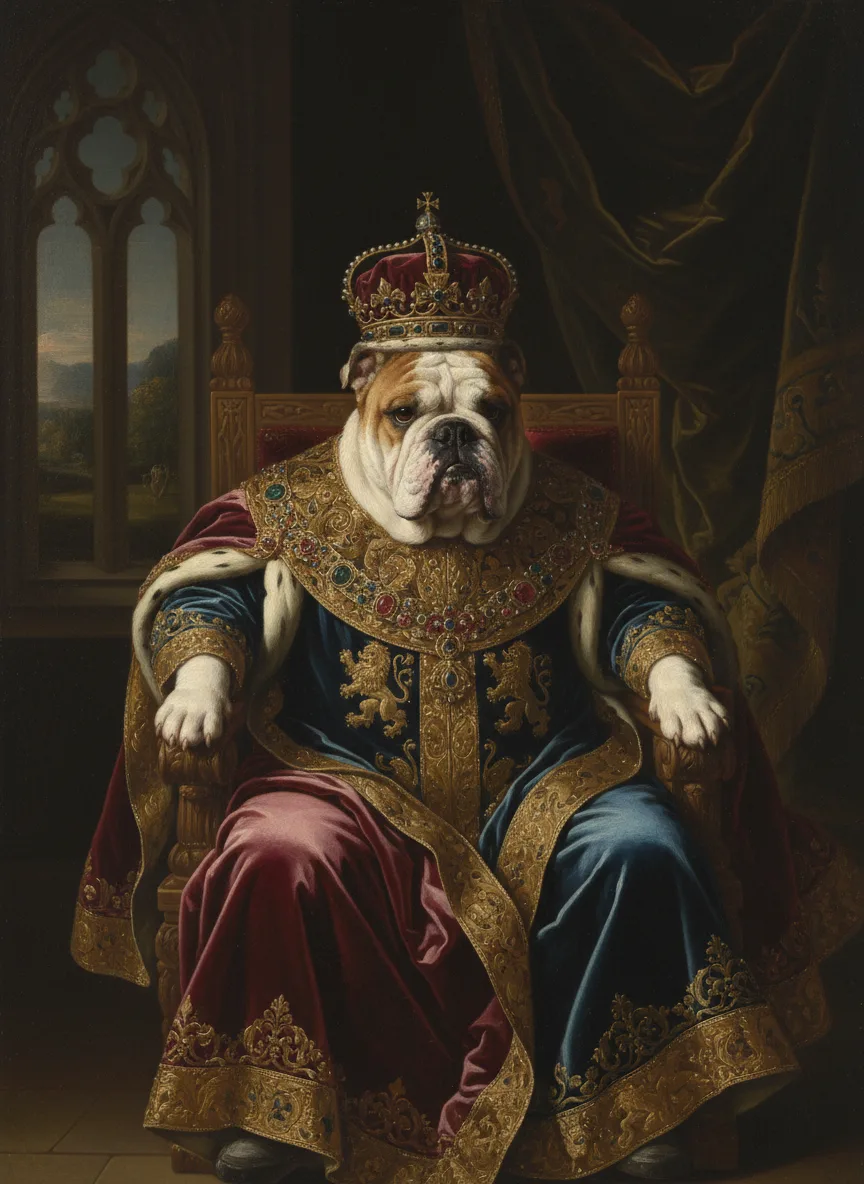
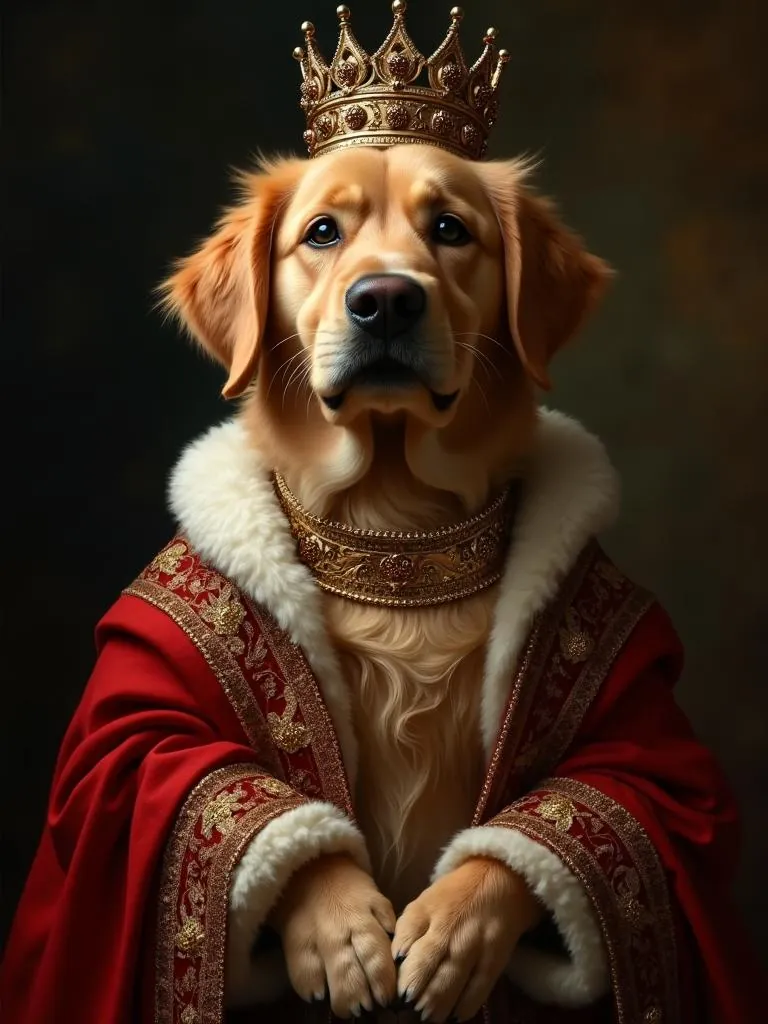
That second job explains why the portraits look the way they do. Painters placed the ruler higher than everyone else, surrounded him with objects that only a ruler could use, and often wrote his name and titles on the page. A royal pet portrait borrows the same signs. When your dog wears a jewelled turban or your cat sits on a gold throne, the picture uses the language these court painters built up over centuries.
How the courts painted their rulers, in order
Each court took ideas from its neighbours and added its own.
The Victoria and Albert Museum (V&A) in London says the practice of taking likenesses of people at the Mughal court began under Akbar, who ruled from 1556 to 1605, and reached new levels of accuracy under his son Jahangir. Our page on Mughal royal portraits follows the emperors from Babur to Aurangzeb.
In Rajasthan, NCERT says Jodhpur painters began to record their ruler and his court in portraits in the 1640s, under Maharaja Jaswant Singh, and kept doing so until photography took over that task in the 1800s. The page on Rajput court portraits covers Jodhpur, Bundi, Kota, Mewar, Bikaner and Jaipur.
In the Deccan, in south central India, NCERT says the kingdoms of Bijapur, Golconda and Ahmadnagar each built their own school of court painting. It adds that Dutch merchants carried portraits of the Golconda sultans to Europe in the late 1600s. The page on Deccan court portraits looks at the sultans' portraits.
In the hill kingdoms of the western Himalayas, NCERT says the artist Nainsukh painted his patron, Raja Balwant Singh of Jasrota, on every possible occasion, and that this gift for individual portraits became a mark of later Pahari painting. Read more in portraits of the Pahari hill rajas.
In the Punjab, the V&A says Ranjit Singh was the first Sikh maharaja of the Panjab and ruled from 1801 until his death in 1839. His court painters gave him a halo and a royal parasol. The page on Sikh and Punjab court portraits carries this story on to Patiala.
In the south, the V&A holds a portrait of Tipu Sultan, ruler of Mysore from 1782 to 1799, that the museum dates to around 1790. It also holds an oil portrait of a later Maharaja of Mysore painted in 1906. The page on Mysore court portraits covers the Mysore rulers. The Maratha king Shivaji was painted in his own century: the Rijksmuseum in Amsterdam holds a portrait of him made in Golconda, which the museum dates to between 1675 and 1685. The page on Maratha court portraits picks up from there. For the Chola kings of the far south, see Chola royal portraits in bronze and stone.
The poses
A small number of poses appear again and again across the courts.
The strict profile
The most famous Mughal pose shows one person standing, face in pure side view, against a plain background. The V&A describes a portrait of the emperor Aurangzeb shown full length, in profile, against a plain pale green background, and says this continued a tradition in Mughal portraits that began in the late 16th century. A side view shows the nose, beard and turban clearly, so the sitter is easy to recognise.
The jharokha window
A jharokha is a balcony window in a palace or fort wall. The Royal Ontario Museum (ROM) in Toronto says the daily practice of appearing at the window and giving an audience to the public was adopted from medieval Indian kings by Mughal rulers from Akbar onwards. The ROM holds two late 18th century portraits, one of Jahangir and one of Aurangzeb, each framed in a jharokha with white marble inlaid with stones in flower patterns and a red curtain with gold embroidery. The Aurangzeb portrait shows him holding a book that the museum says is most likely the Koran.
The Aga Khan Museum, also in Toronto, holds a large album page showing Jahangir in a jharoka looking down at Agra Fort. His highest officials stand on a marble terrace just below him, and lower officials and the public fill the courtyard beneath. The museum explains that darshan, the act of seeing and being seen, began as a Hindu religious and political ritual, and that under Jahangir it became a grand public show. The jharokha puts the ruler above everyone and frames him like a picture inside the picture.
On horseback and at the hunt
Riding and hunting portraits show a ruler in action. The V&A holds a painting from Lahore, dated by the museum to between 1835 and 1840, of Ranjit Singh riding a white stallion decorated with gold chains and turban jewels. It also holds a drawing of Akbar, which it dates to around 1600, hunting from an elephant with a hawk on his outstretched right hand. The V&A calls hawking a kingly sport. The page on animals in Indian court painting explains what the horses, elephants, hounds and hawks in these scenes tell you.
Seated against a bolster
Rulers are often shown seated on a carpet, leaning against a long round cushion called a bolster. The V&A's portrait of Tipu Sultan shows him resting against a red bolster on a blue background, with a gold sword at his hip. A 1721 painting of Thakur Padam Singh of Ghanerao, by an artist named Manna, shows him seated against a magenta and green bolster with his sword and his katar, which the V&A calls a punch dagger, laid in front of him.
Facing the viewer
Later portraits often turn the ruler toward us. The V&A's oil painting of the Maharaja of Mysore, made in 1906 by the artist K. Keshavayya, is a half-length portrait of the maharaja facing to the front, in a pink satin brocade coat and a pink and gold turban.
The symbols, and what each one tells you
| Sign | Where to look | What it means | Source |
|---|---|---|---|
| Halo of light | Around the head | The person is a ruler | V&A, Aurangzeb and Ranjit Singh |
| Parasol | Held above the head | The ancient emblem of kings | V&A, Ranjit Singh |
| Chauri (flywhisk) | In an attendant's hand, behind the ruler | Royalty, at courts of every faith | V&A chowry |
| Turban jewel | On the front of the turban | Royal status, later high rank | V&A turban ornament |
| Sword and katar | At the waist or in front of the sitter | A warrior ruler's arms | V&A, Aurangzeb and Padam Singh |
| Throne | Under the ruler | His seat of power | V&A, Ranjit Singh's throne |
| Hawk on the hand | On the ruler's wrist | The kingly sport of hawking | V&A, Akbar |
| Gold | On and near the ruler | Where the painter wanted you to look | V&A, Akbar |
Halo and parasol
The V&A says the halo marked imperial figures from the reign of Jahangir. It also says the painters of Ranjit Singh's court borrowed the halo from Mughal painting, and that the parasol shading his head is the ancient emblem of kings. In the same picture, his companions carry weapons wrapped in cloth, another sign of royalty.
The chauri
The V&A describes the chauri as a plume of yak tail hair in a decorated holder, and calls it the emblem of royalty that was used and pictured most often across the Indian subcontinent. It says ceremonial flywhisks marked royalty whatever the ruler's religion, and also marked gods: early Hindu and Jain sculptures show attendants holding them beside a deity. The Cleveland Museum of Art holds a stone attendant bearing a chauri from Mathura, made between 100 and 150 CE, and says such figures once stood on either side of a king, the Buddha or another royal or holy figure. In the V&A's painting of Jahangir in a garden, one servant behind the emperor holds his dagger and another holds a flywhisk.
The turban jewel
The V&A says turban jewels in the Mughal tradition from the 16th century were worn only by the emperor and his sons. By the 18th century, as Mughal power declined, the rulers of regional kingdoms, Hindu and Muslim, took them up as signs of rank. So a turban jewel in a Mughal portrait of the early 1600s means something stronger than the same jewel on a Rajasthani noble a century later. The V&A also holds an 18th century portrait of a Rajasthani princess seated on a golden throne and holding out a sarpech, the Persian word for a turban ornament, in her right hand.
The throne
The V&A holds the gold throne that the goldsmith Hafiz Muhammad Multani made for Ranjit Singh, probably between 1805 and 1810. The museum says it is covered in thick sheet gold, and that its base is made of two rows of lotus petals, a flower long used as the seat of Hindu gods and a symbol of purity in Sikh scripture.
Reading a court portrait, step by step
You can read most Indian court portraits with five questions.
- Who is highest or largest? The ruler usually stands above the crowd, sits on the throne, or looks down from the jharokha.
- Where is the gold? In the V&A's drawing of Akbar hawking, made in the pale style called nim qalam (Persian for "half pen"), the artist used gold only on the parts closest to the emperor.
- What is around the head? Look for a halo and a parasol.
- Who stands behind? An attendant with a chauri or a covered weapon marks the person in front as royal.
- Is there writing? Many portraits name the sitter. The Aga Khan Museum says most of the officials in its jharoka painting are identified by tiny inscriptions on their collars or belts.
The Aga Khan painting holds one more detail worth finding. Near the red canopy on the left hangs a golden chain with golden bells. The museum quotes Jahangir's memoirs, in which he calls it the chain of justice and says his first order as emperor was to hang it, so that anyone denied justice could shake it and be heard. In the painting the chain is guarded, and a man trying to reach it is being pushed away.
Common mistakes when looking at these portraits
Treating the portrait as a photograph. Court painters shaped the image to suit the ruler. NCERT says Shah Jahan's painters preferred an ideal, polished image over accurate detail. Some portraits were made long after the sitter's death: the V&A says Delhi artists painted Tipu Sultan in the decades after 1799, copying a Mysore portrait that the V&A dates to around 1790, and the ROM's portrait of Jahangir, whose reign ended in 1627, was painted in Lucknow or Faizabad in the late 18th century.
Reading the halo as a sign of a saint. At these courts the halo marks a ruler. The V&A says the Mughal artists took it from Western art, that it had appeared much earlier in Buddhist paintings in India, and that Rajput painters then borrowed it from the Mughals.
Assuming every turban jewel means an emperor. It did in the early Mughal period. By the 1700s, as the V&A explains, regional rulers wore them too.
Assuming every court portrait is tiny. Many are small. The ROM's jharokha portraits measure 18.8 by 12 cm and 18.4 by 11.75 cm, and the V&A's drawing of Akbar is 17.3 by 13.2 cm. Others are larger: the Aga Khan Museum's page of Jahangir at the window is 56 by 35.2 cm, and NCERT says the Jaipur court produced life-size portraits. The page on how Indian miniature portraits were made explains the paper, pigments and gold.
The courts compared
| Court | Region | Portrait habit to look for | Purrealism style |
|---|---|---|---|
| Mughal | North India, Delhi and Agra | Strict profile on a plain ground; the jharokha | Mughal Emperor |
| Rajput kingdoms | Rajasthan | Rulers on horseback, at the hunt and at court | Rajput Warrior |
| Pahari kingdoms | Himalayan foothills | A ruler painted in many daily moments | Indian Royalty |
| Deccan sultanates | South central India | Sultans in Deccan dress and jewels | Indian Royalty, Maharaja |
| Sikh court and Patiala | Punjab | A halo and parasol over the maharaja | Patiala Royalty |
| Mysore | Karnataka | Ruler against a bolster; later front-facing oils | Mysore Royal |
| Maratha | Western India and Thanjavur | Half-length ruler with a sword | Maratha King |
| Chola | Tamil Nadu | Royal figures in bronze and stone | Chola Warrior |
The Maharaja and Maharani styles take their names from royal titles, explained in what Maharaja means. The guide to Indian royal pet portraits goes through the nine styles one by one.
From court portraits to your pet's portrait
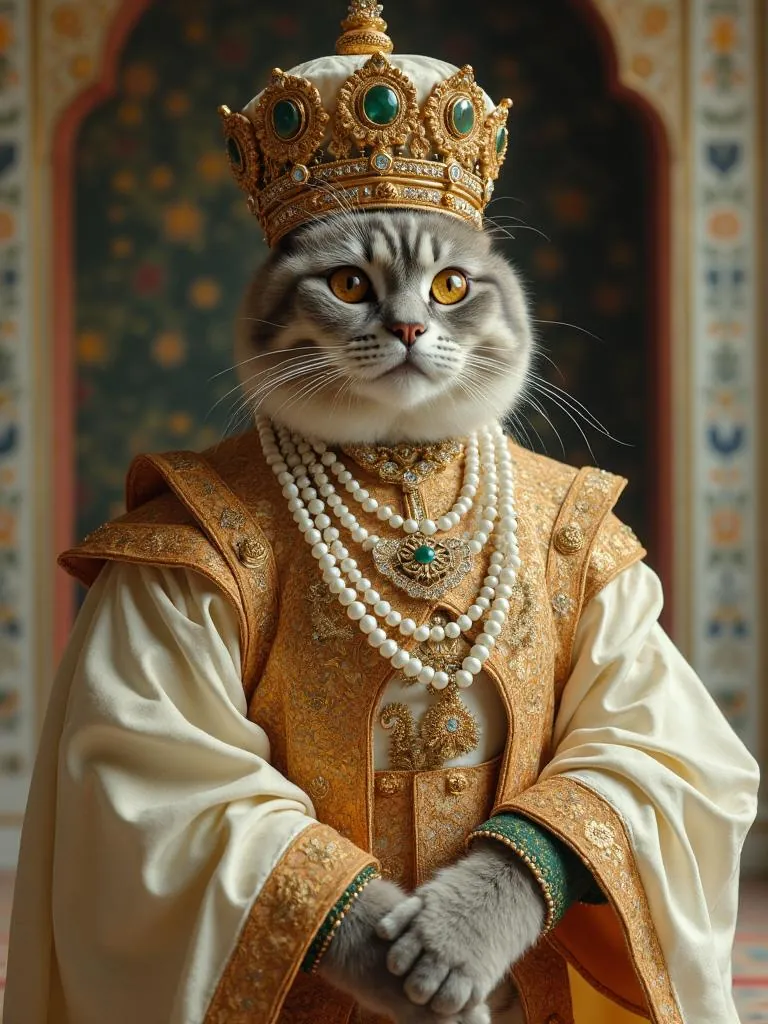
Each of Purrealism's nine Indian styles takes its name from these courts: Indian Royalty, Maharaja, Maharani, Patiala Royalty, Chola Warrior, Mysore Royal, Mughal Emperor, Rajput Warrior and Maratha King. The gallery shows what several of them look like. The Mughal Emperor portrait shows a grey cat wearing a jewelled crown and pearls. The Maharaja portrait shows a golden retriever in a red jewelled turban, seated on a gold throne, and the Patiala Royal portrait shows a Pomeranian in a blue coat and jewelled turban on a red throne. The studio examples add others, including a Rottweiler and a Siamese cat in the Chola Warrior style and a German Shepherd and a Persian cat in the Maratha King style.
The signs above can help you choose. If you like jewels, the Mughal Emperor portrait in the gallery wears a jewelled crown and pearls. If your dog is always on the move, the riding and hunting portraits of the Rajput courts sit behind the Rajput Warrior style, whose gallery portrait shows a dog in armour with a fort at sunset behind it. A calm pet who likes to be admired suits the throne portraits: the gallery's Maharaja and Patiala Royal portraits both seat the dog on a throne.
The profile portraits above depend on a clear face, and so does a pet portrait, so choose a photo where your pet's face is sharp and well lit. The portrait studio takes one photo of up to 5 MB. If you still cannot decide, the style finder further down this page asks whether your pet is a dog or a cat, a word that describes it, its colours and a scene, then suggests one of the nine Indian styles and shows an example portrait. For help across all 15 styles, including the European ones, read how to choose a royal portrait style.
Try it
Indian style finder
Answer four questions about your pet. The finder suggests one of the Indian court styles and shows a portrait painted in it.
Answer all four questions to see your suggestion.
Every page in this guide, by topic
Northern courts
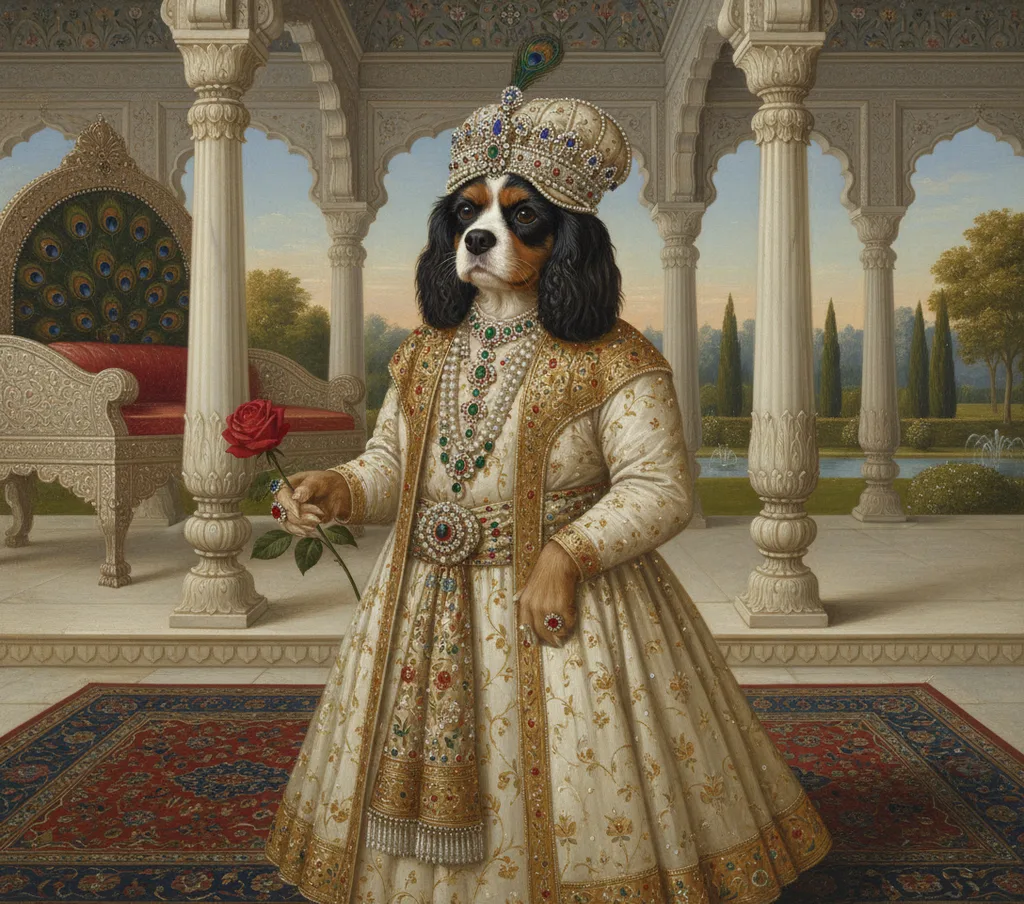
Mughal royal portraits: how the emperors and their courts were painted
Mughal emperors were painted in strict profile with halos, jewels and parasols. How court artists made these portraits, and what each royal symbol meant.
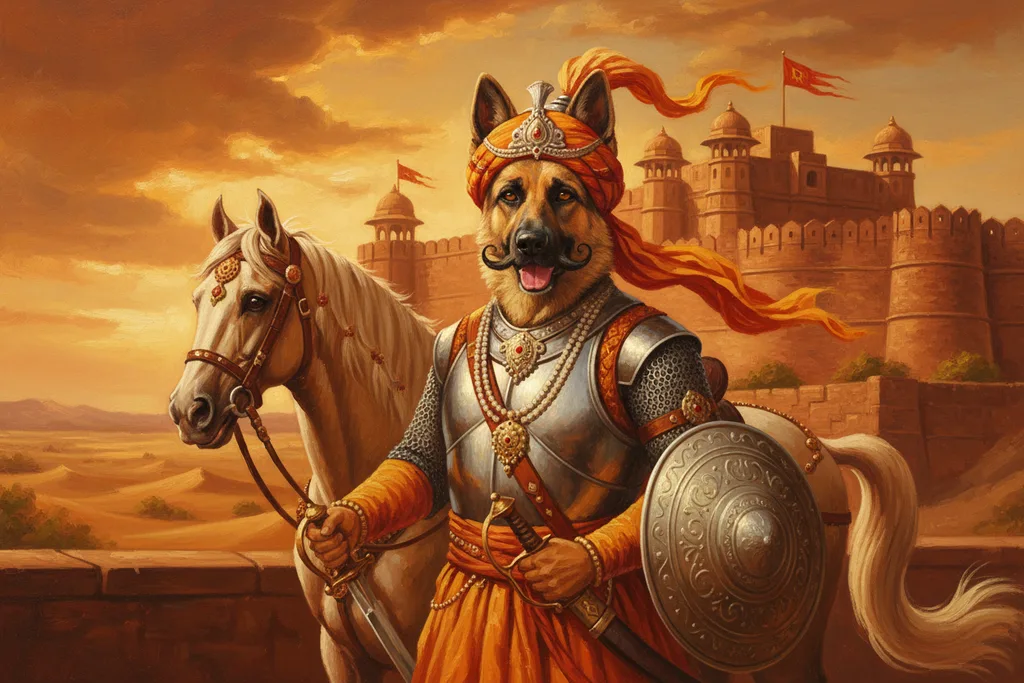
Rajput court portraits: kings on horseback, at the hunt and at court
Rajput rulers were painted with halos, on galloping horses and at the hunt. How the courts of Rajasthan made royal portraits and kept records of them.
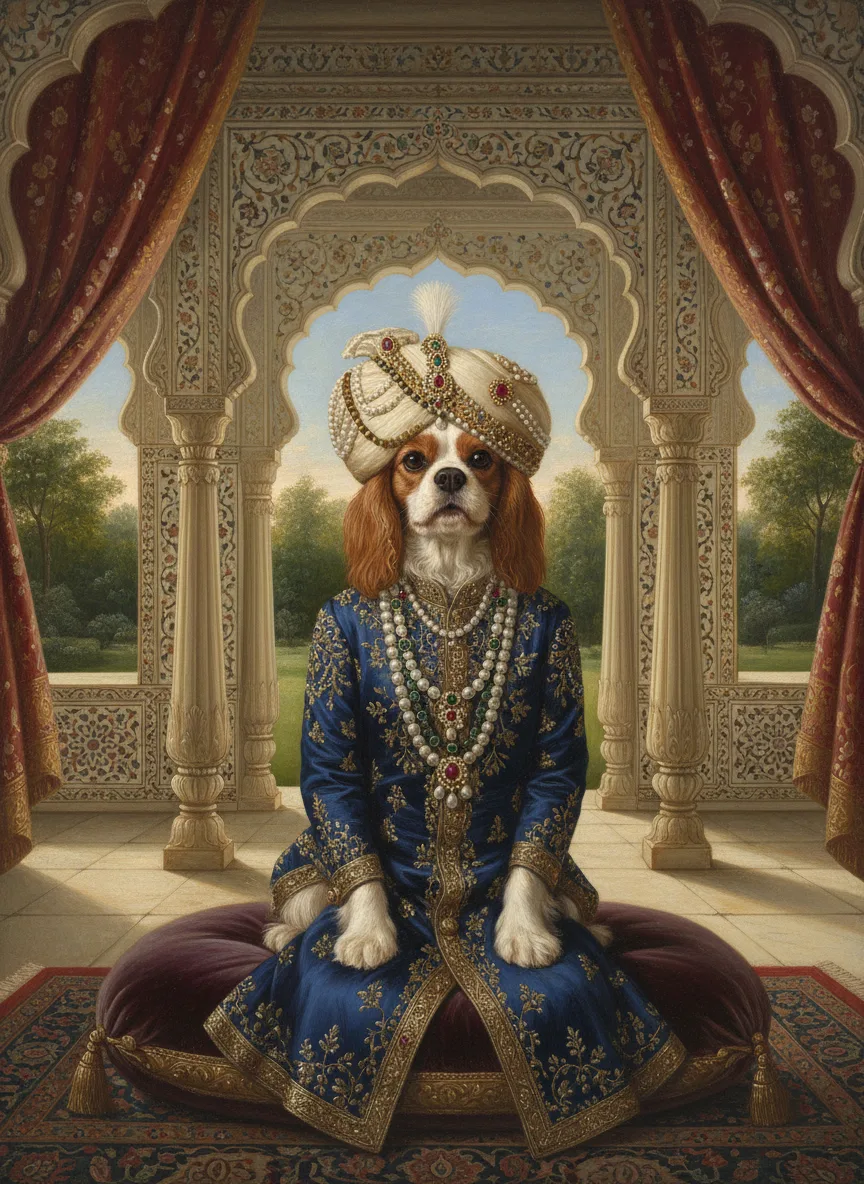
Pahari court portraits: how the rajas of the Punjab Hills were painted
The small hill kingdoms of the Punjab Hills painted their rajas smoking, praying, hunting and at court. How Guler, Jasrota, Kangra and Mandi portrayed rulers.
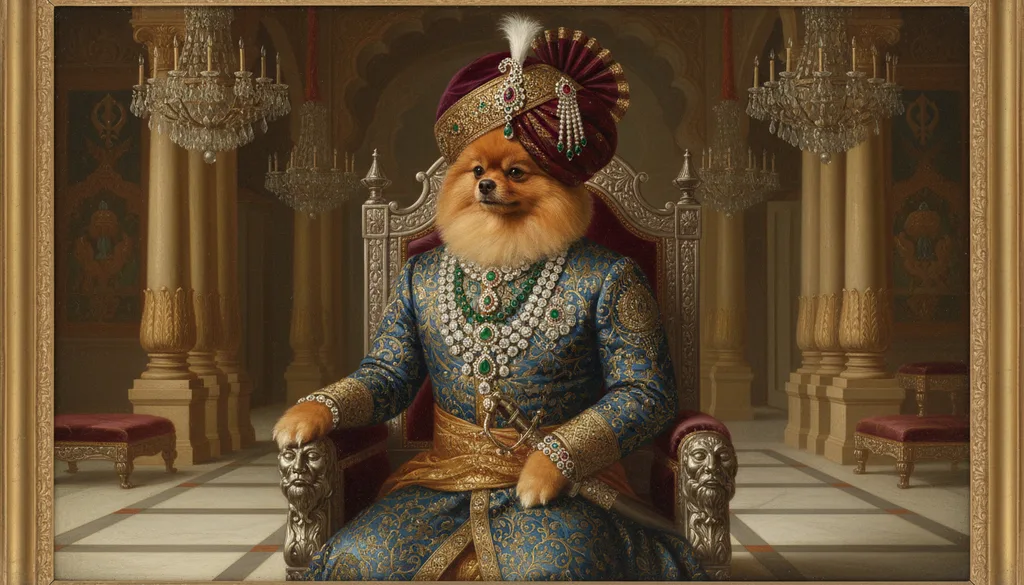
Sikh court portraits: Ranjit Singh, Lahore and the maharajas of Patiala
Sikh rulers were painted on white horses under a parasol, on golden thrones and later from photographs. How Lahore and Patiala portrayed their maharajas.
Southern and western courts
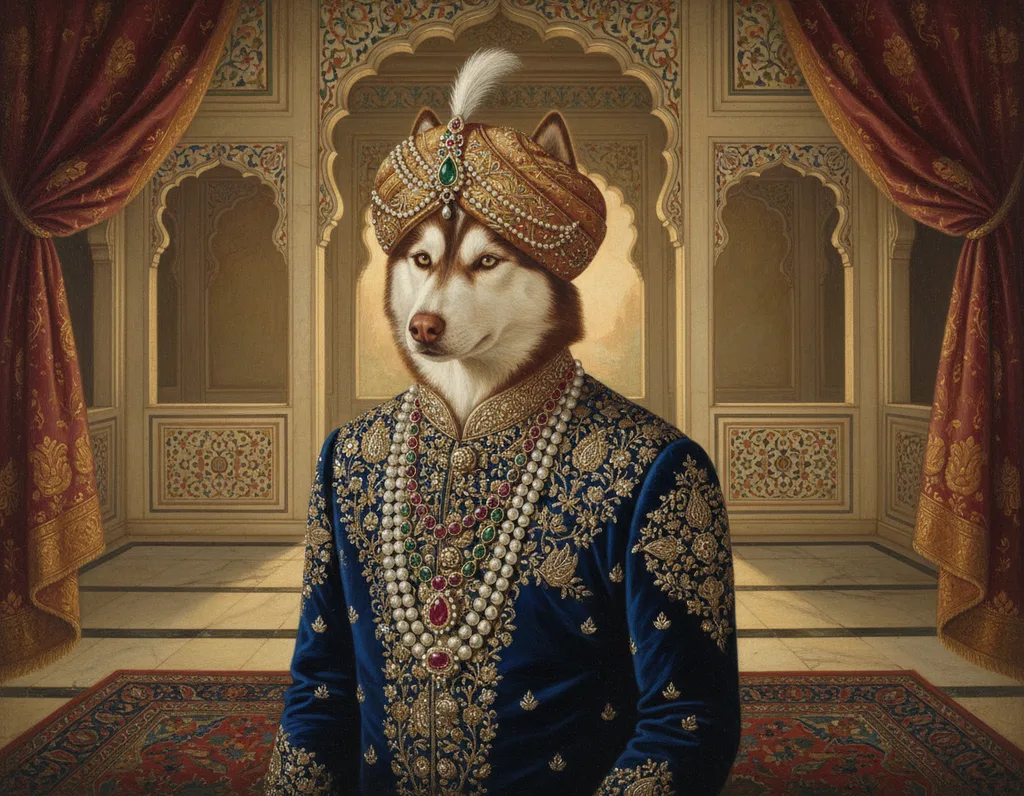
Deccan court portraits: how the sultans of Bijapur, Golconda and Hyderabad were painted
Deccan sultans were painted with long straight swords, fine muslin and at times halos. How Bijapur, Golconda, Ahmadnagar and Hyderabad made royal portraits.
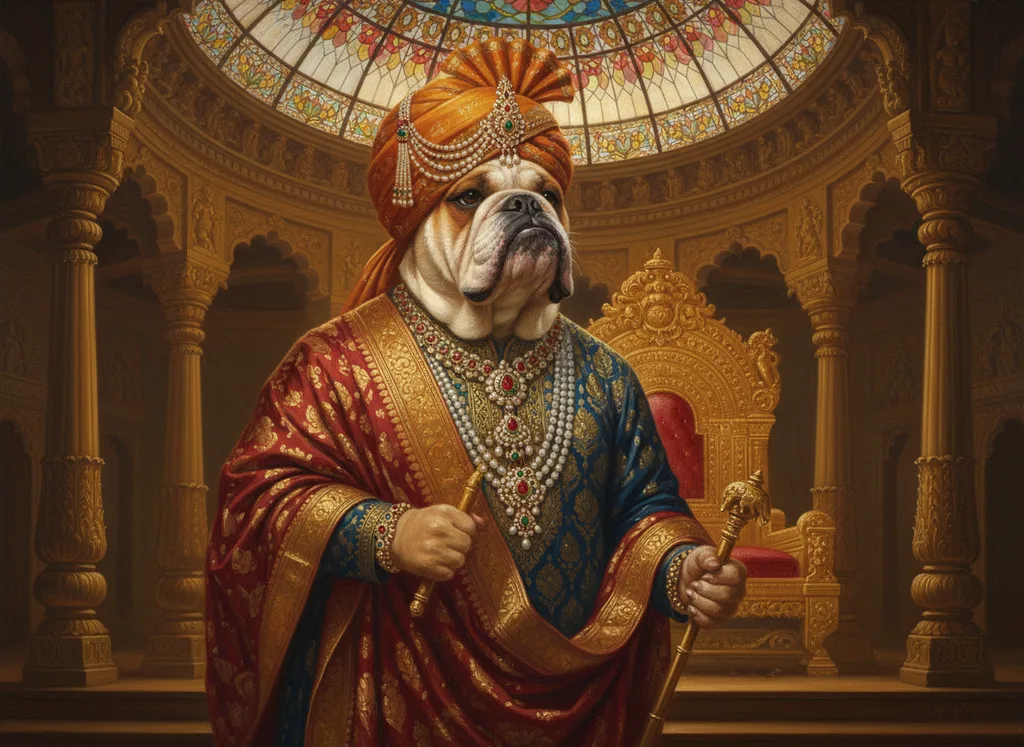
Mysore court portraits: Tipu Sultan, the Wodeyar kings and their painters
How the rulers of Mysore were portrayed, from Tipu Sultan in green and pearls to Wodeyar kings in processions, oil paintings and printed portraits.
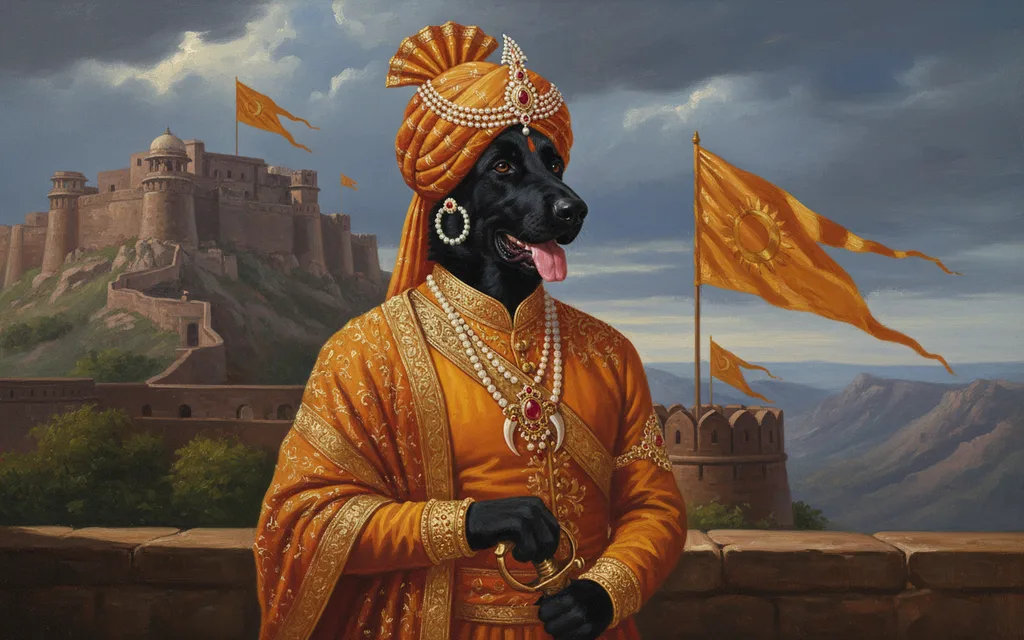
Maratha court portraits: how Shivaji, the Peshwas and the Thanjavur rajas were painted
Maratha rulers were painted in Golconda, at the Peshwa court in Pune and at Thanjavur. Who made the portraits, what they show, and how to read them.
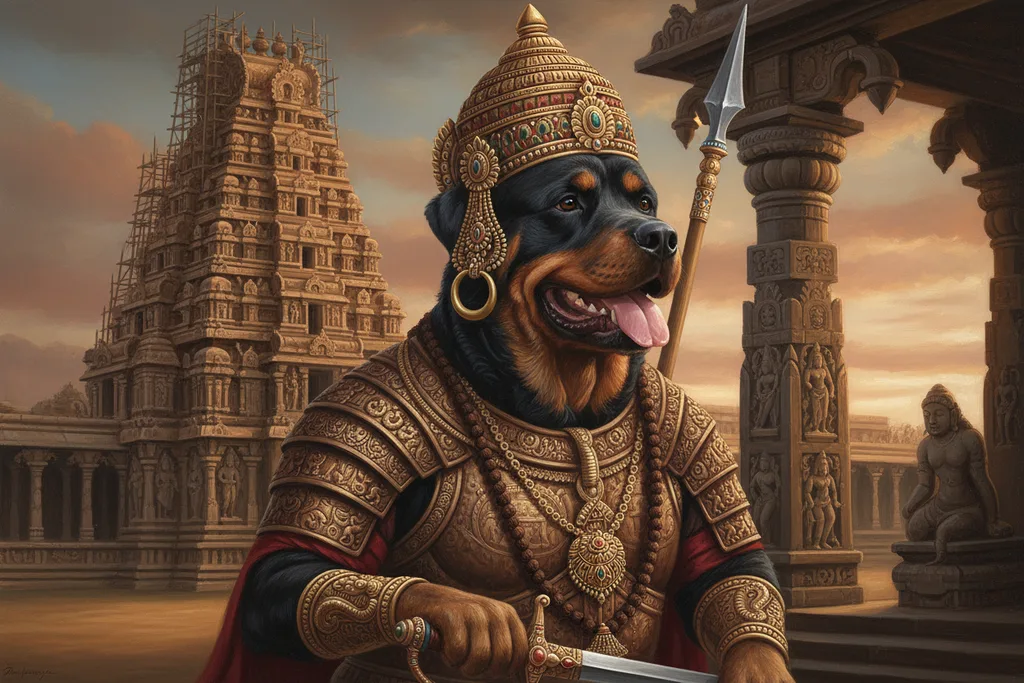
Chola royal portraits: how the kings and queens of Thanjavur were shown
Chola kings and queens appear in temple murals, stone panels and bronzes, most often at worship. How museums name them, and where the naming is uncertain.
How the portraits were made
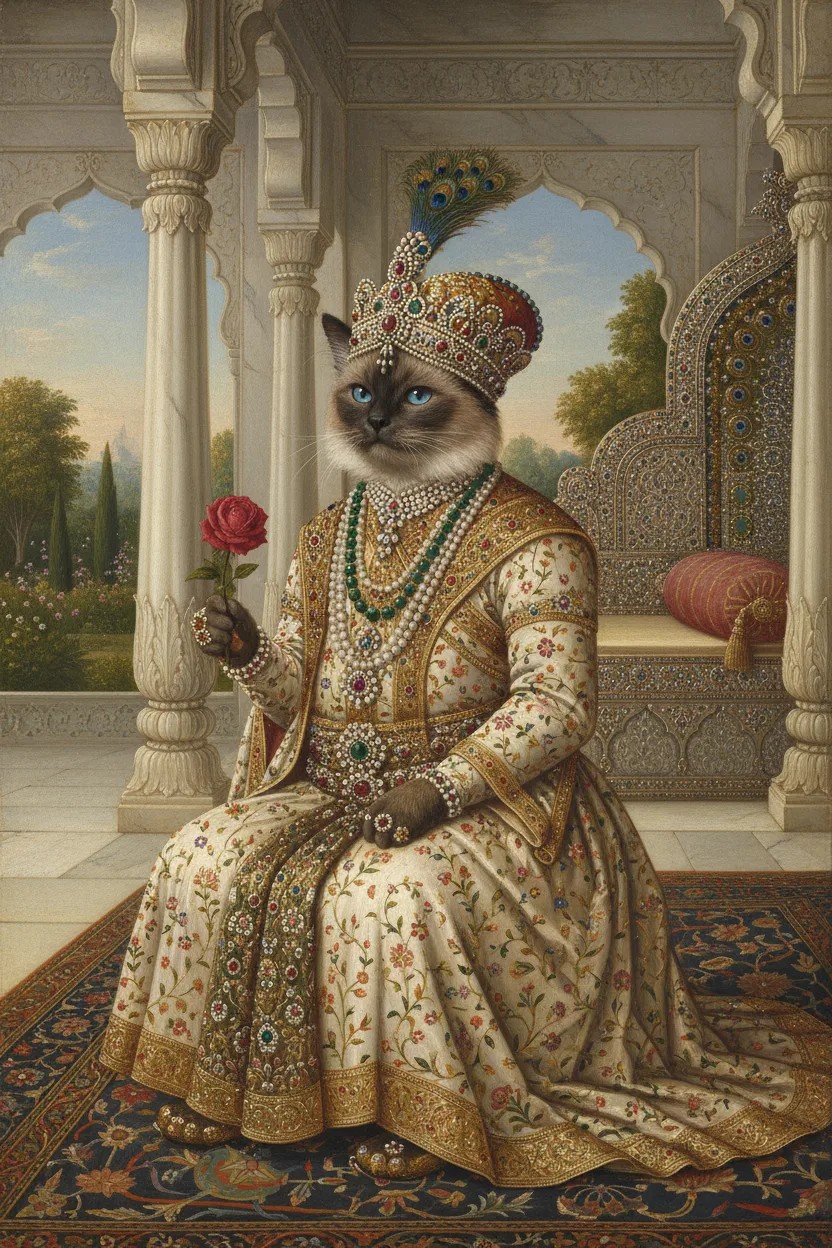
How Indian miniature portraits were made: paper, colours, gold and brushes
Indian court portraits were painted on polished handmade paper with ground minerals, gold and squirrel-hair brushes, often by a team with a face specialist.
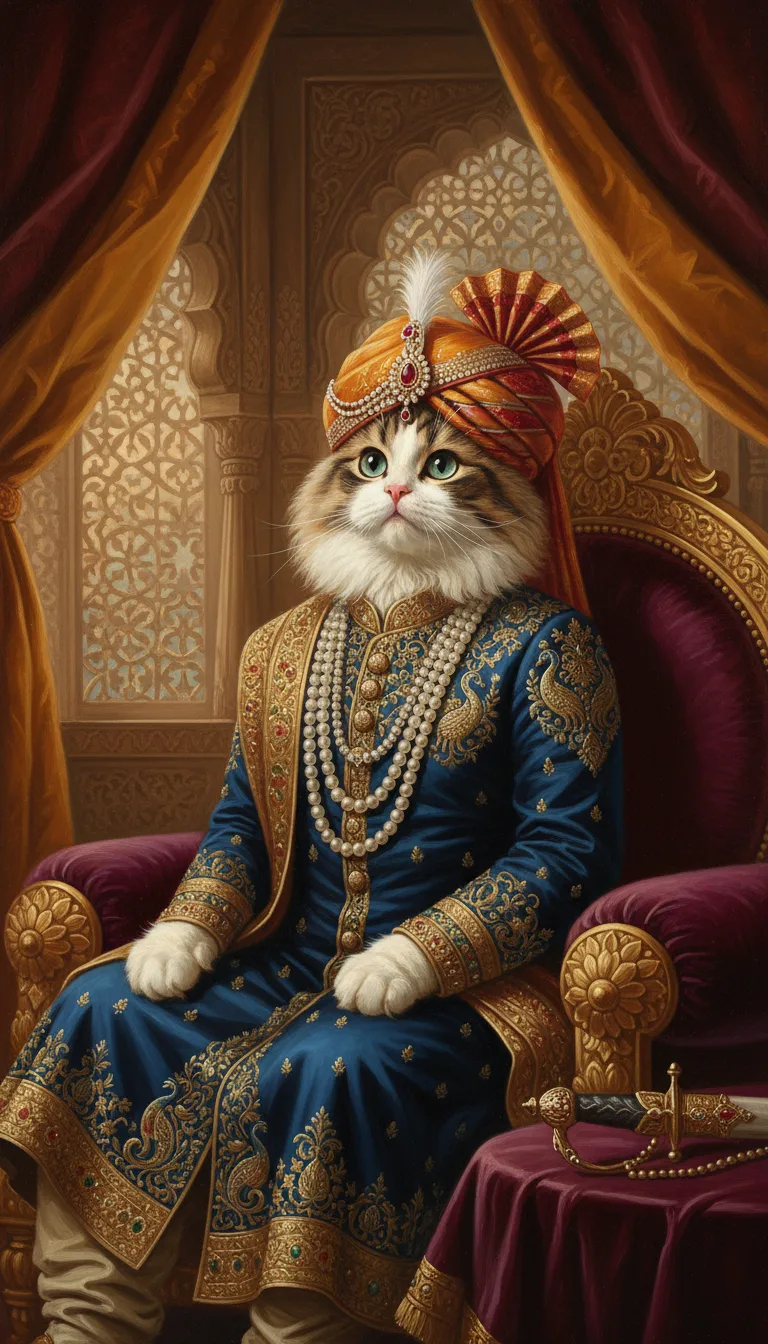
Animals in Indian court painting: elephants, horses, cheetahs and falcons
Elephants, horses, cheetahs, falcons, dogs and cats in Indian royal paintings: how court artists painted them beside rulers, and what each animal showed.
Questions and answers
What was a court painting in India?
A court painting in India was a picture made by artists who worked for a ruler, at the ruler's cost and for the ruler's own use. India's National Council of Educational Research and Training (NCERT) says the rulers of the Deccan hired and trained artists and ordered works that suited both their taste and the needs of governing. At Jodhpur, NCERT says, painters recorded the ruler and his court in portraits from the 1640s.
What is jharokha darshan?
Jharokha darshan was the daily practice of a ruler showing himself to the public at a balcony window, called a jharokha. The Royal Ontario Museum in Toronto says Mughal rulers from Akbar onwards took over this practice from earlier Indian kings. The Aga Khan Museum explains that darshan began as a Hindu religious and political ritual, and that it became a grand public show under the emperor Jahangir.
Who started jharokha darshan at the Mughal court?
Jharokha darshan at the Mughal court began with the emperor Akbar, who ruled from 1556 to 1605. The Royal Ontario Museum in Toronto says the daily practice of appearing at the window and giving an audience to the public was adopted from medieval Indian kings by Mughal rulers from Akbar onwards. The museum holds late 18th century portraits of both Jahangir and Aurangzeb framed in a jharokha window.
What is a chauri?
A chauri is a ceremonial flywhisk made from the long hair of a yak's tail set in a decorated handle. The Victoria and Albert Museum calls the chauri the emblem of royalty that was used and pictured most often across the Indian subcontinent. In court portraits an attendant stands behind the ruler holding one. The V&A's own example, made in the 1850s, has a silver handle.
Which religion uses the chauri?
The chauri is used in several Indian religions and at royal courts of every faith. The Victoria and Albert Museum says ceremonial flywhisks were emblems of royalty whatever the ruler's religion, and that early Hindu and Jain sculptures show attendants holding them beside a god. The Cleveland Museum of Art adds that early images of the Buddha in India often have a chauri bearer on each side.
What does a turban jewel mean in an Indian royal portrait?
A turban jewel in an Indian royal portrait marks the wearer as a ruler or a person of high rank. The Victoria and Albert Museum says that in the Mughal tradition from the 16th century, turban jewels were worn only by the emperor and his sons. By the 18th century, as Mughal power declined, the rulers of regional kingdoms, Hindu and Muslim, wore them as signs of rank too.
What does a hawk on a ruler's hand mean in Indian court art?
A hawk on a ruler's hand in Indian court art shows him taking part in hawking, a sport of kings. The Victoria and Albert Museum holds a drawing of the emperor Akbar, which it dates to around 1600, that shows him hunting from an elephant with a hawk on his outstretched right hand. The V&A also holds a drawing of Raja Pirthi Singh of Jaipur holding a hawk on his left hand.
What is nim qalam in Mughal painting?
Nim qalam is a Mughal painting style of pale, mostly single-colour washes with touches of gold and colour. The Victoria and Albert Museum says the name means half pen in Persian and that court artists used it at the end of the 16th century and the start of the 17th. In a V&A drawing of Akbar hawking, the artist used gold only on the parts closest to the emperor, to show his royal status.
Were Indian court portraits painted from life?
Many Indian court portraits were copied from earlier pictures, some long after the ruler died. The Victoria and Albert Museum says Delhi artists painted Tipu Sultan of Mysore in the decades after his death in 1799, using as their model a portrait made in Mysore that the museum dates to around 1790. The Royal Ontario Museum holds a portrait of Jahangir, whose reign ended in 1627, painted in the late 18th century.
How big is a typical Indian court portrait?
A typical Indian court portrait is small enough to hold in two hands, though sizes vary. The Royal Ontario Museum's late 18th century portrait of Jahangir at the jharokha measures 18.8 by 12 cm. The Aga Khan Museum's album page of Jahangir at the jharoka window is larger, at 56 by 35.2 cm. NCERT says the Jaipur court, by contrast, preferred large formats and produced life-size portraits.
What is the chain of justice in the painting of Jahangir at the jharoka?
The chain of justice is a golden chain with golden bells that hangs near the red canopy in the Aga Khan Museum's painting of Jahangir at the jharoka window. The museum quotes Jahangir's memoirs, where he says his first order as emperor was to hang this chain so that people seeking justice could shake it and be heard. In the painting, the chain is guarded and a petitioner is being pushed away.
Which Indian court portrait style suits my dog or cat?
The Indian court portrait style that suits a dog or cat depends on the look you want, and Purrealism offers nine of them. In the gallery, the Mughal Emperor cat wears a jewelled crown and pearls, the Rajput Warrior dog wears armour, and the Maharaja dog sits on a gold throne. The style finder on the Indian court painting guide asks about your pet, its colours and a scene, then suggests one style.
Sources
- The emperor 'Alamgir (Aurangzeb), painting, c. 1660, Victoria and Albert Museum. Accessed September 28, 2026.
- The arts of the Mughal Empire, Victoria and Albert Museum. Accessed September 28, 2026.
- Album Page, Emperor Jahangir at the Jharoka window (AKM136), Aga Khan Museum. Accessed September 28, 2026.
- Portrait of Mughal Emperor Jahangir at the jharokha (balcony window), Royal Ontario Museum. Accessed September 28, 2026.
- Portrait of Mughal Emperor Aurangzeb at the jharokha (balcony window), Royal Ontario Museum. Accessed September 28, 2026.
- Chowry or fly whisk ('Chamer'), c. 1855, Victoria and Albert Museum. Accessed September 28, 2026.
- Attendant Bearing a Fly Whisk (Chauri), c. 100 to 150 CE, Cleveland Museum of Art. Accessed September 28, 2026.
- Turban ornament, early 18th century, Jaipur, Victoria and Albert Museum. Accessed September 28, 2026.
- Akbar, drawing, c. 1600, Victoria and Albert Museum. Accessed September 28, 2026.
- Raja Pirthi Singh of Jaipur, drawing, 19th century, Victoria and Albert Museum. Accessed September 28, 2026.
- Thakur Padam Singh, painting by Manna, 1721, Victoria and Albert Museum. Accessed September 28, 2026.
- Portrait of a Rajasthani princess, painting, 18th century, Victoria and Albert Museum. Accessed September 28, 2026.
- Maharaja Ranjit Singh, painting, c. 1835 to 1840, Victoria and Albert Museum. Accessed September 28, 2026.
- Maharaja Ranjit Singh's throne, 1805 to 1810, Victoria and Albert Museum. Accessed September 28, 2026.
- Tipu Sultan, painting, c. 1790, Victoria and Albert Museum. Accessed September 28, 2026.
- Portrait of Maharaja Sir Sri Krishnaraja Wodeyar Bahadur, by K. Keshavayya, c. 1906, Victoria and Albert Museum. Accessed September 28, 2026.
- Portrait of Shivaji, c. 1675 to 1685, Rijksmuseum. Accessed September 28, 2026.
- Raja Jaswant Singh of Jodhpur with nobles, brush drawing, c. 1640 to 1650, Victoria and Albert Museum. Accessed September 28, 2026.
- Jahangir in a garden, painting by Manohar, c. 1610 to 1615, Victoria and Albert Museum. Accessed September 28, 2026.
- The Rajasthani Schools of Painting (An Introduction to Indian Art, Part II, chapter 2), National Council of Educational Research and Training (NCERT). Accessed September 28, 2026.
- The Mughal School of Miniature Painting (An Introduction to Indian Art, Part II, chapter 3), National Council of Educational Research and Training (NCERT). Accessed September 28, 2026.
- The Deccani Schools of Painting (An Introduction to Indian Art, Part II, chapter 4), National Council of Educational Research and Training (NCERT). Accessed September 28, 2026.
- The Pahari Schools of Painting (An Introduction to Indian Art, Part II, chapter 5), National Council of Educational Research and Training (NCERT). Accessed September 28, 2026.
Short reads on this topic
Articles from Purrspectives that answer one question each.
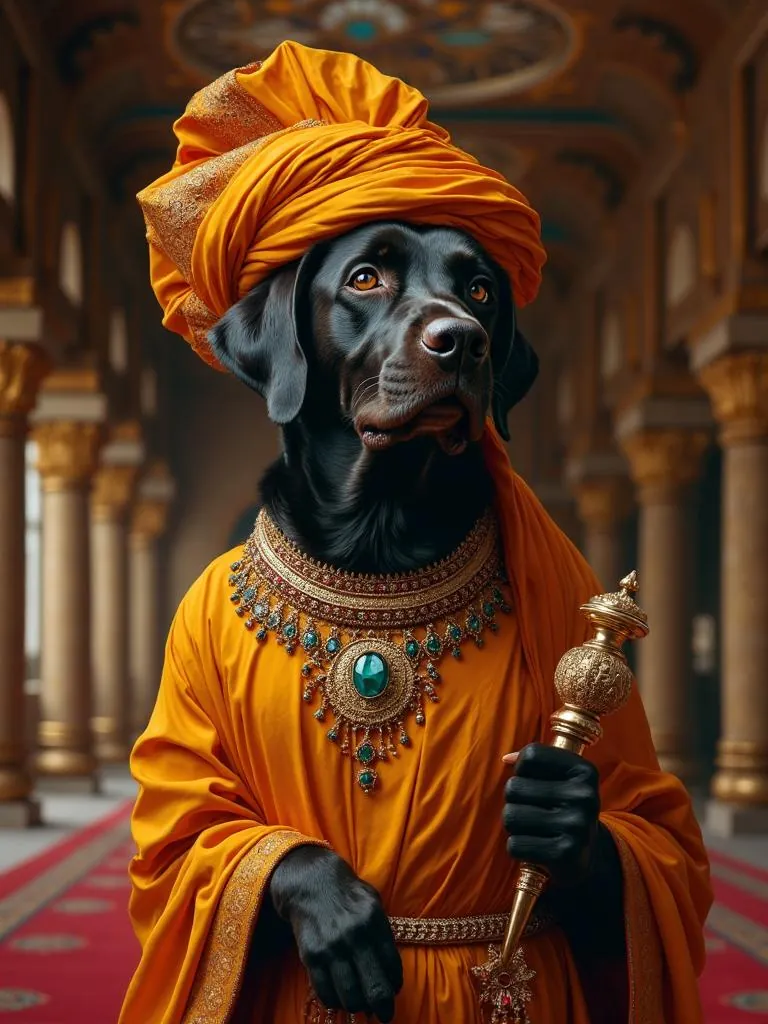
What is Tanjore painting? Gold foil, gesso and the Thanjavur court
Tanjore painting is a South Indian style from Thanjavur, made on a wooden board with raised gesso, gold foil and glass stones. Where it came from and how it is made.
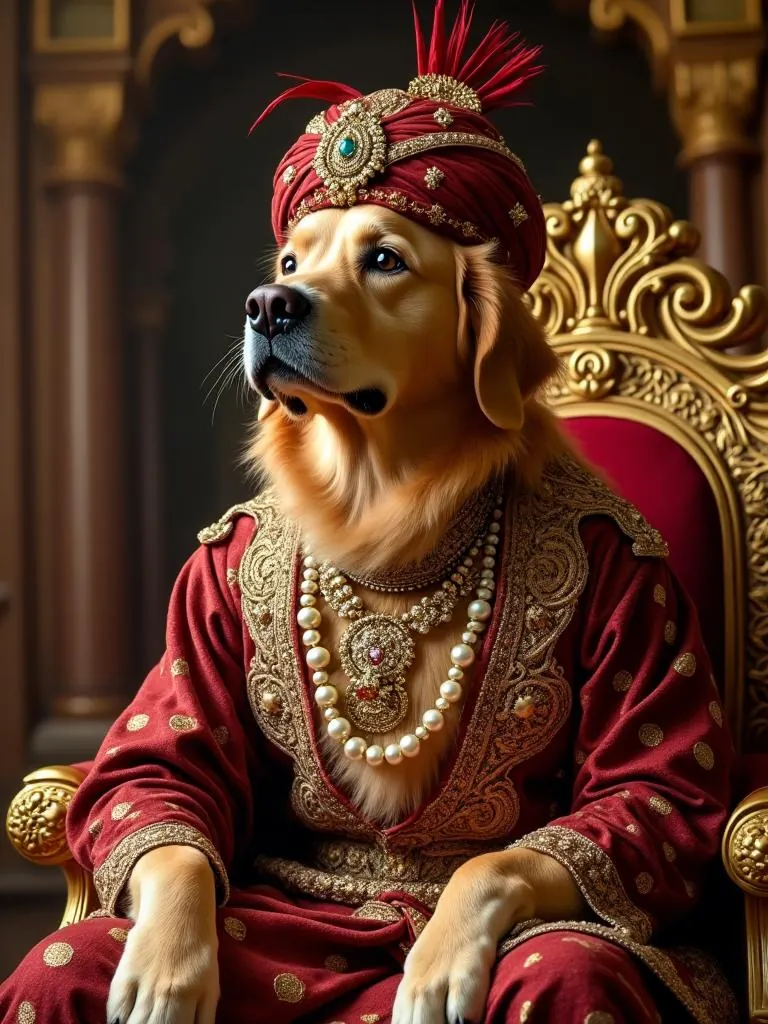
Indian royal pet portraits: the nine Indian court styles explained
An Indian royal pet portrait dresses your dog or cat as a ruler or warrior from an Indian court. Here are the nine styles and the history behind them.

The Maharajas of Patiala: the history behind Patiala royalty
The Phulkian rulers of Patiala founded their capital in 1763. Who built Qila Mubarak, who Bhupinder Singh was, and how Patiala joined India.