How to choose a royal portrait style for your dog or cat
Fifteen royal portrait styles, one photo of your pet. How to pick by coat colour, by your pet's character, and by where the portrait will hang.
By Purrealism
Purrealism offers 15 royal portrait styles. Nine come from Indian royal courts and six from European history. That is a lot of choice for one photo of your dog or cat, so this guide goes through three simple ways to pick: by coat colour, by character, and by where the portrait will hang.
Start with your pet's coat colour
The quickest way to shorten the list is to look at your pet's coat next to the main colour of each style.
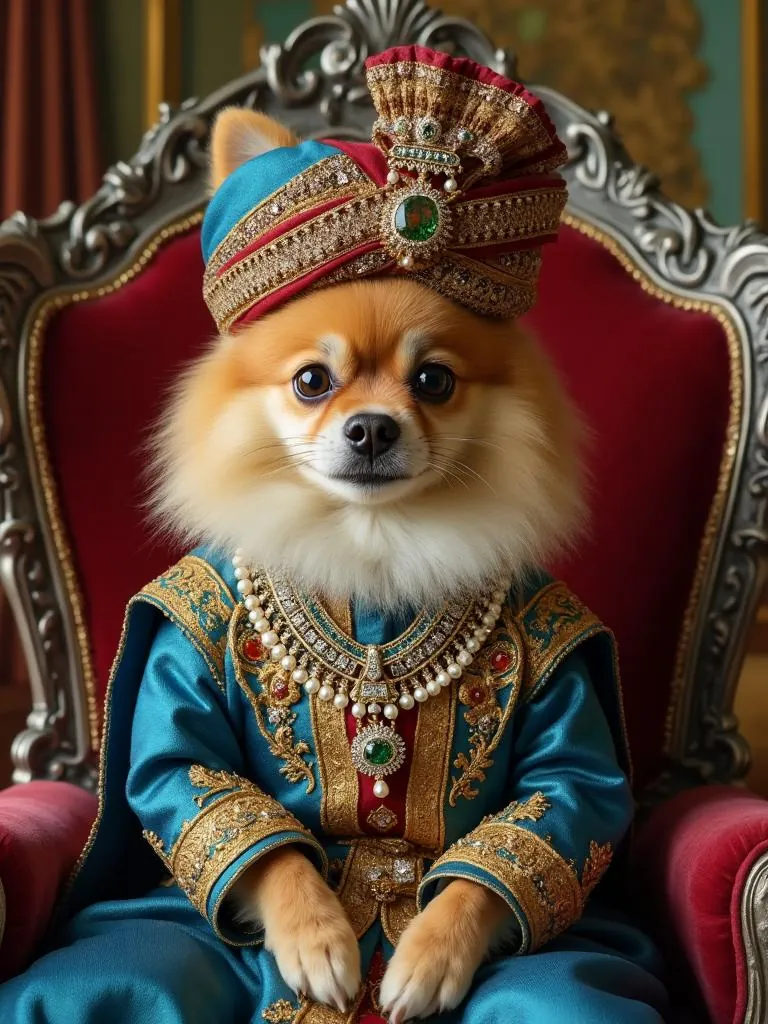
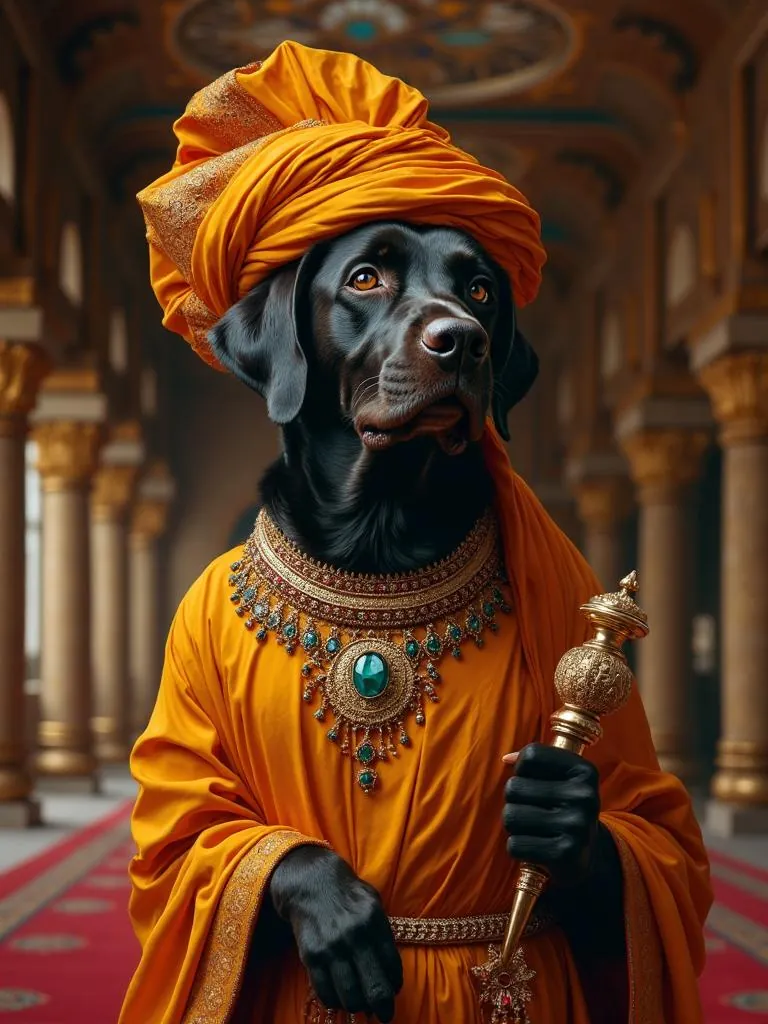
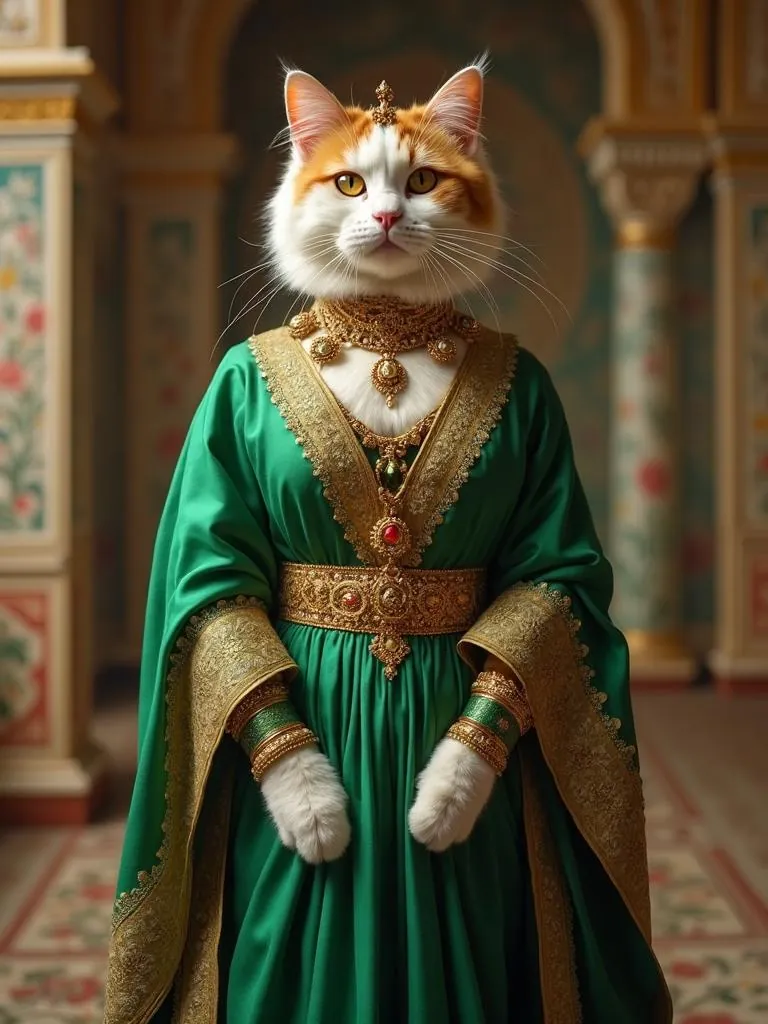
Each Indian court portrait in the gallery has its own main colour. The Maharaja portrait puts a golden retriever in a red jewelled turban on a gold throne. The Mysore Royal portrait dresses a black labrador in a saffron turban. The Patiala Royal portrait gives a Pomeranian a blue coat and a red throne. The Maharani portrait dresses a white and ginger cat in a green and gold gown.
Pick clothes that contrast with the coat, so your pet stands out from the costume:
- Black or dark brown coat: saffron, gold and other light colours.
- Golden, ginger or cream coat: green, blue or deep red.
- White or grey coat: most colours work, so choose on mood instead.
- Patterned coat, such as tabby or tricolour: a style with plainer clothes, so the pattern stays the main detail.
Match the style to your pet's character
Think about how your pet behaves at home, then pick the role that fits.
A calm pet that always takes the best spot on the sofa suits a seated ruler: the Maharaja, the Maharani or the Mughal Emperor. The Mughal Emperor portrait in the gallery shows a grey cat in a jewelled crown and pearls.
A pet that guards the door or barks at every delivery suits a warrior: the Rajput Warrior, the Chola Warrior or the Medieval Knight. The Rajput Warrior portrait shows a dog in armour with a fort at sunset behind it.
A pet with a serious face suits a formal role, such as the Military General or the Victorian Noble.
Indian court or European period
The 15 styles fall into two groups.
Indian court styles: Indian Royalty, Maharaja, Maharani, Patiala Royalty, Chola Warrior, Mysore Royal, Mughal Emperor, Rajput Warrior and Maratha King. Six of the courts behind them have their own history guide: Mughal painting, Rajput painting, Mysore painting, the Maharajas of Patiala, the Chola dynasty and Shivaji and the Maratha kings. For the titles themselves, read what Maharaja means.
European period styles: Renaissance Royal, Victorian Noble, Military General, Medieval Knight, Baroque Aristocrat and Regency Era. The guide to what makes a Renaissance painting explains the art behind the Renaissance Royal style. Four more European styles have a history guide: Baroque art, the Regency era, what a medieval knight wore and, for the Victorian Noble, Queen Victoria and her dogs.
The gallery shows finished portraits in six of the Indian court styles, plus two in the Indian Royalty style. If you want to see a finished example before you decide, start with one of those eight.
Match the style to the occasion
A portrait chosen as a gift often needs a different style than one you would pick for your own wall.
For a birthday or a "just because" gift, a warm, recognisable style travels best: the Maharani or Maharaja portraits read clearly to someone who has never seen the gallery before, since the throne and the jewels make the royal theme obvious at a glance. For a sympathy or memorial gift, a calmer, seated style such as the Mughal Emperor or Victorian Noble suits better than a warrior pose, since the mood of the portrait should match the mood of the moment. For a housewarming gift, match the style to the room you know the print will hang in: a bold Rajput Warrior scene for a study or office, a softer Renaissance Royal portrait for a living room or hallway.
If you are choosing for someone else's pet and you are not sure of their taste, the Indian Royalty and Maharaja styles are the safest general choice. They show up most often in the gallery, which means more people have already chosen them and been happy with the result.
Compare the four print sizes side by side
Each of the 15 styles is available at every size, so the size decision is separate from the style decision. Purrealism sells four sizes, each in matte or glossy paper:
- 8 × 10 in: $114 matte, $124 glossy. Suits a desk, bedside table or shelf.
- 12 × 16 in: $163 matte, $173 glossy. Suits a wide shelf or a narrow wall.
- 18 × 24 in: $244 matte, $254 glossy. Suits a wall on its own, above a desk or dresser.
- 24 × 36 in: $407 matte, $417 glossy. Suits a large wall, above a sofa or bed.
Glossy paper costs $10 more than matte at every size. All four sizes ship free. If you only want a digital file, the digital pack is a flat $29 and includes a high-resolution, watermark-free copy of the portrait with no print at all.
As a rule of thumb, a style with one figure and plain background (Maharani, Mughal Emperor, Victorian Noble) holds up well even at 8 × 10 inches, because there is only one subject for the eye to read. A style with a busy background (Rajput Warrior's fort, Chola Warrior's battlefield) loses detail at the smallest size and reads better at 18 × 24 inches or larger, where the background stays sharp instead of turning into a blur of colour.
Think about where the portrait will go
If you plan to print the portrait, think about the room first. Art prints come in four sizes: 8 × 10, 12 × 16, 18 × 24 and 24 × 36 inches, on matte or glossy paper.
A detailed scene, such as the Rajput Warrior with its fort, needs a larger print so the small details stay visible across a room. A single seated figure, such as the Mughal Emperor, still reads well at 8 × 10 inches on a desk or a shelf.
Matte paper shows less glare, so it suits a wall opposite a window. Glossy paper makes dark colours look deeper, which helps a black coat or a red throne.
If you want the portrait on a screen instead, the digital pack is a high-resolution file with no watermark. You can keep it, use it as a phone wallpaper, or send it to family.
Choose a photo that suits the portrait
The style sets the clothes and the scene. Your photo sets the face. Use a clear, well-lit photo of your pet, saved as an image file of up to 5 MB. Take it at your pet's eye level and in daylight if you can, so the eyes and markings are easy to see.
Still not sure?
Open the gallery and look for the portrait you would most like to see on your own wall. Every portrait there opens the portrait studio with that style already chosen, so you can start from the one you like best.
Questions and answers
How many royal portrait styles does Purrealism offer?
Purrealism offers 15 royal portrait styles for dogs and cats. Nine come from Indian royal courts, including the Maharaja, Maharani, Mughal Emperor and Rajput Warrior styles. Six come from European periods: Renaissance Royal, Victorian Noble, Military General, Medieval Knight, Baroque Aristocrat and Regency Era. You choose one style for each portrait in the portrait studio.
Which royal portrait style suits a black dog?
A black dog stands out best in a royal portrait style with bright clothes, such as saffron or gold. The Mysore Royal portrait in the Purrealism gallery shows a black labrador in a saffron turban holding a gold sceptre, and the light colours keep the dark coat from blending into the background. Dark red or navy clothes give less contrast against a black coat.
Which portrait style suits a ginger or golden pet?
A ginger or golden pet stands out in a portrait style with green, blue or deep red clothes. In the Purrealism gallery, the Maharani portrait puts a white and ginger cat in a green and gold gown, and the Maharaja portrait puts a golden retriever in a red jewelled turban on a gold throne. Both keep the warm coat clearly separate from the clothes.
Can I get a royal portrait of my cat?
Yes. The Purrealism portrait studio lets you choose any of the 15 royal portrait styles for a cat or a dog. The gallery already shows three cats: a white and ginger cat as a Maharani, a grey cat as a Mughal emperor, and a ginger cat in a red and gold royal robe. You add your cat's photo, then pick the style.
What is the difference between the Indian court and European period portrait styles?
The Indian court portrait styles dress your pet as a ruler or warrior from an Indian royal court, such as a Maharaja, a Mughal emperor or a Rajput warrior. The European period styles place your pet in European history, from a Medieval Knight to a Regency Era figure. Purrealism has nine Indian court styles and six European period styles to choose from.
What size print should I choose for a royal pet portrait?
Choose the print size for a royal pet portrait by the size of the wall and by how much detail the style has. Purrealism art prints come in four sizes: 8 × 10, 12 × 16, 18 × 24 and 24 × 36 inches. A busy scene, such as the Rajput Warrior with a fort behind it, shows its detail best at 18 × 24 inches or larger.
Should I choose matte or glossy paper for a pet portrait print?
Choose matte paper for a pet portrait that will hang opposite a window or a bright lamp, because matte paper shows less glare. Choose glossy paper if you want dark colours, such as a black coat or a red throne, to look deeper. Purrealism offers both finishes for every art print size, and you pick the finish in the portrait studio.
What kind of photo works best for a royal pet portrait?
A clear, well-lit photo of your pet's face works best for a royal portrait. Take it at your pet's eye level and in daylight if you can, so the eyes and markings are easy to see. The Purrealism portrait studio accepts one image file of up to 5 MB, and you can drag it in or choose it from your files.