Dogs in artUpdated
Dogs in art: the painters and paintings behind a royal dog portrait
Six centuries of dogs in European painting, from van Eyck's small pet to Maud Earl's grieving terrier: who painted them, what they mean and where to see them.
By Purrealism
Dogs have been painted beside saints, kings, merchants and children for more than 500 years, and some of them were the subject of the picture themselves. This guide is about those paintings: which artists painted dogs, what the dogs meant, how dog portraits became a trade, and where you can see them today. If you are thinking about a royal portrait of your own dog, these paintings show where the idea comes from. The ten pages in this guide each take one painter, one painting or one idea in depth, and this page gives the overview. Ten individual paintings, from Titian's Emperor Charles V to Balla's dachshund, are picked out with the museum that holds each one in our article on famous paintings of dogs; this hub covers the painters and traditions behind them.
Why old dog paintings matter for a portrait of your pet
A royal pet portrait puts one real animal at the centre of a grand picture. That idea is old. Between 1725 and 1732 the French painter Jean-Baptiste Oudry painted a series of portraits of King Louis XV's hunting dogs, and the château de Fontainebleau, which holds most of the series, says each dog's name was written in gold letters to mark its rank. A century later Edwin Landseer painted Lion, a Newfoundland belonging to a Mr W. H. de Merle, at a size of 149.8 by 195.6 cm. In 1910 Maud Earl painted King Edward VII's terrier, Caesar, mourning his master.
Each of these pictures honours a single, named animal. Knowing how the great dog painters worked, and what they tried to show, helps you choose a style, a photo and a pose that give your own dog the same kind of dignity.
A short history of dogs in European painting
The story below is told in order of date. Each part links to a page with the full detail.
The 1400s: pets, travellers and hunters
The small dog in Jan van Eyck's Arnolfini Portrait, dated 1434, stands between a merchant and his wife in their house in Bruges. The National Gallery in London, which owns it, says in its glossary that the dog may symbolise the couple's fidelity. Its detailed catalogue calls the dog "clearly a household pet" and links it to the family of dogs from which the Brussels griffon was bred. Our page on the dog in the Arnolfini Portrait looks at it in close detail.
Religious painters of the same century gave dogs other roles. In a Tobias and the Angel painted in Andrea del Verrocchio's workshop around 1470 to 1475, a dog travels with Tobias and the Archangel Raphael; the National Gallery says it has been suggested that Verrocchio's pupil Leonardo painted the dog. These meanings, from the faithful dog to the dogs of Saint Roch and Saint Dominic, are explained on our page about what dogs mean in paintings.
The 1500s: Titian's spaniel and hounds
In Venice, Titian put dogs into both family portraits and myths. In The Vendramin Family, painted around 1540 to 1545, the youngest boy holds a spaniel, and the National Gallery says he seems to have been painted from life. In The Death of Actaeon, the hunter Actaeon, turned into a stag by the goddess Diana, is attacked by his own hounds. Read more about Titian's dogs.
The 1600s: Dutch families and Rembrandt's dog
Painters in the Dutch Republic put dogs into portraits of rich families and scenes of daily life. The Rijksmuseum in Amsterdam reads the greyhound beside the 10-year-old Martinus Alewijn, painted in 1644, as a sign of hunting and wealth. In 2025 it announced that Rembrandt based the barking dog in The Night Watch, painted in 1642, on a drawing made in 1619 by Adriaen van de Venne. Our page on dogs in Dutch Golden Age paintings covers these works and an 18th-century forgery of a boy with his dog.
1700 to 1750: the French king's dogs and Hogarth's pug
In France, the king's favourite hunting dogs had portraits of their own. The Louvre says Louis XIV ordered four portraits of his favourite female hounds from Alexandre-François Desportes in 1702 and four more in 1714. Oudry painted Louis XV's dogs between 1725 and 1732, and the king came to call him his painter of dogs. The story of these two painters is on our page about Oudry and Desportes.
In London, William Hogarth painted himself with his pug, Trump, in 1745. The National Gallery says the dog alludes to Hogarth's own combative character, and the V&A owns a porcelain Trump made at the Chelsea factory between 1747 and 1750. Hogarth also used dogs in his satires. See Hogarth and his pug, Trump.
1750 to 1830: English country dogs and Spanish royal dogs
Thomas Gainsborough painted gun dogs beside landowners, as in Mr and Mrs Andrews of around 1750, and a dog beside the actress Mary Robinson in 1781 and 1782, which the Wallace Collection says alludes to her fidelity. Our page on Gainsborough's dogs covers five of his pictures.
In Spain, Francisco de Goya painted dogs for royal tapestry designs from 1775. In his portrait of Charles III hunting, the words "REY N. Señor" (King our Lord) are painted on the dog's collar. In his portrait of the Duchess of Alba of 1795, the white poodle was painted in at a later date. Read about Goya's dogs, including the Half-Submerged Dog.
The 1800s: Landseer, dog shows and the breed painters
Edwin Landseer drew skinned dogs as a teenager to learn their anatomy; the V&A holds eight of these studies of dogs and cats, made between 1817 and 1821. He went on to paint dogs that seem to think and feel, such as the dog resting its head on its master's coffin in The Old Shepherd's Chief Mourner of 1837. The V&A says an engraving of that painting sold widely the following year. See our page on Edwin Landseer's dogs.
Then came the dog shows. Philip Howell, writing for BRANCH, a scholarly website on 19th-century Britain, says the first dog show was held at Newcastle upon Tyne in June 1859, and the Kennel Club was founded in 1873 to bring rules to the new shows. Some painters then specialised in pedigree dogs. The Kennel Club says George Earl became a member in 1879 and painted sporting dogs, and his daughter Maud Earl painted the champions of her day. Our page on Victorian dog painters tells their story.
Core ideas: what a painted dog can tell you
Four ideas help you read almost any dog in an old painting.
The dog's name. Some dogs were painted as individuals. Oudry's royal dogs have their names in gold, and Desportes's paintings for Louis XIV are titled with the dogs' names, such as Diane and Blonde. A named dog is a portrait of an animal, in the same sense as a portrait of a person.
The dog's job. A gun dog beside a landowner points to shooting and land. A hound at a hunt belongs to a king's pack. A small lapdog belongs to the home.
The dog's meaning. The National Gallery's glossary says dogs can stand for fidelity and can accompany religious and mythological figures. A dog can also mourn, as in Landseer's Chief Mourner.
The dog's breed at that time. Breeds looked different in the past, and a painting records how a dog looked then.
Common mistakes when looking at dog paintings
Treating every dog as a hidden symbol. The National Gallery's catalogue of the Arnolfini Portrait shows that the dog, like the oranges and the candle, was not in van Eyck's underdrawing, and calls the old theory of hidden symbols unconvincing on several points. Sometimes a dog is a pet.
Assuming breeds have always looked the same. The V&A says Hogarth's pug, Trump, had a much longer muzzle than the pugs of today. The Victorian Web says the white Newfoundland with a black head, normal when Landseer painted one in 1838, lost favour to all-black dogs by 1870.
Assuming a dog was painted from life. Rembrandt's dog in The Night Watch was based on another artist's drawing, according to the Rijksmuseum.
Trusting an old label. The Rijksmuseum's Boy Fleaing a Dog was bought in 1840 as a work by Gerard ter Borch. Its catalogue now calls it a forgery, made in 1718 or later, with cracks painted on to make it look old.
Missing a dog that came later. The Fundación Goya en Aragón says the poodle beside Goya's Duchess of Alba was added after the rest of the portrait.
The painters compared
| Painter | Dates of the works | Typical dogs | Where to see them | Our page |
|---|---|---|---|---|
| Jan van Eyck | 1434 | A small household pet | National Gallery, London | The Arnolfini dog |
| Titian | around 1540 to 1575 | A spaniel, hunting hounds, a lapdog | National Gallery, London | Titian's dogs |
| Dutch painters and Rembrandt | 1634 to 1670 | Family dogs, a greyhound, a barking dog | Rijksmuseum, Amsterdam | Dutch Golden Age dogs |
| Desportes and Oudry | 1702 to 1748 | Named royal hunting dogs | Fontainebleau; Musée de la Chasse et de la Nature, Paris | Oudry and Desportes |
| William Hogarth | 1738 to 1751 | His pug, Trump, and dogs in satires | National Gallery and V&A, London | Hogarth and Trump |
| Thomas Gainsborough | around 1750 to 1786 | Gun dogs and a lady's companion | National Gallery and Wallace Collection, London | Gainsborough's dogs |
| Francisco de Goya | 1775 to the 1820s | Hunting dogs, a king's dog, a poodle | Prado, Madrid, and other collections | Goya's dogs |
| Edwin Landseer | 1817 to the 1840s | Newfoundlands, terriers, hounds | V&A and Tate, London | Edwin Landseer |
| The Earl family | around 1860 to 1910 | Pedigree champions | Royal Kennel Club, London; Museum of the Dog, New York | Victorian dog painters |
Where to see dog paintings today
Most of the paintings in this guide hang in public museums. Check each museum's page before a visit, because paintings move between rooms, go on loan or rest in storage.
- The National Gallery, London. The Arnolfini Portrait, Titian's Vendramin Family and Death of Actaeon, Hogarth's Marriage A-la-Mode and Gainsborough's Mr and Mrs Andrews. In September 2026 Hogarth's The Painter and his Pug, which belongs to Tate, also hung here.
- The Victoria and Albert Museum, London. Many of Landseer's dog paintings, including The Old Shepherd's Chief Mourner, and his early anatomy drawings, as well as the porcelain figure of Hogarth's pug.
- The Wallace Collection, London. Gainsborough's Mary Robinson with her dog.
- The Royal Kennel Club Art Gallery, London. Dog portraits from three centuries, including works by Maud Earl, shown free by appointment in Mayfair.
- The Rijksmuseum, Amsterdam. Rembrandt's The Night Watch and the Dutch family portraits with dogs.
- The château de Fontainebleau and the Musée de la Chasse et de la Nature, near and in Paris. Oudry's portraits of Louis XV's dogs and Desportes's portraits of Louis XIV's hounds.
- The Museum of the Dog, New York. Maud Earl's Silent Sorrow, owned by the American Kennel Club.
How this applies to choosing a portrait of your dog
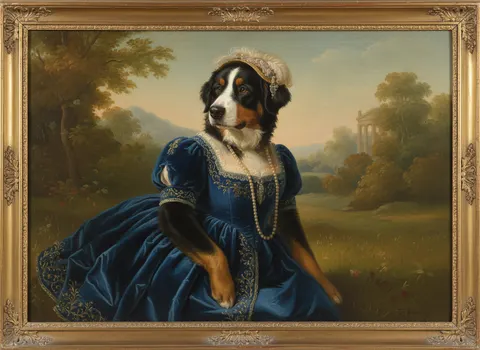
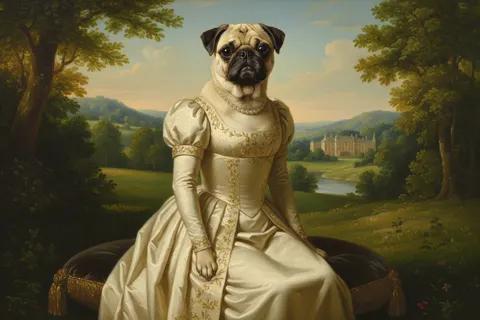
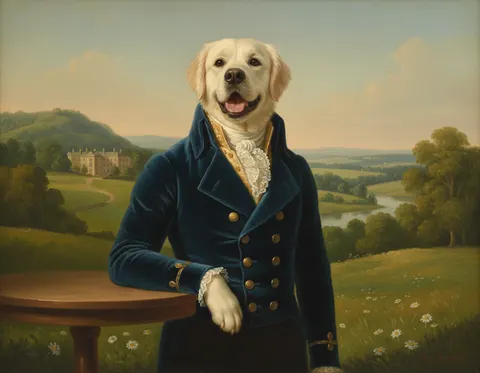
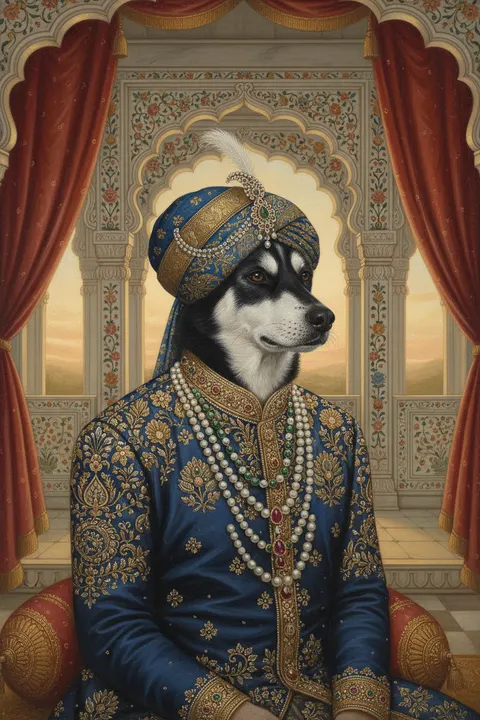
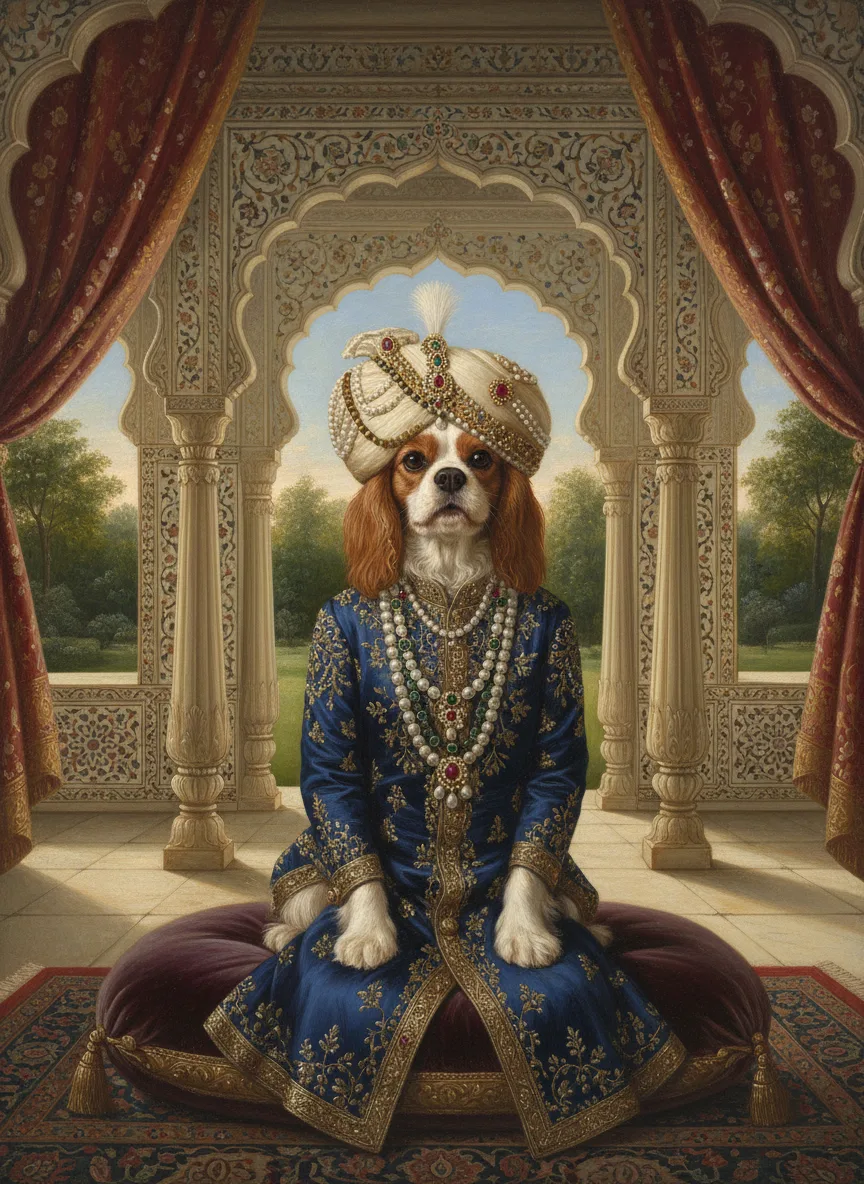
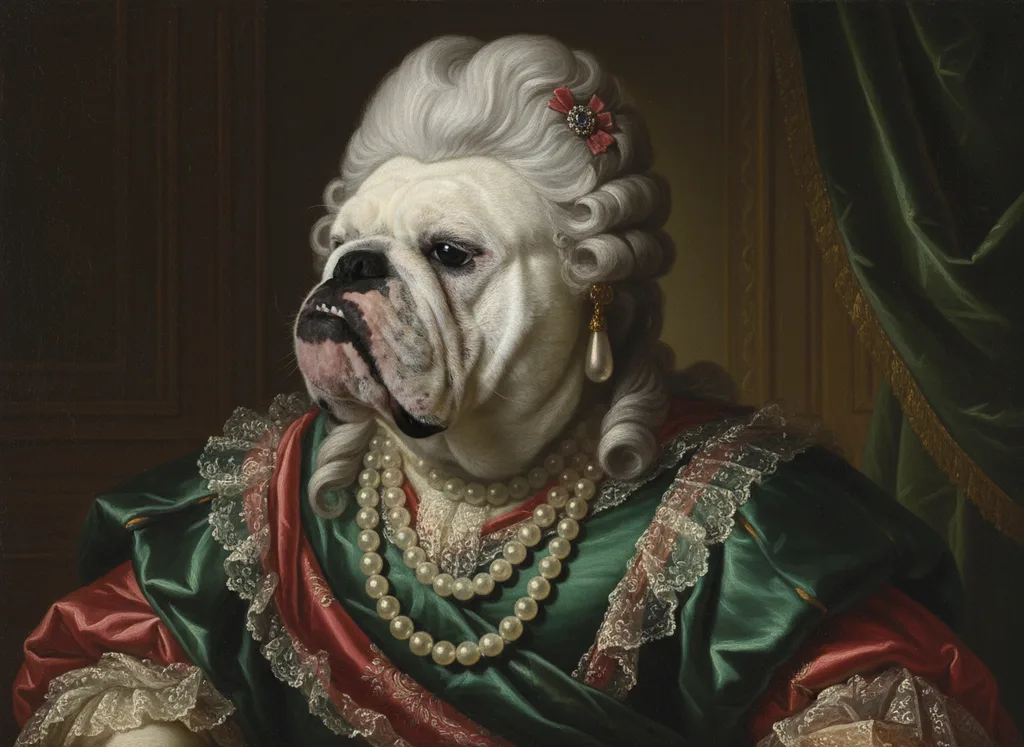
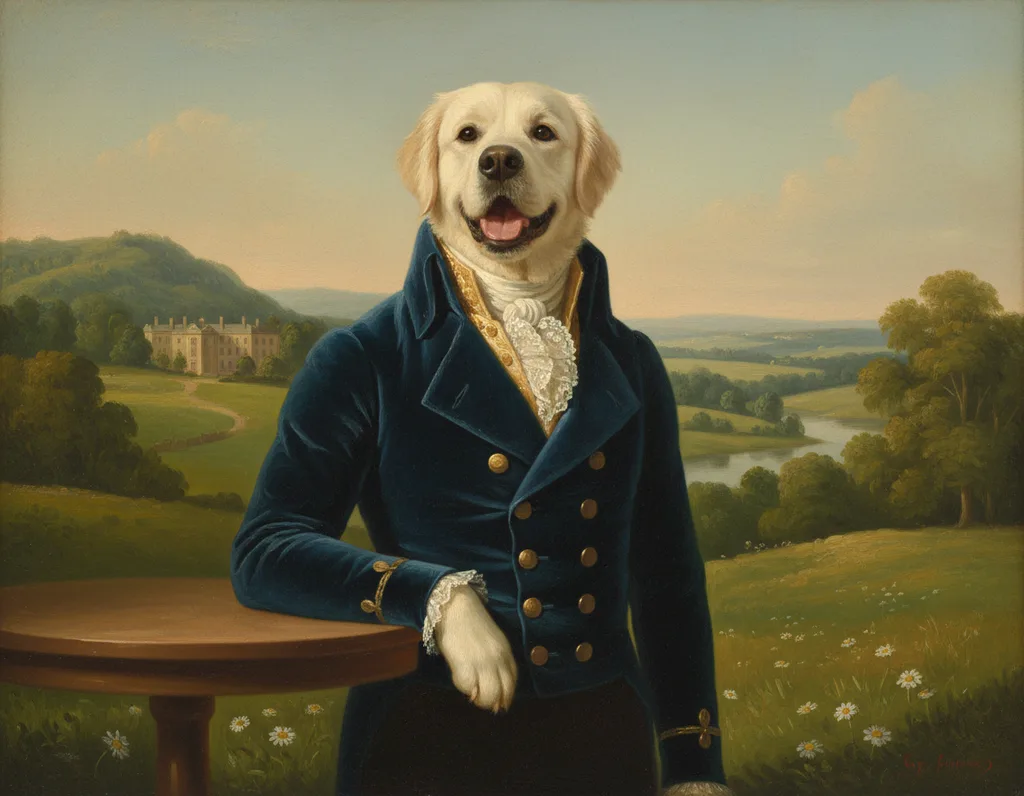
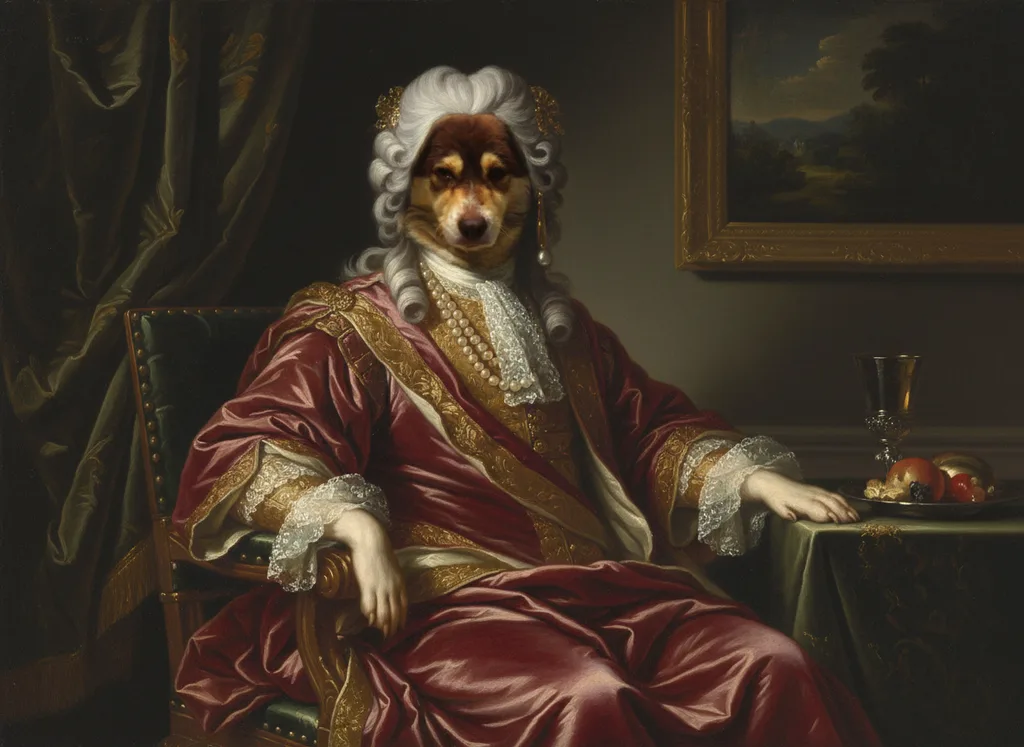
Purrealism offers 15 royal portrait styles: nine from Indian royal courts and six from European history, including Renaissance Royal, Baroque Aristocrat, Regency Era and Victorian Noble. The European style names come from periods of European history, and the painters in this guide can help you pick a period you like. If Titian's spaniel or van Eyck's small pet appeals to you, look at the Renaissance Royal style. If Landseer's Newfoundlands and Maud Earl's champions are more to your taste, look at Victorian Noble. The history behind the European styles themselves is in our guide to European royal portraits, and the lives of real royal dogs are in royal pets in history.
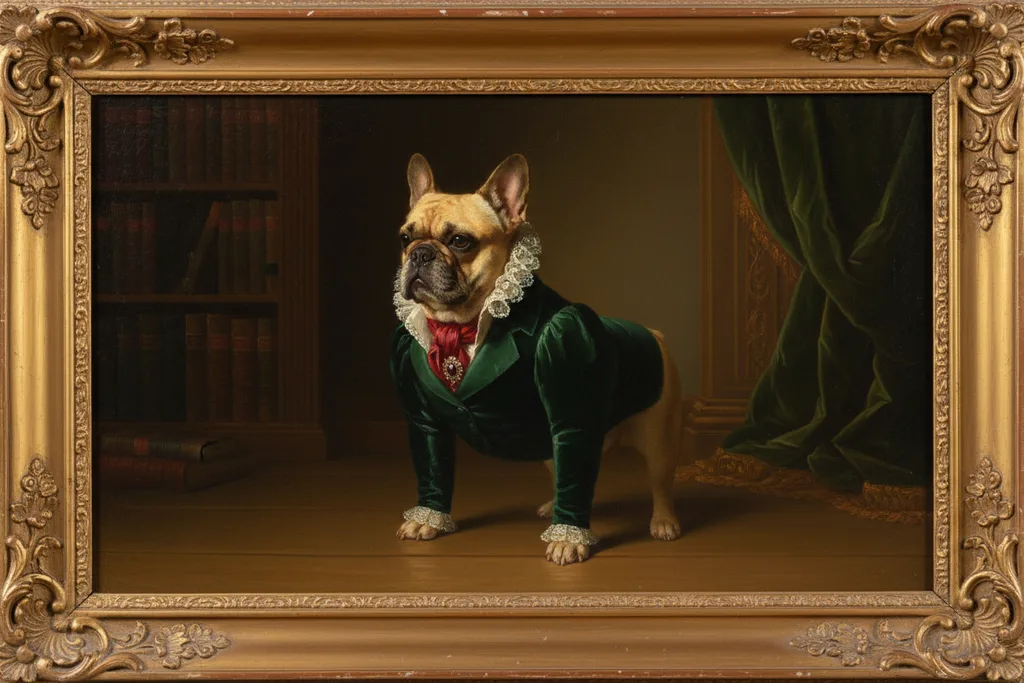
The breed finder further down this page lets you choose dogs or cats, then a breed from the studio examples, and shows every studio portrait of that breed with its style. Tapping one starts a portrait in that style. The cover of this page shows a French Bulldog from the studio examples in the Victorian Noble style.
Whatever style you choose, the old painters show what makes a dog portrait work: a real animal with its own face, markings and way of standing. Start with a clear photo of your dog in daylight, taken at its eye level, with its eyes in focus. The portrait studio takes one photo of up to 5 MB. You can see more finished portraits in the gallery, and our guide on how to choose a royal portrait style helps you match a style to your dog's coat and character.
Try it
Find your breed in the gallery
Choose dog or cat, then a breed, to see every studio portrait of that breed and the style each one uses.
29 portraits. Tap one to start a portrait in its style.
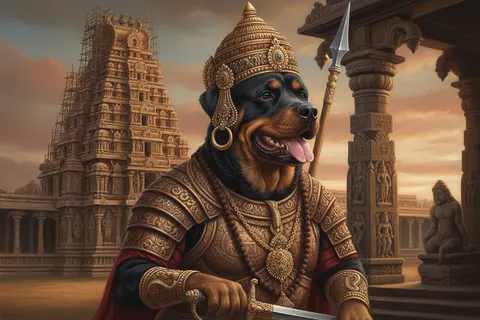
- Chola WarriorRottweiler
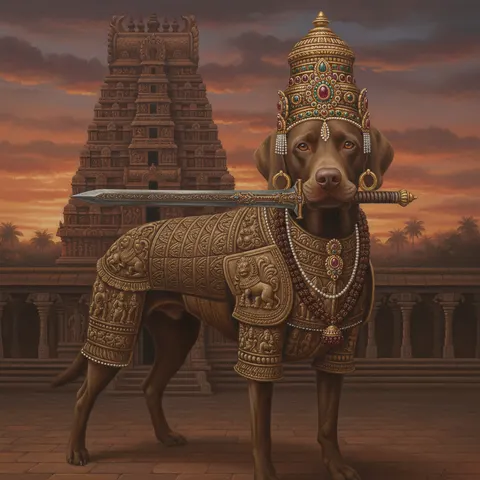
- Chola WarriorVizsla and Labrador Mix
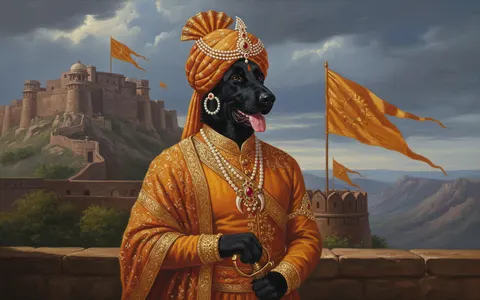
- Maratha KingGerman Shepherd
- Maratha KingPomeranian
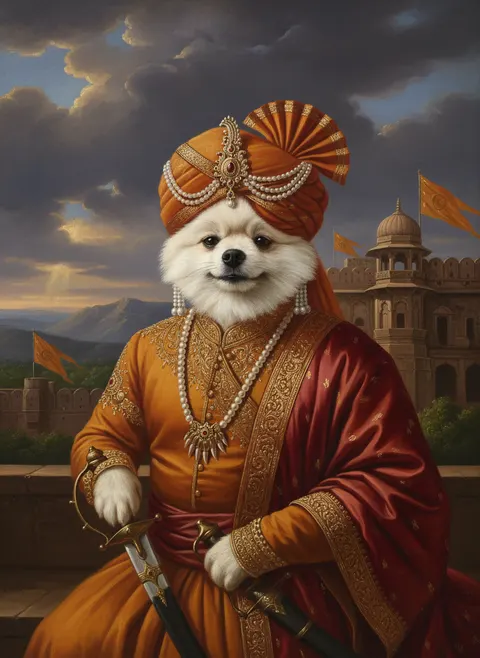
- Maratha KingShih Tzu
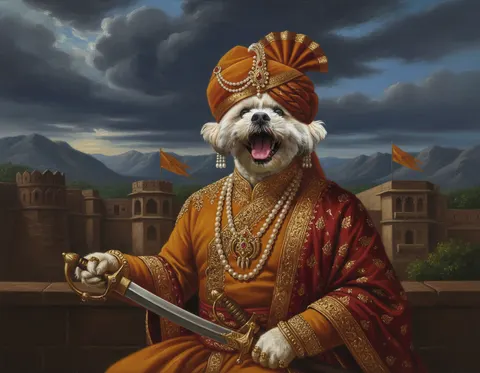
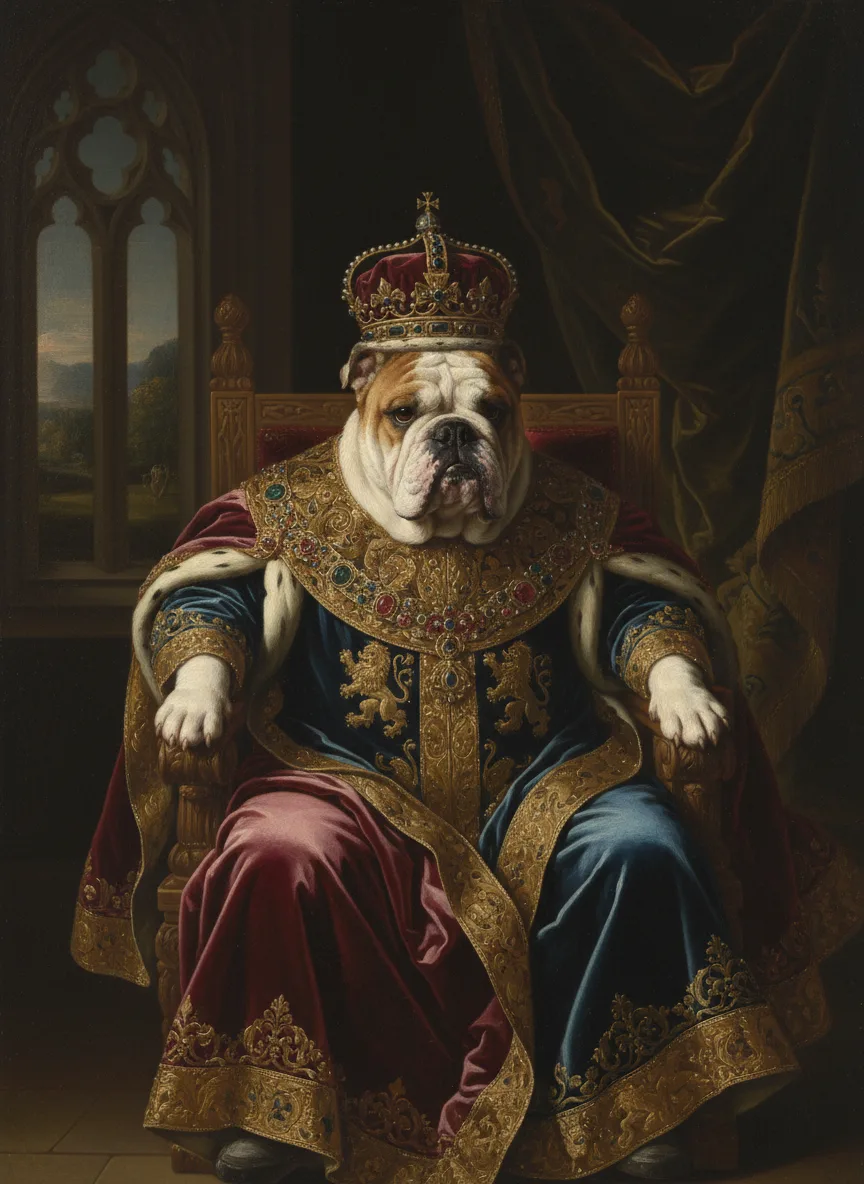
- Renaissance RoyalEnglish Bulldog
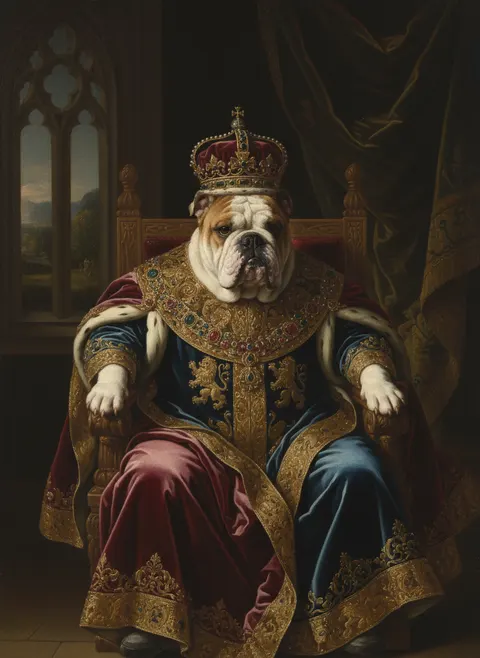
- Victorian NobleBeagle-Harrier
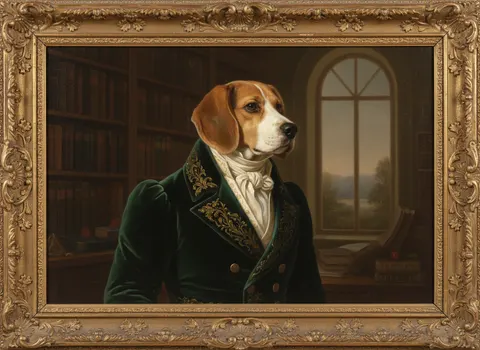
- Victorian NobleGerman Shepherd
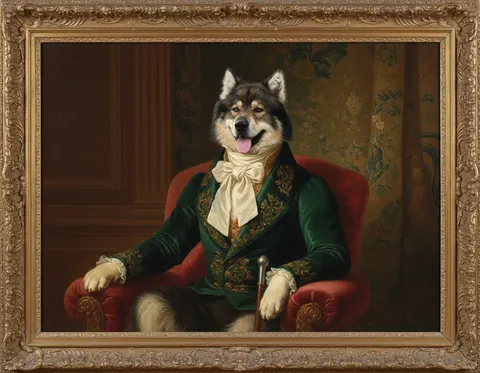
- Victorian NobleFrench Bulldog
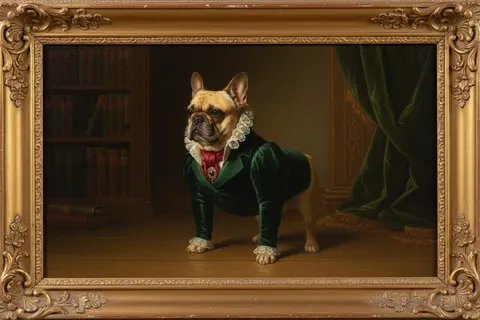
- Victorian NobleWeimaraner
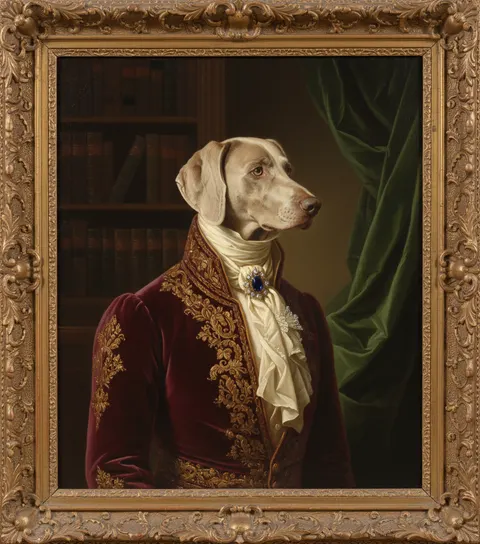
- Military GeneralSamoyed
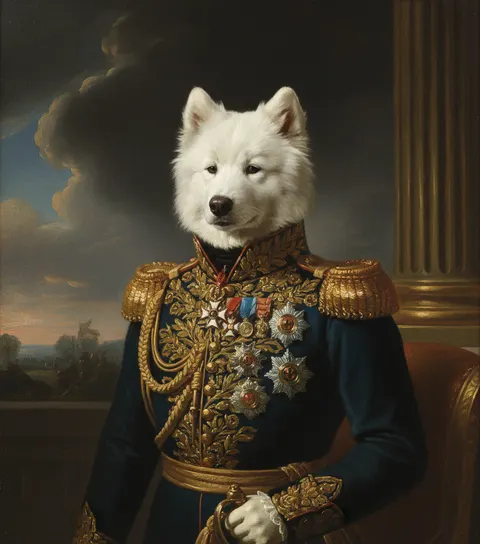
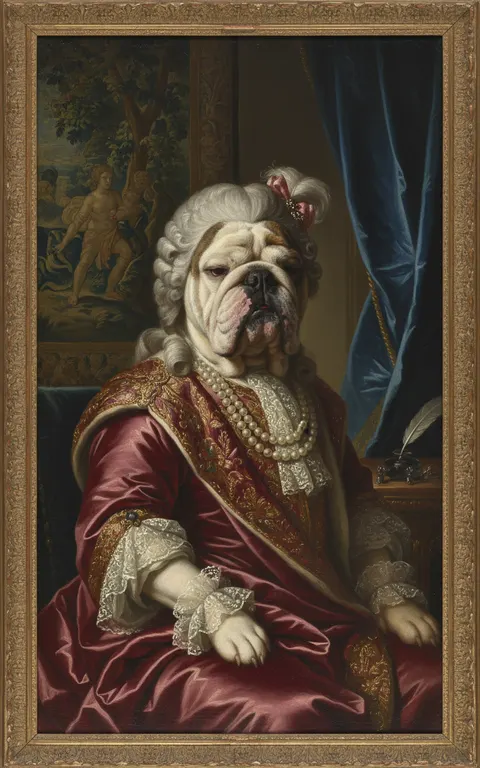
- Baroque AristocratEnglish Bulldog
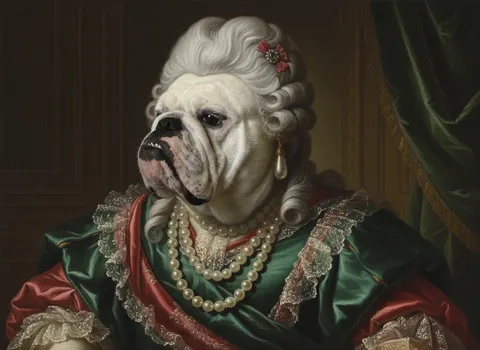
- Baroque AristocratEnglish Bulldog
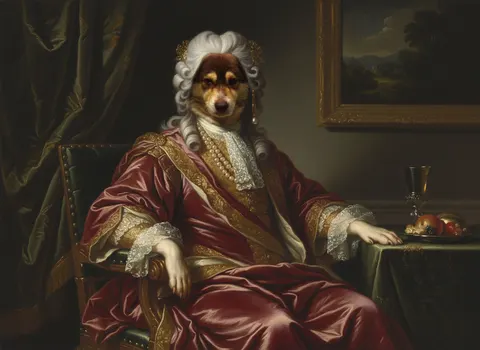
- Baroque AristocratAustralian Shepherd
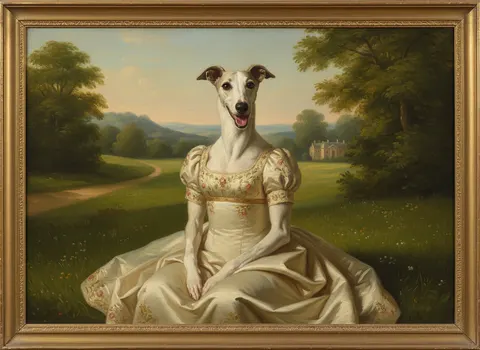
- Regency EraWhippet
- Regency EraBernese Mountain Dog
- Regency EraPug
- Regency EraGolden Retriever
- Indian RoyaltyCorgi and Husky Mix
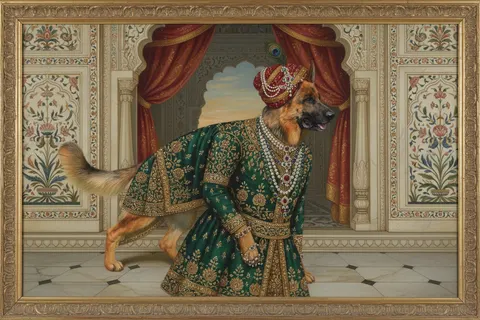
- Indian RoyaltyGerman Shepherd
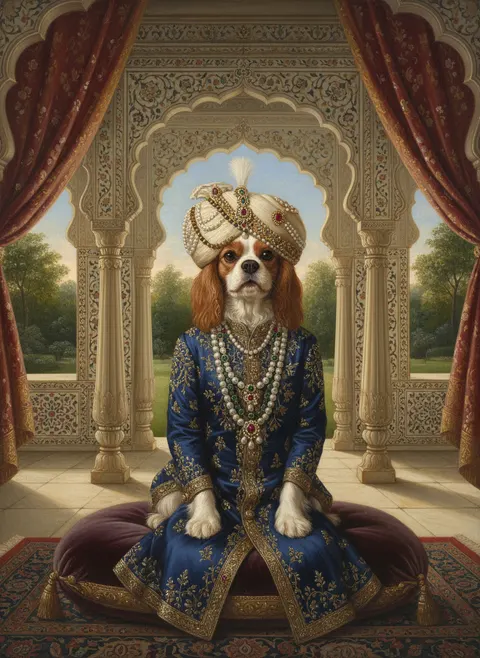
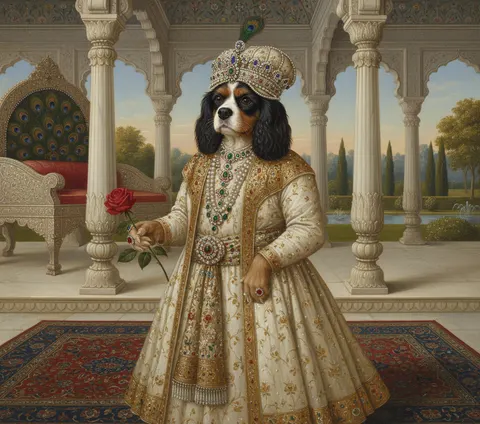
- Indian RoyaltyCavalier King Charles Spaniel
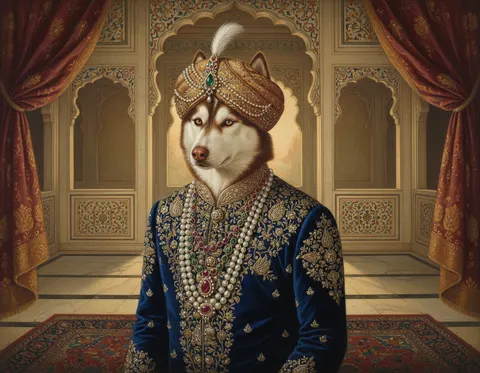
- Indian RoyaltySiberian Husky
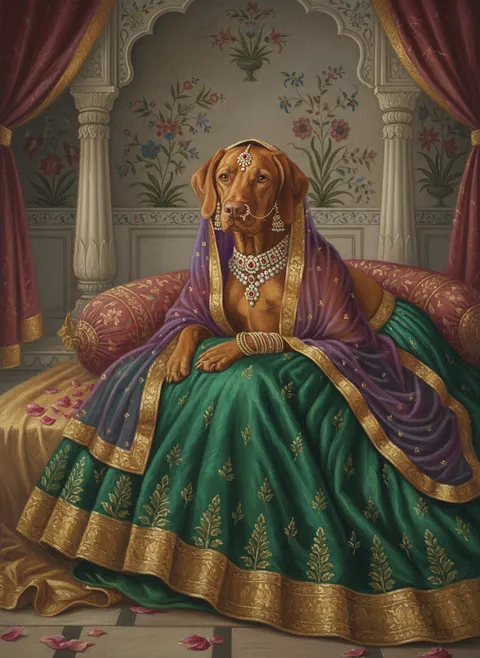
- MaharaniDog
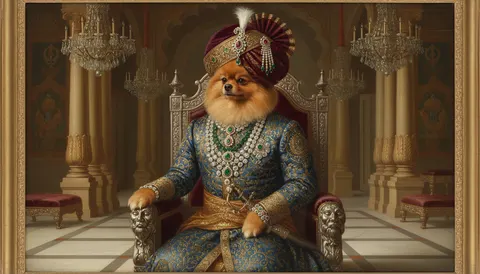
- Patiala RoyaltyPomeranian
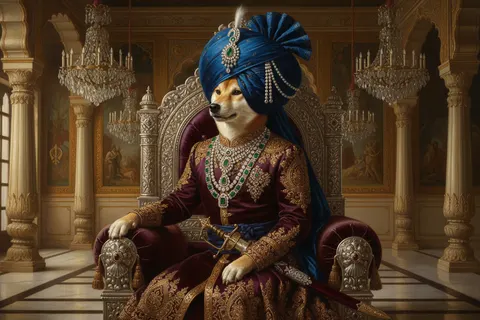
- Patiala RoyaltyShiba Inu
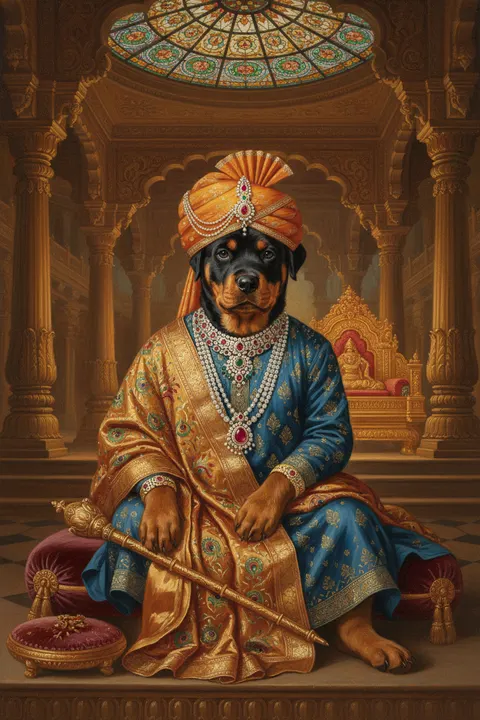
- Mysore RoyalRottweiler
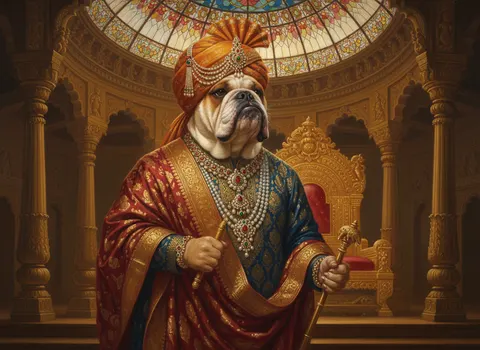
- Mysore RoyalEnglish Bulldog
- Mughal EmperorCavalier King Charles Spaniel
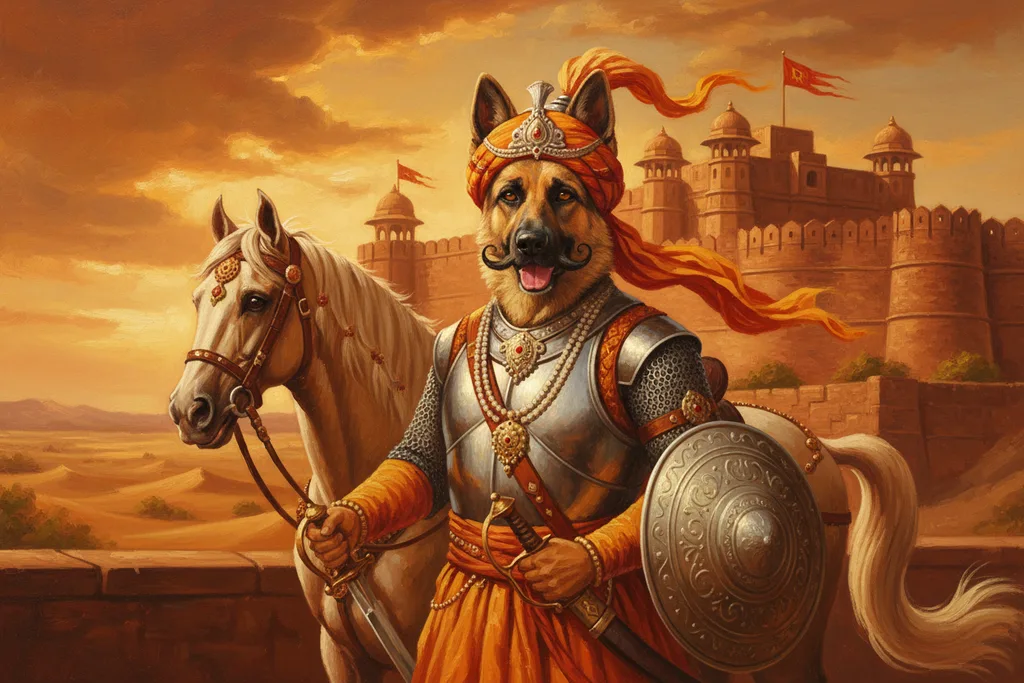
- Rajput WarriorGerman Shepherd
Your breed is not listed? You can choose any of the 15 styles for any dog or cat. See the full gallery.
Start a portraitEvery page in this guide, by topic
Start here
What dogs mean in paintings: loyalty, saints, hunts, grief and politics
How to read a dog in an old painting: the faithful pet, the dogs of Saint Roch and Saint Dominic, hunting saints, Diana's hounds, a mourner and a political dog.
The dog in the Arnolfini Portrait: van Eyck's small pet up close
What the National Gallery's research says about the small dog in van Eyck's Arnolfini Portrait of 1434: its breed, its colours, and whether it is a symbol.
Courts and hunts
Titian's dogs: hounds, lapdogs and a spaniel in a Venetian family portrait
The dogs in Titian's paintings at the National Gallery: Actaeon's hounds, Diana's lapdog, Adonis's hunting dogs and a boy's spaniel, with where to see them.
Oudry and Desportes: the painters of the French kings' hunting dogs
Desportes painted Louis XIV's favourite hounds and Oudry painted Louis XV's, with each dog's name in gold. Who they were and where to see the dogs today.
Goya's dogs: royal hunts, tapestry designs and the dog in the Black Paintings
Goya painted dogs from 1775 to the 1820s: hunting dogs for royal tapestries, a king's dog with a named collar, a duchess's poodle and the Half-Submerged Dog.
Homes, streets and satire
Dogs in Dutch Golden Age paintings: family portraits, forgeries and the Night Watch dog
Dogs in 17th-century Dutch paintings at the Rijksmuseum: a greyhound in a boy's portrait, family pets, a performing dog, a forgery and Rembrandt's barking dog.
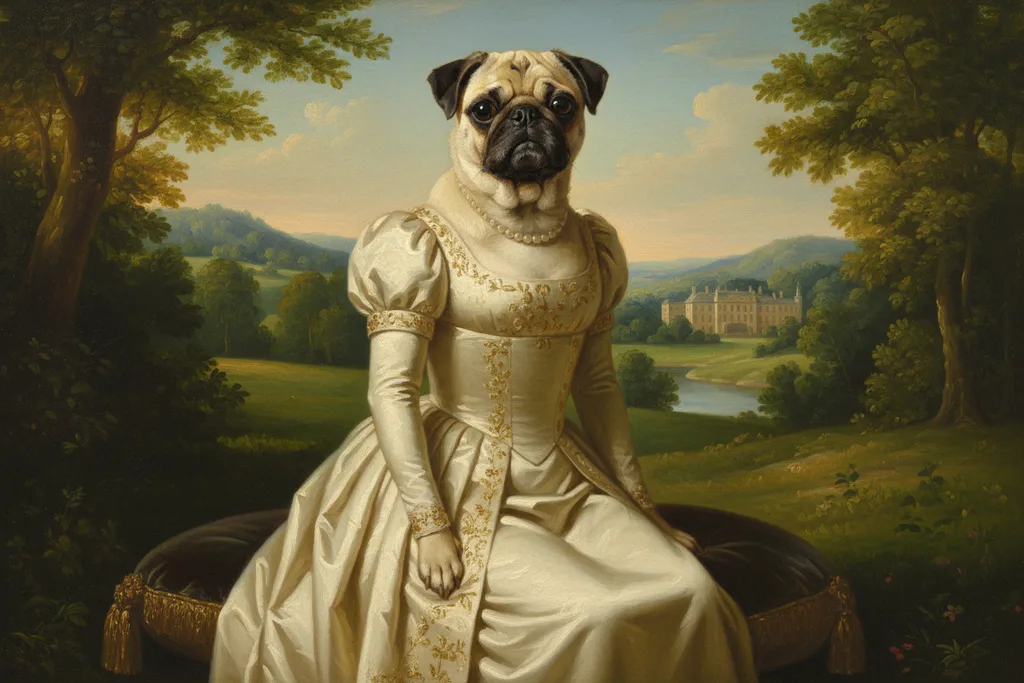
Hogarth and Trump: the painter, his pug and the dogs in his satires
William Hogarth painted himself with his pug, Trump, in 1745. The portrait, the porcelain Trumps that followed, and the dogs that comment in his satires.
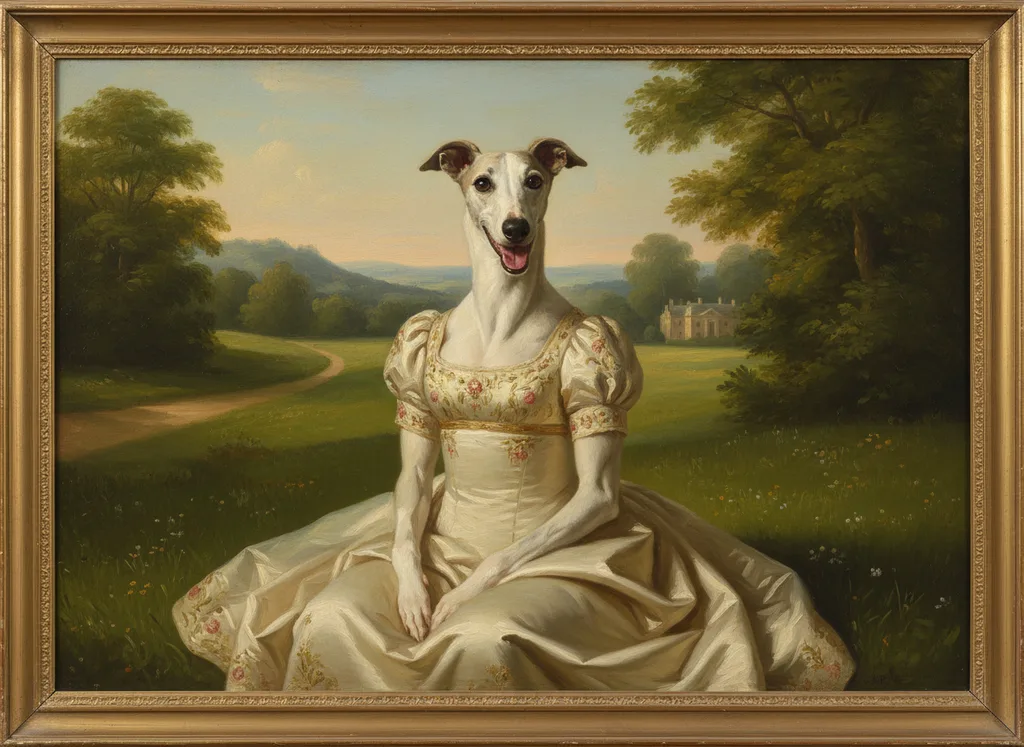
Thomas Gainsborough's dogs: gun dogs, lapdogs and a dog he never finished
Why Thomas Gainsborough put dogs beside the people he painted, from the gun dog in Mr and Mrs Andrews to Mary Robinson's companion, and what each dog tells you.
The Victorian dog portrait
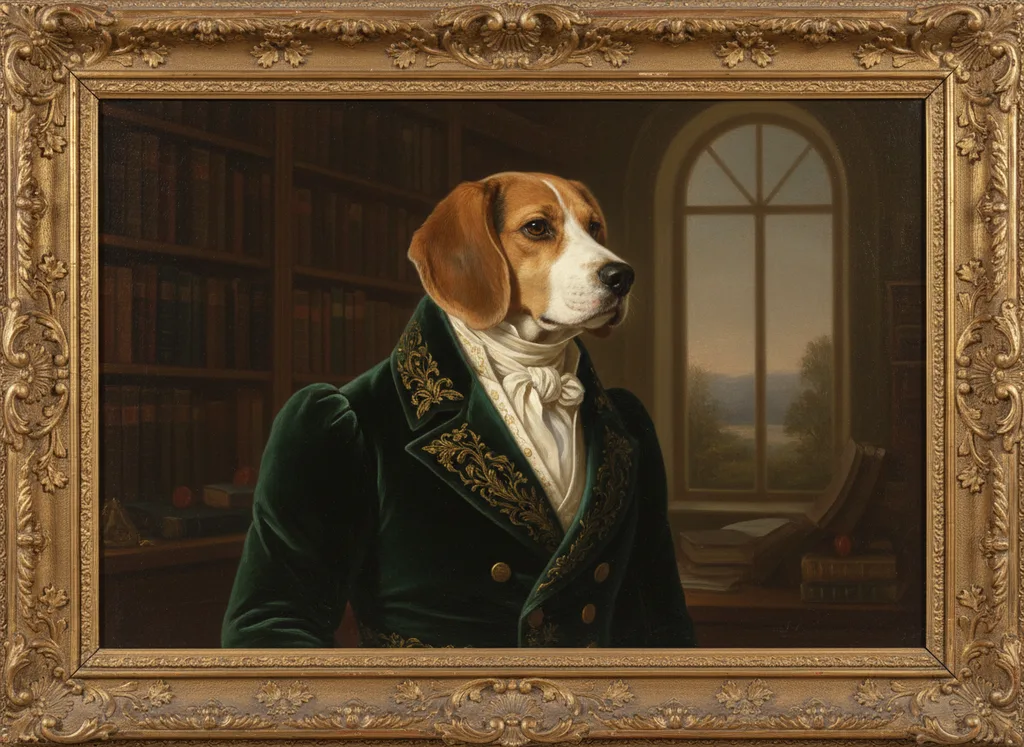
Edwin Landseer's dogs: the Victorian painter who gave animals human feelings
How Edwin Landseer learned dog anatomy as a boy, why his dogs look as if they think and feel, and where to see his dog paintings in London today.
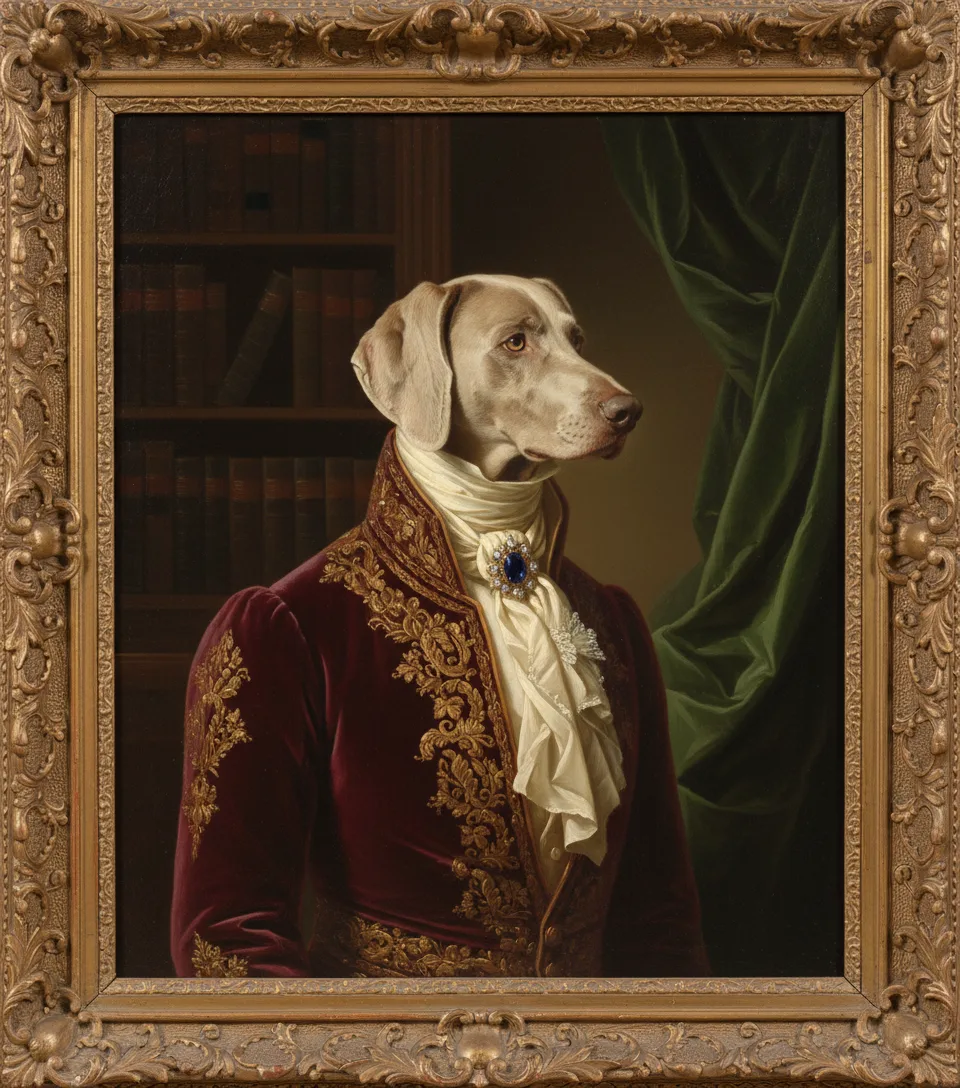
Victorian dog painters: dog shows, Maud Earl and the trade in dog portraits
How dog shows and the Kennel Club created a market for dog portraits in Victorian Britain, and how the Earl family and women painters such as Maud Earl met it.
Questions and answers
Which artists are known for painting dogs?
Artists known for painting dogs include Jean-Baptiste Oudry, whom Louis XV called his painter of dogs, and Edwin Landseer, whom the Victoria and Albert Museum calls one of the most famous and successful painters of his century. The Royal Kennel Club calls Maud Earl one of the most celebrated animal painters of her generation. Titian, Goya and Gainsborough also painted many dogs.
Why do old portraits include dogs?
Old portraits include dogs to say something about the sitter, the person being painted. The National Gallery in London says a dog may stand for a couple's fidelity, as in the Arnolfini Portrait of 1434. In Gainsborough's Mr and Mrs Andrews, a gun dog goes with a landowner who shoots. The Wallace Collection says the dog beside Mary Robinson alludes to her loyalty.
Did kings commission portraits of their dogs?
French kings commissioned portraits of their dogs. The Louvre says Louis XIV ordered four portraits of his favourite female hunting dogs from Alexandre-François Desportes in 1702 and four more in 1714. The château de Fontainebleau says Jean-Baptiste Oudry painted a series of Louis XV's dogs between 1725 and 1732, with each dog's name written in gold.
Were dogs in old paintings painted from life?
Some dogs in old paintings were painted from life and some were copied. The National Gallery in London says the boy holding a spaniel in Titian's The Vendramin Family seems to have been painted from life. The Rijksmuseum announced in 2025 that Rembrandt based the dog in The Night Watch on a drawing made in 1619 by Adriaen van de Venne.
Have dog breeds changed since they were painted in old portraits?
Dog breeds have changed since old portraits were painted. The Victoria and Albert Museum says Hogarth's pug, Trump, shown in porcelain figures of 1747 to 1750, had a much longer muzzle than pugs today. The Victorian Web says the white Newfoundland with a black head, normal in Landseer's time, lost favour by 1870 and became known as the Landseer type.
Which London museums show old paintings of dogs?
Several London museums show old paintings of dogs. The National Gallery has works by van Eyck, Titian, Hogarth and Gainsborough. The Victoria and Albert Museum holds many of Edwin Landseer's dog paintings, given by John Sheepshanks in 1857. The Wallace Collection owns Gainsborough's Mary Robinson with her dog, and the Royal Kennel Club Art Gallery in Mayfair opens by appointment.
How did dog shows change dog painting?
Dog shows created a demand for accurate portraits of named, pedigree dogs. Philip Howell, writing for the BRANCH history website, says the first dog show was held at Newcastle upon Tyne in June 1859 and the Kennel Club followed in 1873. Painters such as George Earl, who joined the Kennel Club in 1879, and his daughter Maud Earl painted breed champions.
What dog breeds appear in famous old paintings?
Many breeds appear in famous old paintings. The National Gallery's catalogue links the Arnolfini dog to the family of the Brussels griffon. Titian painted a spaniel, Oudry painted Louis XV's black spaniels Cadet and Hermine, and Goya painted mastiffs. Landseer painted Newfoundlands, Hogarth painted his pug, and Maud Earl painted King Edward VII's wire fox terrier, Caesar.
Can a pet portrait today follow the old dog painters?
A pet portrait today can follow the old dog painters by treating one named animal as the subject, as Oudry did when he wrote each royal dog's name in gold. Purrealism offers 15 royal portrait styles, including European styles such as Renaissance Royal, Baroque Aristocrat, Regency Era and Victorian Noble. The portrait starts from one photo of your pet, up to 5 MB.
What does the breed gallery finder on this page do?
The breed gallery finder on this page helps you see real results before you choose. You pick dogs or cats, then a breed from Purrealism's studio examples, and it shows every studio portrait of that breed with its style. Tapping one of the portraits starts a portrait of your own pet in that same style, in the Purrealism portrait studio.
Sources
- Dogs, The National Gallery, London. Accessed September 29, 2026.
- The Arnolfini Portrait, Jan van Eyck, The National Gallery, London. Accessed September 29, 2026.
- The Arnolfini Portrait (catalogue entry by Lorne Campbell, 1998, updated 2021), The National Gallery, London. Accessed September 29, 2026.
- Tobias and the Angel, Workshop of Andrea del Verrocchio, The National Gallery, London. Accessed September 29, 2026.
- The Vendramin Family, Titian, The National Gallery, London. Accessed September 29, 2026.
- The Death of Actaeon, Titian, The National Gallery, London. Accessed September 29, 2026.
- Original drawing of the dog in The Night Watch discovered, Rijksmuseum. Accessed September 29, 2026.
- Portrait of Martinus Alewijn, Dirck van Santvoort, Rijksmuseum. Accessed September 29, 2026.
- Boy Fleaing a Dog, copy after Gerard ter Borch, Rijksmuseum. Accessed September 29, 2026.
- Diane et Blonde, chiennes de la meute de Louis XIV, chassant, Musée du Louvre. Accessed September 29, 2026.
- Perle et Ponne, chiennes de la meute de Louis XIV, Musée du Louvre. Accessed September 29, 2026.
- Exposition Cave Canem ! Jean-Baptiste Oudry et les chiens de Louis XV, Château de Fontainebleau. Accessed September 29, 2026.
- Cadet et Hermine peint par Jean-Baptiste Oudry rejoint les collections du château, Château de Fontainebleau. Accessed September 29, 2026.
- The Painter and his Pug, William Hogarth, The National Gallery, London. Accessed September 29, 2026.
- Hogarth's Dog, Trump, Chelsea porcelain factory after Louis-François Roubiliac, Victoria and Albert Museum. Accessed September 29, 2026.
- Mr and Mrs Andrews, Thomas Gainsborough, The National Gallery, London. Accessed September 29, 2026.
- Mrs Mary Robinson and her Portraits, The Wallace Collection. Accessed September 29, 2026.
- Charles III Hunting (Carlos III cazador), Fundación Goya en Aragón. Accessed September 29, 2026.
- Dogs on the Leash (Perros en traílla), Fundación Goya en Aragón. Accessed September 29, 2026.
- María del Pilar Teresa Cayetana de Silva, XIII Duchess of Alba, Fundación Goya en Aragón. Accessed September 29, 2026.
- The Old Shepherd's Chief Mourner, Edwin Henry Landseer, Victoria and Albert Museum. Accessed September 29, 2026.
- Ecorche drawing of a dog's leg, Edwin Henry Landseer, Victoria and Albert Museum. Accessed September 29, 2026.
- Lion: A Newfoundland Dog, Edwin Henry Landseer, Victoria and Albert Museum. Accessed September 29, 2026.
- A Distinguished Member of the Humane Society, by Sir Edwin Landseer, R.A., The Victorian Web. Accessed September 29, 2026.
- Philip Howell, June 1859/December 1860: The Dog Show and the Dogs' Home, BRANCH: Britain, Representation and Nineteenth-Century History. Accessed September 29, 2026.
- Kennel Club Art Gallery exhibition by the Earl Family, The Royal Kennel Club. Accessed September 29, 2026.
- Royal Kennel Club Art Gallery showcases three centuries of women artists who turned dog portraiture into a profession, The Royal Kennel Club. Accessed September 29, 2026.
- Top Dogs, Our Town (New York). Accessed September 29, 2026.
- Quarterly Newsletter Summer 2026 (Where's Caesar?, by Alan Fausel), The American Kennel Club Museum of the Dog. Accessed September 29, 2026.
Short reads on this topic
Articles from Purrspectives that answer one question each.
Dog years to human years: the chart by size, and the DNA formula
A 1-year-old dog is closer to 15 or 30 in human years than to 7. The AKC chart by size, the 2020 DNA formula, and a dog's life stages, explained simply.
Pug history: from Chinese emperors to the House of Orange
Pugs began as companions of Chinese emperors, reached Holland on Dutch trading ships and became the dog of the House of Orange. Their history, art and health.
Persian cat history: where the breed came from, its first cat show, coat and care
Persian cat history from a cat brought to Italy in 1626 to the 1871 Crystal Palace show, plus face types, coat colours, grooming and how to photograph one.