Royal pets in history
Royal pets in history: the real dogs and cats of kings, queens and emperors
The real dogs and cats of pharaohs, emperors, tsars, kings and queens, what the records say about them, and the breeds that carry their royal history today.
By Purrealism
This guide follows the real animals of royal courts, from the cats of ancient Egypt to the corgis of Elizabeth II. Each page looks at one court or one breed and asks what the records actually say: the diaries, letters, memoirs, palace records and kennel club files written by people who knew the animals. The guide keeps to the animals' lives. Paintings of royal people belong to our guides on Indian court painting and European royal portraits.
Why real royal animals matter for a pet portrait
Purrealism paints dogs and cats in 15 royal styles, from Maharaja and Mughal Emperor to Renaissance Royal and Regency Era. Each style dresses your pet as a ruler of a real court. Those courts also had real animals, and they left a record of how rulers lived with them.
The record is often personal. A Prussian king writes to his sister that his dog has died. A Mughal emperor gets up at dawn to watch his tame cranes. A queen keeps her corgis' food prepared in the palace kitchen and feeds them herself. Reading these records makes a royal portrait of your own pet less of a costume and more of a link to a long habit: people in power loving their animals and wanting them remembered.
Royal animals through history
Ancient Egypt
Egypt's cats helped make the modern house cat. A study of ancient cat DNA in Nature Ecology and Evolution found that cats from both the Near East and Egypt contributed to the domestic cat, and that the Egyptian cat spread widely in the classical period along trade routes. The Glencairn Museum says the Egyptian word for cat was miu or miut, and that the word for dog, iwiw, may have sounded like a bark.
The Greek historian Herodotus described how Egyptians mourned their animals. When a house cat died a natural death, he wrote, the people of the house shaved their eyebrows. When a dog died, they shaved the head and the whole body. Dead cats were taken to the town of Bubastis to be embalmed and buried, and female dogs were buried in sacred coffins in their own towns. The lives of these animals are covered in cats in ancient Egypt and the dogs of the pharaohs.
China
The Royal Kennel Club says short-legged, short-faced dogs of the Pekingese type can be traced in China to the 8th century, and that the breed was a favourite in the imperial palace in Peking, from which it takes its name. When European forces sacked the Summer Palace in Peking in 1860, small palace dogs were taken to Britain. The club counts four; JSTOR Daily, reporting the work of the cultural studies scholar Sarah Cheang, says five, and that one, named Looty, was given to Queen Victoria. The story of the palace dogs and the empresses who kept them is in the Pekingese and the Chinese emperors.
Japan, Korea and Siam
In Japan, the veterinary scientist and cat historian Iwazaki Eiji tells Nippon.com that the diaries of Emperor Uda, who reigned from 887 to 931, include detailed entries on a black cat he received from his father at the age of 17. Iwazaki adds that the Pillow Book of Sei Shōnagon describes Emperor Ichijō giving his cat a court rank.
In Korea, the Korea Heritage Service tells the story of King Sukjong of Joseon and his golden cat, Geummyo, recorded in a poem by Kim Si-min. The cat was the only creature allowed to eat near the king, and it slept beside the throne on cold nights. After the king died, the cat refused food, and the queen dowager had it wrapped in silk and buried beside the road to his tomb.
In Siam, now Thailand, manuscripts called Tamra Maew, or cat treatises, described lucky and unlucky types of cat. The Public Domain Review says such treatises circulated from the Ayutthaya period, which ended in 1767, and that the surviving copies date from after that year. The Cat Fanciers' Association says the first Siamese cat in the United States was a gift to President Rutherford B. Hayes from the American consul in Bangkok in 1878. These courts share the page on royal cats of Japan, Korea and Siam.
Mughal India and the maharajas
The Mughal emperor Jahangir wrote his own memoirs, which Alexander Rogers translated into English. In them he describes a pair of tame sarus cranes that he named Laila and Majnun. When a servant told him the birds were about to mate, he hurried out at dawn to watch. The memoirs also record gifts of animals: the ruler of Iran sent him nine large European hunting dogs that he had asked for. Our page on Jahangir and his animals reads these entries closely.
India also has its own hunting breeds. In 2020 India's Prime Minister named the Mudhol hound, Rajapalayam, Chippiparai and Kombai among the country's fine native breeds, and said the Army, CISF and NSG had trained Mudhol hounds. That September, the National Bureau of Animal Genetic Resources registered the Mudhol hound, the Rajapalayam and the Chippiparai as India's first three recognised dog breeds. Their royal history is on the page about Indian royal dog breeds.
Stuart England
The diarist Samuel Pepys watched Charles II play with his dog through a council meeting on 4 September 1667, and wrote that the king was not minding the business. When Charles died in 1685, John Evelyn wrote in his diary that the king took delight in having little spaniels follow him and sleep in his bedchamber. The Royal Kennel Club says toy spaniels became well established at the courts of Charles I and Charles II. The full record is on Charles II and his spaniels.
Prussia
Frederick the Great of Prussia kept small greyhounds all his life and wrote about them. When his favourite, Biche, died at the end of 1751, he wrote to his sister Wilhelmine that he was ashamed a dog had moved him so deeply, and that it was better to feel too much than to be hard. In 2005 the Potsdamer Neueste Nachrichten reported that eleven sandstone plates with the names of his greyhounds lie on the top terrace at Sanssouci. See Frederick the Great's greyhounds.
Russia
The Royal Kennel Club calls the borzoi the wolfhound of the Imperial Russian aristocracy. In 1903 the American breeder Joseph Thomas visited the tsar's kennels at Gatchina and counted 80 grown borzois. The tsars also kept palace pets. The Saint Petersburg branch of the Russian Academy of Sciences says Peter the Great's dogs Tiran and Lisetta, and his horse, also named Lisetta, stand in the Zoological Museum in Saint Petersburg. The Tsarskoe Selo State Museum says three of Catherine the Great's Italian greyhounds are buried behind the Pyramid in the Catherine Park. Read more in the borzoi and the tsars.
Britain in the 1900s
Elizabeth II received a corgi named Susan for her 18th birthday in 1944. The Royal Kennel Club says Susan founded the line of Windsor Pembroke corgis, which ran for 15 generations. The Kennel Club links the breed's numbers to her reign: registrations peaked at nearly 9,000 puppies in 1960, seven years after her coronation. Her dogs, and the Welsh cattle dog behind them, are on the page about Elizabeth II's corgis. Queen Victoria's dogs have their own article: Queen Victoria and her dogs.
Two kinds of royal animal: the hunting pack and the palace pet
Royal animals did two different jobs, and the records treat them differently.
The first job was the hunt. Hunting dogs lived in kennels, often in large numbers, and were bred for speed, strength and courage. Joseph Thomas wrote that the Grand Duke Nicholas's hunt at Perchino kept 300 borzois in 1904, and that each rider led a team of two male borzois and a female. Jahangir asked the ruler of Iran for large hunting dogs. These animals appear in the records in groups, by breed and by number.
The second job was companionship. Palace pets lived in the ruler's rooms, and the records give them names. Frederick's greyhounds slept in his bed, according to Franz Kugler's history of his reign. Charles II's spaniels had their puppies in his bedchamber, as Evelyn complained. Peter the Great sent written messages to his officers in the collar of his dog Tiran, the Russian Academy of Sciences says. A portrait of a pet belongs to this second tradition: one named animal, loved for itself.
How to read royal pet stories
Royal animals attract good stories, and some of them are not true. A few habits help separate the record from the legend.
Look for a witness from the time. Pepys and Evelyn saw Charles II's dogs with their own eyes. Frederick's letters about Biche are in his own words. A story that first appears a century later needs more care.
Watch for the word "legend". The Prussian Palaces and Gardens Foundation calls the story that Frederick the Great brought the potato to Prussia a legend, although visitors still leave potatoes on his grave. The American Kennel Club calls the story of the Blenheim spot, a thumb-shaped mark on a spaniel's head, folklore. Karl Rödenbeck's chronicle of Frederick's reign says the tale of Biche jumping onto the king's desk after her capture was disputed.
Do not assume a breed name proves ownership. The Royal Kennel Club says the King Charles spaniel got its name when King Edward VII asked for the royal link to be kept, long after Charles II died. The American Kennel Club says the spaniels of Charles II's time had longer muzzles than today's King Charles spaniel.
Compare the numbers. Sources often count differently. The Royal Kennel Club says four Pekingese came to Britain from Peking in 1860, while JSTOR Daily gives five. The American Kennel Club says Perchino held 130 adult borzois at its peak, while Joseph Thomas counted 300 borzois in the Grand Duke's hunt in 1904. Where two good sources disagree, our pages give both and say who said what.
Separate the animal from its picture. A painting shows what an artist and a patron wanted to show. This guide uses paintings only as evidence that an animal existed. The art itself belongs to our painting guides.
Royal animals at a glance
| Court | Ruler | Animals in the record | Main type of source | Page |
|---|---|---|---|---|
| Ancient Egypt | Pharaohs and their people | House cats and dogs | Greek historians, animal burials | Cats, dogs |
| Imperial China | Emperors and empresses | Pekingese and other palace dogs | Kennel club history, historians | Pekingese |
| Japan, Korea, Siam | Emperor Uda, Emperor Ichijō, King Sukjong | Palace cats | Diaries, court poems, cat treatises | Royal cats of Asia |
| Mughal India | Jahangir | Tame cranes, hunting dogs | The emperor's own memoirs | Jahangir |
| India today | Native hunting breeds | Mudhol hound, Rajapalayam, Chippiparai | Government breed register | Indian breeds |
| Stuart England | Charles II | Toy spaniels | Diaries of Pepys and Evelyn | Charles II |
| Prussia | Frederick the Great | Small greyhounds, horses | The king's own letters | Frederick |
| Russia | Peter the Great, Catherine the Great, the grand dukes | Borzois, Italian greyhounds | Museum records, a breeder's first-hand account | Borzoi |
| Britain | Elizabeth II | Pembroke corgis | Kennel club records | Corgis |
Choosing a royal portrait for your own pet
The history can help you choose a style. If your dog is a spaniel, a greyhound or a corgi, you may like a European style that matches the courts where those breeds lived, such as Baroque Aristocrat, Regency Era or Victorian Noble. If you are drawn to Jahangir's court or the maharajas' hunting dogs, the nine Indian styles, from Mughal Emperor to Rajput Warrior, come from those courts. Our article on how to choose a royal portrait style goes through the styles by coat colour and character.
Royal pets also had names and titles. Ichijō's cat held a court rank, and Frederick's greyhounds had names such as Biche, Alcmène and Thisbe. The royal title maker further down this page takes your pet's name, an optional street, town or house name, a title form and whether your pet is a dog or a cat, and shows four playful titles to copy for a card or a caption, with a button for more.
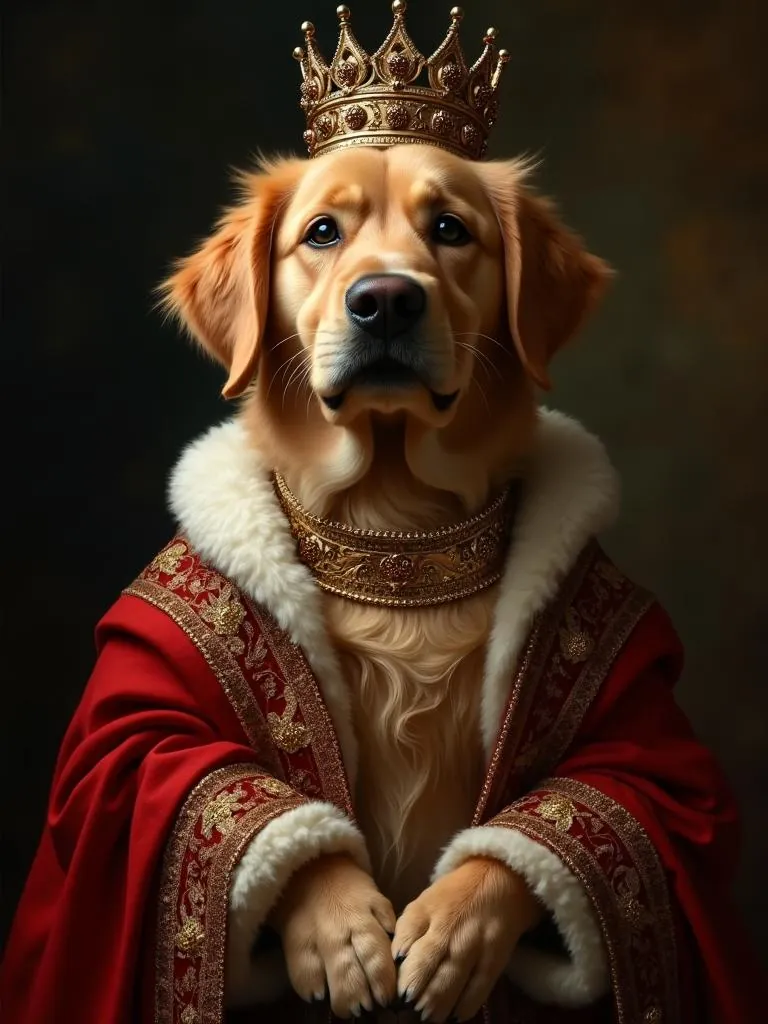
The cover of this guide shows a golden retriever wearing a royal crown and a red robe, one of the portraits in the gallery. When you are ready, the portrait studio takes one clear photo of up to 5 MB and lets you choose any of the 15 styles, as a digital download or an art print.
Try it
Royal title maker
Type your pet's name and get a royal title to use on a card, a caption or the back of a frame.
- Baron Biscuit the Wise, Keeper of the Sofa
- Lord Biscuit, Guardian of the Front Door
- His Majesty Maharaja Biscuit the Loud, Protector of the Treat Jar
- His Serene Highness Prince Biscuit, Lord of the Long Walk
Every page in this guide, by topic
Royal dogs of Europe
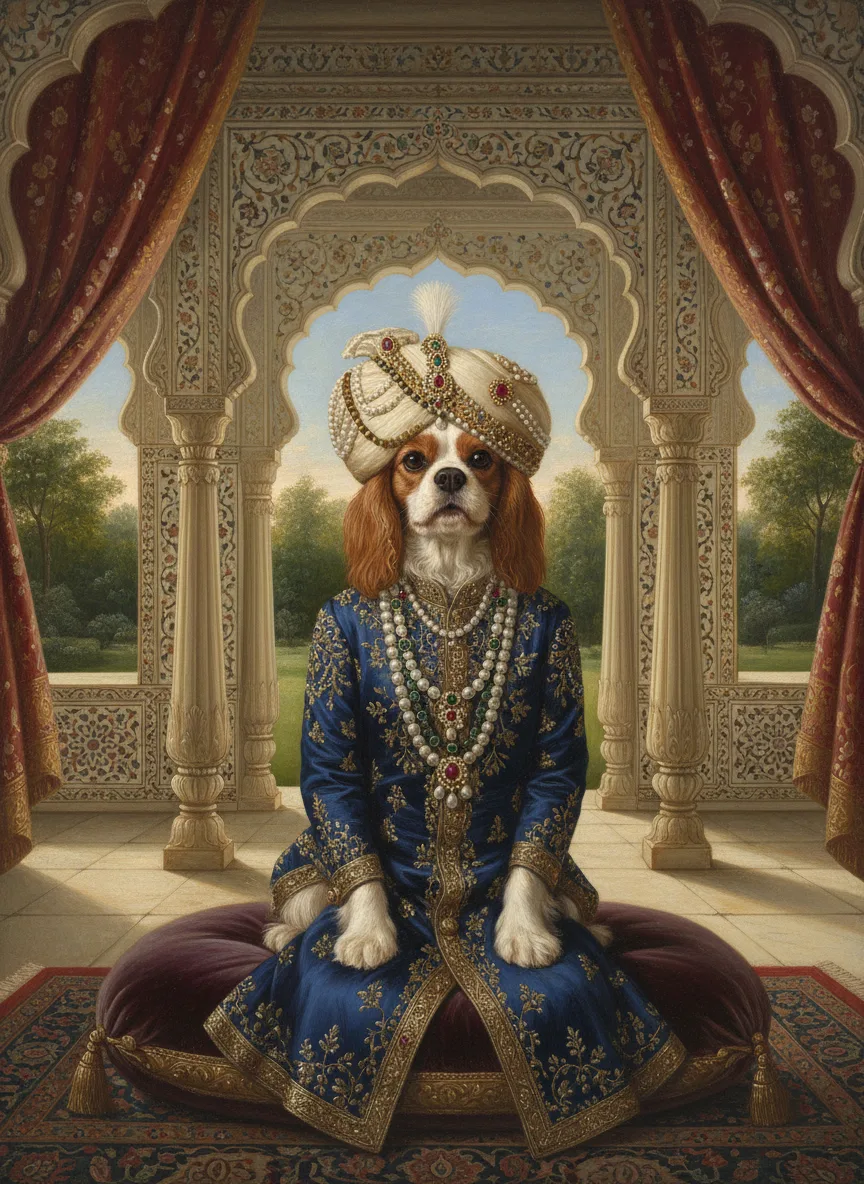
Charles II and his spaniels: what the diaries of Pepys and Evelyn record
What Samuel Pepys, John Evelyn and a 1660 lost-dog advertisement say about Charles II's dogs, and how his toy spaniels became two modern breeds.
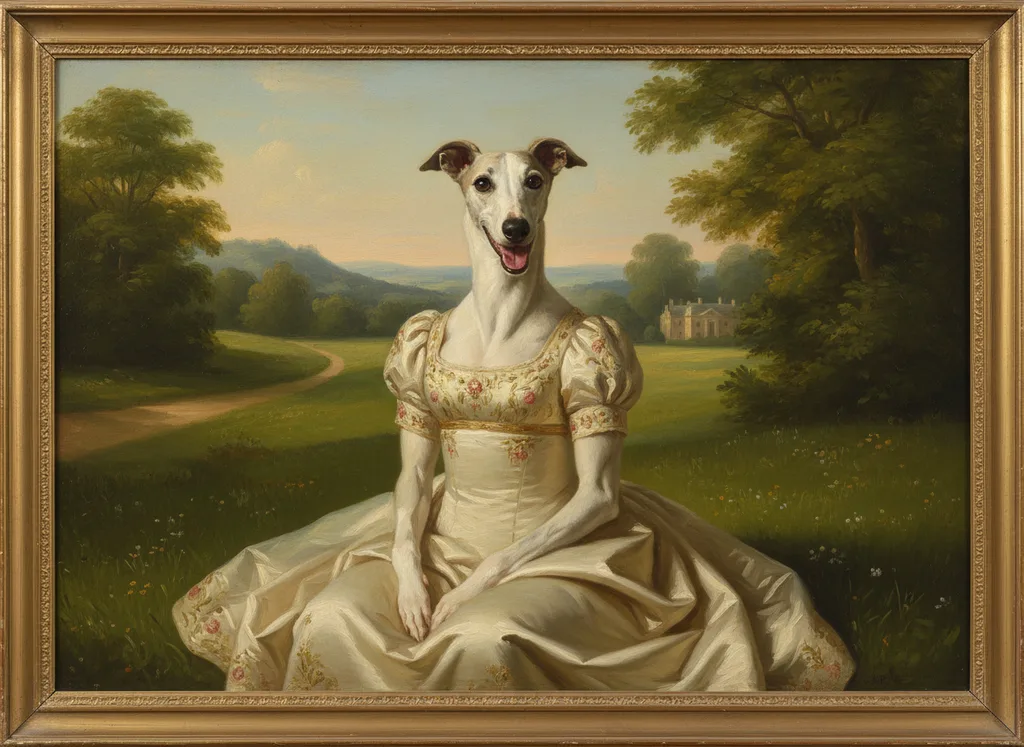
Frederick the Great's greyhounds: Biche, Alcmène and the dogs of Sanssouci
Frederick II of Prussia kept small greyhounds all his life. Letters from his court name Biche, Alcmène, Diane and Thisbé, and tell how they lived and died.
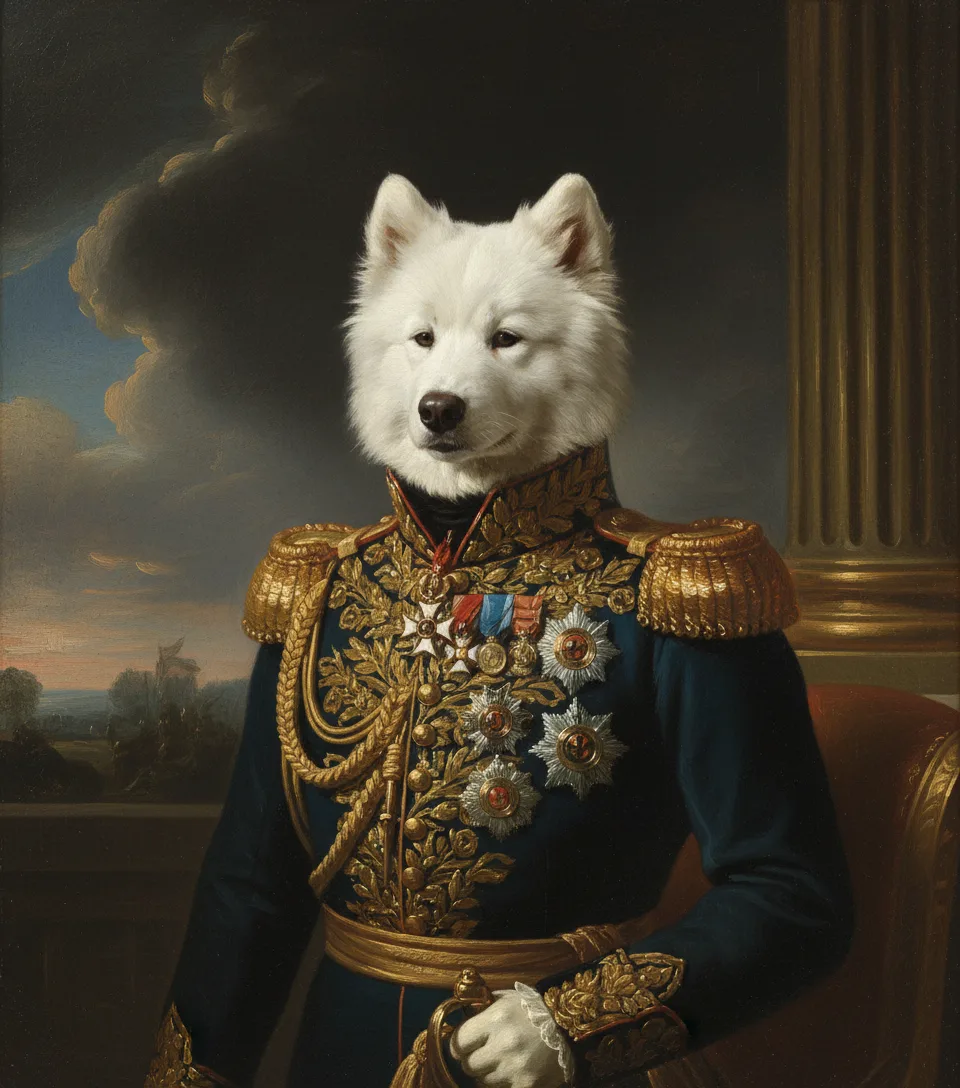
Borzoi and the tsars: Russia's wolfhounds, noble hunts and Perchino
The borzoi was the hunting hound of Russia's nobles and the imperial family. How the great hunts worked, what Perchino was, and how the breed survived 1917.
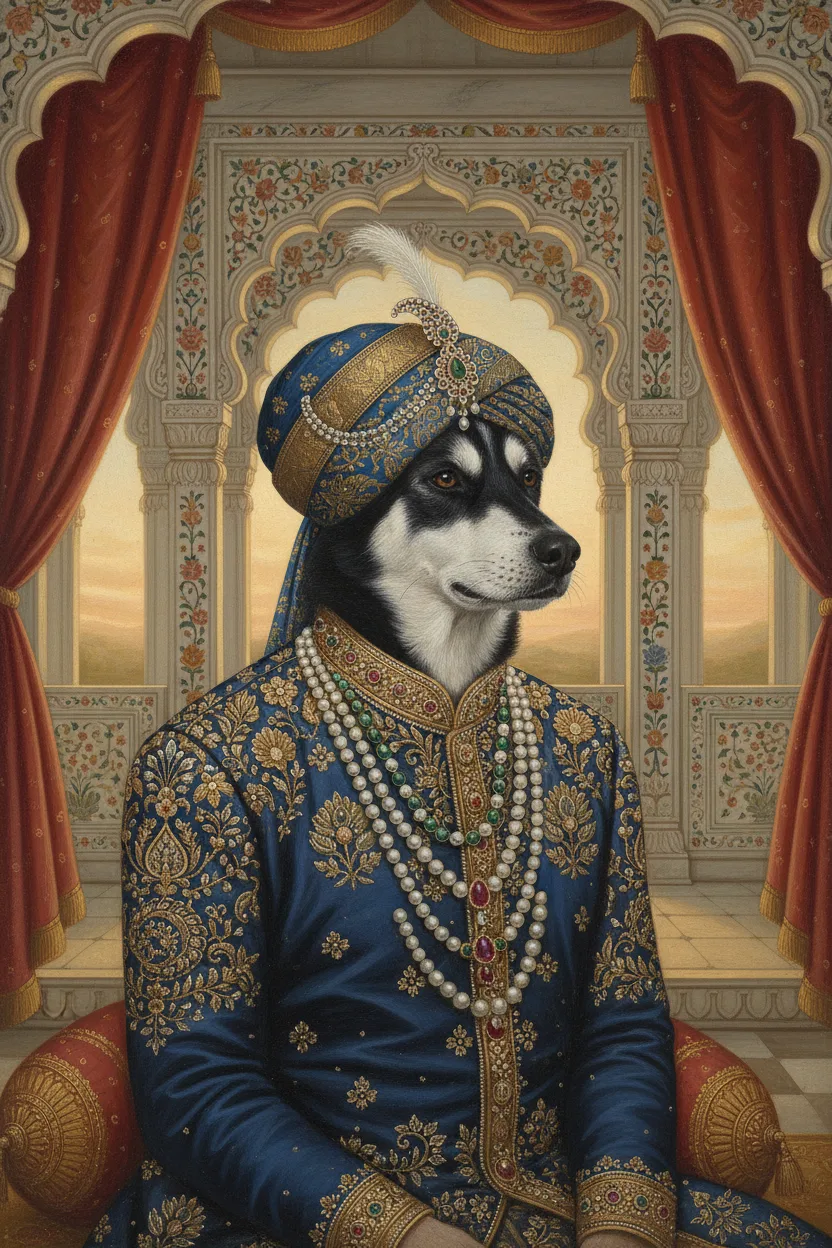
Elizabeth II's corgis: the Windsor line, the breeders and the Pembroke breed
How Elizabeth II's corgis were bred, fed and named, what the Welsh cattle dog was bred for, and how her reign changed the number of Pembroke corgis in Britain.
Courts of China, Japan, Korea and Siam
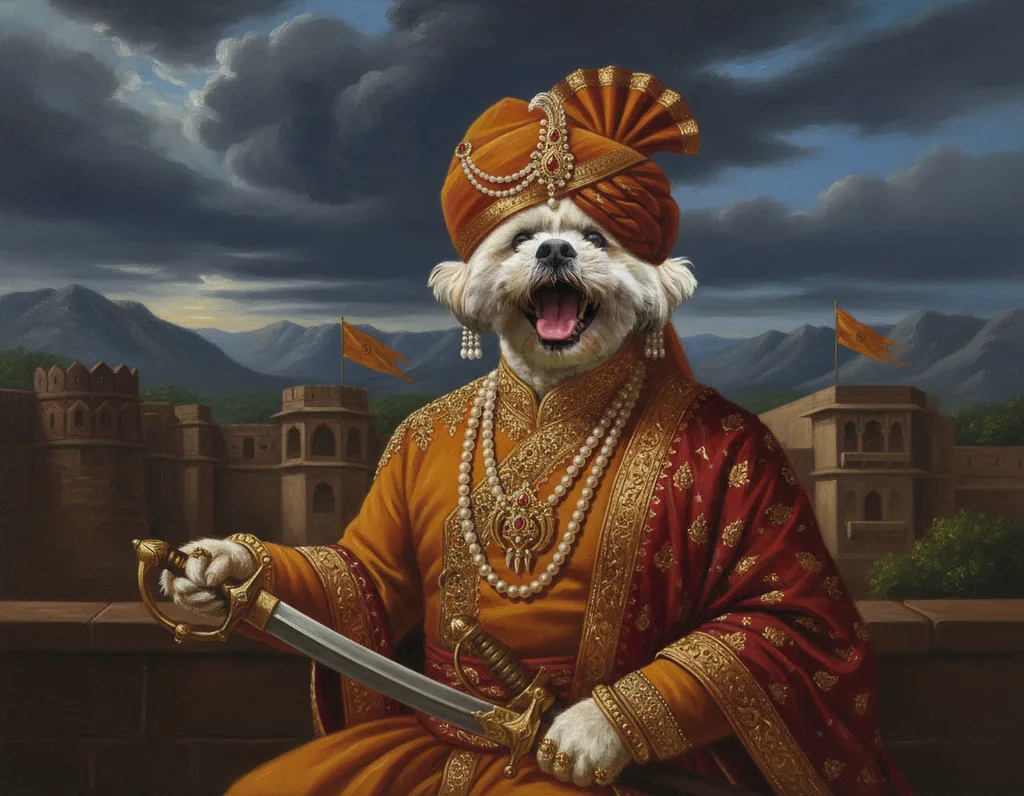
The Pekingese and the Chinese emperors: palace dogs, Looty and Empress Cixi
How Pekingese lived at the Chinese imperial court, how dogs taken from Beijing in 1860 reached Queen Victoria, and what Empress Cixi's court wrote of them.
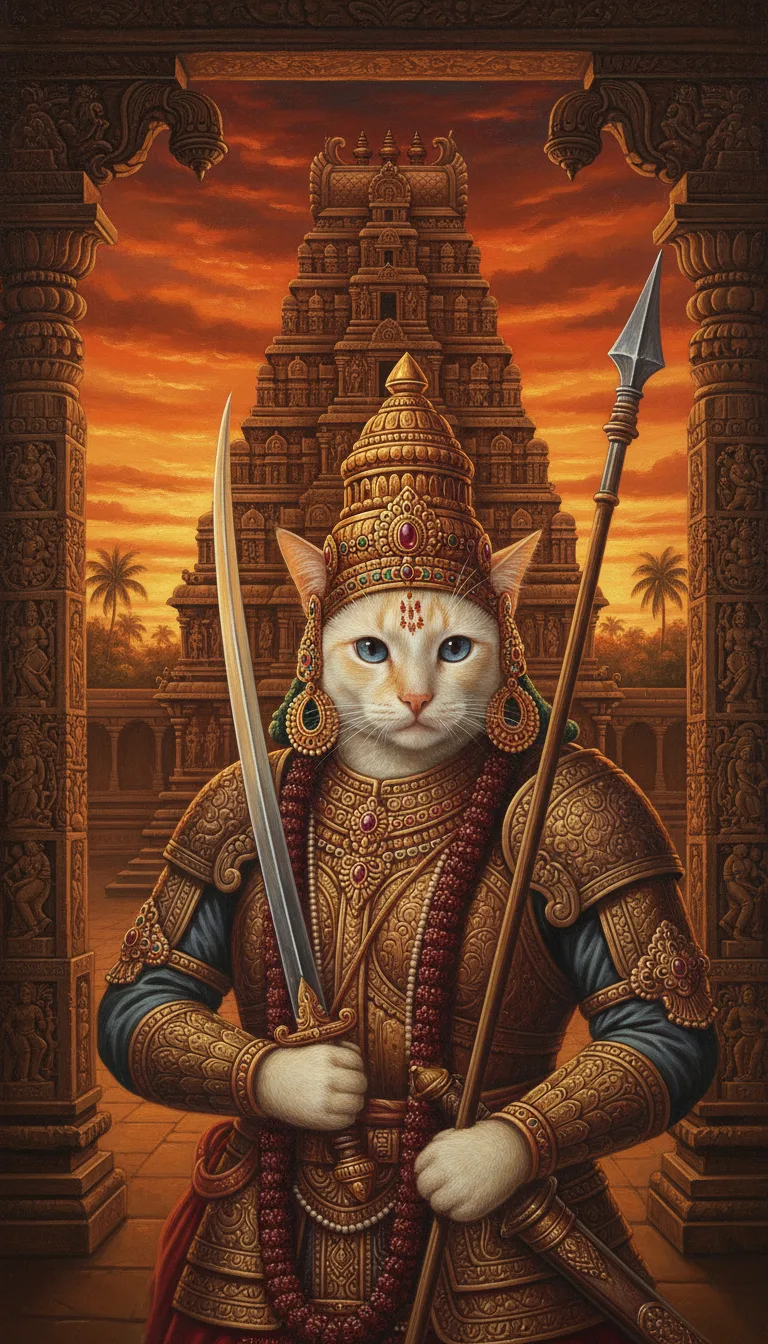
Royal cats of Japan, Korea and Siam: court cats in diaries, poems and palace records
Cats at the royal courts of Japan, Korea and Siam: an emperor's diary, a cat with a court rank, a Joseon king's golden cat and the Thai Cat-Book Poems.
India's emperors and maharajas
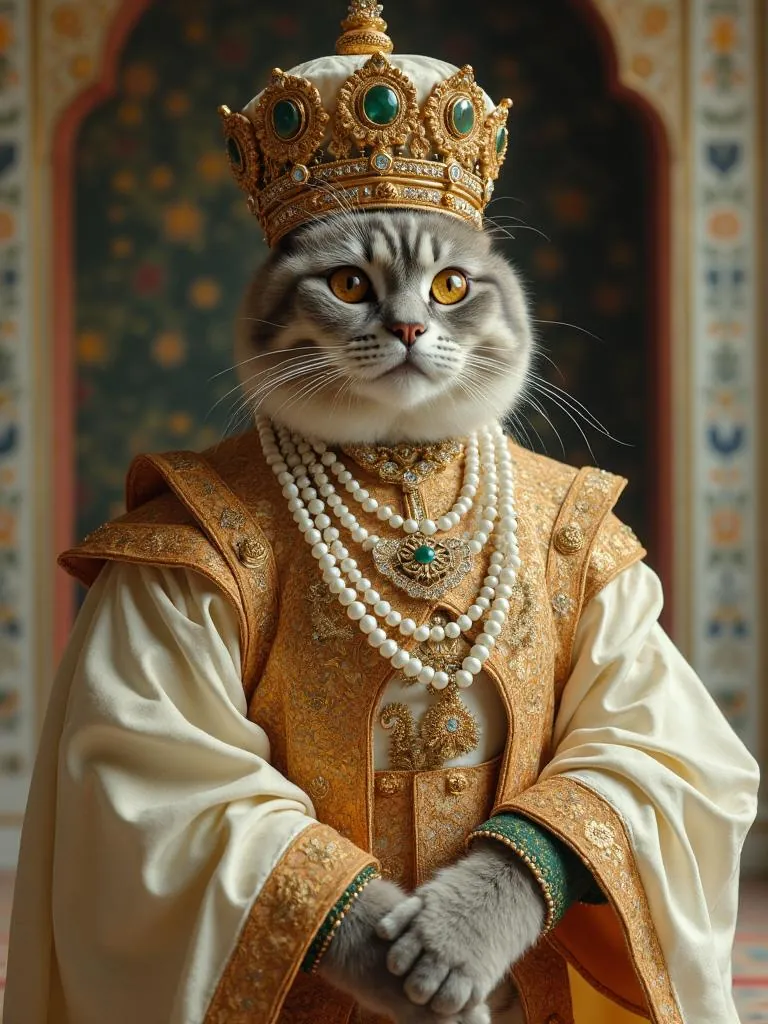
Jahangir's animals: what the Mughal emperor recorded in his memoirs
The Mughal emperor Jahangir wrote about sarus cranes, a turkey, a zebra, cheetah cubs, hunting dogs and 28,532 hunted animals in his own memoirs.
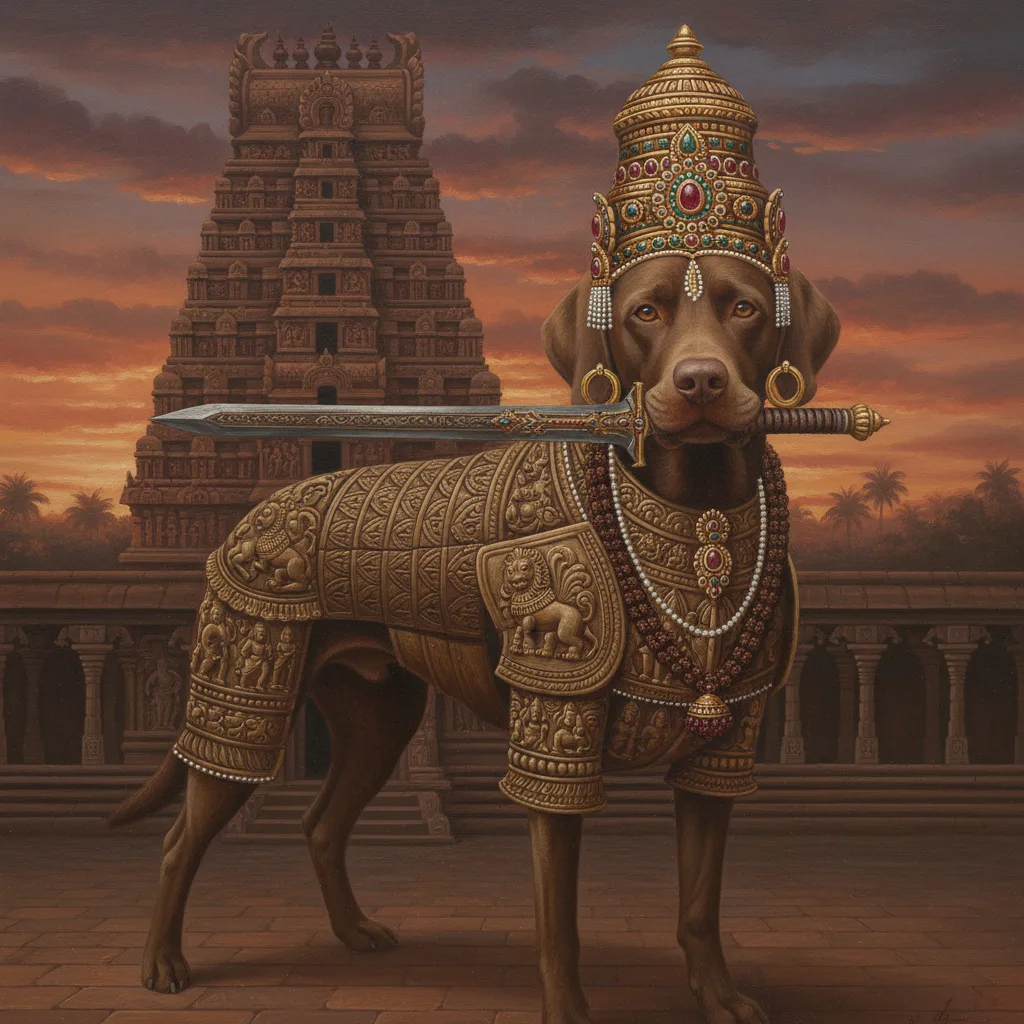
Indian royal dog breeds: the Mudhol hound, Rajapalayam, Rampur hound and more
The Mudhol hound, Rajapalayam, Chippiparai and Rampur hound: India's hunting dogs linked to its old princely states, and the three breeds registered in 2020.
Ancient Egypt
Cats in ancient Egypt: how they were tamed and how they lived
How cats were tamed in Egypt, what they ate, the prince who gave his cat a stone coffin, and what Herodotus, Diodorus and the cat cemeteries record.
Pharaohs and their dogs: the royal hounds of ancient Egypt
The guard dog a king buried at Giza, King Intef II's dogs, Egyptian dog names, the dog catacombs of Saqqara, and what modern breeds have to do with Egypt.
Questions and answers
What are royal pets?
Royal pets are the animals that kings, queens, emperors and their families kept as companions or for the hunt. The records are specific. Samuel Pepys saw Charles II play with his dog through a council meeting in 1667, Frederick the Great wrote letters about his greyhound Biche, and the Royal Kennel Club records that Elizabeth II founded a line of Pembroke corgis that ran for 15 generations.
Which is the royal dog?
No single breed is the royal dog, because each court chose its own. The Royal Kennel Club calls the borzoi the wolfhound of the Imperial Russian aristocracy and says the Pekingese was a favourite in the imperial palace in Peking. In Britain, the King Charles spaniel carries the name of Charles II, and the Pembroke corgi is linked to Elizabeth II.
Which animals did kings and queens keep?
Kings and queens kept dogs, cats, horses and birds. The Mughal emperor Jahangir wrote in his memoirs about a pair of tame sarus cranes he named Laila and Majnun. Peter the Great of Russia kept a horse and two dogs that were stuffed after they died. Frederick the Great named his horses after statesmen of his time, according to Franz Kugler's history of his reign.
How do historians know about royal pets?
Historians know about royal pets from diaries, letters, memoirs and court records written at the time. Samuel Pepys and John Evelyn described Charles II's dogs in their diaries. Frederick the Great's letters about his greyhounds are published in the University of Trier's digital edition of his works. The Mughal emperor Jahangir described his animals in his own memoirs, translated into English by Alexander Rogers.
Which royal pet stories are legends?
Several well-known royal pet stories are legends or disputed anecdotes. The Prussian Palaces and Gardens Foundation calls the story that Frederick the Great brought the potato to Prussia a legend, though visitors still leave potatoes on his grave. Karl Rödenbeck's chronicle says the tale of Frederick's greyhound Biche jumping onto his desk was disputed. The American Kennel Club calls the Blenheim spot story folklore.
Did ancient Egyptians mourn their pets?
Ancient Egyptians mourned their cats and dogs, according to the Greek historian Herodotus. He wrote that when a house cat died a natural death, the people of the house shaved their eyebrows, and when a dog died, they shaved the head and the whole body. He added that dead cats were taken to the town of Bubastis to be embalmed and buried.
Which Asian rulers kept cats?
Rulers in Japan, Korea and Siam kept cats. Nippon.com quotes the veterinary scientist Iwazaki Eiji, who says Emperor Uda wrote about his black cat in his diary and that Emperor Ichijō gave a cat a court rank. The Korea Heritage Service says King Sukjong of Joseon kept a golden cat that ate near him. In Siam, cat treatise manuscripts described lucky breeds.
Did Indian rulers keep dogs?
Indian rulers kept dogs, above all for hunting. The Mughal emperor Jahangir wrote in his memoirs that the ruler of Iran sent him nine large European hunting dogs, which he had asked for. In 2020 India's National Bureau of Animal Genetic Resources registered the Mudhol hound, the Rajapalayam and the Chippiparai as the country's first three recognised dog breeds.
Were royal dogs used for hunting?
Many royal dogs were hunting dogs. The Royal Kennel Club says Russian borzois hunted in pairs and held a wolf down until the hunters arrived. The American breeder Joseph Thomas visited the tsar's kennels at Gatchina in 1903 and counted 80 grown borzois. At Perchino, the Grand Duke Nicholas's hunt kept 300 borzois in 1904, by Thomas's count.
Where are royal pets buried?
Royal pets are buried in palace gardens and parks. Frederick the Great's greyhounds lie under stone plates on the top terrace at Sanssouci, near his own grave. Three of Catherine the Great's Italian greyhounds are buried behind the Pyramid at Tsarskoe Selo, according to the Tsarskoe Selo State Museum. Elizabeth II's first corgi, Susan, has a gravestone at Sandringham, the Royal Kennel Club says.
How can I give my pet a royal title?
You can give your pet a royal title with the royal title maker on the Purrealism guide to royal pets in history. It takes your pet's name, an optional street, town or house name, a title form such as King, Lord or Duke, Queen, Lady or Duchess, or Sovereign or Highness, and whether your pet is a dog or a cat. It shows four playful titles to copy, with a button for more.
Sources
- Herodotus, The Histories, Book 2, chapter 66 (translated by A. D. Godley), Perseus Digital Library, Tufts University. Accessed September 28, 2026.
- Herodotus, The Histories, Book 2, chapter 67 (translated by A. D. Godley), Perseus Digital Library, Tufts University. Accessed September 28, 2026.
- The palaeogenetics of cat dispersal in the ancient world, Nature Ecology and Evolution. Accessed September 28, 2026.
- Cats, Lions, and the Fabulous Felines of Ancient Egypt, Glencairn Museum. Accessed September 28, 2026.
- Pekingese, The Royal Kennel Club. Accessed September 28, 2026.
- The Surprising Imperial History of the Pekingese Dog, JSTOR Daily. Accessed September 28, 2026.
- "Waneko" Studies: A Journey into Japan's Cat Lore, Nippon.com. Accessed September 28, 2026.
- 조선 제일의 고양이 집사 숙종과 금묘 이야기 (King Sukjong and the story of the golden cat), Korea Heritage Service. Accessed September 28, 2026.
- The Cat's Maew: Thai Treatise on Auspicious Felines (19th Century), The Public Domain Review. Accessed September 28, 2026.
- Siamese, The Cat Fanciers' Association. Accessed September 28, 2026.
- The Tuzuk-i-Jahangiri, or Memoirs of Jahangir, Volume 1 (translated by Alexander Rogers, edited by Henry Beveridge), Project Gutenberg. Accessed September 28, 2026.
- The Tuzuk-i-Jahangiri, or Memoirs of Jahangir, Volume 2 (translated by Alexander Rogers, edited by Henry Beveridge), Project Gutenberg. Accessed September 28, 2026.
- Salient Achievements, ICAR National Bureau of Animal Genetic Resources. Accessed September 28, 2026.
- Mann Ki Baat, 30 August 2020 (English rendering), Press Information Bureau, Government of India. Accessed September 28, 2026.
- The Diary of Samuel Pepys, Complete, Project Gutenberg. Accessed September 28, 2026.
- The Diary of John Evelyn (Volume 2 of 2), Project Gutenberg. Accessed September 28, 2026.
- King Charles Spaniel, The Royal Kennel Club. Accessed September 28, 2026.
- Cavalier King Charles Spaniel History: Where the Breed Originated, American Kennel Club. Accessed September 28, 2026.
- Œuvres de Frédéric le Grand, vol. 27.1, p. 231: letter to the margravine of Bayreuth, 29 December 1751, Universitätsbibliothek Trier, digital edition of the works of Frederick the Great. Accessed September 28, 2026.
- Franz Kugler, Geschichte Friedrichs des Großen, p. 493, Universitätsbibliothek Trier, digital edition of the works of Frederick the Great. Accessed September 28, 2026.
- Franz Kugler, Geschichte Friedrichs des Großen, p. 494, Universitätsbibliothek Trier, digital edition of the works of Frederick the Great. Accessed September 28, 2026.
- K. H. S. Rödenbeck, Tagebuch oder Geschichtskalender aus Friedrichs des Großen Regentenleben, vol. 1, p. 127, Universitätsbibliothek Trier, digital edition of the works of Frederick the Great. Accessed September 28, 2026.
- Kartoffeln am Grab. Zum Tod Friedrichs des Großen in Sanssouci am 17. August 1786, Prussian Palaces and Gardens Foundation Berlin-Brandenburg (SPSG). Accessed September 28, 2026.
- Landeshauptstadt: Friedrichs vierbeinige Freunde, Potsdamer Neueste Nachrichten (Der Tagesspiegel). Accessed September 28, 2026.
- Borzoi, The Royal Kennel Club. Accessed September 28, 2026.
- Observations on Borzoi, Called in America Russian Wolf-hounds, by Joseph B. Thomas (1912), Internet Archive. Accessed September 28, 2026.
- Учёные впервые увидели нутро друзей Петра I: рентген раскрыл тайны чучел питомцев (Scientists see inside the friends of Peter I for the first time), Saint Petersburg Branch of the Russian Academy of Sciences. Accessed September 28, 2026.
- Pyramid, Tsarskoe Selo State Museum and Heritage Site. Accessed September 28, 2026.
- The Queen's Corgis, The Royal Kennel Club. Accessed September 28, 2026.
- Corgi soars in popularity, The Royal Kennel Club. Accessed September 28, 2026.
Short reads on this topic
Articles from Purrspectives that answer one question each.
Dog years to human years: the chart by size, and the DNA formula
A 1-year-old dog is closer to 15 or 30 in human years than to 7. The AKC chart by size, the 2020 DNA formula, and a dog's life stages, explained simply.
Pug history: from Chinese emperors to the House of Orange
Pugs began as companions of Chinese emperors, reached Holland on Dutch trading ships and became the dog of the House of Orange. Their history, art and health.
Persian cat history: where the breed came from, its first cat show, coat and care
Persian cat history from a cat brought to Italy in 1626 to the 1871 Crystal Palace show, plus face types, coat colours, grooming and how to photograph one.