Royal portrait styles
Royal portrait styles: a guide to the 15 styles for your pet
A guide to the 15 royal portrait styles on Purrealism, grouped by Indian and European courts, with the paintings each style comes from and which pets suit it.
By Purrealism
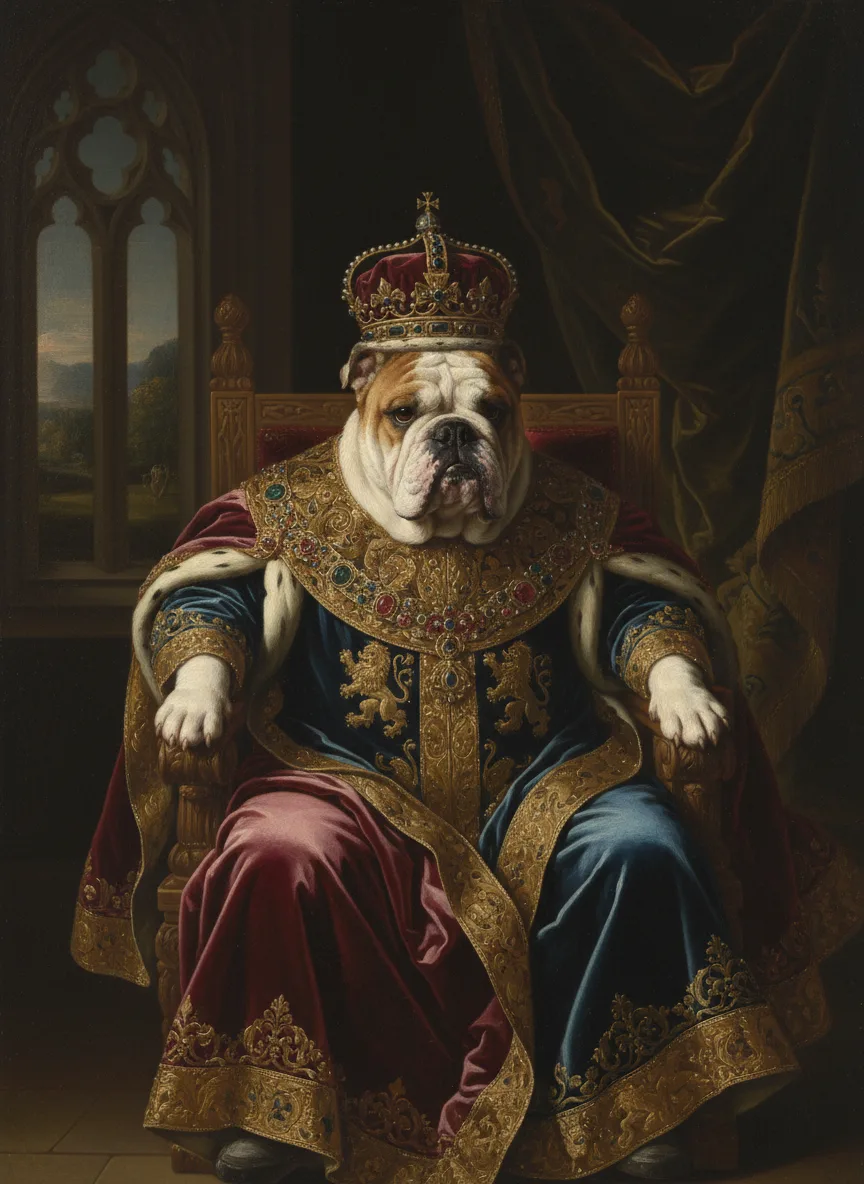
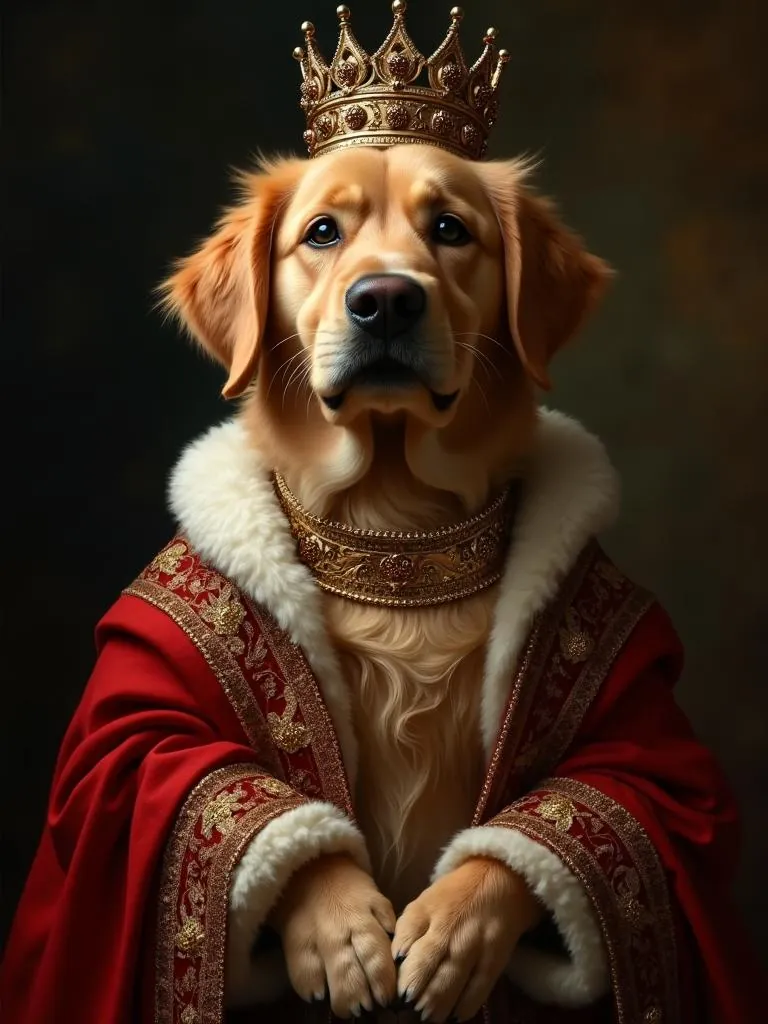
Purrealism paints dogs and cats in 15 royal portrait styles. Nine come from Indian royal courts and six from European historical courts. This hub walks through all 15, groups them into 10 reading pages, and shows which style suits which pet. Each page here is tied to a real court tradition, so a buyer can pick a style with the paintings behind it in mind, not just the look of the costume.
How the 15 styles are grouped
The 15 named styles in the studio are: Indian Royalty, Maharaja, Maharani, Patiala Royalty, Chola Warrior, Mysore Royal, Mughal Emperor, Rajput Warrior, Maratha King, Renaissance Royal, Victorian Noble, Military General, Medieval Knight, Baroque Aristocrat and Regency Era. The site lists them in that order in content.ts, where the studio reads the list. This hub groups them into 10 pages so that each page carries one coherent style family with enough room to describe its real-court source.
Seven pages cover the Indian royal courts: the two titled styles (Maharaja and Maharani), the two broad Indian Royalty portraits of a Noble Hound and a Regal Feline, the four named Indian traditions (Mughal, Rajput, Mysore, Patiala), and the two warrior styles from the south and west of India (Chola and Maratha). Three pages cover the European tradition: the Italian and Northern Renaissance, the long British 1800s from Regency to Victorian, and the Baroque court painters together with the Medieval Knight and Military General looks that share their dramatic lighting.
Indian royal courts
Nine of the 15 styles come from Indian courts, from the Chola bronzes of the 9th to 13th centuries in Tamil-speaking south India to the maharajas of 19th-century Patiala. These courts shared a visual language of jewelled turbans, gold thrones, pearl strings and painted backgrounds, but each kept its own dress and setting. Indian court painting covers the painting traditions themselves. This hub covers how Purrealism dresses your pet in them.
Maharaja and the Noble Hound
Maharaja portrait style is the Hindu ruler of a princely state: a jewelled turban, a gold throne, a scabbard across the lap. The Royal Ontario Museum keeps a miniature portrait of Maharaja Mahendra Singh of Patiala from the 19th century, painted on ivory, with the same seated pose. Purrealism's cover portrait for this hub shows a golden retriever in that style. The Noble Hound within the Indian Royalty family wears a lighter version of the same crown and robe for everyday rooms.
Maharani and the Regal Feline
The Maharani portrait style is the queen of the same court, in a green and gold gown with a long veil, a jewelled nose ring and a seated pose. The site's gallery shows a white and ginger cat in this style. The Regal Feline is the softer version in the Indian Royalty family, with a red and gold robe for a cat whose face is small or whose ears sit high.
Mughal Emperor
Mughal Emperor follows the imperial portraits in the Shah Jahan Album, which the Metropolitan Museum of Art holds. Each portrait in the album was mounted on a page with a wide floral border. The emperor stands in profile, in a jewelled crown and pearl strings, often holding a flower. Purrealism's gallery shows a grey cat in this style, painted in the same miniature flatness. The Cleveland Museum of Art keeps the Portrait Jewel of Emperor Jahangir, who the Met says had tiny portraits of himself made as gifts for his nobles.
Rajput Warrior
Rajput Warrior comes from the Rajput painting schools of Rajasthan, which flourished between the late 16th and the 19th centuries. Google Arts and Culture, with the Salar Jung Museum, lists the main sub-schools: Mewar at Udaipur, Marwar at Jodhpur, Bikaner and Nagaur, Hadoti at Bundi and Kota, Dhundhar at Amber and later Jaipur, and Kishangarh. The Victoria and Albert Museum in London holds works from these schools. Purrealism's version dresses a dog or a cat in armour, with a desert fort at sunset behind.
Patiala Royalty
Patiala Royalty follows the portraits of the Sikh maharajas of Patiala in the Phulkian dynasty. The Asian Art Museum keeps a portrait of Maharaja Karam Singh of Patiala and his son. Karam Singh was the first of the Patiala rulers to take the title of Maharaja, and the Royal Ontario Museum keeps an ivory miniature of his great-grandson Maharaja Mahendra Singh, painted in the late 19th century. The look combines a blue coat, a jewelled turban, a halo around the head and a European-style chair, which Patiala's painters adopted under British influence.
Mysore Royal
The Mysore Royal style comes from Mysore painting, which Karnataka Tourism says grew in the grand courts of the Wodeyar dynasty. The tradition uses fine lines, muted colours and 24-karat gold leaf applied over a raised gesso base, so the jewellery sits in low relief and catches the light. The style reached its height under Maharaja Krishnaraja Wodeyar III. Purrealism's gallery shows a black labrador in a saffron turban holding a gold sceptre, with Mysore palace columns behind.
Chola Warrior and Maratha King
The Chola Warrior and Maratha King styles come from the Chola dynasty of Tamil-speaking south India between the 9th and 13th centuries and the Maratha empire of the 17th to 19th centuries in western India. Chola art is best known through the bronze sculptures of Shiva as Nataraja. The Metropolitan Museum of Art holds examples from the 11th century, the period of Rajaraja Chola, who built the Brihadisvara Temple. The earliest known portrait of the Maratha king Shivaji, Herbert de Jager's 1677 sketch, was published in 1726 in Francois Valentijn's Oud en Nieuw Oost-Indiën. The British Museum holds a Deccan portrait of Shivaji from 1680 to 1687.
European historical courts
Six of the 15 styles come from European courts. Together they cover 400 years of royal portraiture, from the Italian Renaissance of the 1500s to the court of Napoleon in the early 1800s. These styles share a language of oil painting on canvas, a dark painted background, and a sitter in costume to the viewer's left or straight on, but each century dresses that sitter differently. European royal portraits covers the painting history itself, including the pose language of these courts.
Renaissance Royal
The Renaissance Royal style follows Italian Renaissance portraits of the 16th century, in particular those by Titian and Paolo Veronese. The Thyssen-Bornemisza Museum holds Veronese's Portrait of a Woman with a Dog, with a lapdog seated on a ledge. The Uffizi in Florence holds Titian's Venus of Urbino, which includes a sleeping lapdog at the woman's feet, and his Portrait of Eleonora Gonzaga, with a similar dog. Purrealism's Renaissance Royal places your pet against a dark background in a jewelled collar and a brocade sleeve.
Victorian Noble and Regency Era
Victorian Noble and Regency Era cover the British long 1800s. Regency Era follows the neoclassical portraits of Sir Thomas Lawrence, who the National Portrait Gallery in London calls the leading portrait artist of the Regency. Thomas Lawrence favoured timeless neoclassical dress over fashion. Victorian Noble follows the work of Sir Edwin Landseer, who the Victorian Web calls Queen Victoria's favourite animal artist. Landseer was knighted in 1850 and in the same year painted Queen Victoria's spaniel Tilco, according to the Victorian Web.
Baroque Aristocrat, Medieval Knight and Military General
Baroque Aristocrat, Medieval Knight and Military General share dramatic lighting and strong costume. The National Gallery in London says Anthony van Dyck was Charles I's main court painter in London from 1632. Van Dyck often painted children and dogs together, which the National Gallery notes helped raise portraits of children and dogs to the same artistic regard as adult sitters. Medieval Knight follows manuscript illumination with knights in heraldic colours, as collected in works such as the Cloisters Apocalypse at the Met Cloisters in New York. Military General follows 19th-century portraits of Napoleon by Jacques-Louis David, with a sash and star of the Legion of Honour.
Choosing a style by your pet
The sub-pages pair each style with suitable breeds and coat colours. The quick guide below is a starting point.
| Pet | Styles that pair well | Why |
|---|---|---|
| Large hunting dog | Rajput Warrior, Medieval Knight, Military General | The costume matches a large frame and a long muzzle |
| Small lap dog | Regency Era, Victorian Noble, Baroque Aristocrat | The lace cravat and velvet coat frame a small face |
| Short-faced dog or cat | Victorian Noble, Baroque Aristocrat, Mughal Emperor | The costume lifts the eyes and leaves the muzzle at ease |
| Pale coat | Renaissance Royal, Baroque Aristocrat | The dark background sets off a pale coat and jewels |
| Black coat | Mysore Royal, Rajput Warrior, Baroque Aristocrat | A lighter costume or sunset background keeps the dog visible |
| Ginger or tabby cat | Maharani, Victorian Noble, Regal Feline | The warm costume colours sit beside a warm coat |
| White or cream cat | Mughal Emperor, Renaissance Royal | The high collar frames a small face against a dark background |
From style choice to finished portrait
Once a style is chosen, the studio at /create takes one photo of up to 5 MB and the chosen style. Each portrait comes as a digital download or as an art print. The art prints and paper guide covers the paper finishes, and the framing and hanging guide covers the frame and the wall. The gallery shows finished portraits in each of the Maharaja, Maharani, Mughal Emperor, Rajput Warrior, Mysore Royal, Patiala Royalty and Indian Royalty styles, with the Chola Warrior and Maratha King styles shown in the studio examples.
The styles do not change your pet. They dress the dog or cat in the clothes of a court that treated its own animals as named members of the household. Royal pets in history collects what the records say about those animals, from Emperor Uda's black cat in 9th-century Japan to Elizabeth II's Pembroke corgis.
Reading order
A buyer with a style already in mind can skip to the matching sub-page. A buyer still choosing can read the Indian group first (maharaja, maharani, mughal, rajput, patiala, mysore, chola and maratha) and then the European group (renaissance, victorian and regency, baroque and medieval and military). The purrspectives article how to choose a royal portrait style for your pet is a shorter overview that groups the styles by coat colour and character.
Try it
Indian style finder
Answer four questions about your pet. The finder suggests one of the Indian court styles and shows a portrait painted in it.
Answer all four questions to see your suggestion.
Every page in this guide, by topic
Indian royal courts
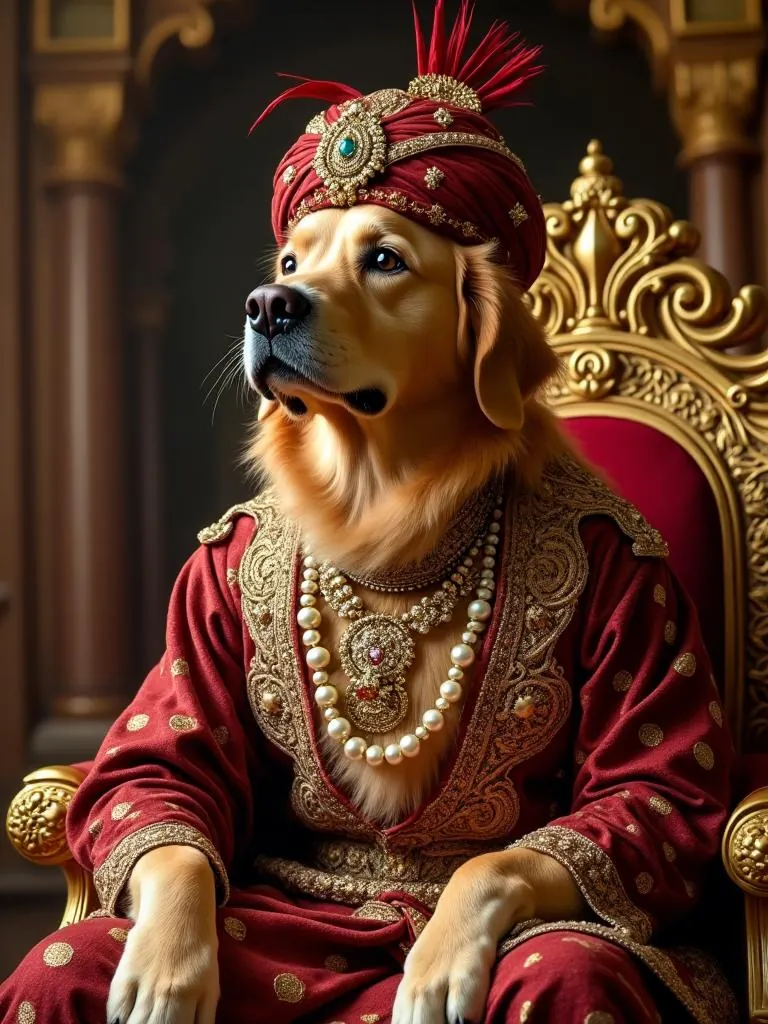
Maharaja portrait style: your dog or cat as a Hindu royal
The Maharaja portrait style on Purrealism: the real courts behind it, the costume, which pets suit it, and how it differs from the other Indian styles.
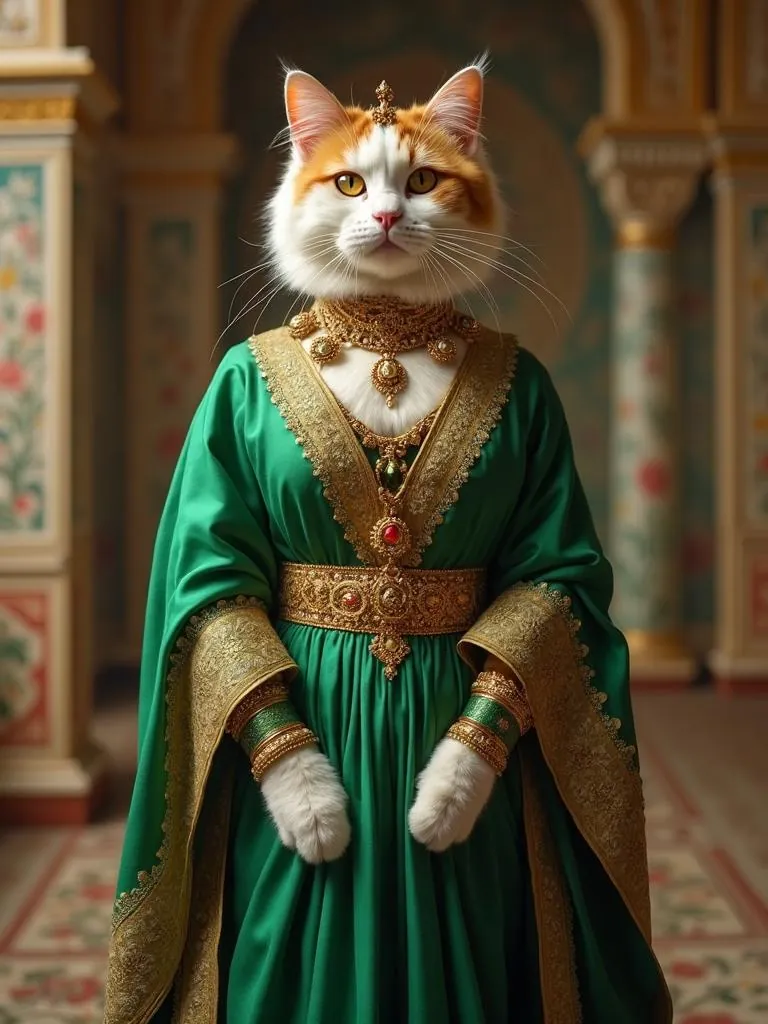
Maharani portrait style: your pet as an Indian queen
The Maharani portrait style on Purrealism: the real courts behind it, the costume details, which pets suit it, and how it compares with the other Indian styles.
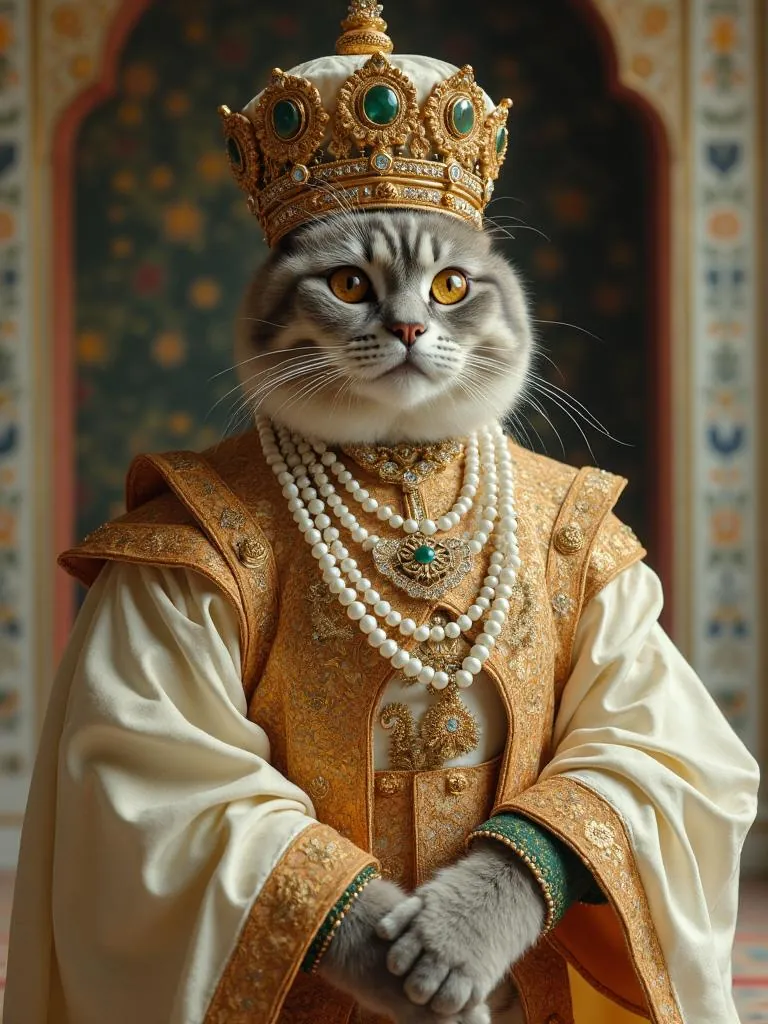
Mughal Emperor portrait style: your pet in the imperial miniature tradition
The Mughal Emperor portrait style on Purrealism: the miniature tradition, the costume, which pets suit it, and how it compares with the Maharaja style.
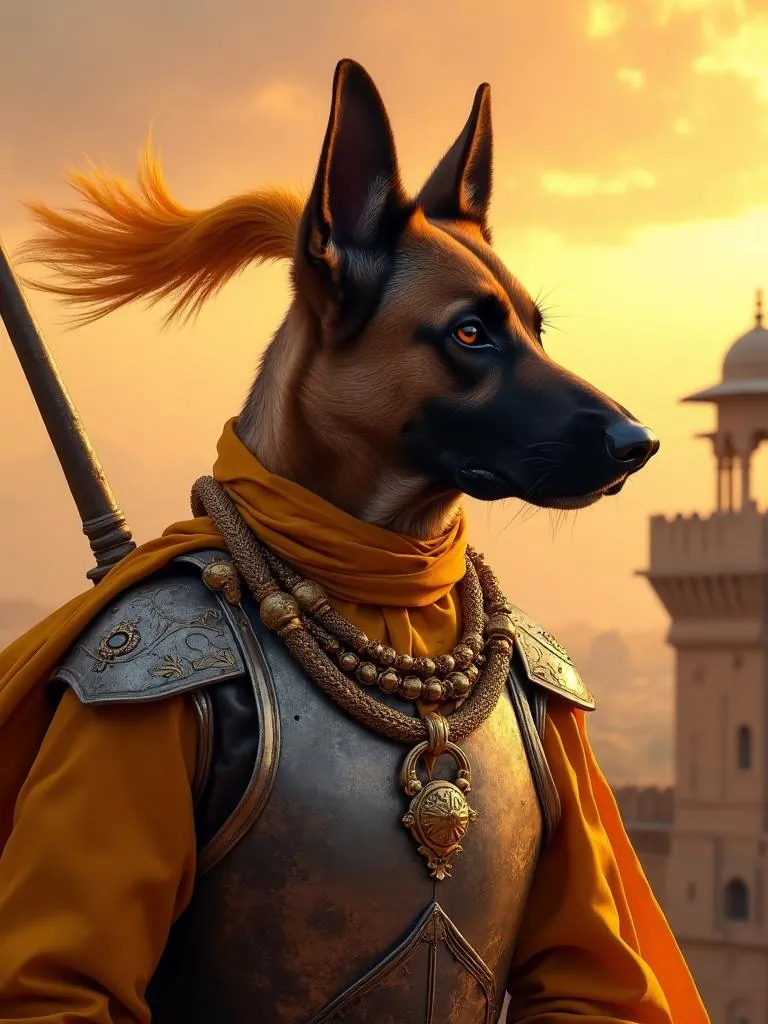
Rajput Warrior portrait style: your pet in armour and at the fort
The Rajput Warrior portrait style on Purrealism: Rajput painting schools, the costume, which pets suit it, and how it compares with Mughal Emperor.

Patiala Royal portrait style: your pet in the Sikh maharaja tradition
The Patiala Royalty portrait style on Purrealism: Sikh maharaja courts, the costume, which pets suit it, and how it compares with the Maharaja style.
Questions and answers
What royal portrait styles can I choose for my pet?
Purrealism paints your dog or cat in 15 royal portrait styles. Nine come from Indian courts: Indian Royalty, Maharaja, Maharani, Patiala Royalty, Chola Warrior, Mysore Royal, Mughal Emperor, Rajput Warrior and Maratha King. Six come from European history: Renaissance Royal, Victorian Noble, Military General, Medieval Knight, Baroque Aristocrat and Regency Era.
Which royal style suits my dog best?
A royal pet portrait style suits your dog when the court it comes from paired a dog of the same build or coat with its rulers. A large hunting dog fits Rajput Warrior or Medieval Knight. A small lap breed fits Regency Era or Victorian Noble. A short-faced breed such as a pug or French bulldog carries Baroque Aristocrat and Victorian Noble well. The sub-pages below pair each style with suitable breeds.
Which royal portrait style suits a cat?
A royal style for a cat works when the costume frames the face without hiding the ears or whiskers. Maharani and Mughal Emperor leave the cat's face framed in a jewelled headdress and a high collar. Renaissance Royal places the cat against a dark background that lifts a pale coat. Victorian Noble puts a cat in a velvet coat with a lace cravat. All 15 styles accept cats as well as dogs.
What is the difference between Maharaja and Maharaja Emperor?
Maharaja and Mughal Emperor are different Indian royal styles. Maharaja dresses your pet as a Hindu ruler of one of India's princely states, in a jewelled turban on a gold throne, as in the maharaja portraits of Mewar and Jodhpur. Mughal Emperor dresses your pet as a Muslim emperor of the Mughal dynasty, in a jewelled crown and pearl strings, in the style of the Shah Jahan Album at the Metropolitan Museum of Art.
Which Indian royal portrait style is the most popular?
No single Indian royal style is the most popular on Purrealism, because each style suits a different pet. The gallery at /gallery shows finished portraits in the Maharaja, Maharani, Mughal Emperor, Rajput Warrior, Mysore Royal, Patiala Royalty and Indian Royalty styles. The studio examples add Chola Warrior and Maratha King on dogs and cats of many breeds and coat colours.
What European royal style should I pick for my pet?
A European royal style for your pet depends on which century suits your room and your pet's build. Renaissance Royal fits a pale coat against a dark wood background. Baroque Aristocrat suits a dramatic, high-contrast photograph. Regency Era and Victorian Noble carry small breeds in a lace cravat or a velvet coat. Medieval Knight suits a large, sturdy dog, and Military General suits a confident pose.
Can my pet wear a crown in the portrait?
Your pet wears a crown or a turban in the portrait when the style you choose includes one. Indian Royalty, Maharaja, Mughal Emperor, Patiala Royalty and Mysore Royal all include a jewelled turban or a crown. Renaissance Royal, Victorian Noble, Regency Era and Baroque Aristocrat use period dress without a crown, following the paintings of Titian, Landseer, Lawrence and Van Dyck.
How many royal portrait styles does Purrealism offer?
Purrealism offers 15 royal portrait styles. The list is Indian Royalty, Maharaja, Maharani, Patiala Royalty, Chola Warrior, Mysore Royal, Mughal Emperor, Rajput Warrior, Maratha King, Renaissance Royal, Victorian Noble, Military General, Medieval Knight, Baroque Aristocrat and Regency Era. The studio at /create lets you pick any one of them for your dog or cat.
Which royal style works best for a short-faced breed?
A short-faced breed such as a pug, French bulldog or Persian cat works best in a style whose costume frames the face rather than one that leans on a long muzzle. Victorian Noble, Baroque Aristocrat and Regency Era place a lace cravat or a velvet coat under the chin, drawing attention to the eyes. The studio example of a French bulldog in Victorian Noble shows this fit.
Do the royal portrait styles follow real paintings?
Each royal portrait style follows a real court tradition. The Shah Jahan Album at the Metropolitan Museum of Art guides Mughal Emperor. The Mewar, Marwar and Hadoti schools, documented by the V and A, guide Rajput Warrior. Thomas Lawrence's Regency work guides Regency Era. Van Dyck's court portraits for Charles I, cited by the National Gallery, guide Baroque Aristocrat. The sub-pages name each source.
What colour palette does each royal portrait style use?
Each royal portrait style has its own palette. Maharaja and Patiala Royalty use red, gold and blue. Mysore Royal uses saffron, deep green and 24-karat gold leaf, as Karnataka Tourism describes. Renaissance Royal uses a dark background against pale skin and jewels. Victorian Noble uses a deep velvet with a lace or satin highlight. Regency Era uses soft pastels in the neoclassical dress of Thomas Lawrence's sitters.
Which pet portrait style suits a black coat?
A black coat suits a royal style with a lighter costume and background. Mysore Royal pairs a black labrador with a saffron turban and a gold sceptre, as the gallery portrait shows. Baroque Aristocrat lifts a black coat against a brown or burgundy background. Rajput Warrior places a black dog in burnished armour against a sunset fort. A fully dark style would hide the dog in shadow.
Sources
- The Shah Jahan Album, The Metropolitan Museum of Art. Accessed October 6, 2026.
- The arts of the Mughal Empire, Victoria and Albert Museum. Accessed October 6, 2026.
- Splendours of Rajasthan, Salar Jung Museum, on Google Arts and Culture. Accessed October 6, 2026.
- Mysore Painting, Karnataka Tourism, Government of Karnataka. Accessed October 6, 2026.
- Queen Victoria's Favourite Dogs and Parrot, by Sir Edwin Landseer, The Victorian Web. Accessed October 6, 2026.
- Anthony van Dyck (1599 to 1641), The National Gallery, London. Accessed October 6, 2026.
- Portrait Jewel of Emperor Jahangir, The Cleveland Museum of Art. Accessed October 6, 2026.
- Karam Singh of Patiala, Royal Ontario Museum. Accessed October 6, 2026.
- Shah Jahan on Horseback, The Metropolitan Museum of Art. Accessed October 6, 2026.
- Thomas Lawrence, National Portrait Gallery, London. Accessed October 6, 2026.