European royal portraits
European royal portraits: how Europe's courts painted their rulers
How Europe's kings, queens and generals were portrayed, from medieval seals to Victorian photographs: the poses, symbols, costumes and court painters.
By Purrealism
From the 11th century to the start of the 20th, the kings and queens of Europe paid artists to show them to their people and to other rulers. This guide is about how they were shown: the poses they took, the objects placed around them, the clothes that marked their rank, and the painters who served their courts. It runs from the wax seals of medieval kings to the photographs of Queen Victoria, and it explains how to read any royal portrait you meet in a museum. Each period and each theme has its own page, listed further down. This main page gives the overview, and at the end it links that history to the six European styles you can choose for a portrait of your dog or cat.
What a royal portrait was for
A portrait is a picture of a particular person. Tate in London explains that before photography, a painted, sculpted or drawn portrait was the only way to record what someone looked like. It says portraits have also always been used to show the power, importance, virtue, beauty, wealth, taste or learning of the sitter, the person being portrayed. Tate adds that portraits have almost always been flattering, and that painters who refused to flatter, such as William Hogarth, tended to find their work rejected. It names Francisco de Goya as an exception, for his apparently bluntly truthful portraits of the Spanish royal family. Portraiture itself is ancient: Tate traces it back at least to ancient Egypt, where it flourished 5,000 years ago by Tate's approximate dating.
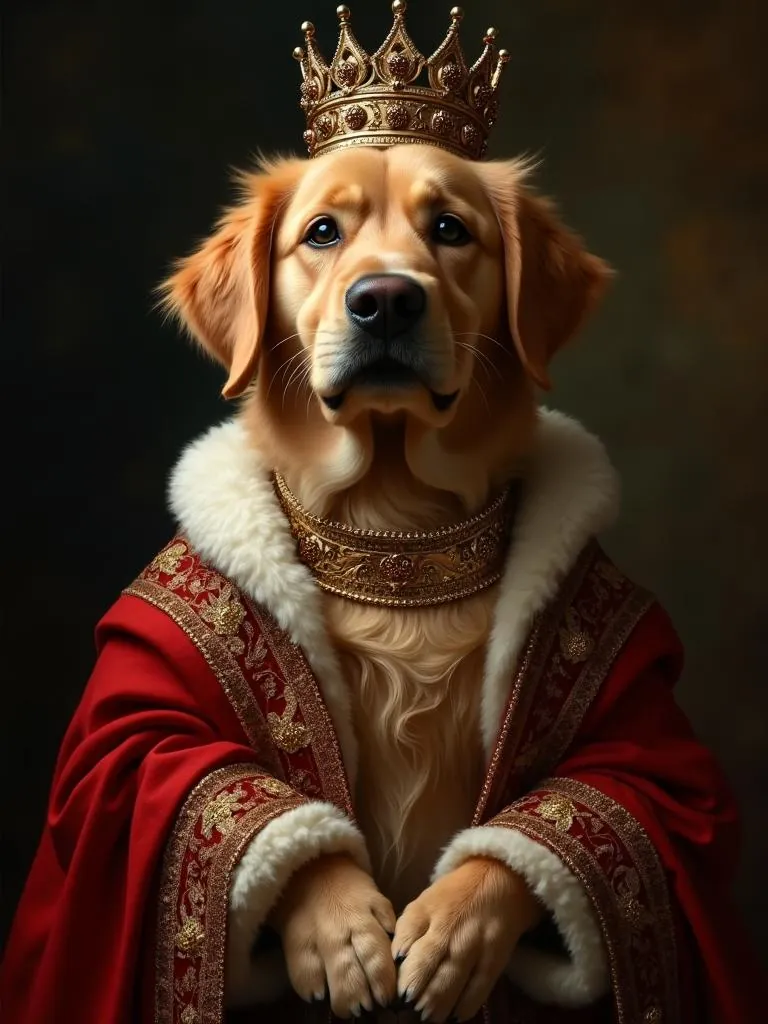
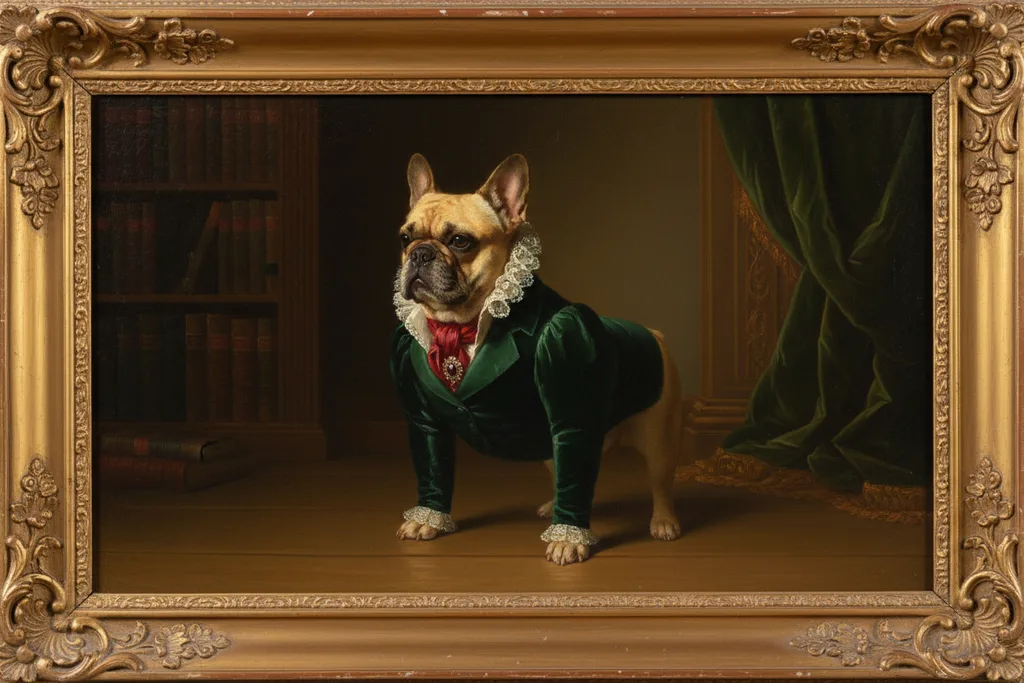
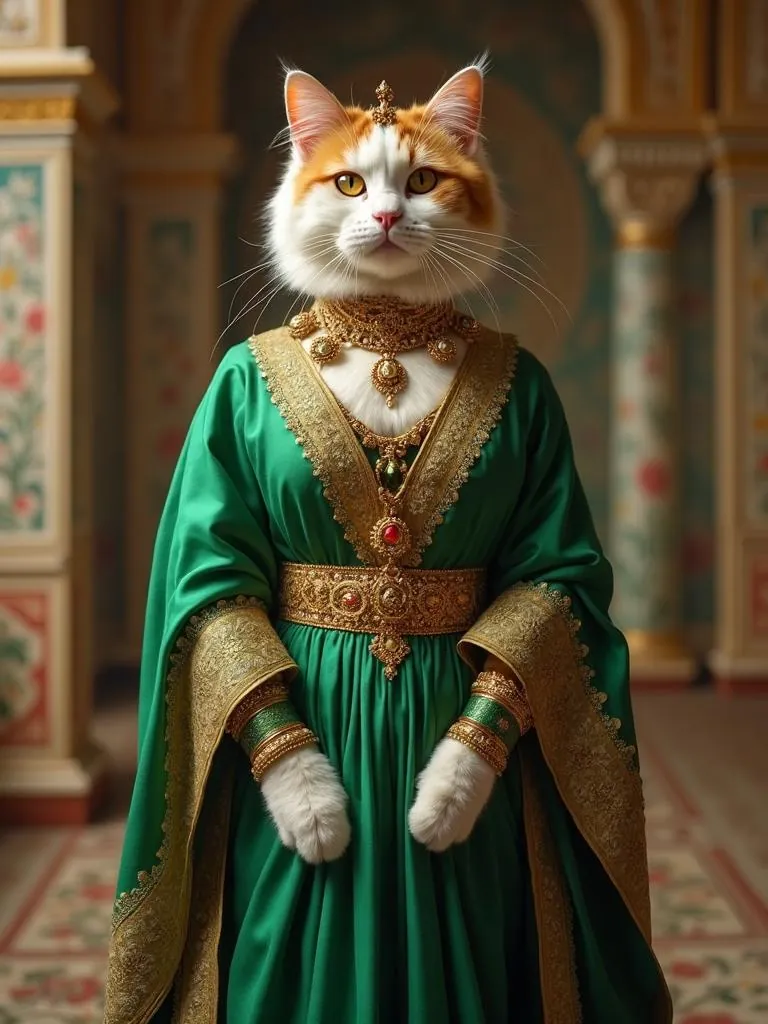
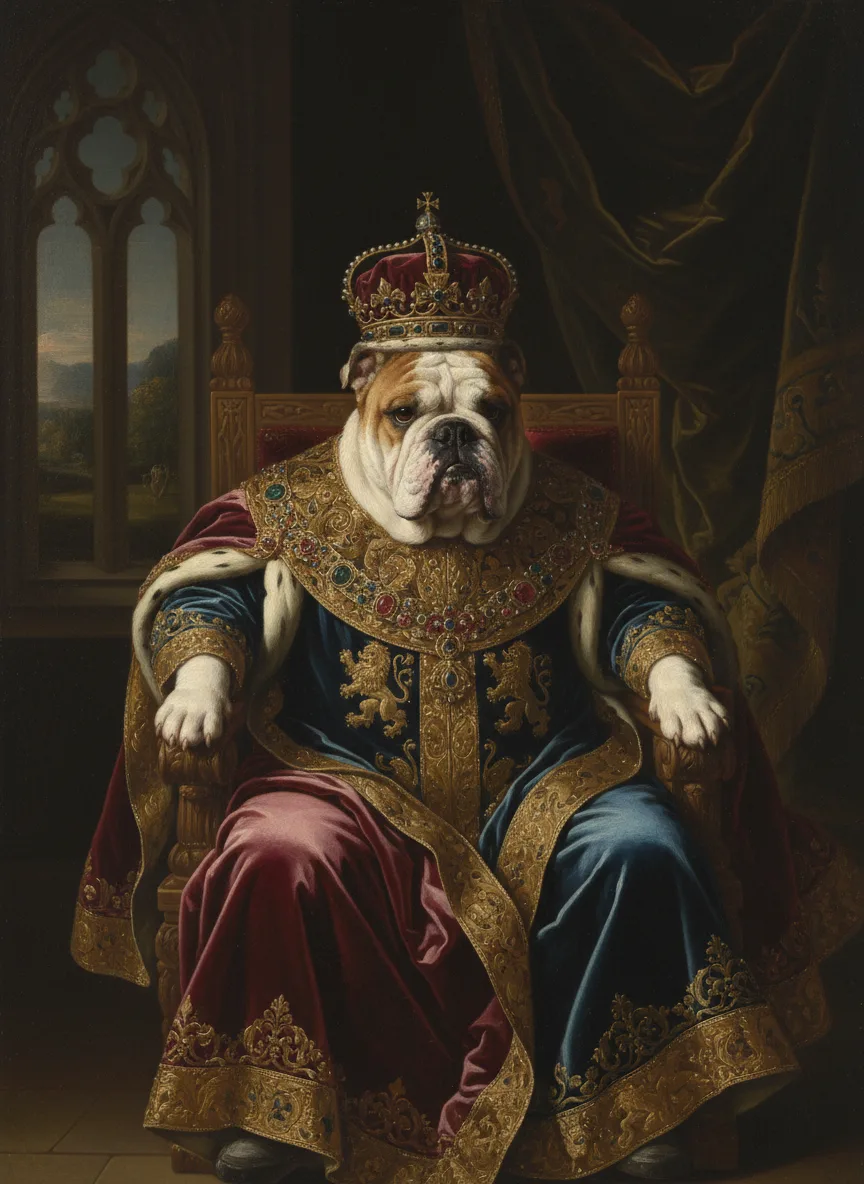
A royal portrait had one more job: to say, at a glance, "this person rules". To do that, painters placed the ruler high in the picture, surrounded him or her with objects that only a monarch could use, dressed the sitter in cloth and fur that the law reserved for the highest ranks, and often wrote the name and title on the picture itself. A royal pet portrait borrows the same signs. When your cat wears a crown and ermine, or your dog stands in a general's coat, the picture uses the same signs that European court painters used for centuries.
Court painters
Most royal portraits were made by court painters. Tate says royal courts were for centuries a major source of work for artists, and that monarchs gave their painters titles such as "King's painter". In England, Henry VIII brought Hans Holbein from abroad, Elizabeth I supported the miniature painter Nicholas Hilliard, and Charles I appointed Anthony van Dyck his principal painter.
| Painter | Court | What the museums record | Page in this guide |
|---|---|---|---|
| Hans Holbein the Younger | Henry VIII of England | Brought to England by the king (Tate) | Renaissance and Tudor |
| Nicholas Hilliard | Elizabeth I of England | The queen's miniature painter (Tate) | Renaissance and Tudor |
| Anthony van Dyck | Charles I of England | Appointed principal painter (Tate) | Baroque |
| Diego Velázquez | Philip IV of Spain | Court painter from 1623 (National Gallery) | Baroque |
| Hyacinthe Rigaud | Louis XIV of France | The king's portraitist (Versailles) | Baroque |
| François Boucher | Louis XV and Madame de Pompadour | Twelve portraits of Pompadour (Wallace Collection) | Rococo |
| Élisabeth Vigée Le Brun | Marie-Antoinette of France | Over 30 portraits of the queen and her family (National Gallery) | Rococo |
| Allan Ramsay | George III of Britain | The coronation portrait, copied over 100 times (Wallace Collection) | Georgian and Regency |
| Thomas Lawrence | George III of Britain | Principal Painter to the King from 1792 (National Gallery) | Georgian and Regency |
| Franz Xaver Winterhalter | Victoria of Britain and Louis-Philippe of France | Victoria's favourite portraitist (Versailles) | Victorian |
The story in order
The way Europe's rulers were shown changed over the centuries. Each step has its own page.
The Middle Ages. Before the painted portrait, a king appeared on his seal. The National Archives in London says every English monarch since Edward the Confessor has used a double-sided great seal, nearly always showing the ruler enthroned on one side and on horseback on the other. Painted likenesses followed in the 1300s: the Louvre dates its portrait of John II of France to 1355 to 1360, and Westminster Abbey calls its panel of Richard II, from the 1390s, the earliest known portrait of an English monarch. Read more in medieval royal portraits.
The Renaissance and the Tudors. Rulers kept painters on their staff, and portraits became planned statements of a family's right to rule. The Armada portrait of Elizabeth I survives in three versions, at the Queen's House in Greenwich, at Woburn Abbey and at the National Portrait Gallery in London, and Royal Museums Greenwich explains that once a picture of the queen's face was approved, many paintings were made from it. See Renaissance and Tudor portraits.
The Baroque 1600s. Many portraits were painted at life size for palace walls. Velázquez painted Philip IV of Spain for four decades, and the National Gallery says copies of his last portrait of the king were given to courtiers and visiting dignitaries. The Palace of Versailles says Rigaud's portrait of Louis XIV became an emblem of absolute monarchy across Europe. See Baroque court portraits.
The Rococo 1700s. At the French court the style turned lighter, with pale silks and graceful poses. Madame de Pompadour used portraits to protect her place at court, the Wallace Collection says, and Vigée Le Brun painted Marie-Antoinette. See Rococo court portraits.
Georgian and Regency Britain. British painters served four kings named George. Ramsay's coronation portrait of George III was copied over and over, Reynolds brought an idealised "grand manner" to portraits, and Lawrence became principal painter to the king. See Georgian and Regency portraits.
The Victorian age. Winterhalter painted Queen Victoria and her family for twenty years. In May 1860, the National Portrait Gallery in Canberra says, John Jabez Edwin Mayall photographed the royal family, and the queen allowed the pictures to be sold to the public. Tate says photography went on to become the most important medium of traditional portraiture, turning an expensive luxury into something almost everyone could afford. See Victorian royal portraits.
Portraits that travelled
A royal portrait was often made to leave the palace. Royal Museums Greenwich says portraits of Elizabeth I were commissioned as official gifts for foreign monarchs and favoured courtiers. The National Gallery says copies of Velázquez's last portrait of Philip IV were given to members of the court and to visiting dignitaries. In France, the Wallace Collection says, a workshop of copyists at Versailles called the Cabinet du Roi reproduced official portraits of Louis XV for embassies, public buildings and loyal friends. The Palace of Versailles still holds portraits of Queen Victoria and Prince Albert by Winterhalter from 1842, sent as gifts to the King of the French.
So the same image of a ruler could hang in many places at once, which is one reason several versions of a royal portrait often survive.
Queens, regents and the women of the court
Royal portraits of women carried their own messages. Elizabeth I ruled in her own right and shaped her image with care, as the page on Renaissance and Tudor portraits explains. The National Gallery's portrait of Queen Mariana of Spain from 1666 shows a widow in mourning who ruled as regent for her young son, holding a petition to show her official duties. Tate, writing about the Baroque in Britain, says portraits were one of the few ways in which women at court could exercise power. In France, the Wallace Collection says Madame de Pompadour used her portraits to project confidence and loyalty when her place at court was insecure.
The three things to read: pose, objects and clothes
Every royal portrait can be read through the same three questions.
How is the ruler posed? The National Gallery says the strict side view, or profile, was adopted from the heads of emperors on Roman coins and medals, so it became a symbol of power. Later painters turned the face toward us in a three-quarter view, showed the ruler standing full length near life size, or put the ruler on a horse. The page on royal portrait poses explains each one.
What objects are around the ruler? Royal Museums Greenwich sums up the basic set: crowns, orbs and sceptres all signified monarchy. Ermine, a white fur with black tail tips, was restricted to royalty and the high nobility, according to the same museum. A gold chain with a badge usually marks an order of knighthood. The National Gallery says the chain in Van Dyck's equestrian portrait of Charles I marks him as a member of the Order of the Garter, and his baton signals his military rank. See symbols of royal power.
What is the ruler wearing? Clothes showed rank, and some were even controlled by law. They could also be arranged for the picture: the Wallace Collection says Louis-Michel van Loo's portrait of Louis XV combines robes worn on two different days of his coronation. See royal portrait costume, and for uniforms, batons and medals, military portraits.
How to read a European royal portrait, step by step
- Find the sitter's eyes. A ruler who does not meet your gaze may be showing rank. The National Gallery says the doge of Venice in Giovanni Bellini's portrait does not return our look because no viewer was his equal.
- Check how much of the body you see, and the size of the canvas. The National Gallery says visitors to Gerrit van Honthorst's near life-size portrait of Elizabeth Stuart, Queen of Bohemia, would have judged her status partly from its size.
- Look at the hands. A sceptre, a baton, a petition or a sword each tells you about the sitter's role.
- Read the clothes and the fur. Ermine, lace, pearls and the collar of an order point to rank.
- Look behind the sitter. A column, a heavy curtain or a battle in the distance adds meaning. The Louvre in Paris, which holds Rigaud's Louis XIV of 1701, says the column in that portrait stands for strength, with a figure of Justice on its base.
- Look for words. Seals carried the owner's name around the edge, and Velázquez signed a paper in Philip IV's hand as "Painter to Your Majesty".
Common mistakes when reading royal portraits
Taking the picture as a record of fact. Portraits could flatter and invent. Royal Museums Greenwich calls the Armada portrait "in many ways a glorious fiction", because it shows the Spanish fleet destroyed when over two thirds of its ships returned home. The National Gallery says the Wilton Diptych shows Richard II as a beardless youth, although he was a grown man when it was made.
Looking for "the original". Royal Museums Greenwich says it is hard to speak of originals and copies in Tudor royal portraits, because approved patterns were painted many times. The Wallace Collection says over 100 replicas of Ramsay's George III appear to have been produced, many by Ramsay himself.
Assuming the famous painter painted everything. The Wallace Collection says Joshua Reynolds sent his sitters' clothes to specialist drapery painters, who painted the costumes for him.
Forgetting the time a portrait took. Some were quick and some were slow. The National Gallery says Queen Charlotte probably gave Thomas Lawrence only one sitting in 1789, while Colonel Tarleton sat nine times for Reynolds and Drouais spent from April 1763 to May 1764 on Madame de Pompadour.
European and Indian court portraits
India's royal courts had their own way of portraying their rulers, and Purrealism's nine Indian styles come from them. If you are choosing between a European and an Indian style, the guide to Indian court painting explains how those courts portrayed their rulers, and comparing the two helps you see which look you prefer for your pet.
Choosing a European style for your pet
Purrealism offers six European styles, and each takes its name from one of the periods in this guide.
| Purrealism style | Period behind it | Page to read | In the gallery |
|---|---|---|---|
| Medieval Knight | The Middle Ages | Medieval royal portraits | No example yet |
| Renaissance Royal | The Renaissance and the Tudors | Renaissance and Tudor portraits | Bulldog and four cats |
| Baroque Aristocrat | The 1600s and early 1700s | Baroque court portraits | Two bulldogs, an Australian shepherd and a cat |
| Regency Era | Britain in the Regency, from 1811 to 1820 | Georgian and Regency portraits | Four dogs and a cat |
| Victorian Noble | Britain from 1837 to 1901 | Victorian royal portraits | Four dogs and three cats |
| Military General | Officers and commanders | Military portraits | A Samoyed and a cat |
The gallery shows these finished examples, so you can see how each style looks on a real dog or cat before you decide. If you cannot choose, the style finder further down this page asks whether your pet is a dog or a cat, a word that describes it, the clothes and a scene you like, then suggests one of the six European styles and shows an example portrait. To compare all 15 styles, Indian and European, read how to choose a royal portrait style.
The portrait studio takes one photo of up to 5 MB. You can order the portrait as a digital download or as an art print in four sizes, 8 × 10, 12 × 16, 18 × 24 and 24 × 36 inches, on matte or glossy paper. A full-length pose with a column and a curtain has more small detail, so it suits the larger sizes.
Try it
European style finder
Answer four questions about your pet. The finder suggests one of the European styles and shows a portrait painted in it.
Answer all four questions to see your suggestion.
Every page in this guide, by topic
How to read a royal portrait
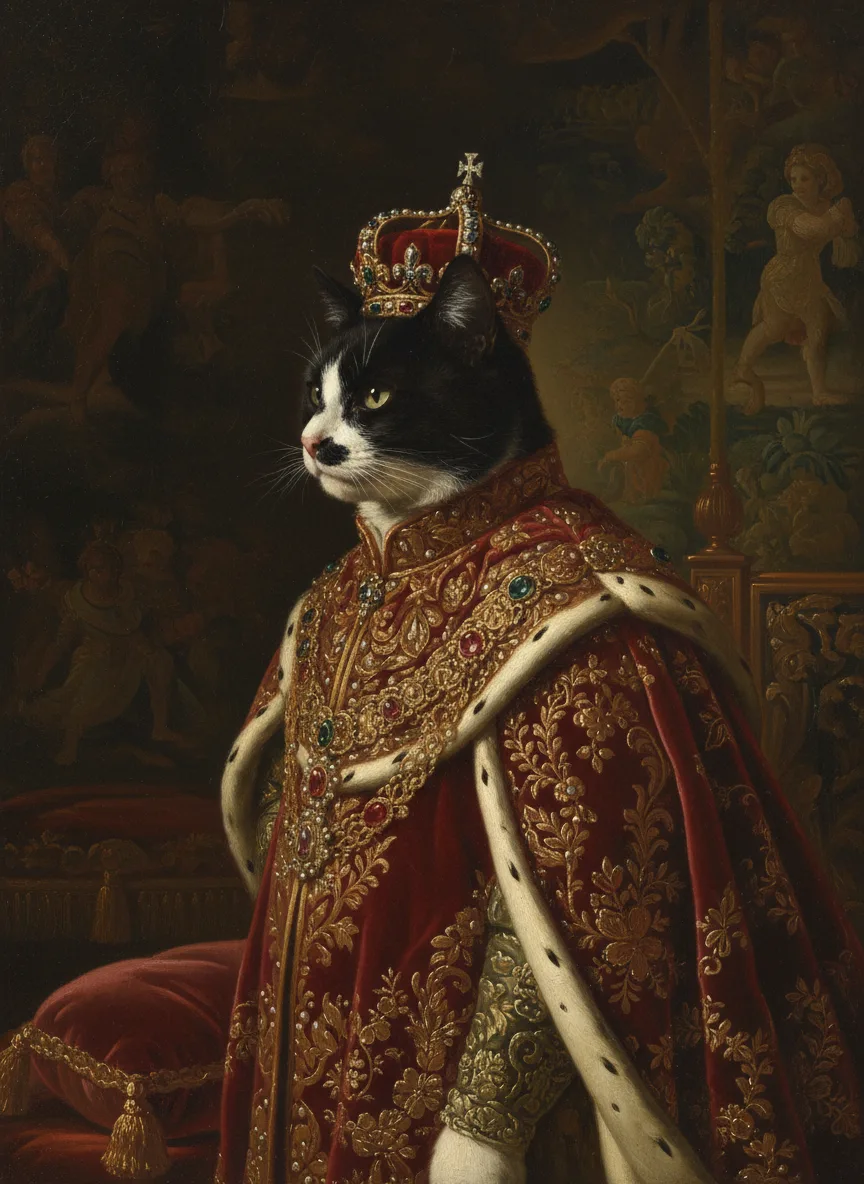
Poses in European royal portraits: profile, three-quarter view, full length and on horseback
Why European rulers were painted in profile, turned three-quarters, standing full length or on horseback, and what each pose told the people who saw it.
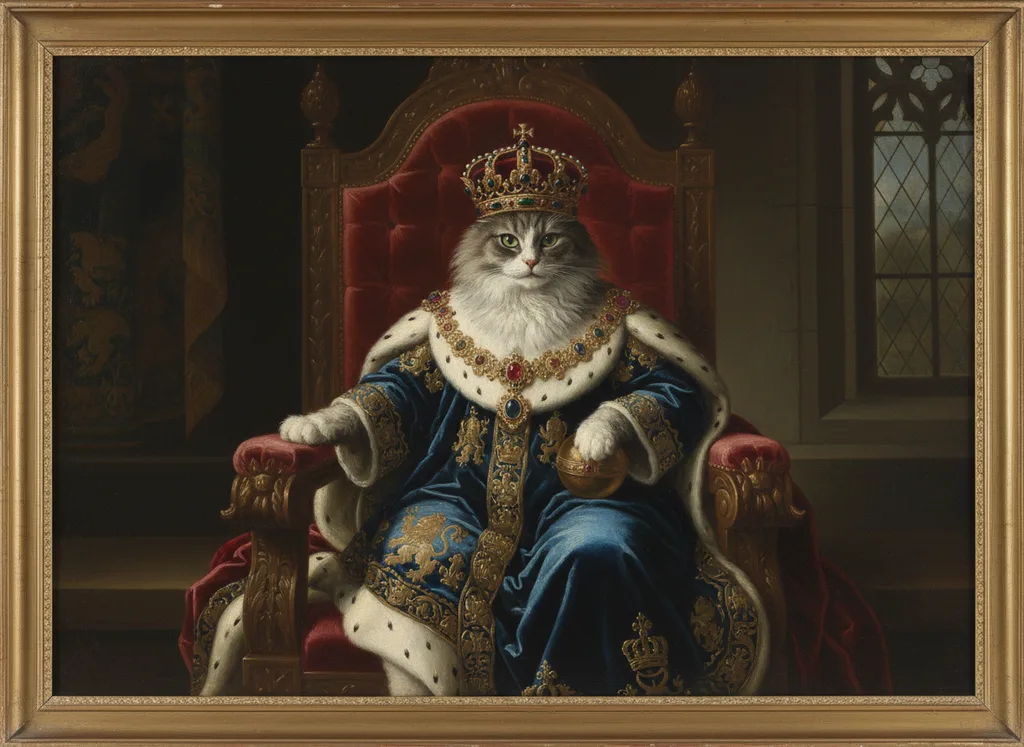
Symbols of royal power in European portraits: crown, orb, sceptre, ermine and more
What the crown, orb, sceptre, ermine, column, chains of knighthood and other objects meant in European royal portraits, with real paintings as examples.
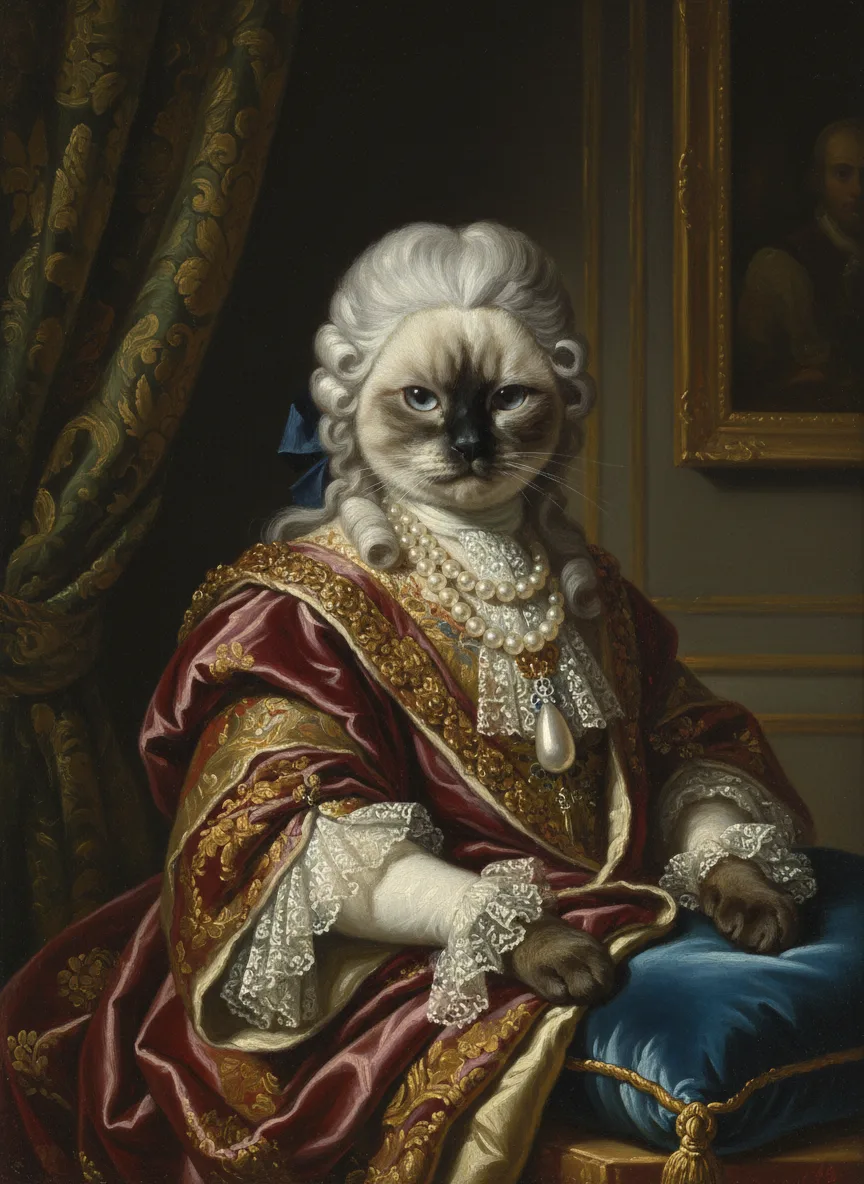
Costume in European royal portraits: how clothes, fur and wigs showed rank
How European rulers and nobles used robes, fur, ruffs, pearls, black silk and powdered wigs in their portraits to show rank, wealth and loyalty.
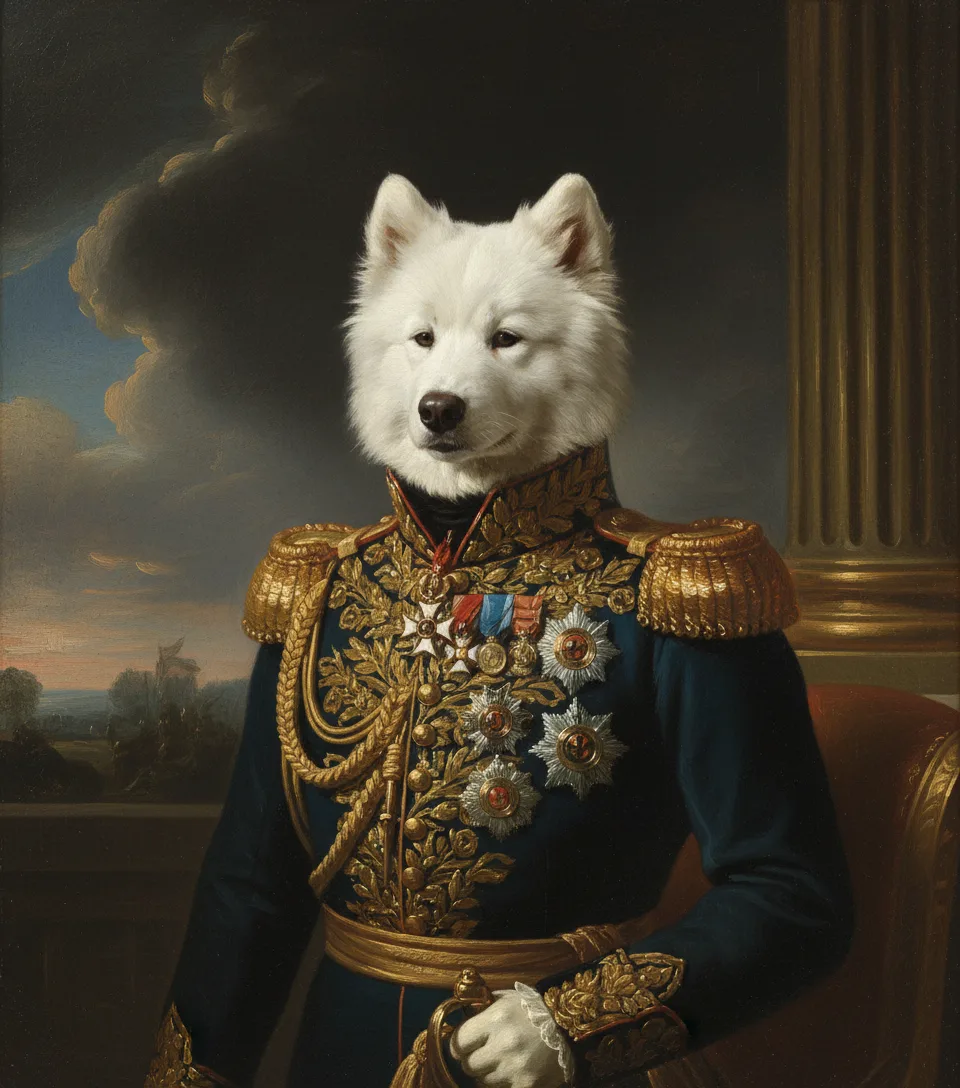
Military portraits in European art: armour, uniforms, batons and medals
How European kings, generals and officers were painted as soldiers, from tournament armour to red coats and rows of medals, and how to read each sign.
Medieval to Baroque
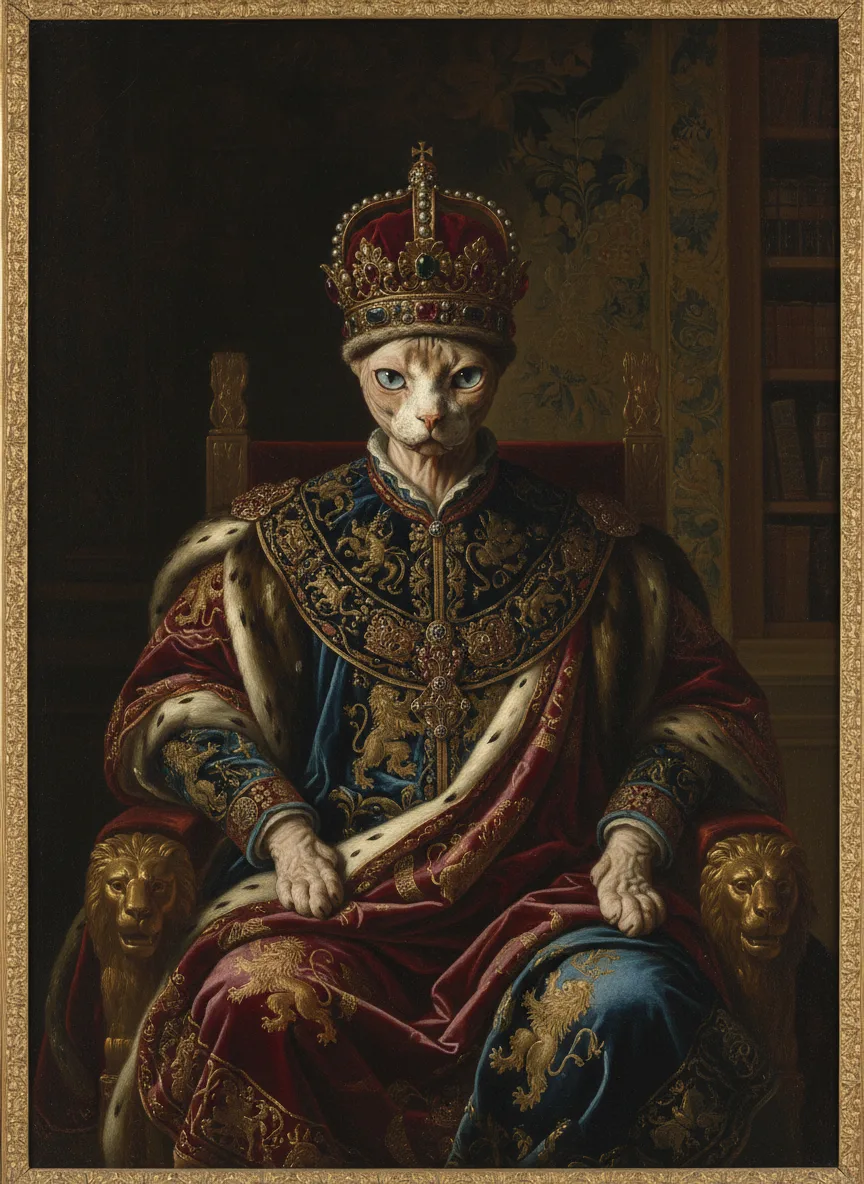
Medieval royal portraits: how kings were shown on seals, tombs and panels
Before the painted portrait, medieval kings appeared on seals, tomb effigies and altarpieces. How to read them, from Richard II to the Wilton Diptych.
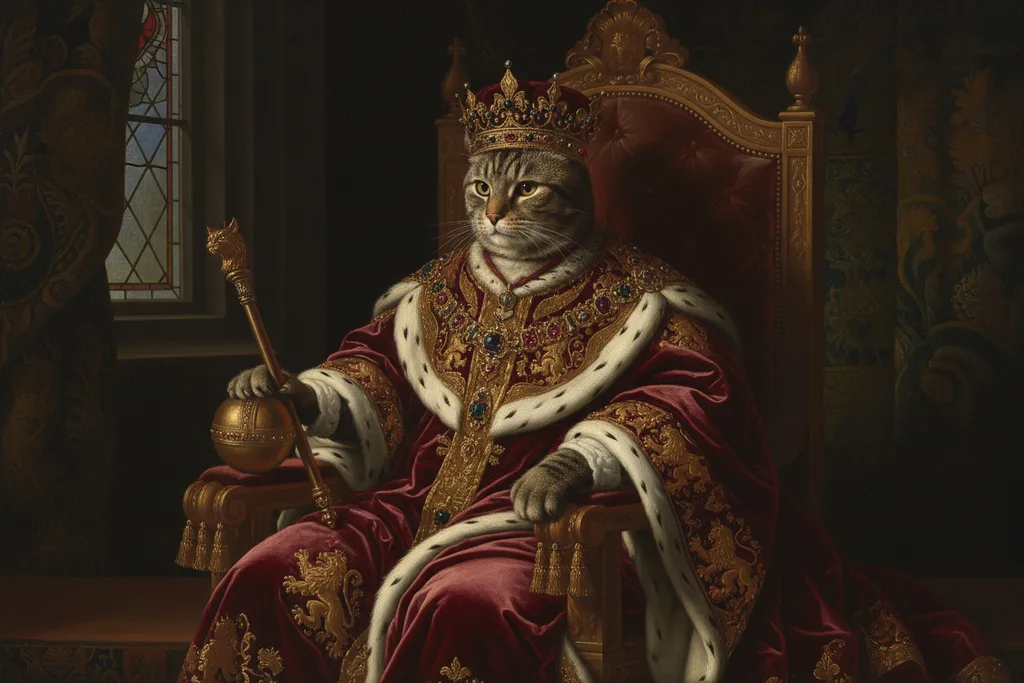
Renaissance and Tudor royal portraits: Holbein, Hilliard and the image of the ruler
How Renaissance courts and the Tudors used portraits as statements of power: court painters, Holbein's Henry VIII, Elizabeth I's approved face and miniatures.
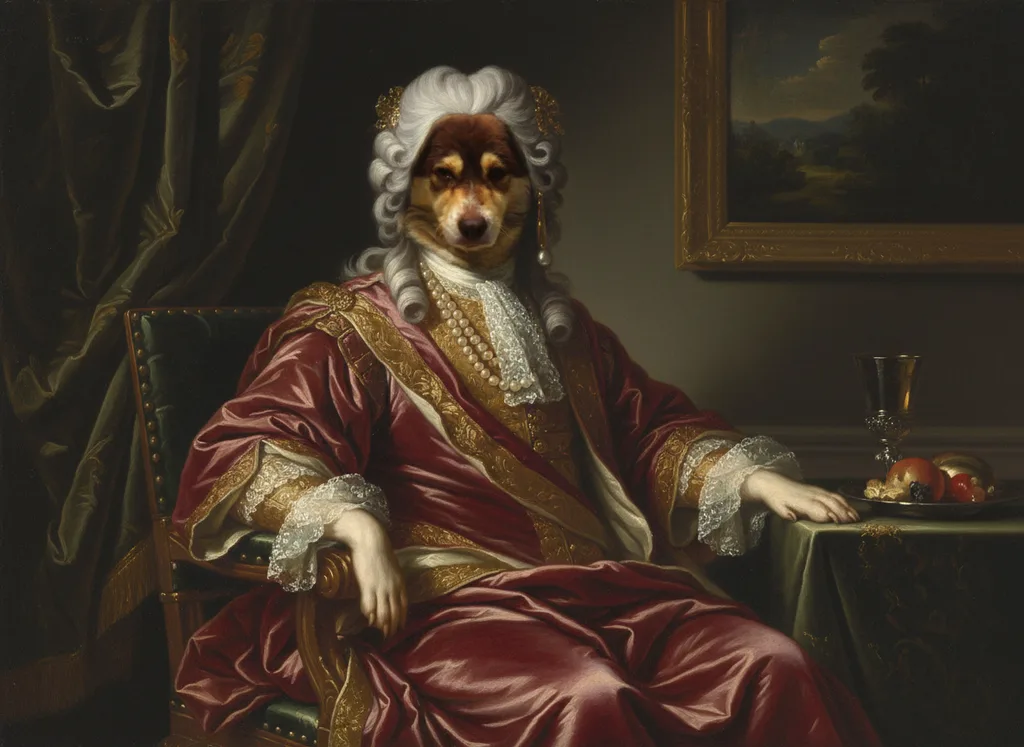
Baroque court portraits: how the kings and queens of the 1600s were painted
How Van Dyck, Velázquez, Rubens and Rigaud painted the rulers of the 1600s, and how palaces, copies and grand scale turned a portrait into power.
The 1700s and 1800s
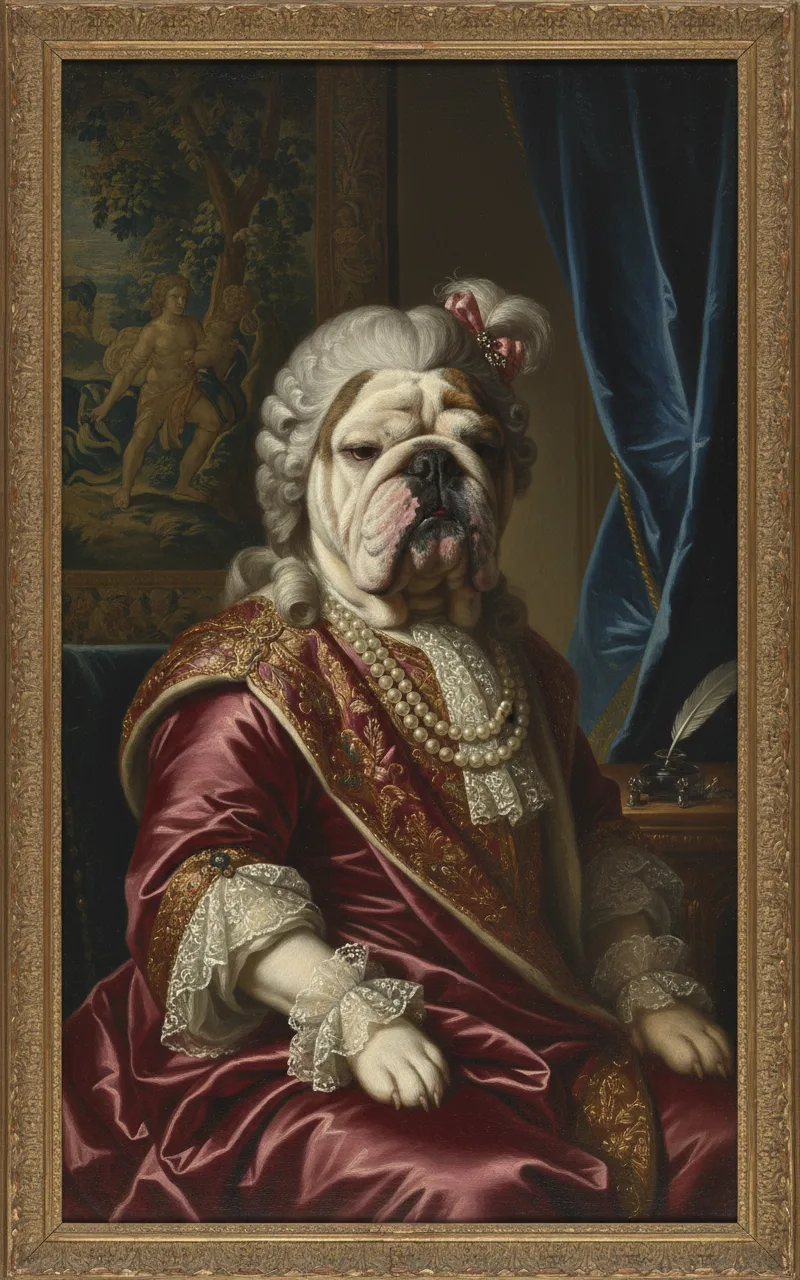
Rococo court portraits: Louis XV, Madame de Pompadour and Marie-Antoinette
How the French court of the 1700s was painted in the light, curving Rococo style, from Boucher's Madame de Pompadour to Vigée Le Brun's Marie-Antoinette.
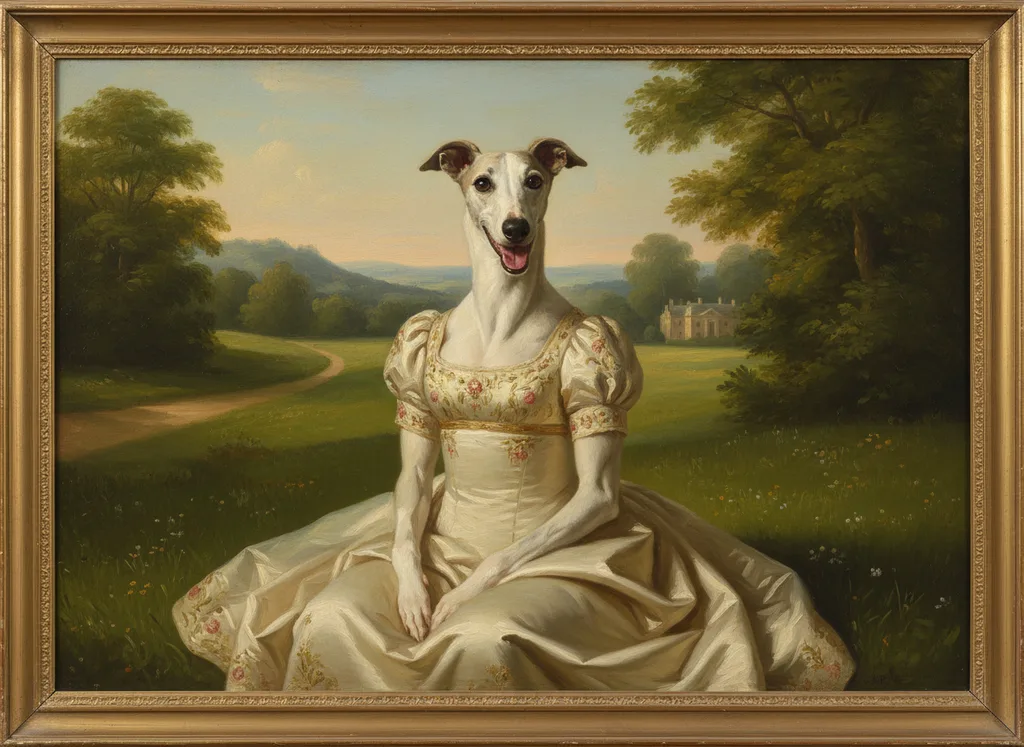
Georgian and Regency portraits: Ramsay, Reynolds, Gainsborough and Lawrence
How British kings, queens and nobles were painted from 1714 to 1830: coronation portraits and their copies, the grand manner, conversation pieces and more.
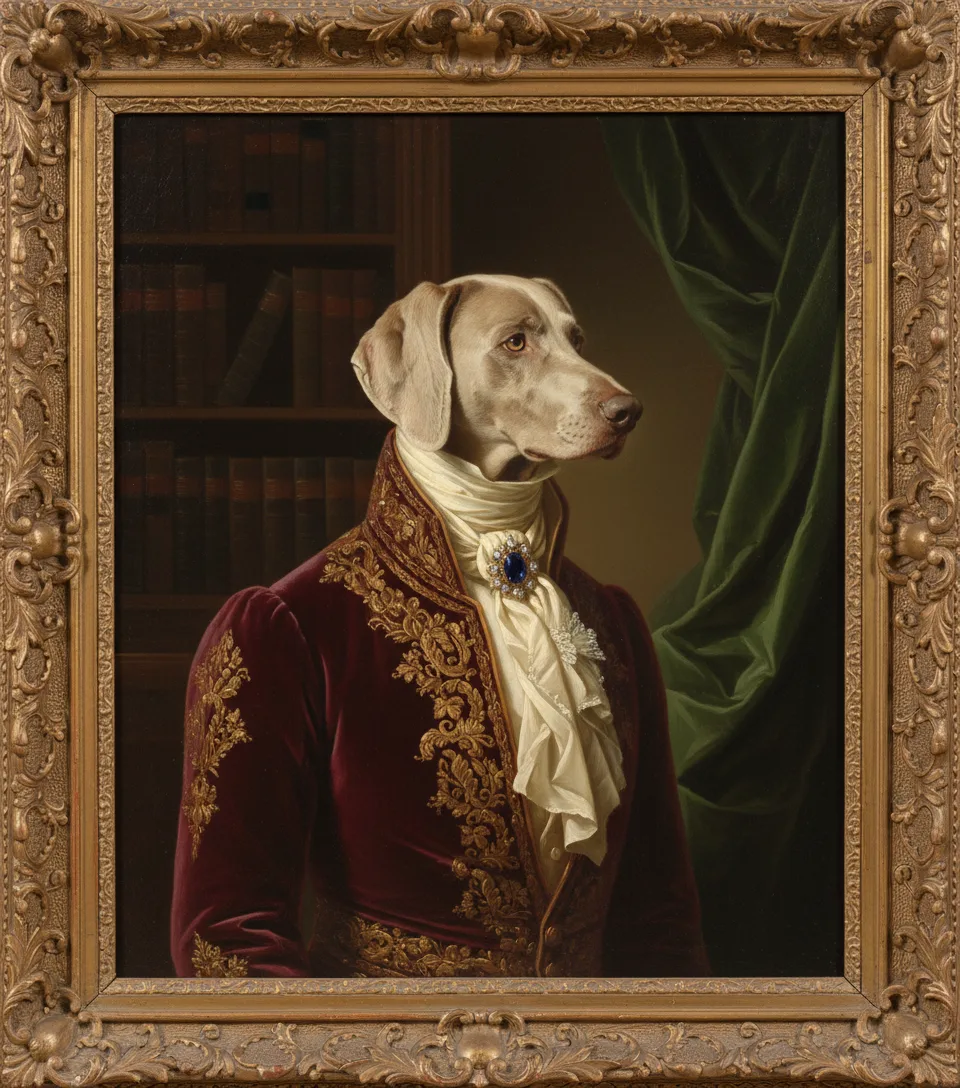
Victorian royal portraits: Winterhalter, coronation robes and the first royal photographs
How Queen Victoria was portrayed, from coronation robes and Winterhalter's court portraits to the first royal photographs sold to the public.
Questions and answers
What is a European royal portrait?
A European royal portrait is a painted, sculpted, drawn or photographed image of a European king, queen or member of a royal family, usually made by an artist working for the court. Tate says royal courts were for centuries a major source of work for artists, and that monarchs gave their painters titles such as King's painter. In England, Henry VIII employed Hans Holbein and Charles I employed Anthony van Dyck.
Why did kings have their portraits painted?
Kings had their portraits painted to show their power and to record what they looked like. Tate says that before photography a painted, sculpted or drawn portrait was the only way to record a person's appearance, and that portraits have always been used to show the power, importance, virtue, beauty, wealth, taste or learning of the sitter. Royal portraits were also sent abroad as gifts.
Did European court painters flatter their sitters?
European court painters usually flattered their sitters. Tate says portraits have almost always flattered the sitter, and that painters who refused to flatter, such as William Hogarth, tended to find their work rejected. It names Francisco de Goya as an exception, for his apparently bluntly truthful portraits of the Spanish royal family. Royal Museums Greenwich calls the Armada portrait of Elizabeth I a glorious fiction.
How long did royal portraits take?
Royal portraits took anywhere from a single sitting to more than a year. The National Gallery in London says Queen Charlotte probably gave Thomas Lawrence only one sitting in 1789, and that Colonel Tarleton had nine sittings with Joshua Reynolds. François-Hubert Drouais began his portrait of Madame de Pompadour in April 1763 and finished it in May 1764.
What is a court painter?
A court painter is an artist employed by a royal court to paint the ruler, the royal family and the courtiers. Tate says monarchs gave these artists titles such as King's painter, and that they could be among the most famous artists of the day. Charles I appointed Anthony van Dyck Principal Painter in Ordinary, and Diego Velázquez served Philip IV of Spain as court painter from 1623.
Which painters worked for European royal courts?
Many leading European painters worked for royal courts. Tate names Hans Holbein at the court of Henry VIII, Nicholas Hilliard for Elizabeth I and Anthony van Dyck for Charles I. The National Gallery in London names Velázquez for Philip IV of Spain and Thomas Lawrence as Principal Painter to George III from 1792. The Palace of Versailles calls Franz Xaver Winterhalter Queen Victoria's favourite portraitist.
What was the first portrait painting?
Portraiture is thousands of years old, far older than European royal portraits. Tate says it goes back at least to ancient Egypt, where it flourished 5,000 years ago by Tate's approximate dating. For European rulers, the Louvre holds a portrait of John II of France dated 1355 to 1360, and Westminster Abbey holds a panel of Richard II from the 1390s, the earliest known portrait of an English monarch.
How do you read a European royal portrait?
You read a European royal portrait by looking at five things in turn: the pose, the objects, the clothes, the setting and any inscription. A crown, orb and sceptre mark a monarch. White fur with black spots is ermine, which Royal Museums Greenwich says was restricted to royalty and the high nobility. A gold chain with a badge usually marks an order of knighthood, such as the Order of the Garter.
How did photography change royal portraits?
Photography made royal portraits cheap enough for ordinary people to own. Tate says photography became the most important medium of traditional portraiture, turning an expensive luxury into something almost everyone could afford. The National Portrait Gallery in Canberra says Queen Victoria allowed photographs of her family taken by John Jabez Edwin Mayall in May 1860 to be sold to the public.
How do I choose a European royal style for my pet?
Choose a European royal style for your pet by the period and look you like best. Purrealism offers six: Renaissance Royal, Baroque Aristocrat, Regency Era, Victorian Noble, Military General and Medieval Knight. The gallery shows finished examples in five of them. The style finder on the European royal portraits guide asks about your pet, a word for it, its clothes and a scene, then suggests one style.
Where can I see European royal portraits?
You can see European royal portraits in several public collections. The National Gallery in London holds Van Dyck's Equestrian Portrait of Charles I and portraits of Philip IV of Spain by Velázquez. The Louvre in Paris holds Rigaud's 1701 portrait of Louis XIV. Westminster Abbey displays its 1390s panel of Richard II, and the Queen's House in Greenwich shows one of the three Armada portraits of Elizabeth I.
Sources
- Portrait, Tate. Accessed September 29, 2026.
- Court, Tate. Accessed September 29, 2026.
- Seals, The National Archives. Accessed September 29, 2026.
- Jean II le Bon (1319-1364), Musée du Louvre. Accessed September 29, 2026.
- Richard II and Anne of Bohemia, Westminster Abbey. Accessed September 29, 2026.
- Alesso Baldovinetti, Portrait of a Lady, National Gallery, London. Accessed September 29, 2026.
- Elizabeth I Armada Portrait: why are there 3 versions?, Royal Museums Greenwich. Accessed September 29, 2026.
- The 'Armada' portrait and Elizabethan propaganda, Royal Museums Greenwich. Accessed September 29, 2026.
- Symbolism in portraits of Queen Elizabeth I, Royal Museums Greenwich. Accessed September 29, 2026.
- Anthony van Dyck, Equestrian Portrait of Charles I, National Gallery, London. Accessed September 29, 2026.
- Diego Velázquez, Philip IV of Spain, National Gallery, London. Accessed September 29, 2026.
- Louis XIV en grand costume royal, par Hyacinthe Rigaud, Château de Versailles. Accessed September 29, 2026.
- Madame de Pompadour, The Wallace Collection. Accessed September 29, 2026.
- Elisabeth Louise Vigée Le Brun, Self Portrait in a Straw Hat, National Gallery, London. Accessed September 29, 2026.
- François-Hubert Drouais, Madame de Pompadour at her Tambour Frame, National Gallery, London. Accessed September 29, 2026.
- George III, The Wallace Collection. Accessed September 29, 2026.
- Louis XV, The Wallace Collection. Accessed September 29, 2026.
- Reynolds's Studio, The Wallace Collection. Accessed September 29, 2026.
- Sir Thomas Lawrence, Queen Charlotte, National Gallery, London. Accessed September 29, 2026.
- Sir Joshua Reynolds, Colonel Tarleton, National Gallery, London. Accessed September 29, 2026.
- Francisco de Goya, The Duke of Wellington, National Gallery, London. Accessed September 29, 2026.
- Franz Xaver Winterhalter, Château de Versailles. Accessed September 29, 2026.
- Queen of cartes, National Portrait Gallery, Canberra. Accessed September 29, 2026.
- The Wilton Diptych, National Gallery, London. Accessed September 29, 2026.
- Giovanni Bellini, Doge Leonardo Loredan, National Gallery, London. Accessed September 29, 2026.
- Gerrit van Honthorst, Elizabeth Stuart, Queen of Bohemia, National Gallery, London. Accessed September 29, 2026.
- Louis XIV (1638-1715), roi de France, Musée du Louvre. Accessed September 29, 2026.
- Diego Velázquez, Philip IV of Spain in Brown and Silver, National Gallery, London. Accessed September 29, 2026.
- George IV, Westminster Abbey. Accessed September 29, 2026.
- What do YOU see in these Royal Portraits? Tudors to Windsors, Royal Museums Greenwich. Accessed September 29, 2026.
- Illusions of Power in British Baroque, Tate. Accessed September 29, 2026.
- Juan Bautista Martínez del Mazo, Queen Mariana of Spain in Mourning, National Gallery, London. Accessed September 29, 2026.
- VII. Fashions in Fur, British History Online (London Record Society). Accessed September 29, 2026.
Short reads on this topic
Articles from Purrspectives that answer one question each.
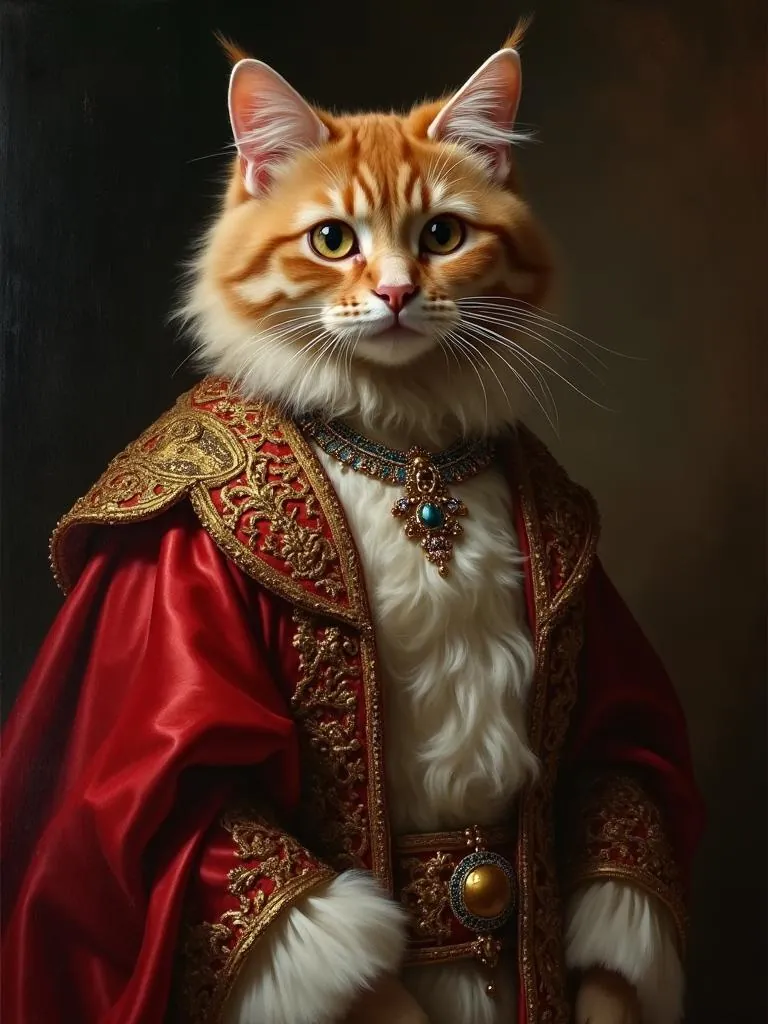
What was the Victorian era? Dates, fashion and portraits of 1837 to 1901
The Victorian era is Queen Victoria's reign, 1837 to 1901. Her life, what Victorians wore, and how they had portraits painted and photographed.
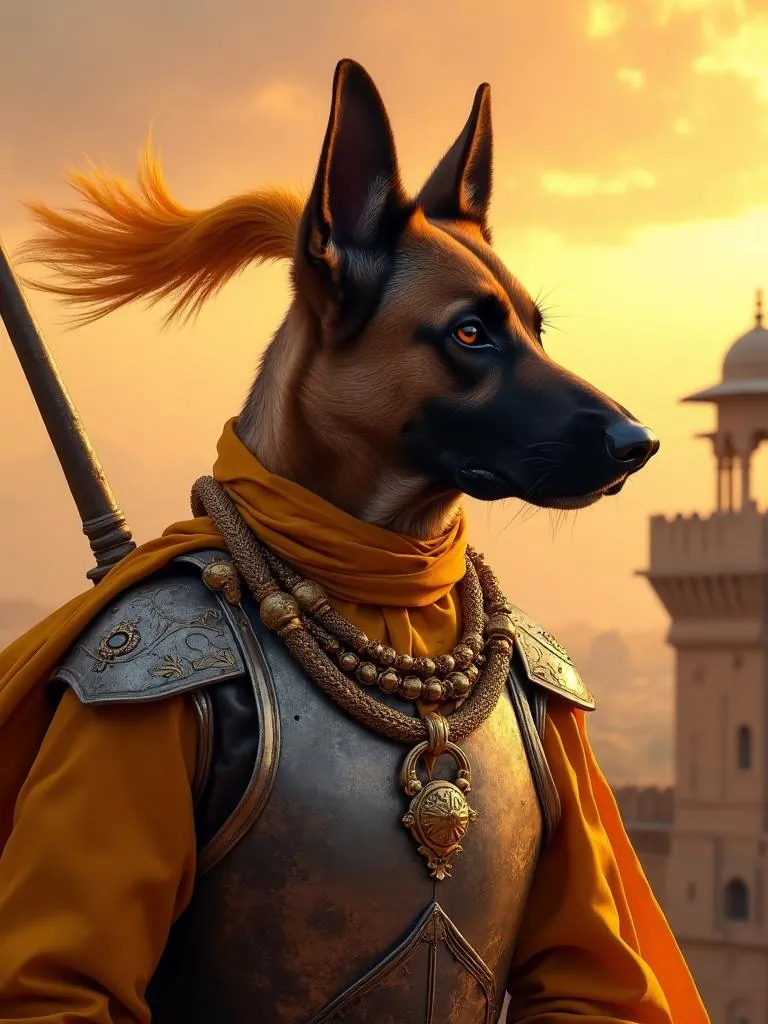
Military dog portraits: the real dogs who served, and your dog as a general
Real war dogs such as Stubby and Gander earned medals and a rank. Here is their story, and how to make a dog general portrait of your own dog.
Dogs in medieval paintings and manuscripts: hunting hounds, lapdogs and faithful friends
Medieval dog paintings show hunting hounds, lapdogs and loyal dogs in painted books, on church brasses and in the Bayeux Tapestry. Where to find each one.