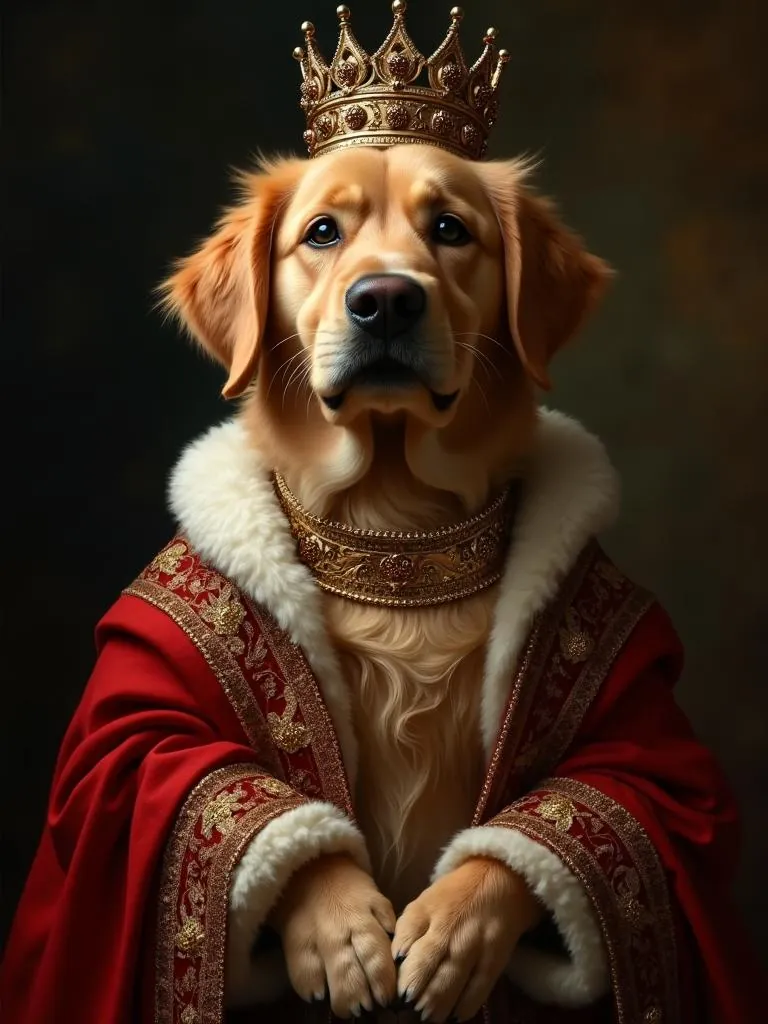
Framing and hanging
Framing and hanging a royal pet portrait: frames, glass, walls and light
How to frame, hang and light a pet portrait print so it stays bright: frame parts, mats, glazing, hanging height, wall hardware and safe places to hang it.
By Purrealism
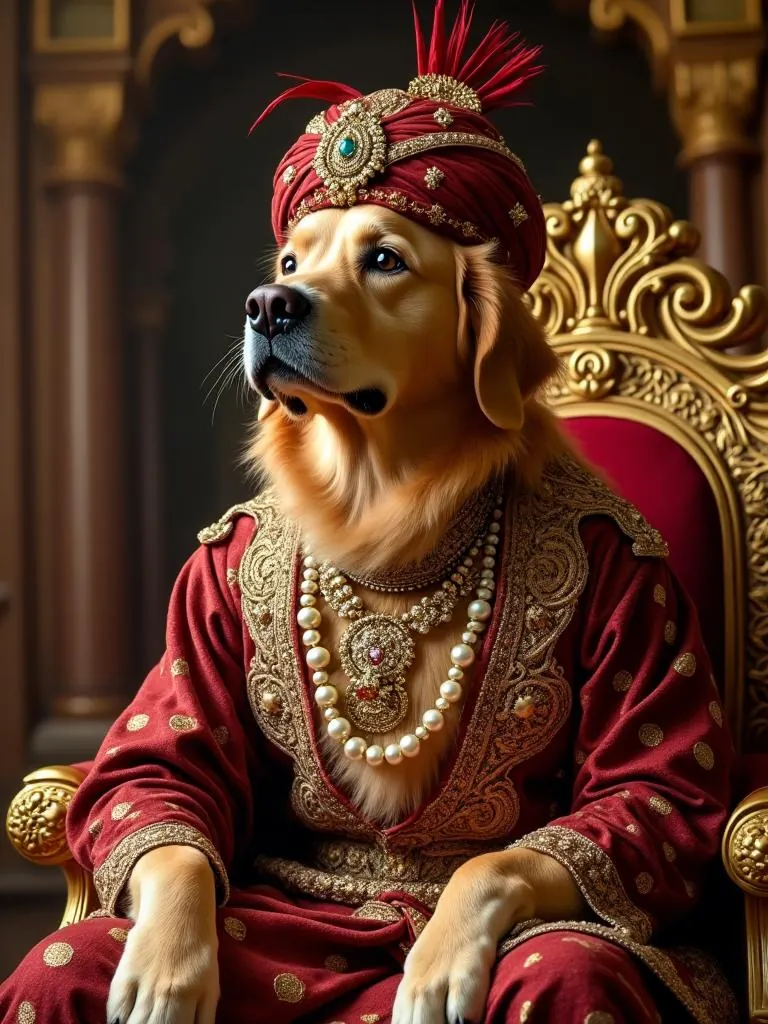
A royal portrait of your dog or cat is made to be looked at every day. Once the print arrives, three questions decide how it looks and how long its colours last: what frame holds it, where it hangs, and what light falls on it. This guide walks through each step in order, from the parts of a frame to the nail in the wall, and links to a deeper page on every step. Most of the advice comes from the Canadian Conservation Institute, the Government of Canada's conservation institute in Ottawa, which publishes care guides for museums and collectors. The same rules that protect a museum print protect yours.
Why framing matters for a pet portrait
A Purrealism art print is printed on paper, in a matte or glossy finish. The guide to art prints and paper explains how a print is made and how to store it before it is framed. Paper and the colours on it react to light, damp air, heat and touch. A frame puts a barrier between the print and all four.
The Canadian Conservation Institute gives three reasons to frame any work of art: to protect it, to display it more easily, and to enhance its appearance. All three apply to a pet portrait. The glazing (the sheet of glass or clear plastic at the front) keeps fingers, dust and cooking fumes off the print. The frame gives you a firm edge to hold and a place to fix hanging hardware. The colour and shape of the frame also change how the costume and the background of the portrait look.
Framing also protects the print from people. A portrait of the family dog tends to hang where the family spends time: the living room, the hallway, the stairs. Those are the places where a shoulder, a bag or a wagging tail can touch the wall.
A short history of frames and hanging
The frame on your wall has a long history. The Victoria and Albert Museum in London dates separate wooden picture frames in Italy to the 15th century. The museum says they grew out of earlier metal and wooden frames on church altarpieces, and were used to protect and enhance both religious and non-religious paintings. The National Gallery in London puts it this way: frames have been designed as removable items that enhance a painting only since the early 1500s.
Some of those early frames were covered in gold. A carved frame from Venice, made between 1550 and 1600 and now in the V&A, is carved from lime or poplar wood and water gilded. That means thin gold leaf laid over a coloured layer called bole, on top of a thin white ground. The same record says that the frame's pierced carving once let the colour of the wall show through it, and that the frame was later damaged by damp, with water marks and mould on the back. Even a museum frame suffers when it hangs somewhere wet.
The way pictures were hung has changed as well. In 1787 the Royal Academy's summer exhibition in London filled the Great Room at Somerset House with paintings. The Government Art Collection calls the print of that exhibition, engraved by Pietro Antonio Martini after a drawing by Johann Heinrich Ramberg, an important record of how the exhibitions were presented. In the V&A's copy of the print, frames cover the walls edge to edge, from just above the visitors' heads to the ceiling, and the top rows lean forward. Small dogs run about on the floor among the crowd. Today most homes hang fewer pictures, lower, with space between them. The page on planning a gallery wall around a pet portrait shows how to group several frames without the crowding of 1787.
The parts of a framed print
A framed print is a stack of layers. From front to back:
| Layer | What it does | What to look for |
|---|---|---|
| Frame | Holds the stack together and carries the hanging hardware | A strong corner join and an inner lip deep enough for all the layers |
| Glazing | Keeps dust, touch and some ultraviolet light off the print | Glass or acrylic, with or without an ultraviolet filter |
| Mat | Holds the print back from the glazing and adds a border | Acid-free board with a bevelled window |
| The portrait itself | Held by hinges or corners, never glued flat | |
| Backing board | Supports the print from behind | Acid-free board or plastic sheet |
| Seal | Closes the gap at the back | Gummed linen tape or brown kraft tape |
The inner lip of the frame is called the rabbet (you will also see it spelled rebate). The Canadian Conservation Institute says it should be deep enough for a mat, a backing board and a glazing material, which come to 2 cm in total (the Institute's rounded figure). It also warns that metal clip-together frames are not always deep enough for all three. The page on how to measure a frame explains the rabbet, the sight size and the outside size, so you can check a frame before you buy it.
Frame, mat and glazing
The frame is the part people notice first. The page on choosing a frame for a royal pet portrait matches frame colours and widths to the portrait styles, such as a gold frame beside the gold throne of the Maharaja portrait.
The mat is the card border between the frame and the print. The Institute explains that, inside a frame, a window mat creates an air space that keeps the image from touching the glazing. The page on mats for framed prints covers mat colours, borders and the materials that will not stain the paper.
The glazing is glass or acrylic. The Institute lists the trade-offs: glass is heavier and breaks more easily, while acrylic is lighter but scratches more easily and bows in large sizes. The page on glass or acrylic for a framed print compares them and explains what ultraviolet filtering can and cannot do.
Light, damp and heat: the three slow risks
Most damage to a framed print is slow. It happens over months and years, so you do not see it until it is done.
Light. The Canadian Conservation Institute says visible light fades colours, ultraviolet (UV) light yellows and weakens materials, and infrared heats them. It defines the light dose as the light level in lux multiplied by the hours of exposure. A print under a dim light for a long time can fade as much as a print under a bright light for a short time. The Institute also says there is no true recovery possible from faded colours. The Library of Congress makes a related point about glazing: filtering out ultraviolet removes the most damaging part of sunlight, and all light, visible light included, damages paper.
Damp. High humidity lets mould grow on paper, and the V&A frame from Venice shows what damp does to a frame. The Institute advises against hanging art on the inside of an exterior wall in winter, because that surface gets cold and water can condense behind the frame.
Heat. Radiators, air vents, fireplaces and hot lamps all dry and stress a picture. The Institute lists areas near heat radiators, air vents or fireplaces as poor places to display paintings.
Two pages cover these risks in detail: how to light a framed portrait at home deals with lamps and bulbs, and where not to hang a print deals with sunlight, damp rooms and heat sources.
The order to work in
It helps to make decisions in this order, because each one limits the next.
- Choose the wall. Pick a dry interior wall that direct sun does not reach. The wall sets the largest print that fits and the light the portrait will get.
- Choose the print size. Purrealism prints come in four sizes: 8 × 10, 12 × 16, 18 × 24 and 24 × 36 inches. The Purrspectives article how big is an 8 × 10 print gives all four in centimetres and shows which mat and frame sizes fit each one.
- Choose the frame and mat. The mat border and the frame width add to the print size. A 12 × 16 inch print with a 3 inch mat and a 1 inch frame covers 20 × 24 inches of wall.
- Choose the glazing. Weigh glare, weight and cost. Large frames are heavy with glass.
- Choose the hardware. Match it to the frame's weight and to what the wall is made of.
- Mark the height and hang it. Work out the nail position from the centre height you want.
- Set the light. Aim lamps so they light the portrait without a reflection in the glass.
The hanging planner further down this page helps with step 6. You pick one of the four print sizes, its orientation and the frame and mat border, then enter the centre height, the wire drop and your furniture's width and height. It shows the nail height (the centre height, plus half the frame height, minus the wire drop), the gap above the furniture and the frame's width as a percentage of the furniture's width, with a drawing to scale.
Hanging it on the wall
Two questions come up every time a frame goes on a wall: how high, and on what. The hardware needs care. The Canadian Conservation Institute's guide to caring for paintings says works of art frequently fall off walls because hanging hardware fails or was badly installed, and that lighter works are often the victims, because less attention is paid to what they need.
For height, measure to the centre of the frame and work from there. The page on how high to hang a portrait gives a method for choosing the centre height, using the Smithsonian's guidelines for exhibitions that people view both standing and seated, and a formula that turns the centre height into a nail position.
For hardware, the Canadian Conservation Institute describes D-rings (flat metal rings screwed to the back of the frame) and advises hanging a frame from two points on the wall, which makes it easier to level and keeps it from falling if one hanger comes loose. Walls differ: the Institute says a plywood wall holds a nailed hook without an anchor, while drywall, plaster, brick and concrete need drilled holes with wall plugs or anchors. The page on picture hanging hardware for drywall, plaster and brick goes through each wall type.
Common mistakes
These are the mistakes the conservation guides warn about most often.
- Hanging in direct sun. The Canadian Conservation Institute puts direct noon sunlight at almost 100,000 lux, against 50 lux for sensitive works on paper in a museum.
- Letting the print touch the glass. The Institute says a framed work should not touch the glazing, to avoid image transfer, staining or mould. A mat or spacers keep them apart.
- Taping the print to the mat with household tape. The Institute says gummed and pressure-sensitive tapes from the shop age badly and will, in time, stain and damage the paper. Paper hinges hold a print safely.
- A light fixed to the frame. The Institute advises against attaching light fixtures to frames, because they create a hot spot and add to fading.
- One hook and a worn wire. Wire can fray. Two hooks and a checked wire, or two D-rings on two hooks, are safer.
- Spraying cleaner on the glazing. The Library of Congress says to put the cleaning agent on the cloth instead of on the glazing. The Canadian Conservation Institute gives the reason: this stops liquid from staining the mat or the artwork.
- A frame where people brush past. The Institute advises against narrow corridors and stairwells where a picture can be touched or bumped.
Framed print, unframed print or a screen
Here is how the main ways to show a portrait compare. Each suits a different room and a different reader.
| Option | Protection | Weight | Best for |
|---|---|---|---|
| Framed print behind glass | Keeps off dust and touch; UV filter optional | Heaviest | Small and medium sizes on a solid wall |
| Framed print behind acrylic | Keeps off dust and touch; UV filter optional | Lighter than glass | Large sizes, children's rooms, stairs |
| Unframed print on a shelf or board | None from dust, touch or damp | Lightest | Short-term display only |
| Digital pack on a screen | No paper exposed to light; keep backup copies of the file | Depends on the screen | Phones, computers, TVs and digital frames |
The Institute's guide on glazing says that plastic is lightweight, which makes it a common choice for large works, and that glass is heavier and needs sturdy frames and hanging systems. For a 24 × 36 inch print, that difference in weight is worth weighing before you choose.
The digital pack is a high-resolution download, and a screen shows it without exposing any paper to light. The page on showing a digital pet portrait on a screen covers phones, televisions and digital frames, and how to keep the file safe.
How this applies when you choose a portrait
Framing choices start before you order. Three decisions in the portrait studio affect the frame and the wall.
The size. Hold a sheet of paper cut to the print size, plus the mat and frame you plan, against the wall. A small 8 × 10 inch portrait suits a desk or a shelf. A 24 × 36 inch print needs a wide wall and strong hardware. The pricing page lists the four sizes side by side.
The finish. Matte and glossy paper react differently to light in the room. Behind glazing, the glazing adds its own reflection, so the room's light matters for both finishes. If the portrait faces a window, plan the glazing and the lamp angles with care.
The style. A portrait with a strong gold colour, such as the Maharaja with his gold throne, sits well in a gold or warm wood frame. A portrait with steel armour against a sunset sky, such as the Rajput Warrior, suits dark wood or bronze. Browse the gallery to see the finished portraits and their colours, and the Purrspectives article on how to choose a royal portrait style for your pet for help with the style itself.
If you have questions about sizes or finishes, the questions and answers page covers the portrait studio and the two editions.
Try it
Hanging planner
Work out where the nail goes, and see the four print sizes drawn to scale above your sofa, bed or sideboard.
The width the frame and any mat add on each side of the print.
Where the middle of the frame sits. The framing guide explains how to choose it.
Pull the hanging wire tight toward the top of the frame. Measure from the wire to the frame's top edge.
- Framed size
- 16 in (41 cm) wide × 20 in (51 cm) tall
- Put the nail at
- 64 in (163 cm)
- above the floor: centre height, plus half the frame height, minus the wire drop.
- Gap above the furniture
- 13 in (33 cm)
- Frame width compared with the furniture
- 19 percent
Every page in this guide, by topic
Choose the frame
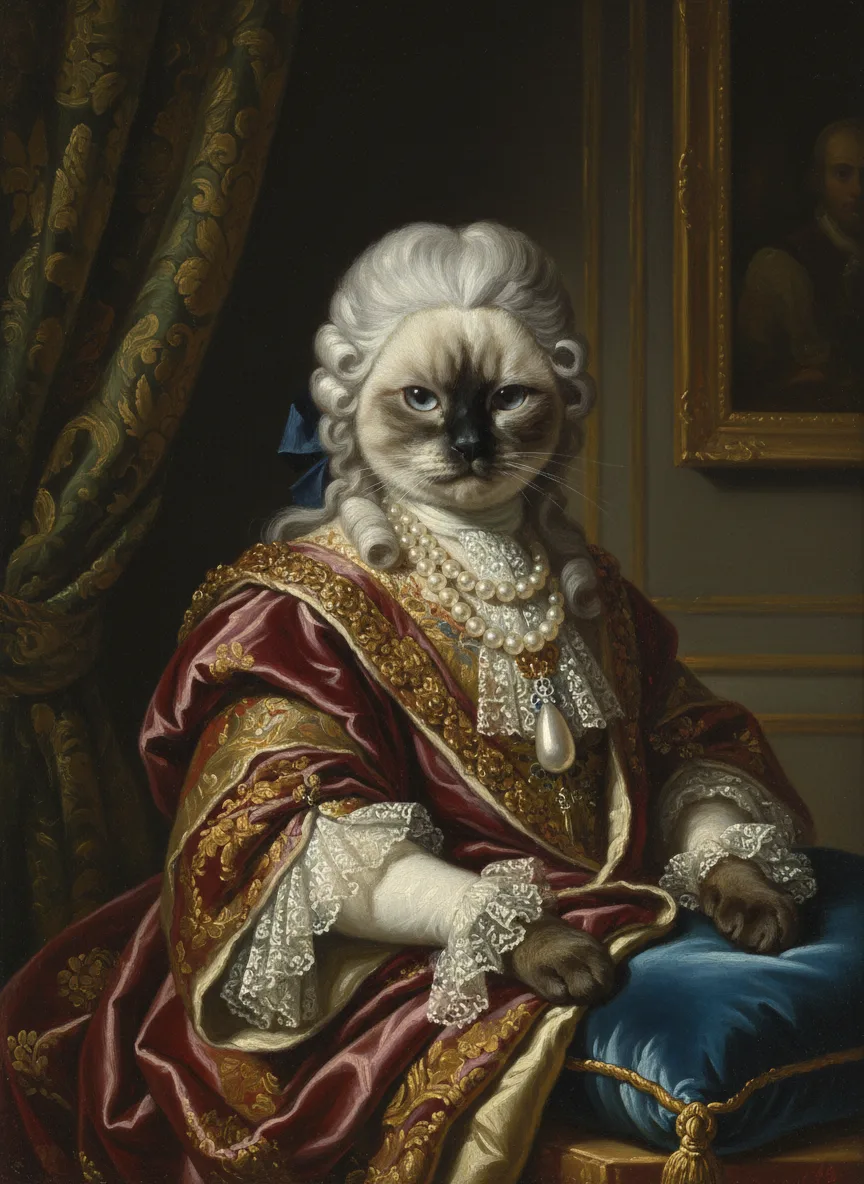
How to choose a frame for a royal pet portrait
Match the frame to the portrait style: gold for a throne scene, dark wood for a sunset scene, plain black for modern rooms, plus what makes a frame strong.
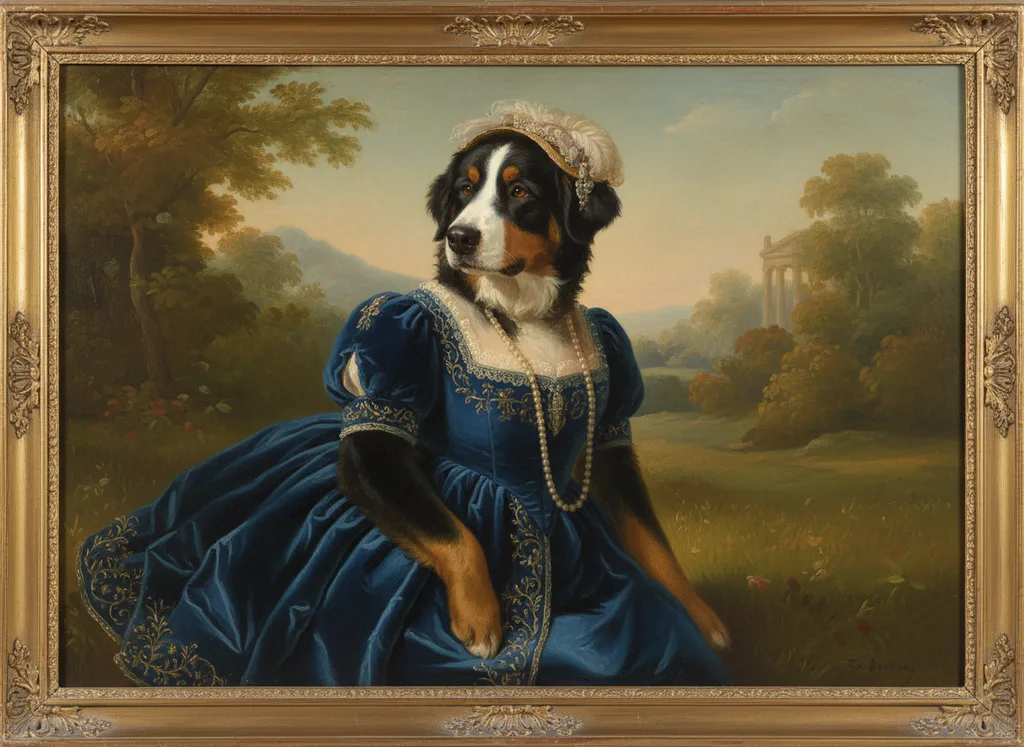
How to measure a frame for a print: sight size, rabbet and outside size
A frame has three sizes: the opening you see, the inside lip that holds the print, and the outside edge. How to measure each one before you frame a portrait.
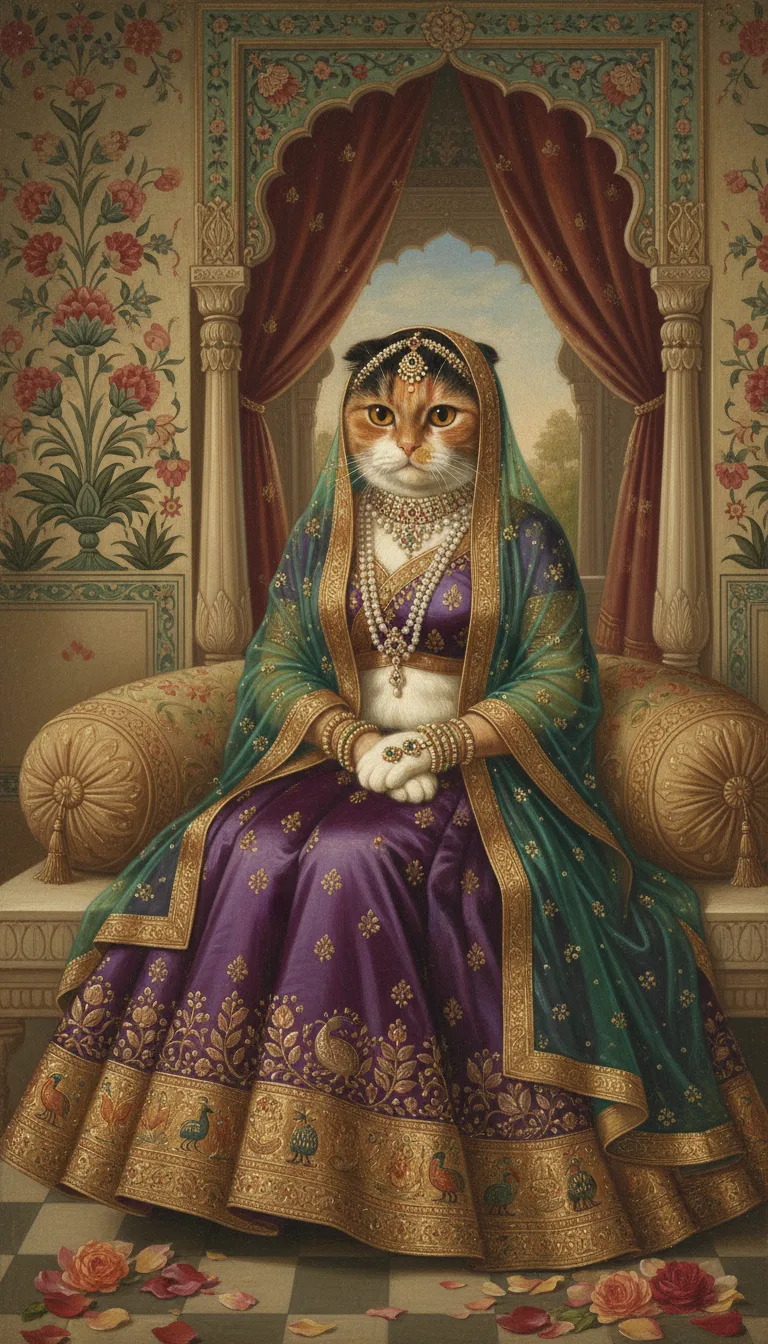
Mats for a framed pet portrait: board, border, colour and hinges
A mat keeps a print off the glass and gives it a border. Which board is safe, how thick to cut it, what colour suits a royal portrait and how to hold the print.

Glass or acrylic for a framed print: weight, glare, UV and cleaning
Glass is rigid and hard to scratch. Acrylic is light and safer if it breaks. How each handles glare, ultraviolet light, dust and cleaning over a pet portrait.
Hang it
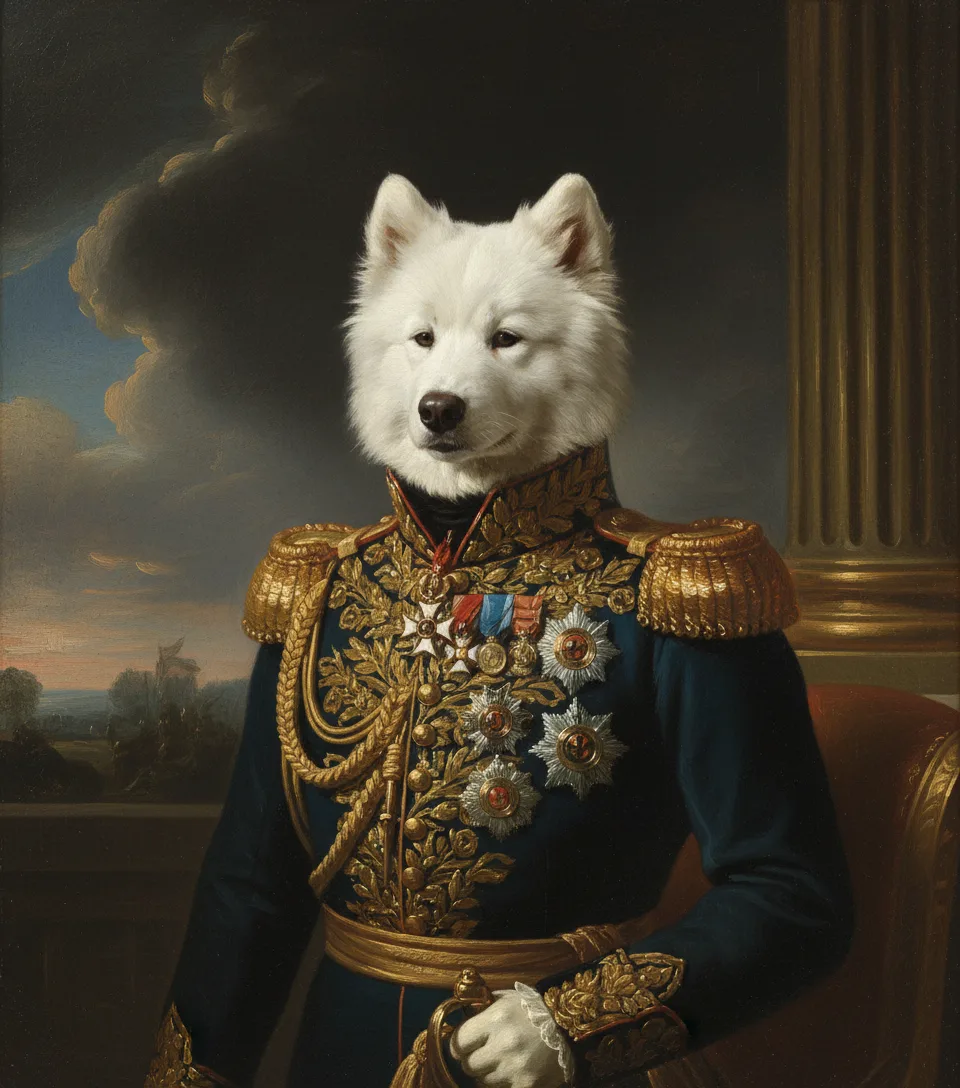
How high to hang a pet portrait: centre height and nail position
Pick a centre height for the people who will look at the portrait, then find the nail from the frame height and wire. Worked figures for all four print sizes.
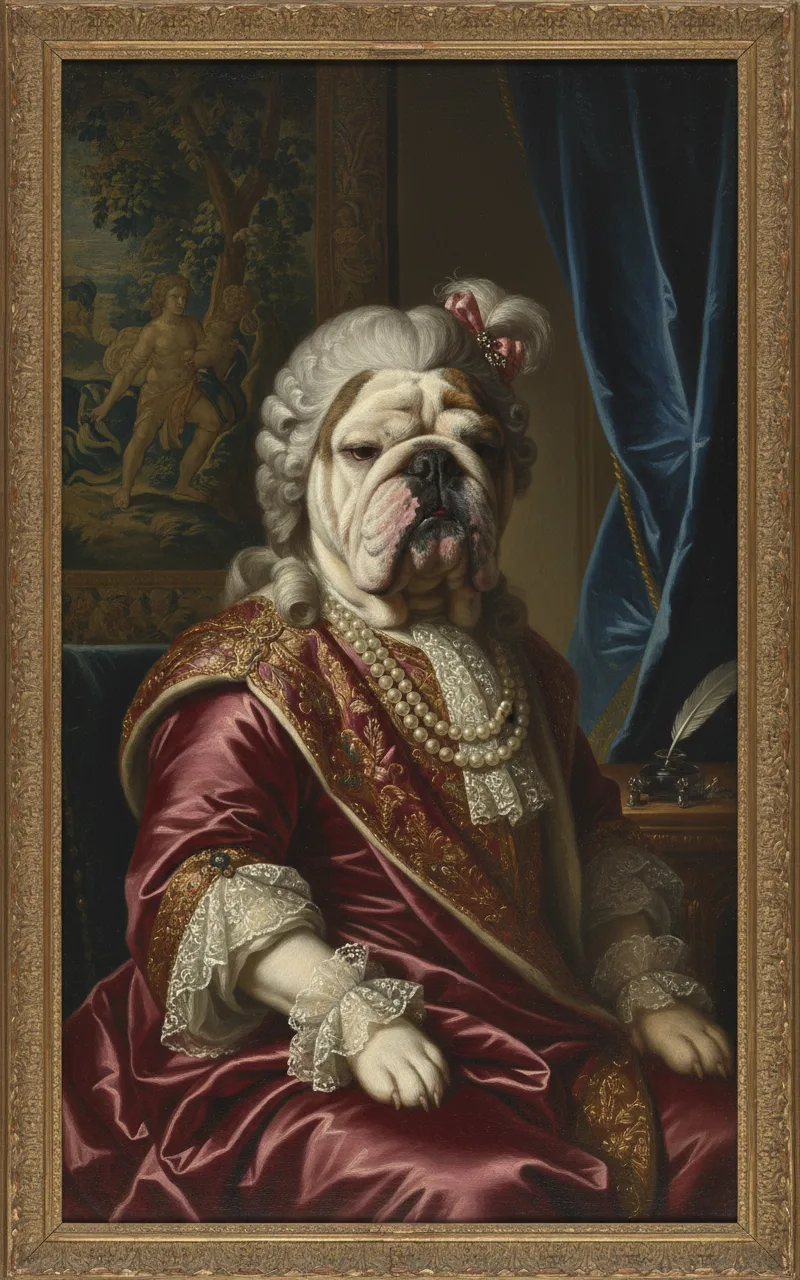
Picture hanging hardware: D-rings, wire, hooks and wall anchors
Which hangers go on the back of the frame, which hooks go in the wall, what each wall type needs, and how to hang a portrait so it stays up in an earthquake.
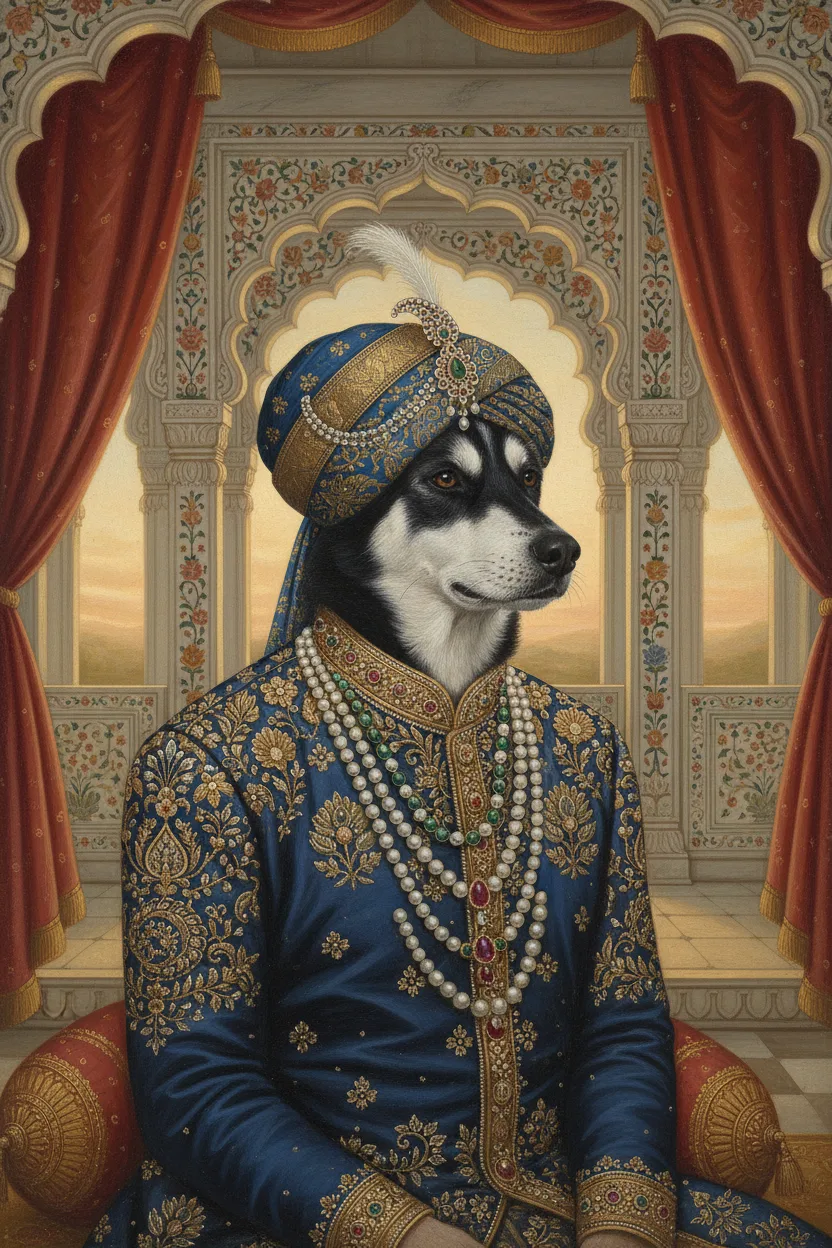
Planning a gallery wall around a royal pet portrait
Three ways to group frames around a pet portrait (a grid, a row and a salon cluster), with spacing sums for the four print sizes and lessons from 1787.
Keep it safe and bright
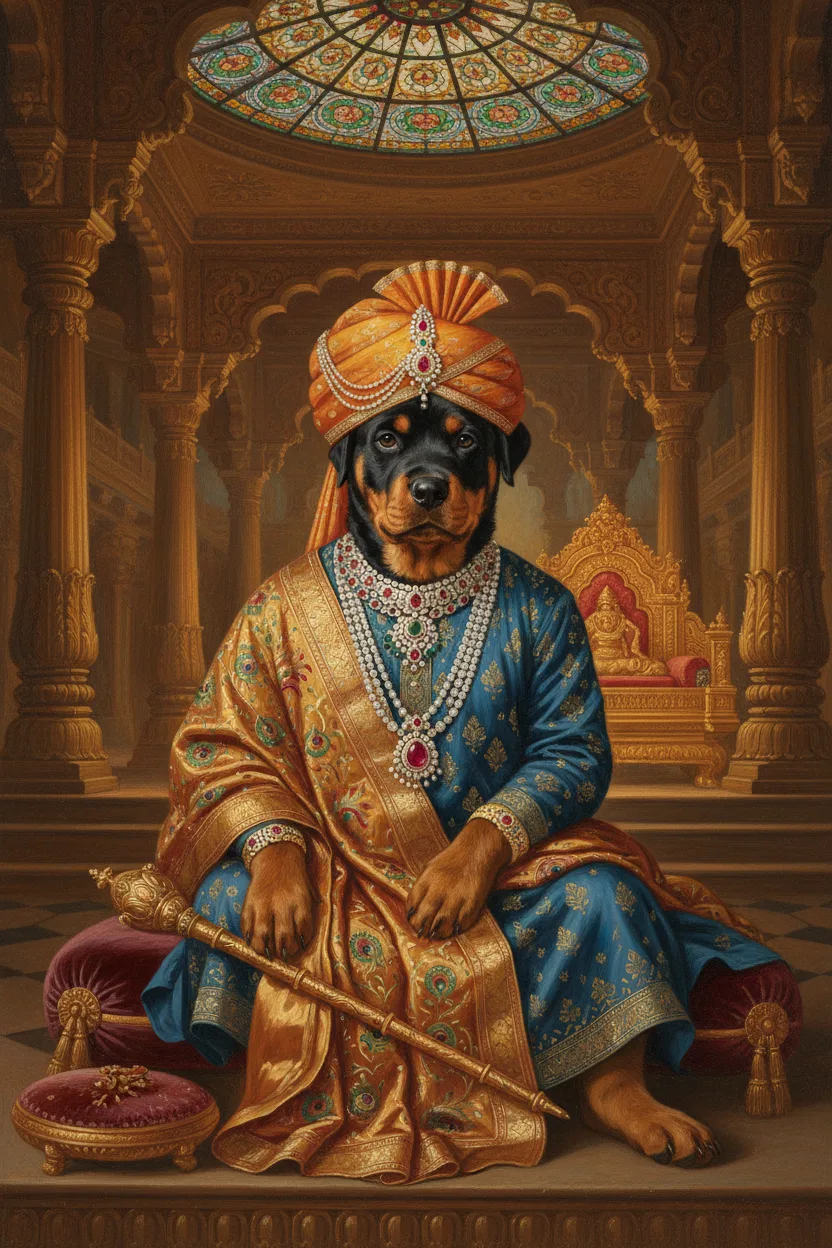
How to light a framed pet portrait at home
How much light a framed print needs, which bulbs show red and gold truly, why LED suits art, and where to aim a lamp so it does not reflect in the glass.
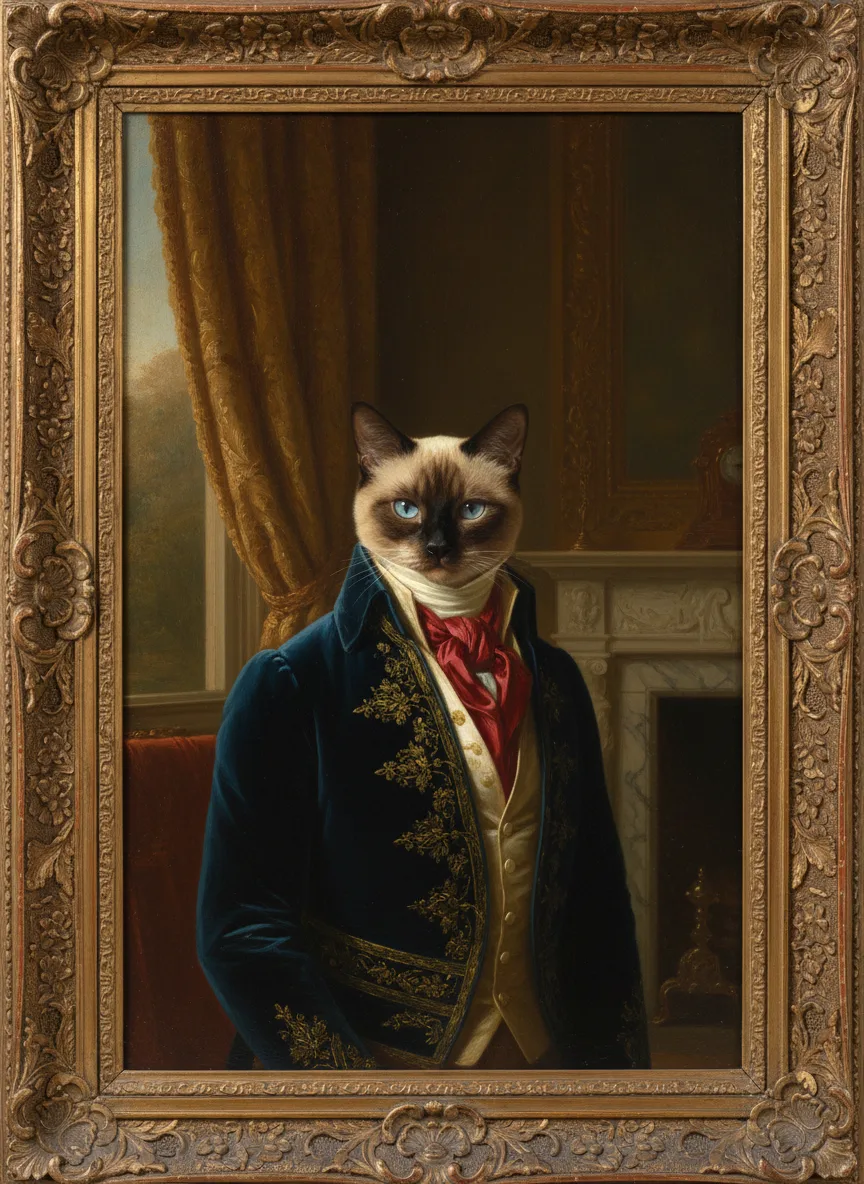
Safe places to hang a framed print: sun, damp, heat and insects
A room-by-room check for a framed paper print: sunbeams, damp, dry winter air, heaters, outside walls, basements and insects, with the numbers to aim for.

Questions and answers
Why should you frame a pet portrait print?
Framing a pet portrait print protects the paper, makes it easy to hang, and finishes its look. The Canadian Conservation Institute names these three reasons for framing any work of art: to protect it, to display it more easily, and to enhance its appearance. A frame with glazing and a sealed back also keeps dust and fingers off the print, which matters for a portrait that hangs in a busy family room.
What are the parts of a framed print?
A framed print has six main parts: the frame, the glazing (the glass or clear plastic sheet), the mat, the print, a backing board and a seal across the back. The Canadian Conservation Institute recommends acid-free backing board and advises sealing the gap between the backing board and the frame with gummed linen tape or brown kraft tape to keep out dust and polluted air.
How deep does a picture frame need to be for a matted print?
A picture frame for a matted print needs an inner lip, called the rabbet, deep enough for the glazing, the mat and a backing board. The Canadian Conservation Institute puts these three layers at 2 cm together (a rounded figure) and warns that metal clip-together frames are not always deep enough to hold all three. Measure the rabbet depth before you buy a frame.
When did picture frames become separate from paintings?
Picture frames became separate objects in Italy in the Renaissance. The Victoria and Albert Museum dates separate wooden picture frames in Italy to the 15th century and says they grew out of earlier frames on altarpieces. The National Gallery in London says frames have been designed as removable items to enhance a painting only since the early 1500s.
Does light fade a framed print even behind glass?
Yes, light can fade a framed print even behind glass. The Library of Congress says ultraviolet filtering removes the most damaging part of sunlight, but all light is damaging to paper, including the visible light that passes through the glazing. The Canadian Conservation Institute adds that there is no true recovery from faded colours, so the best protection is a wall out of direct sun.
Is it bad to hang a picture on an outside wall?
An outside wall can harm a picture in winter, because the inside face of an exterior wall gets cold and damp can form behind the frame. The Canadian Conservation Institute warns of condensation damage on these walls. If you must use one, it advises a backing board and cork or plastic spacers on the back of the frame, so air can move between the frame and the wall.
Where should you not hang a framed pet portrait?
Do not hang a framed pet portrait in a kitchen, above a radiator or fireplace, next to an air vent, or where people brush past it. The Canadian Conservation Institute lists all of these as poor places for art, together with spots where a frame can touch doors, curtains or furniture. A dry interior wall that direct sun does not reach is the safer choice.
How bright is direct sunlight compared with museum light for paper?
Direct sunlight is close to 2,000 times brighter than museum light for paper. The Canadian Conservation Institute puts direct noon sunlight at almost 100,000 lux, and gives 50 lux as the traditional museum level for works on paper, so noon sun is close to 2,000 times brighter. Because light damage adds up as light level multiplied by hours, a sunny wall fades a print fastest.
Can you put a picture light on a frame?
A picture light fixed to a frame is a poor choice for a print. The Canadian Conservation Institute advises against attaching light fixtures to frames, because they make a hot spot on the picture and add to fading. Its guide for paintings says frame lamps give uneven light and can overheat a painting. Light the portrait from a lamp or ceiling fixture set back from the wall.
What should you decide first when framing and hanging a portrait?
Decide on the wall first when framing and hanging a portrait, because the wall limits every later choice. The Canadian Conservation Institute rules out walls in direct sun, near radiators, vents or fireplaces, in kitchens, and on the cold inside of outside walls. Once the wall is fixed, choose the print size, then the frame and mat, the glazing, the hardware and the height.
Sources
- Framing Works of Art on Paper, Canadian Conservation Institute. Accessed September 28, 2026.
- Glazing Materials for Framing Works on Paper, Canadian Conservation Institute. Accessed September 28, 2026.
- Agent of Deterioration: Light, Ultraviolet and Infrared, Canadian Conservation Institute. Accessed September 28, 2026.
- Storage and Display Guidelines for Paintings, Canadian Conservation Institute. Accessed September 28, 2026.
- Caring for paintings, Canadian Conservation Institute. Accessed September 28, 2026.
- Environmental Guidelines for Paintings, Canadian Conservation Institute. Accessed September 28, 2026.
- Will UV-filtering acrylic or glass ("glazing") protect my framed paper item from yellowing or fading?, Library of Congress. Accessed September 28, 2026.
- Matting Works on Paper, Canadian Conservation Institute. Accessed September 28, 2026.
- Smithsonian Guidelines for Accessible Exhibition Design, Smithsonian Accessibility Program. Accessed September 28, 2026.
- Picture Frame (Venice, 1550 to 1600), Victoria and Albert Museum. Accessed September 28, 2026.
- Frames in Focus: Sansovino Frames, The National Gallery, London. Accessed September 28, 2026.
- The Exhibition of the Royal Academy, 1787, Victoria and Albert Museum. Accessed September 28, 2026.
- The Exhibition of the Royal Academy, 1787, Government Art Collection. Accessed September 28, 2026.
Short reads on this topic
Articles from Purrspectives that answer one question each.

Cat wall art ideas: choosing a cat portrait for every room
Cat wall art for each room: the print size for a hall, living room, bedroom or small flat, the cat portrait that suits its colours, and where to keep it safe.

Dog wall art ideas: how to choose and hang a portrait of your dog
Good dog wall art fits its wall: pick a print size for the furniture below, hang it with its centre at eye level, and keep it out of direct sun.

How big is an 8 × 10 print? Pet portrait print sizes explained
An 8 × 10 print is 20.32 × 25.4 cm, with a 4:5 shape. See all four portrait print sizes in cm, plus the pixels, frames and mats each one needs.