The Chola dynasty: the kings, the temples and the bronzes of South India
The Cholas were Tamil kings who ruled South India until 1279. They built the Brihadisvara temple at Thanjavur and paid for famous bronze statues.
By Purrealism
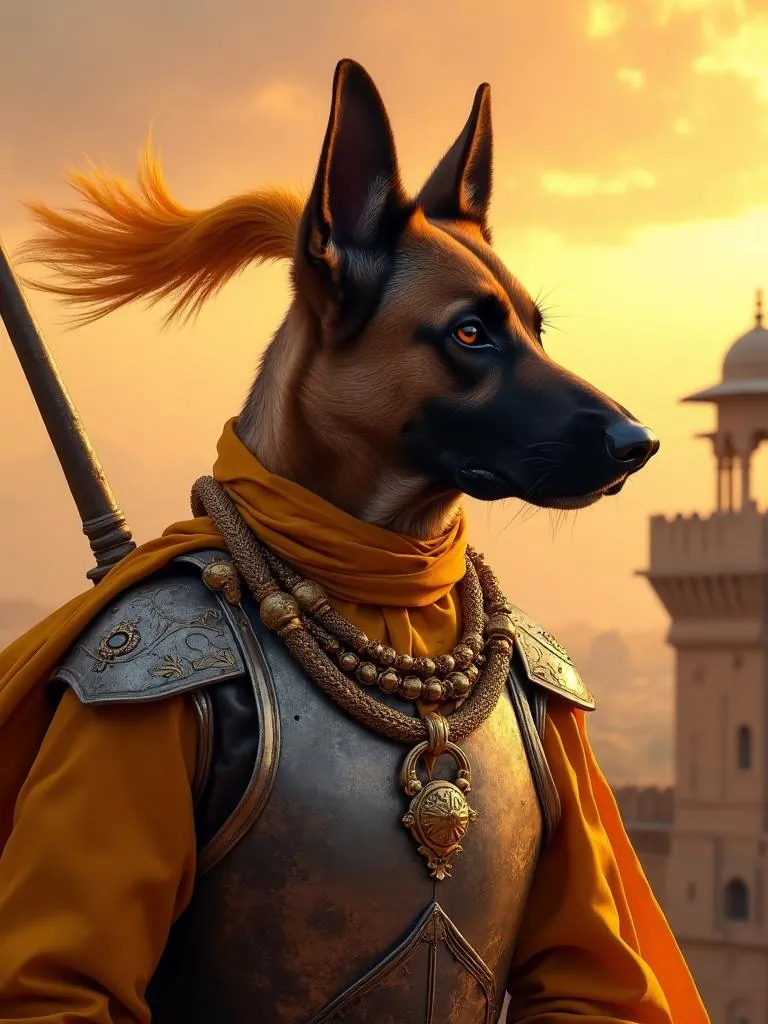
The Cholas were Tamil kings who ruled South India for hundreds of years. They built great temples and paid for bronze statues that museums in New York and Amsterdam now hold. One of the 15 portrait styles on this site, the Chola Warrior, takes its name from them. This guide covers who the Cholas were, their two best-known kings, the great temple at Thanjavur and the Chola bronzes.
Who were the Cholas, and where did they rule?
The Cholas came from the valley of the Kaveri River, in what is now the state of Tamil Nadu. Encyclopaedia Britannica calls them rulers "of unknown antiquity": nobody knows when the family began, and it is older than the early Sangam poems of Tamil literature. Their oldest capital was Uraiyur, the city now called Tiruchchirappalli. Britannica also gives the other spelling of the name, Cola.
The Cholas who built an empire came later. NCERT, India's national school textbook body, tells the story in its Class 7 history book. A small ruling family, the Muttaraiyar, held the Kaveri delta and served the Pallava kings of Kanchipuram. In the middle of the ninth century Vijayalaya, from the old Chola family of Uraiyur, took the delta from them. He built the town of Thanjavur and a temple there to the goddess Nishumbhasudini.
The kings after him took the Pandya lands to the south and the Pallava lands to the north. UNESCO says these Cholas ruled from Thanjavur and the land around it for four and a half centuries.
NCERT says many Chola achievements were made possible by new developments in farming. The Kaveri splits into many small channels before it reaches the Bay of Bengal. These channels leave fertile soil on their banks, and their water helps crops grow, especially rice. Farmers built embankments against floods, dug canals and wells, and made large tanks, which are man-made ponds, to hold rainwater. Villages of farmers were called ur, and groups of villages formed a larger unit called a nadu. The village council and the nadu settled disputes and collected taxes. Chola inscriptions, NCERT adds, use more than 400 different words for kinds of tax.
Rajaraja I and Rajendra I
NCERT calls Rajaraja I the most powerful Chola ruler. He became king in 985. According to Britannica, he had conquered Kerala and taken northern Sri Lanka by 996, and by 1014 he held the Lakshadweep and Maldive islands as well. With the wealth from these wars he built the Brihadisvara temple at Thanjavur. NCERT says he also reorganised how the empire was run.
His son Rajendra I ruled until 1044 and went further. Britannica lists his campaigns: he completed the conquest of Sri Lanka, put his own son on the throne at Madurai, and in 1023 sent an army north as far as the Ganges River. That army brought Ganges water back to his new capital, Gangaikondacholapuram. He also conquered parts of the Malay Peninsula and the islands of the Malay Archipelago.
Several of these campaigns crossed the sea. NCERT says he built up a navy for his expeditions to the Ganga valley, Sri Lanka and Southeast Asia. The Smithsonian describes the Cholas as a strong naval power that also kept up trade and diplomatic contact with China and Southeast Asia.
The Brihadisvara temple at Thanjavur
UNESCO calls the Brihadisvara temple at Thanjavur the greatest achievement of the Chola architects. You will see its name spelled several ways: Brihadisvara (UNESCO), Brihadishvara (Britannica), and Brihadeeswarar or Brihadeshwara in everyday use. Inscriptions of the time call it Dakshina Meru.
Rajaraja I began the work in 1003 or 1004 and dedicated the temple himself in 1009 or 1010. Its main feature is the vimana, the tall tower that rises over the inner room holding the image of the god. At Thanjavur the vimana stands 59.82 metres high, with 13 levels and an eight-sided top. Inside, a walkway runs all the way around the inner room. Large paintings cover the temple walls. On the walls around the inner room, sculptors carved 81 of the 108 karanas, a set of 108 dance poses, in the Bharatanatyam style.
The temple joined the UNESCO World Heritage List in 1987. In 2004 UNESCO added two more Chola temples, and the three together are now called the Great Living Chola Temples:
| Temple | Place | Built by | Tower height (UNESCO) |
|---|---|---|---|
| Brihadisvara | Thanjavur | Rajaraja I | 59.82 m |
| Brihadisvara | Gangaikondacholapuram | Rajendra I, finished in 1035 | 53 m |
| Airavatesvara | Darasuram | Rajaraja II | 24 m |
UNESCO calls them living temples because the worship that began in them over a thousand years ago still goes on daily, weekly and yearly. The Archaeological Survey of India looks after all three. The fort walls around the Thanjavur temple and the Sivaganga Tank beside it came later: UNESCO says the Nayaks of Tanjore built them in the 16th century.
Chola bronzes
NCERT says bronze making was the most distinctive craft tied to Chola temples, and that Chola bronze images "are considered amongst the finest in the world". Most show gods, and some show devotees.
Britannica says South Indian bronzes were made in large numbers from the 8th to the 16th century, mostly in the Thanjavur and Tiruchchirappalli districts. They were made by lost-wax casting. The Smithsonian describes the method: the artist models the figure in wax, with every detail, and the wax model is then cast in bronze. Britannica adds that the sculptors worked on each figure again after casting, so the images are "carved" as well as "modelled".
The bronzes were made for worship. The Smithsonian explains that every Chola temple has a fixed image of its main god at the centre, while the bronzes can be moved. From Chola times to today, it says, the bronzes are dressed and decorated, then carried out to meet worshippers at outdoor festivals. The Rijksmuseum in Amsterdam holds a Shiva Nataraja from the 12th century, 153 cm tall and weighing 255 kg. Its base has rings for carrying poles, so bearers could lift it in a procession.
Nataraja means "King of Dancers", according to the Rijksmuseum. A Nataraja shows Shiva dancing inside a ring of fire. The Metropolitan Museum of Art in New York has a Nataraja from the 11th century, 68.3 cm tall. The Met explains that the form appeared in sculpture as early as the fifth century, and that its famous present form developed under the Cholas. In 2002 and 2003 the Smithsonian's Arthur M. Sackler Gallery in Washington showed 70 Chola bronzes together, which it described as the first exhibition in the United States given only to Chola temple bronzes.
The Chola Warrior portrait style
Purrealism has a Chola Warrior portrait style, one of nine styles drawn from Indian royal courts. The gallery has no finished Chola Warrior portrait yet. You can choose the style for your dog or cat in the portrait studio.
The Rajput Warrior, another warrior style, has a finished example in the gallery, and our guide to Rajput painting explains the courts behind it. The Maratha King style has its own history guide, Shivaji and the Maratha kings. For help choosing across all 15 styles, read how to choose a royal portrait style.
How the Chola dynasty ended
Britannica traces the wars that followed Rajendra I. His successor Rajadhiraja was killed in 1054 at the Battle of Koppam, fighting the Chalukya kings of the Deccan. Kulottunga I, who ruled from 1070 to 1122, gave up the Deccan and worked on uniting the east coast. By the 1160s Sri Lanka had won back its independence.
From 1216 the Hoysala kings took land in the Chola country. Local lords who had served the Cholas broke away, and kings from the north joined the fighting. In 1257 the Pandya kings conquered the Chola country, and Britannica gives 1279 as the year the Chola dynasty ended. The three Chola temples at Thanjavur, Gangaikondacholapuram and Darasuram still hold daily worship, UNESCO says.
Questions and answers
Who founded the Chola dynasty?
Vijayalaya began the rise of the Chola kings who later ruled South India, according to India's National Council of Educational Research and Training (NCERT). He came from an old Chola family of Uraiyur and took the Kaveri delta from the Muttaraiyar family in the middle of the ninth century. He then built the town of Thanjavur. Britannica says the Chola family itself is older: its beginnings are unknown and come before the early Sangam poems of Tamil literature.
What is the Chola dynasty famous for?
The Chola dynasty is famous for its temples, its bronze sculpture and its wars on land and at sea. UNESCO lists three Chola temples together as the Great Living Chola Temples and praises Chola work in architecture, sculpture, painting and bronze casting. According to NCERT, Chola bronze images are considered among the finest in the world. NCERT also says the Chola king Rajendra I built up a navy for expeditions to Sri Lanka and Southeast Asia.
What is the capital of the Chola dynasty?
The Chola dynasty had more than one capital during its long history. According to Britannica, Uraiyur, now Tiruchchirappalli, was the oldest Chola capital. NCERT says Vijayalaya built the town of Thanjavur in the ninth century, and Rajaraja I later built his great temple there. Britannica adds that Rajendra I brought water from the Ganges River to his new capital, Gangaikondacholapuram, and UNESCO says he built a temple there.
When did the Chola dynasty start and end?
The Chola dynasty has no known start date, and it ended in 1279, according to Britannica. The encyclopedia says the family's beginnings are older than the early Sangam poems of Tamil literature. The Cholas who built the empire rose in the middle of the ninth century, when Vijayalaya took the Kaveri delta. UNESCO says these later Cholas ruled from Thanjavur and the land around it for four and a half centuries.
Which Chola king built Brihadeshwara temple?
Rajaraja I built the Brihadisvara temple at Thanjavur, a name also spelled Brihadeeswarar or Brihadeshwara. According to UNESCO, work on the temple began in 1003 or 1004, and the king dedicated the finished temple with his own hands in 1009 or 1010. Britannica says he paid for it with the wealth taken in his wars. Inscriptions of the time call the temple Dakshina Meru, UNESCO adds.
Is Brihadeeswara temple a world heritage site?
The Brihadisvara temple at Thanjavur is a UNESCO World Heritage site, listed in 1987. UNESCO added two more Chola temples in 2004, the Brihadisvara temple at Gangaikondacholapuram and the Airavatesvara temple at Darasuram. The three now form one site called the Great Living Chola Temples. UNESCO calls them living temples because worship in them goes on every day, and the Archaeological Survey of India looks after all three.
What is Chola bronze?
Chola bronze is the metal sculpture of Hindu gods, saints and devotees made in South India under the Chola kings. The Smithsonian describes how each figure was first modelled in wax in full detail and then cast in bronze, a method called lost-wax casting. According to NCERT, bronze making was the most distinctive craft tied to Chola temples. The Smithsonian adds that the bronzes were paraded through outdoor festivals, a custom that continues today.
Which Chola king conquered Sri Lanka?
Rajaraja I and his son Rajendra I conquered Sri Lanka between them. According to Britannica, Rajaraja I had taken northern Sri Lanka by 996, and Rajendra I completed the conquest of the island. NCERT says Rajendra I built up a navy for his expeditions, which also reached the Ganga valley and Southeast Asia. Britannica adds that Sri Lanka had won back its independence by the 1160s.
Which Chola king conquered Maldives?
Rajaraja I brought the Maldive islands under Chola rule, according to Britannica, which says he had acquired the Lakshadweep and Maldive islands by 1014. He became king in 985 and also took Kerala and northern Sri Lanka. The Smithsonian describes the Cholas as a strong naval power and, for 400 years, the leading force in culture, religion and politics in South India, Sri Lanka and the Maldive Islands.
How did the Chola dynasty end?
The Chola dynasty ended in 1279, after neighbouring kingdoms took its lands, according to Britannica. From 1216 the Hoysala kings gained land in the Chola country, and local lords who had served the Cholas stopped obeying them. The Pandya kings conquered the Chola country in 1257. UNESCO says the Nayaks of Tanjore, who ruled Thanjavur in the 16th century, came after the Chola emperors there.
Sources
- Chola dynasty, Encyclopaedia Britannica
- South Indian bronze, Encyclopaedia Britannica
- Great Living Chola Temples, UNESCO World Heritage Centre
- Our Pasts II, Chapter 2: Kings and Kingdoms (Class 7 history), National Council of Educational Research and Training (NCERT)
- The Sensuous and the Sacred: Chola Bronzes from South India, Smithsonian's National Museum of Asian Art
- Shiva as Lord of Dance (Nataraja), The Metropolitan Museum of Art
- Shiva Nataraja, Rijksmuseum
Go deeper
The full guides on this topic, each a set of pages with sources: