Updated
Victorian dog painters: dog shows, Maud Earl and the trade in dog portraits
How dog shows and the Kennel Club created a market for dog portraits in Victorian Britain, and how the Earl family and women painters such as Maud Earl met it.
By Purrealism. Part of Dogs in art: the painters and paintings behind a royal dog portrait.
In Victorian Britain, dogs became show animals, and their owners wanted pictures of them. Between the first dog show in 1859 and the First World War, a trade grew up in portraits of named, pedigree dogs: paintings for breeders, prints for the public and books for dog lovers. This page explains how dog shows and the Kennel Club created that market, and follows the painters who served it, above all the Earl family and Maud Earl. It draws on a history of the first dog show by Philip Howell, the Royal Kennel Club's own exhibition records, and the Museum of the Dog in New York, which is run by the American Kennel Club. For the longer history of dogs in art, start with the dogs in art guide.
Before the shows: Landseer and the engraved dog
People were already buying dog pictures before the first show. The Victorian Web says Edwin Landseer's animal paintings were widely circulated as engravings, often made by his brother Thomas, and were bought by both the aristocracy and the new middle class. Our page on Edwin Landseer covers his dogs in detail. Landseer painted dogs as characters in a story. Some of the painters who came after the shows had a different aim: to record what a winning dog of a particular breed looked like.
The first dog show, 1859
Philip Howell, writing for BRANCH, a scholarly website on 19th-century British history, says the first true dog show was held in June 1859 in the town hall at Newcastle upon Tyne. It was a modest event, attached to an older agricultural show. Only sporting breeds could enter, pointers and setters, and there were 60 dogs in all. The champions were Lord Derby's pointer, Bang, and Mr Jobling's Gordon setter, Dandy. The chief judge was a local gunsmith, William Rochester Pape, and the prizes were shotguns from his own workshop.
Shows spread quickly. By the end of the 1860s, Howell writes, dog shows were a fixture of the breeding world, with commercial sponsors and aristocratic patrons. The first field trial, a test of working gun dogs in the field, took place in Bedfordshire on 18 April 1865. Cruft's show began in 1891, and in the United States the Westminster show began in 1877.
The Kennel Club and the pedigree dog
Howell says the Kennel Club of Great Britain was established in 1873 "precisely in order to impose a measure of consistency on the burgeoning dog shows". Its main task was to regulate the dog fancy, the world of breeders and exhibitors. It did this through stud books and registers, which recorded each dog's parents. Howell stresses how new the idea of fixed breeds was at the time, and how breeding for the shows made a firm division between the "pedigree" dog and the "mongrel".
Painters responded to the shows. Our Town, a New York newspaper, quotes Alan Fausel of the Museum of the Dog on the Victorian painter Lucy Waller, who painted "to document champion dogs". Fausel added that such pictures were judged "the way they judge the dogs".
The Earl family of dog painters
In 2022 the Kennel Club held an exhibition about one family of dog painters, the Earls. Its announcement gives the family's story.
- Thomas William Earl, the elder brother, began the family tradition of painting dogs. The exhibition showed his painting of Dandie Dinmont terriers in a snowy landscape.
- George Earl was elected a member of the Kennel Club in 1879 and became known for his paintings of sporting dogs. The exhibition included his Champion Dogs of England, painted around 1860, and The Field Trial.
- Alice Maud Earl, George's daughter, known as Maud Earl, continued the tradition, focusing on anatomically accurate portraits of different breeds.
- Later generations, Thomas Percy Earl, Jack Earl and Maris Earl Tomaszewski, carried the tradition into the 20th century.
The club says the Earls' shared love of animals brought them royal commissions across the generations.
Maud Earl
Maud Earl lived from 1863 to 1943. The Royal Kennel Club holds more than 125 of her works, which it says chart the growth of her style over a career of six decades, and it calls her one of the most celebrated animal painters of her generation. The Kennel Club's announcement adds that the only known sculpture by her shows Largo, a pointer that belonged to William Arkwright.
Earl painted the champions of her day. Alan Fausel, curator of the Museum of the Dog, writes that she painted many dogs belonging to the Duchess of Newcastle, a leading breeder of wire fox terriers, and dogs owned by Francis Redmond, a leading breeder of smooth fox terriers who later became chairman of the Kennel Club.
She also sold her work to a wider public. Fausel describes two portfolios of her paintings reproduced as photogravures, a printing method that etches a photograph into a metal plate: British Hounds and Gun Dogs, and Terriers and Toys. Each was limited to 500 copies. Many sets were later broken up, and the single prints were framed.
The same Our Town article reports a comment by Fausel that shows the difference between two kinds of dog painter. Some painters simply documented champions, showing them in profile as if at a show, and "love feet". Earl's dogs are more expressive: in her Two Pointers on Point in a Field, of 1905, tall grasses hide the dogs' paws.
Silent Sorrow: a king's dog in mourning
Earl's best-known picture shows grief. King Edward VII died at Buckingham Palace on 6 May 1910. His wire fox terrier, Caesar, had been bred by the Duchess of Newcastle, sired by her dog Cackler of Notts, and given to the king nearly ten years earlier. At the funeral procession on 20 May, Fausel writes, Caesar followed directly behind the coffin, in front of nine heads of state.
The Illustrated London News commissioned Earl to paint Silent Sorrow, expecting great public sympathy for the king's dog. Our Town describes the painting: Caesar rests his head on the dead king's armchair. The magazine printed it on 21 May, the day after the funeral, and advertised photogravure prints of it for sale. Another publisher, Hodder and Stoughton, brought out a small book called Where's Master?, told in Caesar's voice. Fausel says it went into at least 16 editions in the months after the king's death.
Then a mystery. Fausel has never found a copy of the advertised print of Silent Sorrow, despite searching sale records and asking dealers and the Royal Kennel Club. He reports that Queen Alexandra was angry about Where's Master? and suggests that powerful people may have stopped the print. The original painting belongs to the American Kennel Club and is on long-term display at the Museum of the Dog in New York. Fausel adds that Earl left England for good in 1916.
Women who made a living painting dogs
Maud Earl was one of many women in this trade. In June 2026 the Royal Kennel Club opened an exhibition called Leaders of the Pack: The Women of the Royal Kennel Club Art Collection. The club says it brings together over 120 works by more than 100 women artists, spanning painting, sculpture, drawing, printmaking and medals across three centuries.
The club explains why dog portraits mattered to these artists. The women largely faced exclusion from formal art training and gallery representation, yet built professional careers regardless. Two of them, Lilian Cheviot and Fanny Moody, supported themselves entirely through commissions for dog portraits. The club also says its collection is split evenly between male and female artists, and it shows a pastel by Lucy Dawson of Dookie, the first corgi of Queen Elizabeth II.
The Victorian dog portrait trade at a glance
| Year | Event | Source |
|---|---|---|
| 1859 | First dog show, Newcastle upon Tyne: 60 pointers and setters | Philip Howell, BRANCH |
| around 1860 | George Earl paints Champion Dogs of England | Royal Kennel Club |
| 1865 | First field trial for working gun dogs, Bedfordshire | Philip Howell, BRANCH |
| 1873 | The Kennel Club is founded | Philip Howell, BRANCH |
| 1879 | George Earl elected to the Kennel Club | Royal Kennel Club |
| 1891 | Cruft's show begins | Philip Howell, BRANCH |
| 1910 | Maud Earl paints Silent Sorrow after the death of Edward VII | Museum of the Dog |
| 1916 | Maud Earl leaves England for good | Museum of the Dog |
| 2026 | Leaders of the Pack exhibition of women dog artists opens in London | Royal Kennel Club |
What the breed painters mean for your own dog's portrait
The Victorian breed painters wanted the right ears, the right coat and the right stance for each breed. Their portraits are records of real, named dogs. A portrait of your dog today works best from the same starting point: a clear photo that shows your dog's own markings and build.
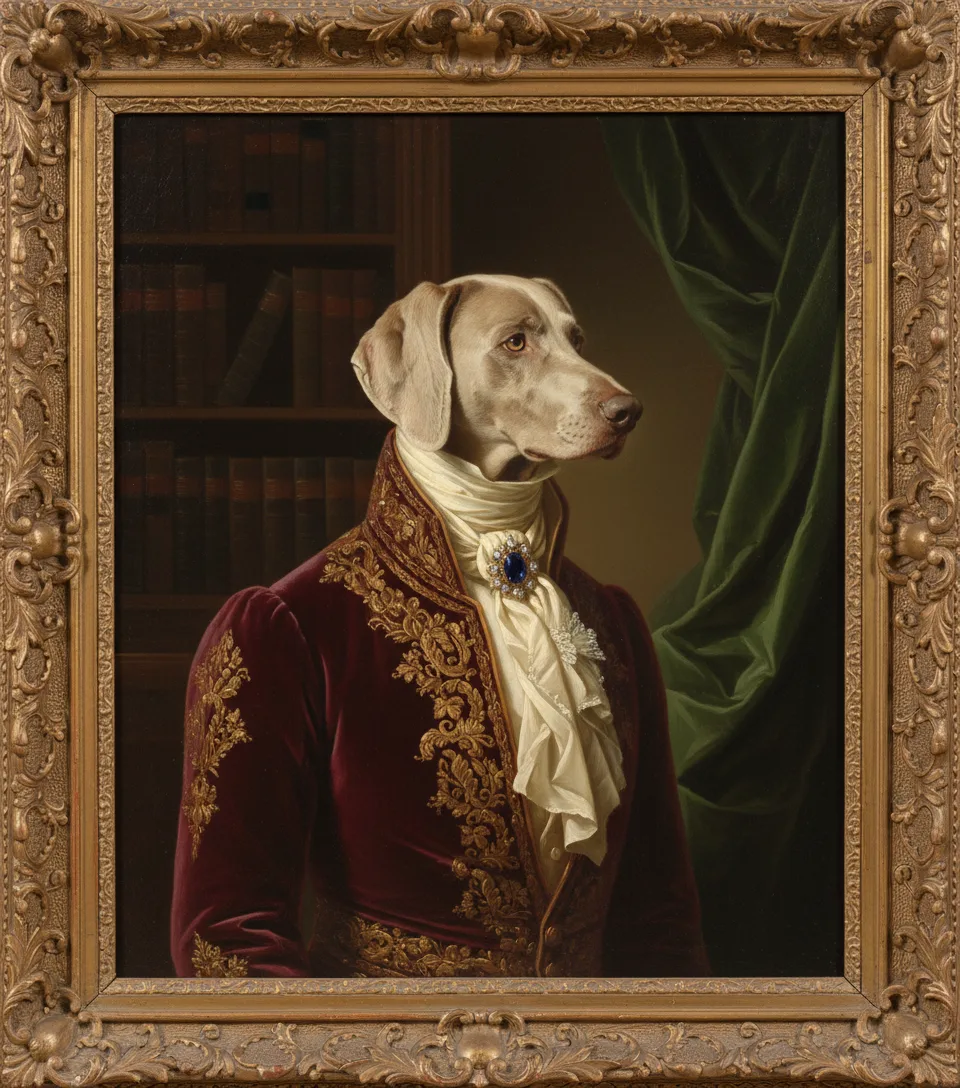
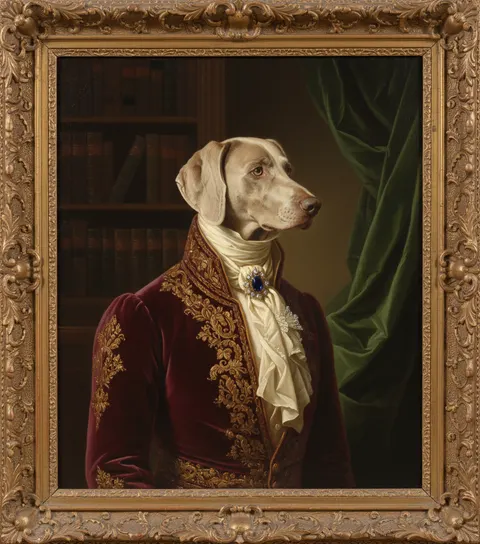
The breed finder further down this page lets you choose dogs or cats, then a breed from the studio examples, and shows every studio portrait of that breed with its style. Tapping one starts a portrait in that style. The cover of this page shows a Weimaraner from the studio examples in Purrealism's Victorian Noble style. For Queen Victoria's own dogs and the painters she hired, read our guide to Queen Victoria and her dogs. For the long tradition of the faithful, grieving dog that Silent Sorrow belongs to, see what dogs mean in paintings.
Try it
Find your breed in the gallery
Choose dog or cat, then a breed, to see every studio portrait of that breed and the style each one uses.
29 portraits. Tap one to start a portrait in its style.
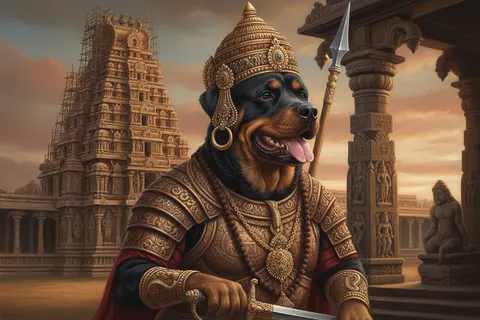
- Chola WarriorRottweiler
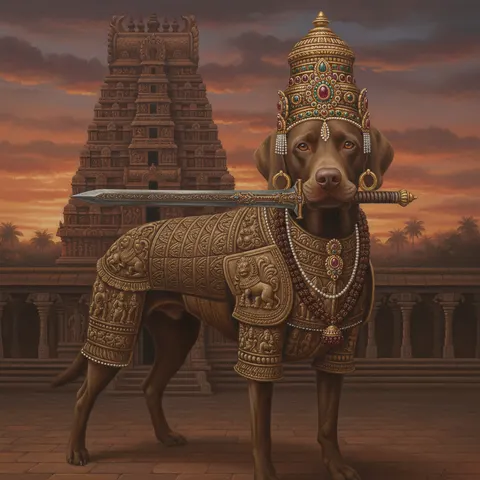
- Chola WarriorVizsla and Labrador Mix
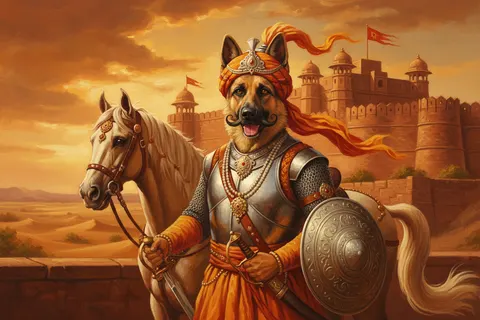
- Maratha KingGerman Shepherd
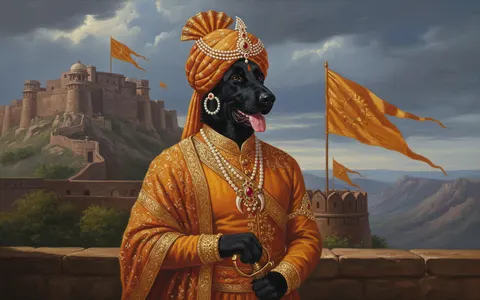
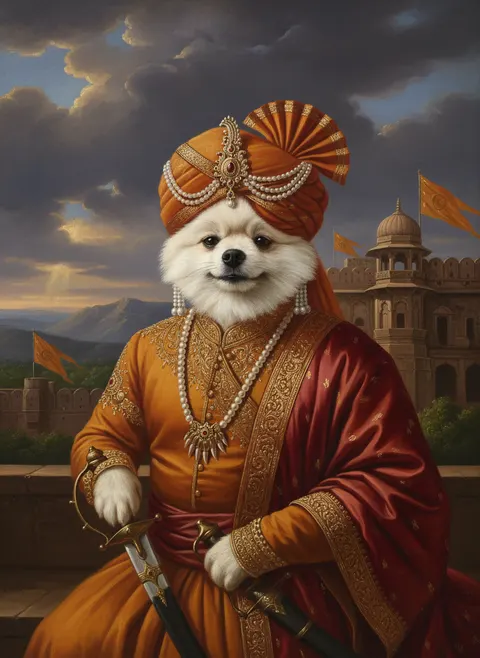
- Maratha KingPomeranian
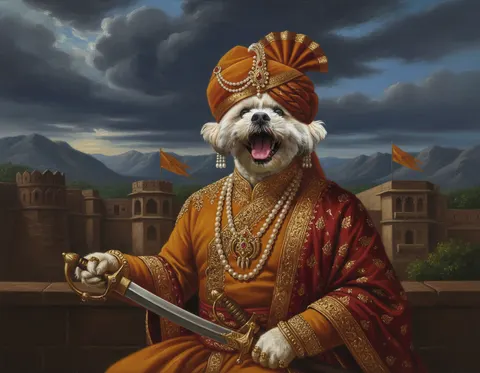
- Maratha KingShih Tzu
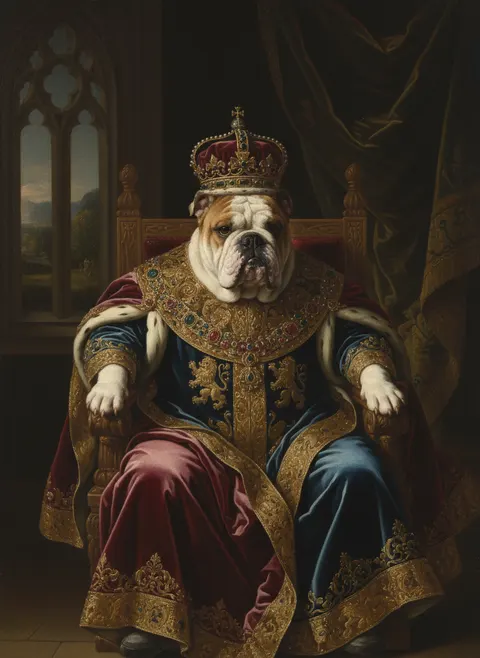
- Renaissance RoyalEnglish Bulldog
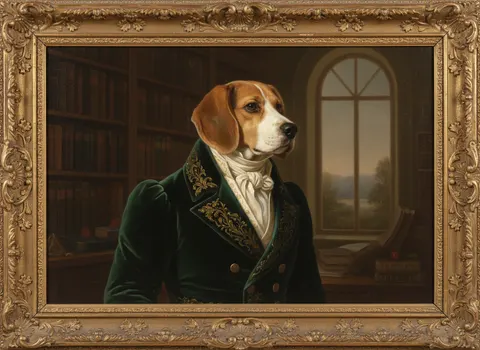
- Victorian NobleBeagle-Harrier
- Victorian NobleGerman Shepherd
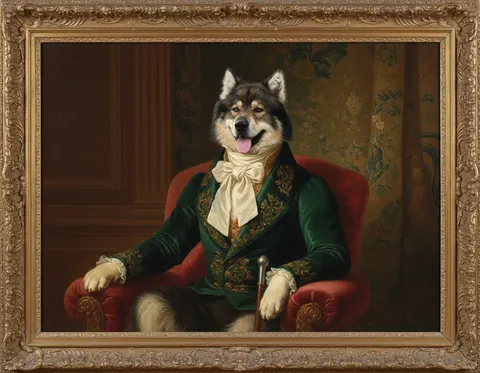
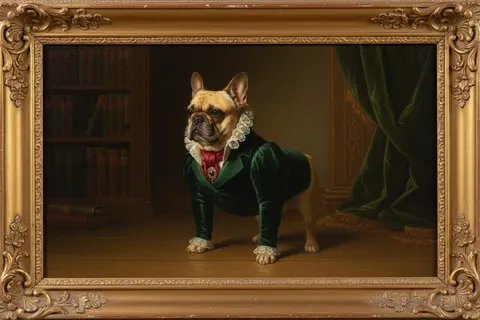
- Victorian NobleFrench Bulldog
- Victorian NobleWeimaraner
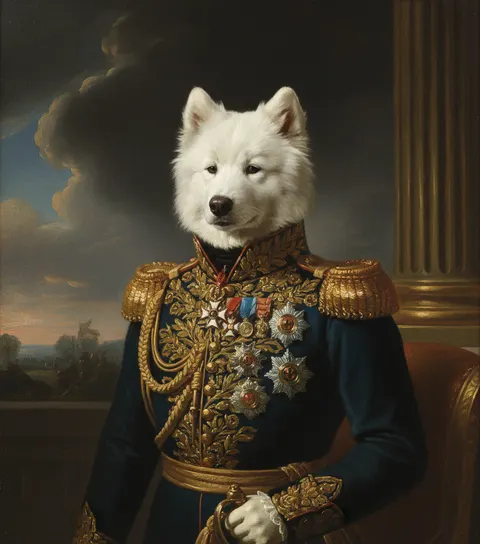
- Military GeneralSamoyed
- Baroque AristocratEnglish Bulldog
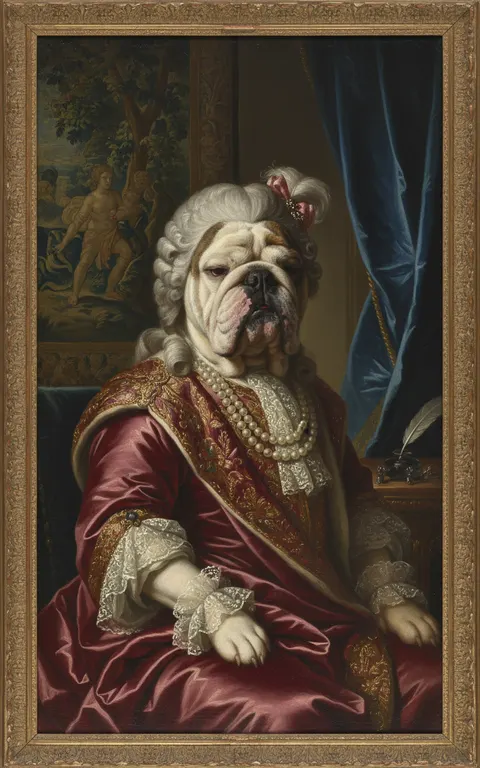
- Baroque AristocratEnglish Bulldog
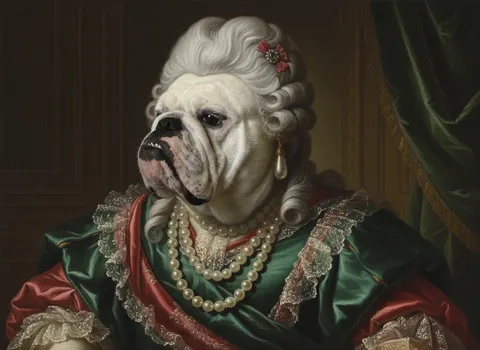
- Baroque AristocratAustralian Shepherd
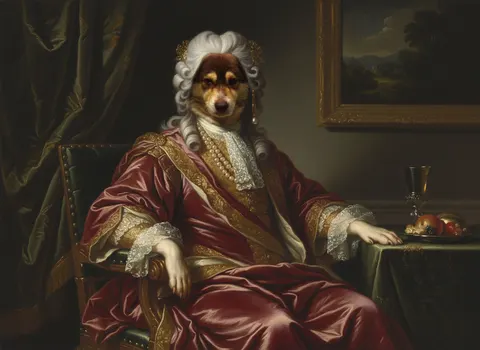
- Regency EraWhippet
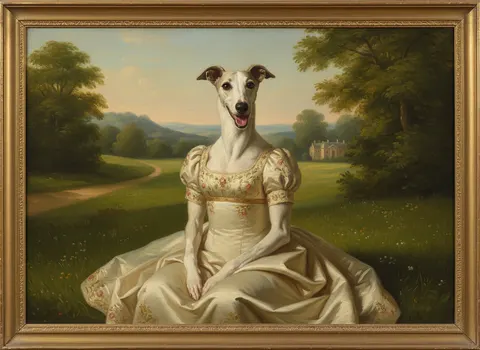
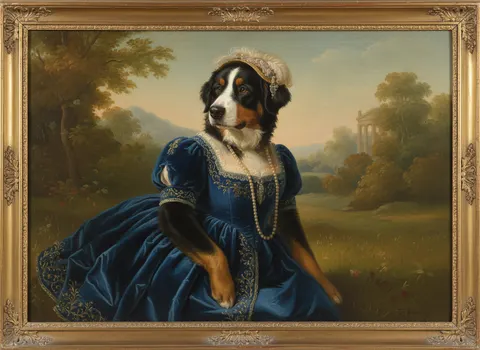
- Regency EraBernese Mountain Dog
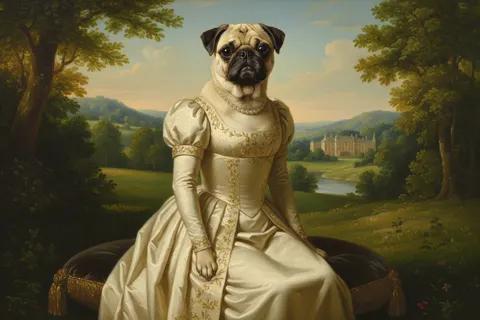
- Regency EraPug
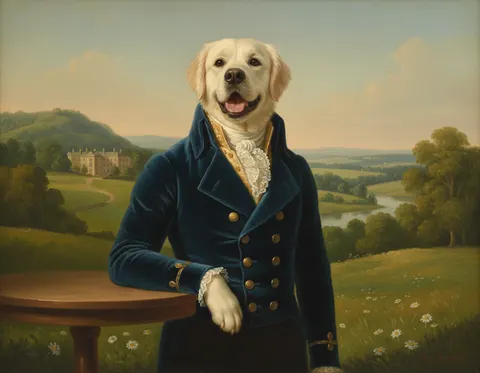
- Regency EraGolden Retriever
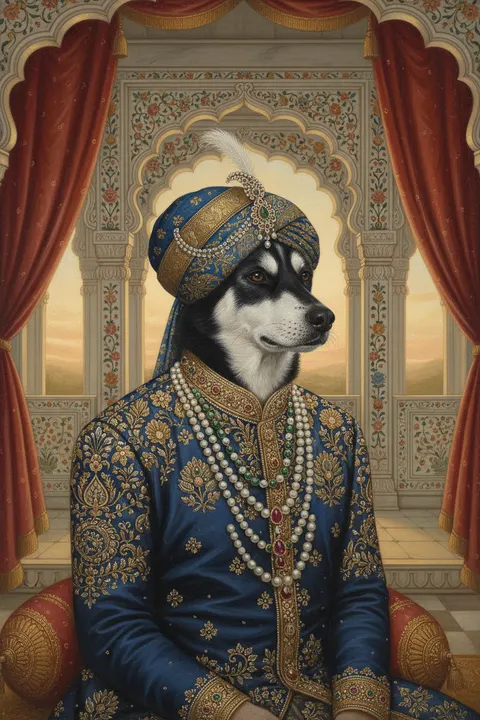
- Indian RoyaltyCorgi and Husky Mix
- Indian RoyaltyGerman Shepherd
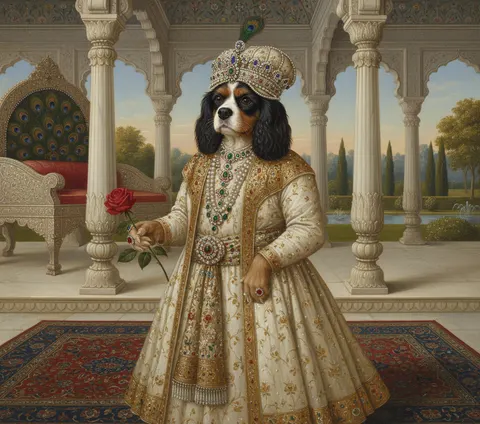
- Indian RoyaltyCavalier King Charles Spaniel
- Indian RoyaltySiberian Husky
- MaharaniDog
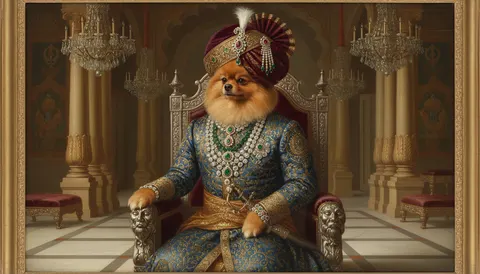
- Patiala RoyaltyPomeranian
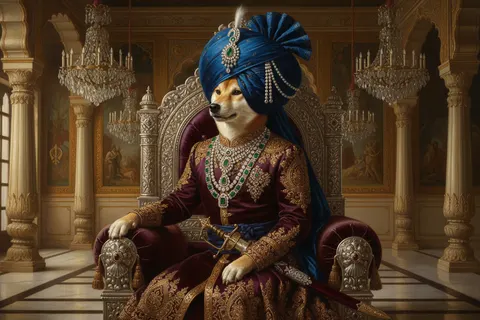
- Patiala RoyaltyShiba Inu
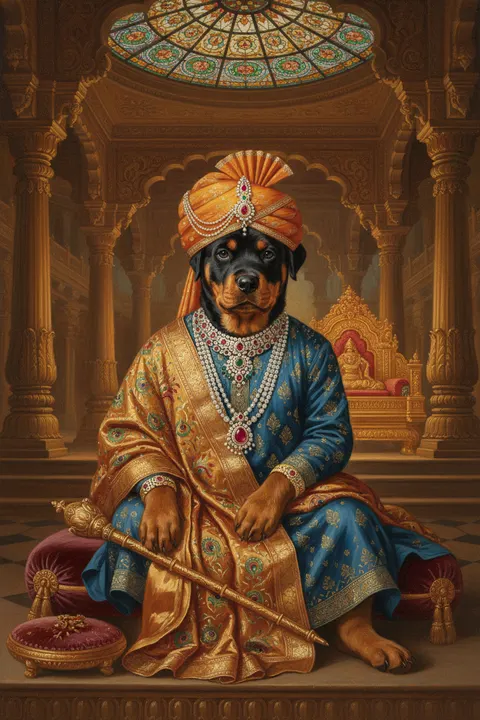
- Mysore RoyalRottweiler
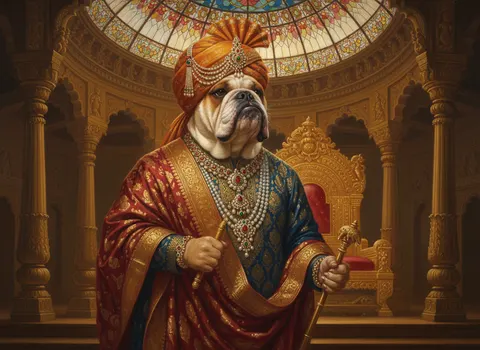
- Mysore RoyalEnglish Bulldog
- Mughal EmperorCavalier King Charles Spaniel
- Rajput WarriorGerman Shepherd
Your breed is not listed? You can choose any of the 15 styles for any dog or cat. See the full gallery.
Start a portraitQuestions and answers
When and where was the first dog show held?
The first dog show was held in June 1859 in the town hall of Newcastle upon Tyne, in northern England. Philip Howell, writing for BRANCH, a scholarly website on 19th-century British history, says only pointers and setters were entered, 60 dogs in all. The winners were Lord Derby's pointer Bang and Mr Jobling's Gordon setter Dandy, and the prizes were shotguns.
Why was the Kennel Club founded?
The Kennel Club was founded in Britain in 1873 to bring a consistent set of rules to the dog shows that had spread since 1859. Philip Howell, writing for the BRANCH history website, says its main task was regulating the dog fancy, the world of breeders and exhibitors, through its stud books and registers. The club has since been renamed the Royal Kennel Club.
Who was Maud Earl?
Maud Earl (1863 to 1943) was a British painter of dogs whose career lasted six decades. The Royal Kennel Club, which holds more than 125 of her works, calls her one of the most celebrated animal painters of her generation. Her father, George Earl, also painted dogs. The American Kennel Club's Museum of the Dog in New York owns her painting Silent Sorrow.
What is Maud Earl's painting Silent Sorrow?
Silent Sorrow is Maud Earl's painting of Caesar, the wire fox terrier of King Edward VII, made after the king died in May 1910. The Museum of the Dog in New York, which owns it, says The Illustrated London News commissioned the painting and printed it on 21 May, the day after the royal funeral. It shows Caesar resting his head on the king's chair.
Who was Caesar, King Edward VII's dog?
Caesar was the wire fox terrier of King Edward VII of Britain. The Museum of the Dog in New York says he was bred by the Duchess of Newcastle, sired by her dog Cackler of Notts, and given to the king nearly ten years before his death. At the king's funeral in May 1910, Caesar walked directly behind the coffin, ahead of nine heads of state.
What were Maud Earl's portfolios of dog prints?
Maud Earl's portfolios were two sets of photogravure prints of her dog paintings, called British Hounds and Gun Dogs and Terriers and Toys. A photogravure is a print made from a photograph etched into a metal plate. The Museum of the Dog in New York says each portfolio was limited to 500 copies, and many were later broken up and the prints framed.
Who was George Earl?
George Earl was a Victorian painter of sporting dogs and the father of Maud Earl. The Kennel Club says he was elected a member in 1879, and that his elder brother, Thomas William Earl, began the family tradition of painting dogs. George Earl's painting Champion Dogs of England, dated around 1860, was shown in the club's Earl family exhibition in 2022.
Why did so many women paint dogs in the 19th century?
Many women painted dogs in the 19th century because portraits of dogs offered them a way to earn a living when art schools and galleries often excluded them. The Royal Kennel Club says women largely faced exclusion from formal art training and gallery representation, yet built careers painting dogs. It names Lilian Cheviot and Fanny Moody, who lived entirely on dog commissions.
Was the Silent Sorrow print ever published?
No copy of the promised print of Maud Earl's Silent Sorrow has been found. Alan Fausel, curator of the Museum of the Dog in New York, writes that The Illustrated London News advertised the print in 1910, but after searching sale records and asking dealers and the Royal Kennel Club, he has never seen one. The museum is asking anyone who owns a copy to contact it.
Where can I see Victorian dog paintings in London?
The Royal Kennel Club Art Gallery at 10 Clarges Street in Mayfair, London, shows Victorian and later dog paintings, including works by Maud Earl. The club says visits are free and by appointment. Its exhibition Leaders of the Pack, about women artists in its collection, opened on 10 June 2026 with over 120 works by more than 100 women.
Sources
- Philip Howell, June 1859/December 1860: The Dog Show and the Dogs' Home, BRANCH: Britain, Representation and Nineteenth-Century History. Accessed September 29, 2026.
- Kennel Club Art Gallery exhibition by the Earl Family, The Royal Kennel Club. Accessed September 29, 2026.
- Royal Kennel Club Art Gallery showcases three centuries of women artists who turned dog portraiture into a profession, The Royal Kennel Club. Accessed September 29, 2026.
- Quarterly Newsletter Summer 2026 (Where's Caesar?, by Alan Fausel), The American Kennel Club Museum of the Dog. Accessed September 29, 2026.
- Top Dogs, Our Town (New York). Accessed September 29, 2026.
- Sir Edwin Henry Landseer, RA 1802-73, The Victorian Web. Accessed September 29, 2026.
Short reads on this topic
Articles from Purrspectives that answer one question each.
Dog years to human years: the chart by size, and the DNA formula
A 1-year-old dog is closer to 15 or 30 in human years than to 7. The AKC chart by size, the 2020 DNA formula, and a dog's life stages, explained simply.
Pug history: from Chinese emperors to the House of Orange
Pugs began as companions of Chinese emperors, reached Holland on Dutch trading ships and became the dog of the House of Orange. Their history, art and health.
Persian cat history: where the breed came from, its first cat show, coat and care
Persian cat history from a cat brought to Italy in 1626 to the 1871 Crystal Palace show, plus face types, coat colours, grooming and how to photograph one.