Renaissance and Tudor royal portraits: Holbein, Hilliard and the image of the ruler
How Renaissance courts and the Tudors used portraits as statements of power: court painters, Holbein's Henry VIII, Elizabeth I's approved face and miniatures.
By Purrealism. Part of European royal portraits: how Europe's courts painted their rulers.
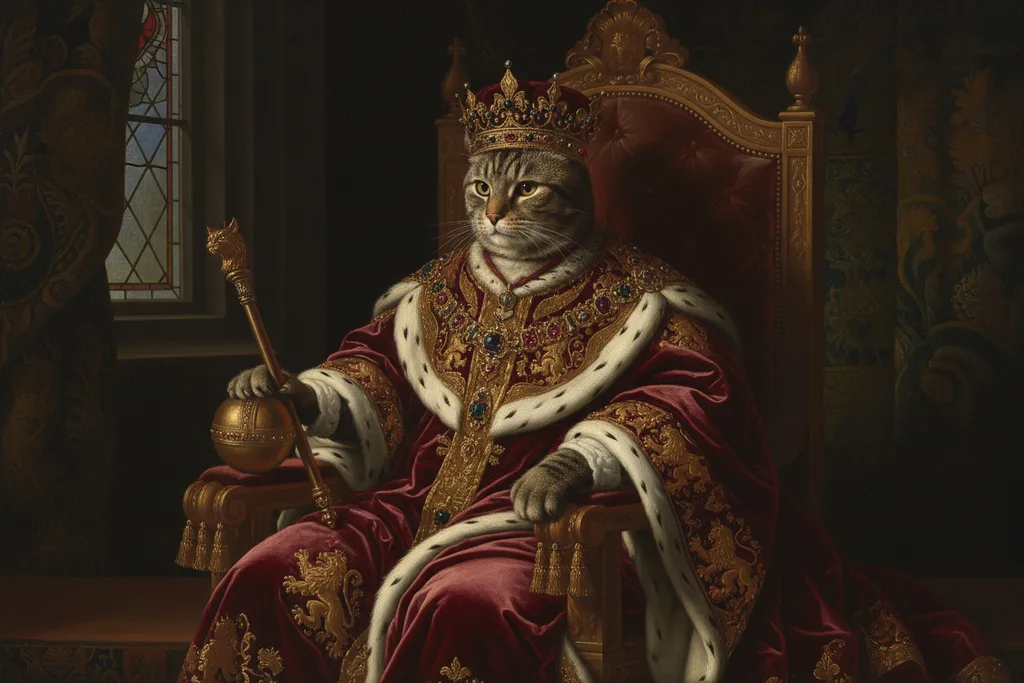
In the Renaissance, rulers across Europe kept painters on their staff, and a portrait could make a planned statement: of a family's right to rule, of a king's strength, of a queen's virtue. This page follows these statements from the Italian and German courts to Tudor England, where Hans Holbein painted Henry VIII and Elizabeth I controlled her own image with approved patterns and tiny jewelled miniatures. The art of the period itself, its oil paint, perspective and light, is explained in what makes a Renaissance painting. This page stays with the rulers and how they were shown. It is part of the guide to European royal portraits.
Painters on the royal staff
Tate explains that until modern times royal courts were a major source of work for artists. Monarchs employed their own painters and gave them titles such as "King's painter", though historians generally call them court painters. Tate says Henry VIII brought Hans Holbein to England, and Elizabeth I supported Nicholas Hilliard, whom it calls the first native-born genius of British art.
German princes did the same. The National Gallery in London says Lucas Cranach the Elder worked as court painter to successive electors of Saxony, the rulers of a German state, from 1505 until his death in 1553. His workshop kept working for them after he died.
A portrait as a claim to rule
Cranach's double portrait of 1509, in the National Gallery, shows why rulers wanted such painters. It pairs Johann the Steadfast, a future elector, with his six-year-old son Johann Friedrich. The gallery says the two panels were made to assert the power of the electors of Saxony and to stress their hereditary line, confirming the family's right to rule. The format was normally used for a husband and wife, but Johann's wife had died, so Cranach paired father and son. He placed the boy higher and closer to the viewer, giving the future ruler a commanding presence.
In Rome, family emblems did similar work. The National Gallery says Raphael first painted the background of his portrait of Pope Julius II with heraldic symbols, including the papal crossed keys and, probably, the oak tree of the della Rovere family arms, before covering them with plain green. The portrait was shown in a Roman church on 12 December 1513, after the pope's death. Raphael's design was widely copied. The gallery names Titian and Velázquez among the painters who followed it, and says Titian's portrait of the Emperor Charles V on horseback probably inspired Van Dyck's later picture of Charles I.
Holbein and Henry VIII
In England, Holbein painted the king and his family on a palace wall. The National Portrait Gallery, in a text shared by the National Gallery, says Henry VIII ordered Holbein to paint a wall at Whitehall Palace to celebrate the strength of the Tudor dynasty. It was finished in 1537, perhaps to mark the birth, or the expected birth, of Henry's son Edward.
The painting showed four life-size figures: Henry VIII and his third wife Jane Seymour, and his parents Henry VII and Elizabeth of York. A tablet in the painting praised the achievements of the new dynasty. The gallery says the mural may have been in the king's Privy Chamber, a private room, so its audience may have been small and select.
Whitehall Palace burned in 1698 and the mural was lost. What survives is Holbein's full-size drawing for its left side, showing Henry VIII with his father. It is 2578 by 1372 millimetres, exactly the size of the painting. The gallery explains how it was used: Holbein pricked holes along the main outlines, fixed the sheet to the wall and brushed chalk or charcoal dust through the holes, leaving the outline on the plaster. The faces of the two kings are separate pieces of paper pasted onto the sheet.
The National Gallery's director called these "portraits of power at the Tudor court" and said propaganda images had never before been made in England with such force. The gallery says Holbein drew the design partly from his 1533 double portrait The Ambassadors.
Painted on Baltic oak
Most Tudor royal portraits were painted on wooden panels. Royal Museums Greenwich explains why in an article by one of its conservators. The hard, even surface of wood let painters apply paint smoothly and in fine detail, which suited the embroidered costumes and elaborate jewels of the sitters.
The wood itself travelled far. Most panels in the museum's study were oak from the eastern Baltic, the region of modern Poland, Lithuania, Latvia and Estonia. The trees there grew slowly and evenly in a colder climate, so the boards could be cut thin and flat with hand tools. English oak had a twisted grain and was harder to work. The museum says tree-ring dating, a method that reads the growth rings in the wood, helps date the panels and identify where the trees grew, and that painters of the 16th century favoured panels in a 4:3 shape.
Elizabeth I: the approved face
Tate says Elizabeth I took a keen interest in her portraits and guided artists such as Nicholas Hilliard and Marcus Gheeraerts the Younger toward stylised images of elegance, wealth and power.
Royal Museums Greenwich explains how the system worked. Elizabeth sat for few portraits. Once a picture of her face, which the museum calls a "pattern", had been approved, many paintings were made from it to meet the demand. Portraits were given as official gifts to foreign monarchs and favoured courtiers, and other courtiers acquired versions to show their devotion to her. The museum says it is hard to speak of "originals" and "copies" at all.
The Armada portrait shows the system at work. It celebrates the defeat of the Spanish Armada in 1588, and three versions survive, at the Queen's House in Greenwich, at Woburn Abbey and at the National Portrait Gallery in London. Royal Museums Greenwich says no artist has been confirmed. George Gower, the queen's Serjeant Painter from 1581, and Nicholas Hilliard have both been suggested, but research points to different workshops working from an approved miniature of her face by Hilliard.
The picture also misstates the facts. Royal Museums Greenwich calls it "in many ways a glorious fiction": the Armada was not destroyed, since over two thirds of its ships returned to Spain. The museum says the portrait shows what the queen and her courtiers wanted people to believe. Its symbols, from the globe beside her to the pearls on her dress, are explained on the museum's pages and in this guide's page on symbols of royal power.
A second famous image makes the same kind of claim. Royal Museums Greenwich describes the Ditchley portrait by Marcus Gheeraerts the Younger, painted in the early 1590s, in which Elizabeth, dressed in white, stands on a globe of the world. The museum says it was probably commissioned by her courtier Sir Henry Lee, and that her feet rest on Oxfordshire, where his house stood. The storm behind her and the clear sky ahead refer to her forgiving nature.
Miniatures: a portrait you could wear
Tate says miniature painting flourished at the court of Elizabeth I. It explains that a miniature is a small painting, usually a portrait, from 3 to 25 centimetres high, painted in watercolour on materials such as vellum, ivory or even a playing card. It grew out of the medieval art of decorating books by hand, and its great age was the 16th and 17th centuries.
Miniatures had a clear purpose. Tate says they were often set in jewelled cases and worn as personal decoration and as a sign of allegiance, political or romantic, to the person shown. Royal Museums Greenwich says Hilliard became Elizabeth's limner, or miniature painter, in the early 1570s, and Tate says his pupil and rival Isaac Oliver followed him. Tate adds that the Victoria and Albert Museum holds the national collection of portrait miniatures. Clothes, ruffs and pearls in these portraits are explained on the page about royal portrait costume.
Before and after
Tudor portraits came between two traditions. Before them came the seals, effigies and gold-ground panels described on the page about medieval royal portraits. After them came the grand, life-size portraits of Van Dyck and Velázquez, covered on the page about Baroque court portraits. Queen Victoria's reign, centuries later, brought its own approach to royal portraits, covered on the page about Victorian royal portraits.
The Renaissance Royal style: a Renaissance pet portrait
Purrealism's Renaissance Royal style is a Renaissance pet portrait: it borrows the look of these courts and paints your dog or cat the way Holbein or Cranach painted a ruler. The gallery shows it on an English bulldog and on several cats, including a tabby, a tuxedo cat and a Sphynx, and on a long-haired cat holding an orb. You can choose it in the portrait studio for your own pet, with one photo of up to 5 MB.
Questions and answers
Who was the court painter for Henry VIII?
Hans Holbein the Younger was the court painter best known for his portraits of Henry VIII. Tate says Henry VIII brought Holbein to England and that monarchs gave such artists titles such as King's painter. His large drawing of Henry VIII with his father, made for a wall painting at Whitehall Palace completed in 1537, survives in the National Portrait Gallery in London.
What was Holbein's Whitehall mural?
Holbein's Whitehall mural was a life-size wall painting of the Tudor royal family, completed in 1537 at Whitehall Palace in London. The National Portrait Gallery says it showed Henry VIII, his third wife Jane Seymour and his parents Henry VII and Elizabeth of York, with a tablet praising the Tudor dynasty. It was destroyed when the palace burned in 1698. A full-size drawing of its left side survives.
How did Holbein transfer his design onto the Whitehall wall?
Holbein transferred his Whitehall design by pricking holes along the outlines of a full-size drawing and brushing chalk or charcoal dust through them onto the wall. The National Portrait Gallery says the surviving drawing, of Henry VIII and Henry VII, is 2578 by 1372 millimetres, exactly the size of the finished painting. The faces of the two kings are cut out and pasted onto the backing paper.
Why do all Tudor portraits look the same?
Many Tudor portraits look alike because painters copied approved patterns. Royal Museums Greenwich says Elizabeth I took part in few portrait sittings, so once a picture of her face had been approved, many paintings were made from it to meet demand. The museum says three versions of the Armada portrait may have come from different workshops, all using an approved miniature of her face by Nicholas Hilliard.
Why did Elizabeth I use portraits?
Elizabeth I and her court used portraits as gifts and as signs of loyalty and power. Royal Museums Greenwich says portraits of Elizabeth were commissioned as official gifts for foreign monarchs and favoured courtiers, while other courtiers bought versions to show devotion. Tate says the queen took a keen interest in her portraits and guided artists such as Nicholas Hilliard and Marcus Gheeraerts the Younger.
How accurate are Tudor portraits?
Tudor portraits often idealised the sitter and the events around them. Tate describes Elizabethan portraits as stylised images of elegance, wealth and power. Royal Museums Greenwich calls the Armada portrait a glorious fiction, because it shows the Spanish fleet destroyed when over two thirds of its ships returned to Spain, and says it shows what the court wanted people to believe.
Why were Tudor miniature portraits done?
Tudor miniature portraits were made to be kept close and worn as a sign of loyalty or love. Tate says miniatures range from 3 to 25 centimetres high, grew out of the medieval art of decorating books, and were often set in jewelled cases and worn as a sign of political or romantic allegiance to the person shown. Nicholas Hilliard painted them for Elizabeth I.
Who painted the Armada portrait of Elizabeth I?
Nobody has confirmed who painted the Armada portrait of Elizabeth I. Royal Museums Greenwich says George Gower, Serjeant Painter to the queen from 1581, and Nicholas Hilliard, her miniature painter from the early 1570s, have both been suggested, but neither attribution has been verified. Research suggests the three surviving versions may come from different workshops working from an approved Hilliard miniature.
What is the Ditchley portrait of Elizabeth I?
The Ditchley portrait is a full-length painting of Elizabeth I by Marcus Gheeraerts the Younger, painted in the early 1590s, in which the queen stands on a globe of the world. Royal Museums Greenwich says it was probably commissioned by her courtier Sir Henry Lee, and that her feet rest on Oxfordshire, where his house at Ditchley stood. Storms behind her and clear skies ahead refer to her forgiving nature.
What wood were Tudor portraits painted on?
Most Tudor panel portraits were painted on oak imported from the eastern Baltic. Royal Museums Greenwich says its conservators found that the slow, even growth of Baltic trees made boards that were easier to cut thin and flat than English oak. The hard, smooth panel suited the fine detail of royal costumes and jewels, and the museum says a 4:3 shape was the usual choice.
Who was court painter to the Electors of Saxony?
Lucas Cranach the Elder was court painter to the Electors of Saxony, the rulers of a German state. The National Gallery in London says he worked for successive electors from 1505 until his death in 1553. His 1509 double portrait of Johann the Steadfast and his six-year-old son was made to assert the electors' power and their hereditary right to rule.
Sources
- Court, Tate. Accessed September 29, 2026.
- Elizabethan, Tate. Accessed September 29, 2026.
- Miniature, Tate. Accessed September 29, 2026.
- Holbein's Henry VIII and The Ambassadors go on rare public display together as more National Portrait Gallery loans announced, National Gallery, London (with the National Portrait Gallery). Accessed September 29, 2026.
- Lucas Cranach the Elder, Diptych: Two Electors of Saxony, National Gallery, London. Accessed September 29, 2026.
- Raphael, Pope Julius II, National Gallery, London. Accessed September 29, 2026.
- Anthony van Dyck, Equestrian Portrait of Charles I, National Gallery, London. Accessed September 29, 2026.
- Against the grain: the construction of Tudor panel paintings, Royal Museums Greenwich. Accessed September 29, 2026.
- Elizabeth I Armada Portrait: why are there 3 versions?, Royal Museums Greenwich. Accessed September 29, 2026.
- The 'Armada' portrait and Elizabethan propaganda, Royal Museums Greenwich. Accessed September 29, 2026.
- Symbolism in portraits of Queen Elizabeth I, Royal Museums Greenwich. Accessed September 29, 2026.
- What do YOU see in these Royal Portraits? Tudors to Windsors, Royal Museums Greenwich. Accessed September 29, 2026.
Short reads on this topic
Articles from Purrspectives that answer one question each.
What was the Victorian era? Dates, fashion and portraits of 1837 to 1901
The Victorian era is Queen Victoria's reign, 1837 to 1901. Her life, what Victorians wore, and how they had portraits painted and photographed.
Military dog portraits: the real dogs who served, and your dog as a general
Real war dogs such as Stubby and Gander earned medals and a rank. Here is their story, and how to make a dog general portrait of your own dog.
Dogs in medieval paintings and manuscripts: hunting hounds, lapdogs and faithful friends
Medieval dog paintings show hunting hounds, lapdogs and loyal dogs in painted books, on church brasses and in the Bayeux Tapestry. Where to find each one.