Picture hanging hardware: D-rings, wire, hooks and wall anchors
Which hangers go on the back of the frame, which hooks go in the wall, what each wall type needs, and how to hang a portrait so it stays up in an earthquake.
By Purrealism. Part of Framing and hanging a royal pet portrait: frames, glass, walls and light.
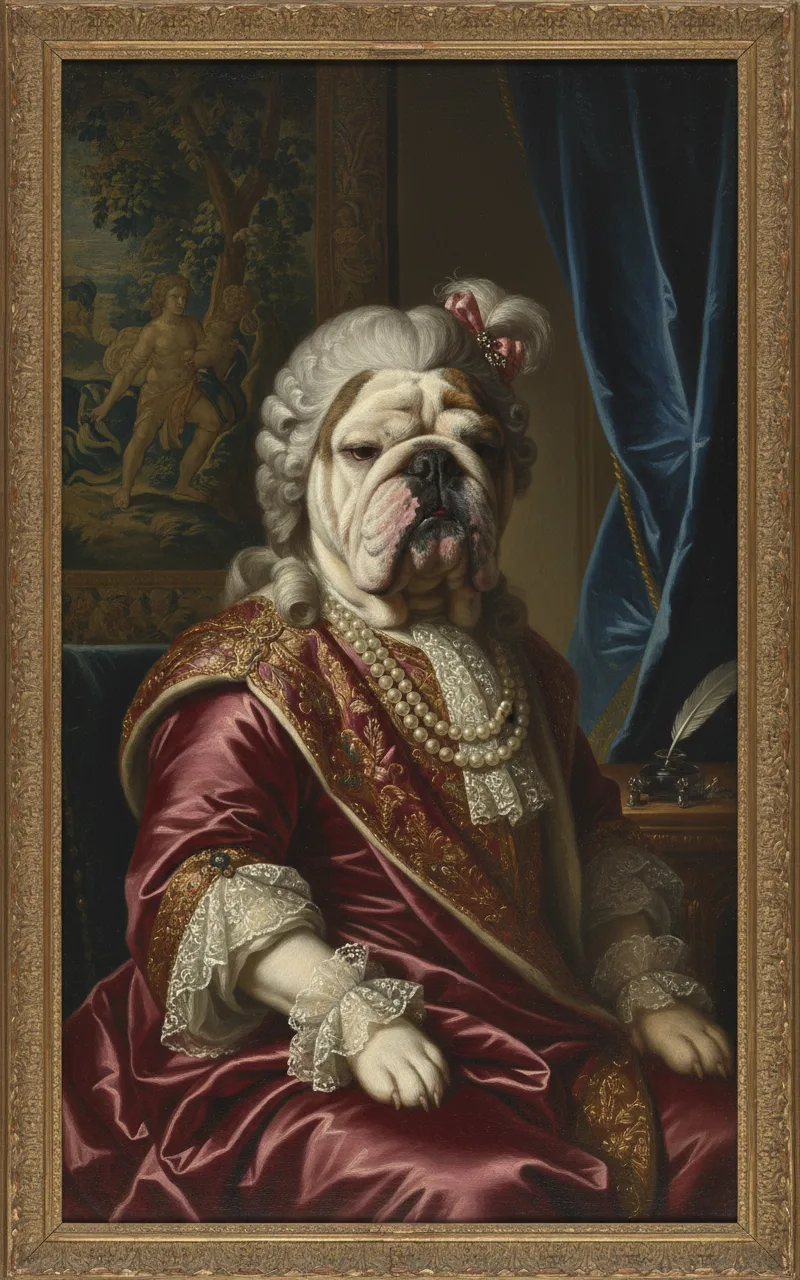
This page covers the metal that holds a framed pet portrait on the wall. It has two halves. The first half is the hardware on the back of the frame: screw eyes, D-rings, picture wire and, for the heaviest frames, a wooden cleat. The second half is the hardware in the wall, which depends on what the wall is made of. It ends with the extra steps for homes in earthquake zones. Most of the advice comes from the Canadian Conservation Institute's guide to the storage and display of paintings, which applies to framed prints as well, according to the Institute's own guide to framing works on paper. For choosing the height before you drill, read how high to hang a pet portrait. The main framing and hanging guide shows how the steps fit together.
Start with the weight
The Institute's guide to caring for paintings says works of art frequently fall off walls because the hanging hardware was inadequate or badly installed. It adds that the heavy pieces are usually handled with extra care, and that lighter works are often the victims of poor hanging. A small 8 × 10 inch portrait deserves the same care as a large one.
Every piece of hanging hardware has a weight limit. The Institute says it is important to know the maximum weight each hanging device can support, so that it can handle the combined weight of the frame, the artwork and the glazing.
Glazing is where the weight changes most. The Institute's guide to glazing says glass is heavier than plastic, and that large sheets of glass need sturdy frames and hanging systems whose hooks and wire can carry the mat, the frame and the glass together. For a 24 × 36 inch portrait behind glass, weigh the finished frame on a bathroom scale before you buy hooks: stand on the scale holding the frame, then subtract your own weight. The page on glass or acrylic for a framed print explains how a lighter glazing changes the load.
On the frame: where the hardware goes
The Institute says hanging hardware should go on the back of the main frame, because the frame is normally the heaviest and strongest part. It says to avoid a liner or inner frame, which may be poorly attached, shallow or narrow, and may crack when a screw goes in.
Screw length matters too. The Institute says to measure the thickness of the frame where the screw goes, and to leave at least 1.5 cm between the tip of the screw and the front face of the frame. A screw tip that comes too close can raise a small bump on the decorated front, and the finish above that bump will crack and flake off later. A thin, narrow moulding may not leave room for that clearance, which is one reason to choose a strong frame, as the page on choosing a frame for a royal pet portrait explains.
On the frame: the four main hangers
Screw eyes
A screw eye is a screw with a closed loop at the top. The Institute says two screw eyes are usually fixed to the frame to hold a picture wire. It prefers a second method: hook the two screw eyes directly onto two hangers on the wall, with no wire at all. This, it says, removes the risk of the wire failing. Its warnings about screw eyes are practical: the screw part is often long and cannot be used in a shallow frame, and the loop can stick out noticeably from the back.
D-rings
A D-ring is a D-shaped ring threaded through a flat, folded metal plate that screws to the frame. The Institute says D-rings are also called mirror hangers or ring hangers. They lie flat against the frame until you flip them up onto a hook. The smallest have one screw hole and larger ones have two or more, and each size is designed for a set maximum weight. Going over that weight can break the ring.
The Institute describes two ways to fit them. If the frame will hang on wire, the rings face each other so the wire runs straight between them. If the frame will hang directly on two wall hooks, the rings sit parallel, both pointing up.
Picture wire
Picture wire is the most familiar hanger, and the Institute is cautious about it. It says wire can rust, weaken, wear and break at the point where it rests on the wall hanger, and that a wired picture easily slips off centre. For smaller paintings it suggests plastic-coated cable wire, which does not wear or rust as easily.
It also gives three rules for any wire:
- Match the rating. Wire is rated for weight. Know the weight of the frame and choose a wire rated for it.
- Never double it. Doubling a wire does not double its strength. One strand always ends up tighter than the others and takes the full load, so the strands tend to break one at a time.
- Fix the ends and leave slack. Wind the spare wire back onto itself at each ring. Leave enough slack so the wire can rest on two wall hooks. The Institute says this makes the frame easier to level and keeps it from falling if one hook comes loose.
The Conservation Center for Art and Historic Artifacts gives similar advice for frames at home: coated picture wire attached to the side rails with screw eyes, and for heavy frames, D-rings on the side rails with two points of attachment to the wall. It says not to use sawtooth hangers (the thin toothed metal strips nailed to the top of cheap frames) on the top rail.
French cleats for the heaviest frames
The Institute says the heaviest paintings will exceed the limits of ordinary screw eyes and D-rings. For those, it describes metal cleat hangers or French cleats, which spread the weight across the whole width of the frame. A French cleat is made from strips of 18 mm (3/4 inch) plywood cut lengthwise at a 45 degree angle. One half is screwed to the back of the frame and the other half to the wall, and the frame is lifted so the two angled edges lock together. A strip of the same thickness along the bottom of the frame keeps the frame parallel to the wall. Check the weight rating on the D-ring packet first; a cleat is for a frame heavier than the D-rings you can buy are rated to carry.
In the wall: match the fixing to the wall
The Institute is direct about this: know your wall before hanging a painting. Its advice for each type of wall is set out below.
| Wall | What holds the hook | From the Institute's guide |
|---|---|---|
| Plywood | A picture hook fixed with a nail, or a hook with a screw thread | Holds without anchors or plugs |
| Drywall and hollow block (hollow walls) | A hook screwed into a wall plug or an expanding wall anchor | Drill holes first |
| Brick, plaster, stone, poured concrete | A threaded hook screwed into a wall plug | Drill holes lined with wall plugs |
A wall anchor is a sleeve of plastic or metal that goes into a drilled hole and spreads or grips behind the wall board when the screw goes in, so the load is shared by a wider area of the wall. Choose anchors rated for more than the weight of the frame, and follow the maker's drill size.
The Institute also describes picture rail systems: a metal track fixed high on the wall, from which frames hang on wire or chain. It says metal wire or chain is more durable and safer than plastic, and that a track removes the need to make and fill holes each time a picture changes. A rail suits a family that expects to add portraits over the years, which the page on planning a gallery wall covers in more detail.
Earthquake zones
The Government of Canada's earthquake preparedness advice gives two rules that apply directly to a portrait:
- Attach flat screen TVs, mirrors, paintings and other hanging objects securely to a wall so that they will not fall.
- Do not hang heavy pictures or objects over beds.
Museums have gone further. A US National Park Service conservation leaflet on secure hangers for framed works of art says that when a museum is in an earthquake zone, it is prudent to secure all framed objects against falling and other shock hazards. It describes three hanger types that can be made from parts sold in hardware stores:
- A snap hook screwed or bolted to the wall. The wire passes through the hook and comes out only when the spring is pressed. The leaflet recommends stainless steel or bronze hooks because they support the most weight.
- A warded hook, a strip of metal bent into a nearly closed loop. The wire slides in through a narrow gap and cannot be lifted off quickly.
- Interlocking L-hooks. One L-hook holds the wire, and two more are fixed on either side, lower and turned upside down, so their tips sit just above the wire. The leaflet says these guard hooks stop the wire being lifted off quickly and prevent the picture from falling during an earthquake.
For a home, the simplest version of the same idea is a closed hook: any hook whose opening is small enough, or shut, so the wire or D-ring cannot bounce out.
A quick checklist before you drill
- Weigh the framed portrait and buy hardware rated above that weight.
- Fix the hangers to the main frame, with 1.5 cm clear of the front face.
- Prefer two D-rings on two hooks; if you use wire, choose coated wire rated for the weight and never double it.
- Identify the wall and use the fixing the table gives.
- In an earthquake zone, use closed or guarded hooks and keep heavy frames away from beds.
Once the portrait is up, stand back and check it from the sofa or the doorway. If you are still choosing a size, the portrait studio lets you compare the four print sizes before you order.
Questions and answers
What is a D-ring on a picture frame?
A D-ring on a picture frame is a D-shaped metal ring held in a flat metal plate that screws to the back of the frame. The Canadian Conservation Institute says D-rings, also called mirror hangers or ring hangers, lie flat until they are flipped up onto a wall hook. Each size is designed for a maximum weight, and going over that weight can break the ring.
Is picture wire safe for a heavy frame?
Picture wire is a weak choice for a heavy frame. The Canadian Conservation Institute says wire can rust, weaken, wear and break where it rests on the wall hanger, and lets the frame slip off centre. It suggests plastic-coated cable wire only for smaller frames, and prefers hangers on the frame hooked directly onto two points on the wall.
Can you double picture wire to hold more weight?
Doubling picture wire does not let it hold more weight safely. The Canadian Conservation Institute warns that one of the strands will always end up tighter than the others and carry the full load, so the strands tend to break one at a time. It advises choosing a wire rated for the weight of the frame, glazing and print together.
How long should the screws in a picture frame be?
Screws in a picture frame should stop at least 1.5 cm short of the front face of the frame. The Canadian Conservation Institute gives this clearance because a screw tip that comes too close can raise a small bump on the decorated front, which later cracks and loses its finish. Measure the thickness of the frame before choosing screws or screw eyes.
What is a French cleat for hanging a picture?
A French cleat is a pair of wooden strips cut at a 45 degree angle that lock together, one fixed to the frame and one to the wall. The Canadian Conservation Institute describes cleats cut from 18 mm plywood for the heaviest paintings, because they carry the weight across the whole width of the frame instead of at two small points.
Are sawtooth hangers good for framed prints?
Sawtooth hangers are a poor choice for a framed print. The Conservation Center for Art and Historic Artifacts says not to use sawtooth hangers on the top rail of a frame. For frames in a home, it suggests coated picture wire attached to the side rails with screw eyes, and for heavy frames, D-rings on the side rails with two points of attachment to the wall.
What wall anchor do you need for plaster or brick?
Plaster and brick walls need a drilled hole lined with a wall plug, into which a threaded hook screws. The Canadian Conservation Institute gives the same method for stone and poured concrete. For hollow walls such as drywall and hollow block, it says to drill holes and insert wall plugs or expanding wall anchors that grip from behind.
Can you hang a picture on plywood without an anchor?
A picture can hang on a plywood wall without an anchor. The Canadian Conservation Institute says hanging hooks fixed with nails, or hooks with screw-threaded ends, will hold paintings in plywood without anchors or plugs. Drywall, hollow block, plaster, brick, stone and concrete all need drilled holes with plugs or anchors instead.
Should you hang a picture over a bed in an earthquake zone?
Heavy pictures should not hang over a bed where earthquakes happen. The Government of Canada's earthquake preparedness advice says not to hang heavy pictures or objects over beds, and to attach mirrors, paintings and other hanging objects securely to the wall so they will not fall. A light, unglazed print is a safer choice above a bed.
How do museums stop framed pictures falling in an earthquake?
Museums stop framed pictures falling in an earthquake with hooks the wire cannot jump off. A US National Park Service conservation leaflet describes snap hooks that open only when the spring is pressed, and pairs of upturned guard hooks set just above the wire, which keep it from being lifted off the main hook during shaking. It recommends securing all framed objects in earthquake zones.
Sources
- Storage and Display Guidelines for Paintings, Canadian Conservation Institute. Accessed September 28, 2026.
- Caring for paintings, Canadian Conservation Institute. Accessed September 28, 2026.
- Framing Works of Art on Paper, Canadian Conservation Institute. Accessed September 28, 2026.
- Glazing Materials for Framing Works on Paper, Canadian Conservation Institute. Accessed September 28, 2026.
- Matting and Framing Specifications for Objects on Paper, Conservation Center for Art and Historic Artifacts. Accessed September 28, 2026.
- Fabricating Secure Hangers for Framed Works of Art (Conserve O Gram 2/7), National Park Service. Accessed September 28, 2026.
- Earthquakes: Get prepared, Government of Canada. Accessed September 28, 2026.
Short reads on this topic
Articles from Purrspectives that answer one question each.

Cat wall art ideas: choosing a cat portrait for every room
Cat wall art for each room: the print size for a hall, living room, bedroom or small flat, the cat portrait that suits its colours, and where to keep it safe.

Dog wall art ideas: how to choose and hang a portrait of your dog
Good dog wall art fits its wall: pick a print size for the furniture below, hang it with its centre at eye level, and keep it out of direct sun.

How big is an 8 × 10 print? Pet portrait print sizes explained
An 8 × 10 print is 20.32 × 25.4 cm, with a 4:5 shape. See all four portrait print sizes in cm, plus the pixels, frames and mats each one needs.