How to choose a frame for a royal pet portrait
Match the frame to the portrait style: gold for a throne scene, dark wood for a sunset scene, plain black for modern rooms, plus what makes a frame strong.
By Purrealism. Part of Framing and hanging a royal pet portrait: frames, glass, walls and light.
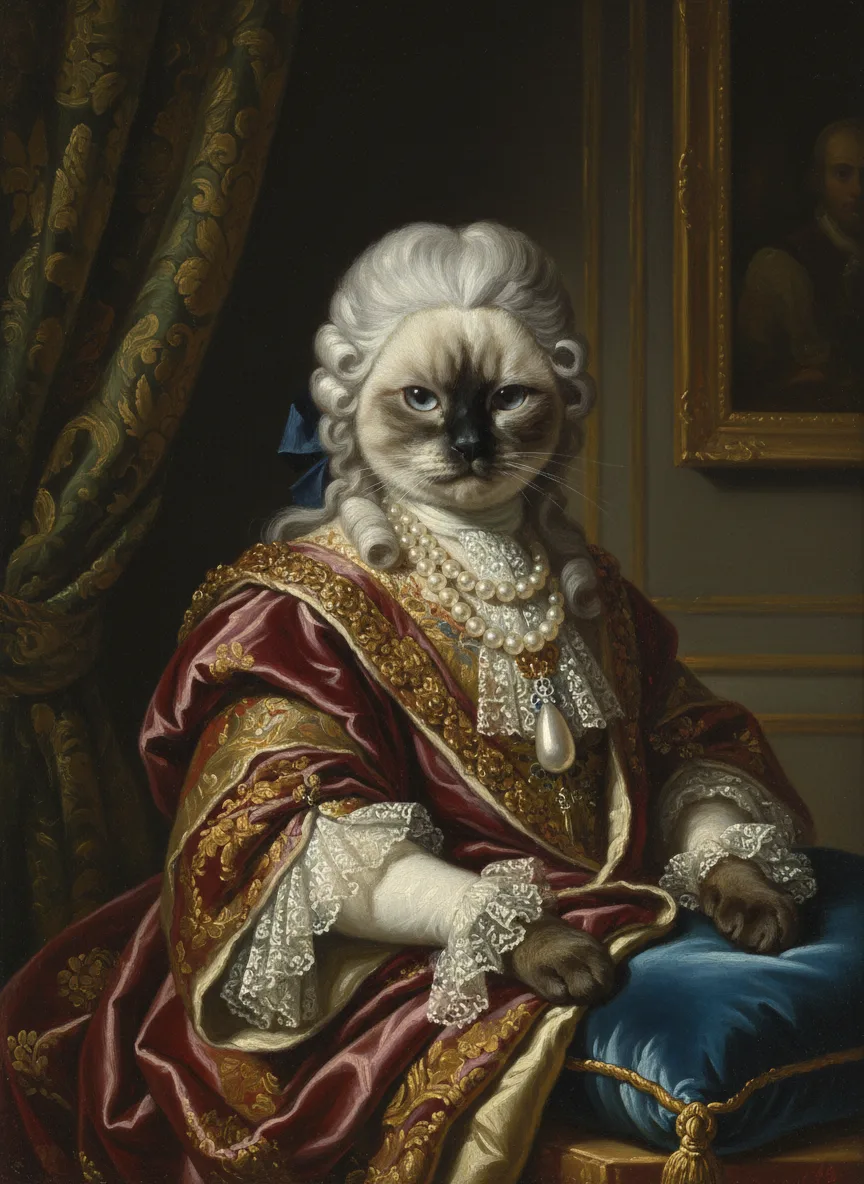
This page helps you pick a frame for a royal portrait of your dog or cat. It covers three things: how the frame should look next to the portrait's colours and costume, what the great carved frames of the past can teach, and how to tell whether a frame is strong and deep enough to protect a print. The measurements (sight size, rebate and outside size) have their own page on how to measure a frame, and the wider picture of frames, walls and light is in the main framing and hanging guide.
Start with the portrait, then the room
The Canadian Conservation Institute, in its guide to framing works of art on paper, says the choice of frame and style of moulding (the shaped strip of wood or metal that forms the frame) is a matter of personal preference. Its firm rules are about protection, and they come later on this page. On looks, you decide.
That freedom can make the choice harder. A useful rule is to choose for the portrait first and the room second. The portrait will stay the same for decades. The sofa and the wall colour may change in five years.
Look at the portrait and name its two or three strongest colours. Then pick a frame that repeats one of them. A repeated colour links the frame to the picture, so the eye moves from the frame into the portrait. A frame colour that appears nowhere in the picture pulls the eye away from it.
Matching frames to the portrait styles
Purrealism offers 15 styles. The gallery shows finished portraits in several of them, and their colours give clear starting points.
| Gallery portrait | Strongest colours | Frame ideas |
|---|---|---|
| Maharaja: golden retriever in a red jewelled turban on a gold throne | Red, gold | Gold, or dark red-brown wood |
| Maharani: white and ginger cat in a green and gold gown | Green, gold, white | Thin gold, or pale wood |
| Mughal Emperor: grey cat in a jewelled crown and pearls | Gold robe, cream, pearl white, green stones | Gold, or pale gold |
| Mysore Royal: black labrador in a saffron turban holding a gold sceptre | Black, saffron, gold | Gold, or warm brown wood |
| Patiala Royalty: Pomeranian in a blue coat and jewelled turban on a red throne | Blue, red | Gold, or deep blue-black |
| Rajput Warrior: dog in armour with a fort at sunset behind | Saffron orange, steel grey armour | Dark wood, black, or bronze |
| Noble Hound: golden retriever in a royal crown and red robe | Red, gold | Gold |
| Regal Feline: ginger cat in a red and gold royal robe | Ginger, red, gold | Gold, or warm wood |
The same idea works for the European styles, such as Renaissance Royal, Baroque Aristocrat or Regency Era. Look at the finished portrait of your own pet, pick out its main colours, and repeat one in the frame. The article on how to choose a royal portrait style for your pet explains how coat colour and costume work together, and the frame can repeat one of those colours at the edge.
Gold
Gold suits most of the Indian court styles, because gold appears in the throne, the crown, the jewellery or the sceptre of each gallery portrait. A gold frame also matches the history of royal portraits, which the next section covers. Choose a warm, soft gold over a bright yellow one if the portrait has deep reds.
Wood
A brown wood frame suits a portrait with warm colours but no strong gold, and it suits a room with wooden furniture. Dark wood contrasts with a light portrait. Pale wood suits a light portrait in a light room.
Black, silver and white
A plain black frame suits a modern room and a portrait with a dark background. It makes the colours inside look stronger. Silver suits grey coats and cool colours, such as a grey cat in a blue or white costume. A white frame suits a white wall when you want the portrait to seem to float, but it can look thin around a detailed royal scene.
What the old frames can teach
Royal portraits and gold frames have a long shared history, and the museum records of historic frames explain where the look comes from.
The Victoria and Albert Museum in London says separate wooden picture frames were used in Italy from the 15th century, developing from earlier metal and wooden frames on altarpieces. It says they were used to protect and enhance both religious and non-religious paintings.
One V&A frame, made in Tuscany between 1480 and 1550, is a tabernacle frame: a frame built like a small building, with a cornice (a projecting top edge) and a panel below. It was carved from hardwood and water gilded. Water gilding means thin gold leaf laid over a coloured layer called bole, on a white ground. Its lower panel was gilded and then painted blue, with gold spots scratched through the paint. The museum says the original gilding "would have imitated solid gold." A frame of this kind was meant to make the picture inside look precious.
A second V&A frame, made in Venice between 1550 and 1600, is a Sansovino frame, carved from lime or poplar with scrolls, garlands, birds and small winged figures, then water gilded. The museum says the pierced carving let the colour of the wall show through. The National Gallery in London explains the name: the term "Sansovino" was coined in the late 19th century, after the architect and sculptor Jacopo Sansovino, to describe frames in an elaborate early Baroque style. Its exhibition on these frames gathered 30 examples from Venice and the Veneto, dating from 1550 to 1600.
Two lessons carry over to a pet portrait:
- Gold makes a picture look valuable. That is why a gold frame suits a royal costume.
- The wall shows too. Even a carved Venetian frame was planned with the wall colour in mind. Hold your frame sample against your actual wall, as well as against the print.
You do not need a carved frame. A plain gold moulding carries the same colour into the room.
Width and depth
A frame has two measurements that change how it looks: its face width (how wide it looks from the front) and its depth (how far it stands out from the wall).
A wide frame makes a small print look more important. A thin frame keeps attention on a large print. As a quick test, lay the frame corner sample on the print and step back two metres. If the frame is the first thing you see, it is too wide or too bright.
Depth matters for protection. The Canadian Conservation Institute says the frame's inner lip, called the rabbet, should be deep enough for a mat, a backing board and the glazing, which come to 2 cm in total (the Institute's rounded figure). The Institute also warns that metal clip-together frames are not always deep enough to hold all three.
Strength: what the frame has to carry
A frame is also a carrier. It holds the glazing, and glazing can be heavy.
The Institute's guide on glazing says glass is heavier than plastic, and that large sheets of glass need sturdy frames and hanging systems able to carry the frame, the mat and the glazing together. This matters most at 18 × 24 and 24 × 36 inches. For those sizes, pick a wide, solid moulding if you want glass, or pick acrylic glazing, which the Institute says is lightweight. The page on glass or acrylic for a framed print compares the two in detail.
The hanging hardware is fixed to the frame, so the frame has to take the screws. The Institute's guide on storage and display of paintings says to attach hardware to the main frame, never to a thin inner frame or liner, and to leave at least 1.5 cm between the tip of each screw and the front face of the frame. A screw that comes too close can raise a bump on the front and crack the finish. A thin, narrow moulding may not leave room for that clearance. The page on picture hanging hardware covers D-rings, wire and wall fixings.
Frames to avoid
Two framing methods look tidy but give poor protection.
Glass-and-clip frames. The Canadian Conservation Institute does not recommend holding a paper artwork between two sheets of glass, or between glass and a board, with clips. It says this offers little protection from dust or polluted air, which can come in at the open edges, and it puts pressure on the artwork.
Frames with no room for a mat or spacer. A print pressed flat against the glass can stick to it or stain. The page on mats for framed prints explains how a mat keeps the two apart.
Reusing a family frame
Many people have an old frame they love, perhaps from a grandparent's house. A royal pet portrait in a family frame can make a warm gift.
The Institute's advice is to examine an old frame before reusing it. Look for damaged or missing moulding, lost gilding, loose joints and warping, and replace any glass that is chipped, broken or brittle. Then measure. The print, the mat and the backing need to fit inside the rabbet. If the old frame is too shallow for a mat, the Institute describes using thin spacers along the inside of the frame to hold the artwork away from the glazing.
Measure the frame's opening before you order the print. The four Purrealism print sizes are 8 × 10, 12 × 16, 18 × 24 and 24 × 36 inches, and the pricing page lists them together. If the old frame's opening is larger than the print, a mat can fill the gap.
A quick checklist
Before you buy, check these five points:
- The frame colour repeats a colour in the portrait.
- The face width suits the print size when you stand back.
- The rabbet is deep enough for glazing, mat and backing.
- The moulding is strong enough for the glazing you want and deep enough for screws.
- The corners are tight and the frame lies flat on a table.
Then look at the gallery one more time with your frame sample in hand, and imagine your own pet in the portrait you plan to make in the portrait studio.
Questions and answers
What colour frame suits a royal pet portrait?
A frame colour that repeats one colour already in the portrait suits a royal pet portrait best. A gold frame picks up the gold throne in a Maharaja portrait, a warm brown wood repeats a saffron turban, and a black frame suits a dark background. The Canadian Conservation Institute calls the choice of frame and moulding a matter of personal preference, so test a corner sample against the print.
Is a gold frame right for a Maharaja pet portrait?
A gold frame suits a Maharaja pet portrait because it repeats the gold in the picture. The Maharaja portrait in the Purrealism gallery shows a golden retriever in a red jewelled turban on a gold throne, so a gold frame links the frame to the throne. A thin gold frame keeps attention on the dog, while a wide carved one adds a palace feel.
What is a Sansovino frame?
A Sansovino frame is an elaborate carved frame in an early Baroque style from Venice and the Veneto. The National Gallery in London says the name was coined in the late 19th century after the architect and sculptor Jacopo Sansovino, more than three centuries after his death. Its 'Frames in Focus' exhibition gathered 30 examples, with frames on loan dating from 1550 to 1600.
What is water gilding on a picture frame?
Water gilding is a way of laying thin gold leaf onto a carved wooden frame over prepared layers. The Victoria and Albert Museum describes a Venetian frame from 1550 to 1600 that was water gilded on a blue-red layer called bole, over a thin white ground. A second V&A record, for a Tuscan frame made between 1480 and 1550, also names water gilding.
Why were Renaissance picture frames covered in gold?
Renaissance picture frames were gilded to look like solid gold. The Victoria and Albert Museum says the original gilding on a Tuscan frame made between 1480 and 1550 would have imitated solid gold. The same frame was also painted blue with gold spots scratched through the paint, so gold and colour were used together to make the picture look precious.
What is a tabernacle frame?
A tabernacle frame is a picture frame built like a small piece of architecture, with a cornice on top and a panel below. The Victoria and Albert Museum holds a carved and water gilded tabernacle frame from Tuscany, made between 1480 and 1550. Its lower panel carries a painted shield, and the museum says it may once have held a terracotta relief hung high on a wall.
Can you reuse an old frame for a new print?
You can reuse an old frame for a new print once you have checked it. The Canadian Conservation Institute advises examining an old frame for damaged or missing moulding, lost gilding, loose joints and warping before reusing it, and replacing any glass that is chipped, broken or brittle. Also measure the inner lip, because an old frame may be too shallow for a mat.
Are clip frames good for art prints?
Clip frames are a weak choice for an art print you want to keep. The Canadian Conservation Institute does not recommend holding a paper artwork between two sheets of glass, or between glass and board, with clips. It says this gives little protection from dust or polluted air, which can enter at the open edges, and it presses on the paper.
Should a frame match the portrait or the room?
A frame for a royal pet portrait is best chosen for the portrait first and the room second. The Canadian Conservation Institute calls the choice of frame and moulding a matter of personal preference, and its practical requirement is depth: room for the glazing, the mat and the backing board. The portrait stays the same for decades, while sofas and wall colours change.
Does a large print need a stronger frame?
A large print needs a stronger frame when it sits behind glass. The Canadian Conservation Institute says glass is heavier than plastic, and that large sheets of glass need sturdy frames and hanging systems strong enough to carry the frame, the mat and the glazing. For a 24 × 36 inch print, choose a wide, solid moulding or a lighter acrylic glazing.
Sources
- Framing Works of Art on Paper, Canadian Conservation Institute. Accessed September 28, 2026.
- Glazing Materials for Framing Works on Paper, Canadian Conservation Institute. Accessed September 28, 2026.
- Storage and Display Guidelines for Paintings, Canadian Conservation Institute. Accessed September 28, 2026.
- Frames in Focus: Sansovino Frames, The National Gallery, London. Accessed September 28, 2026.
- Picture Frame (Venice, 1550 to 1600), Victoria and Albert Museum. Accessed September 28, 2026.
- Frame (Tuscany, 1480 to 1550), Victoria and Albert Museum. Accessed September 28, 2026.
Short reads on this topic
Articles from Purrspectives that answer one question each.
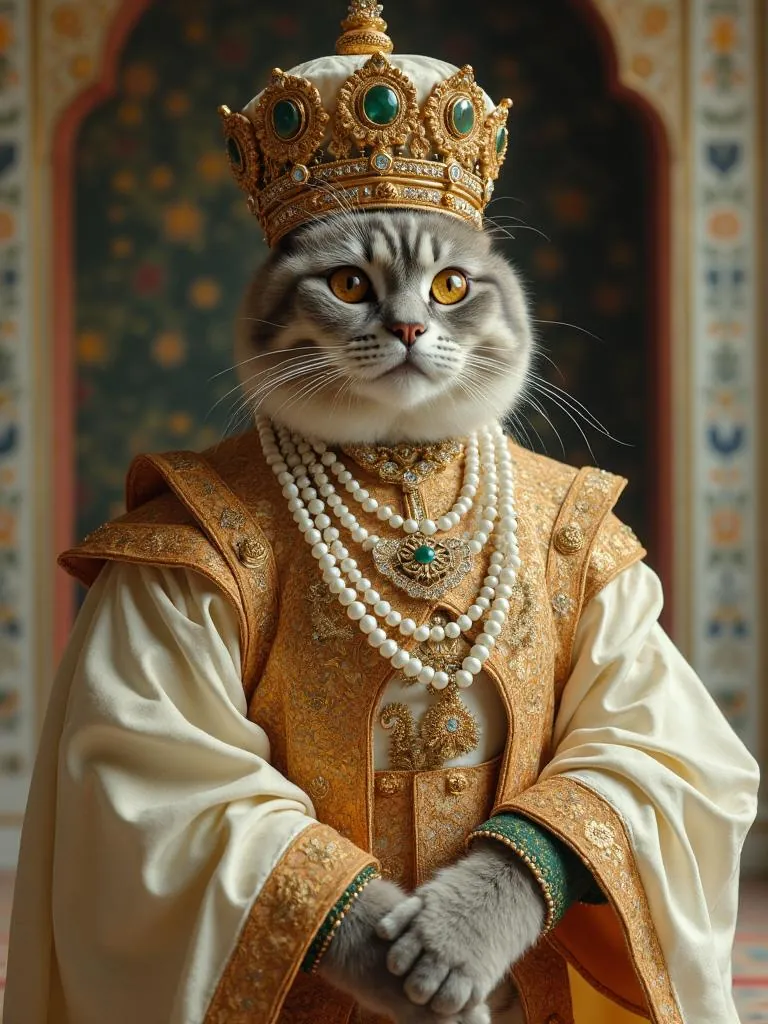
Cat wall art ideas: choosing a cat portrait for every room
Cat wall art for each room: the print size for a hall, living room, bedroom or small flat, the cat portrait that suits its colours, and where to keep it safe.

Dog wall art ideas: how to choose and hang a portrait of your dog
Good dog wall art fits its wall: pick a print size for the furniture below, hang it with its centre at eye level, and keep it out of direct sun.
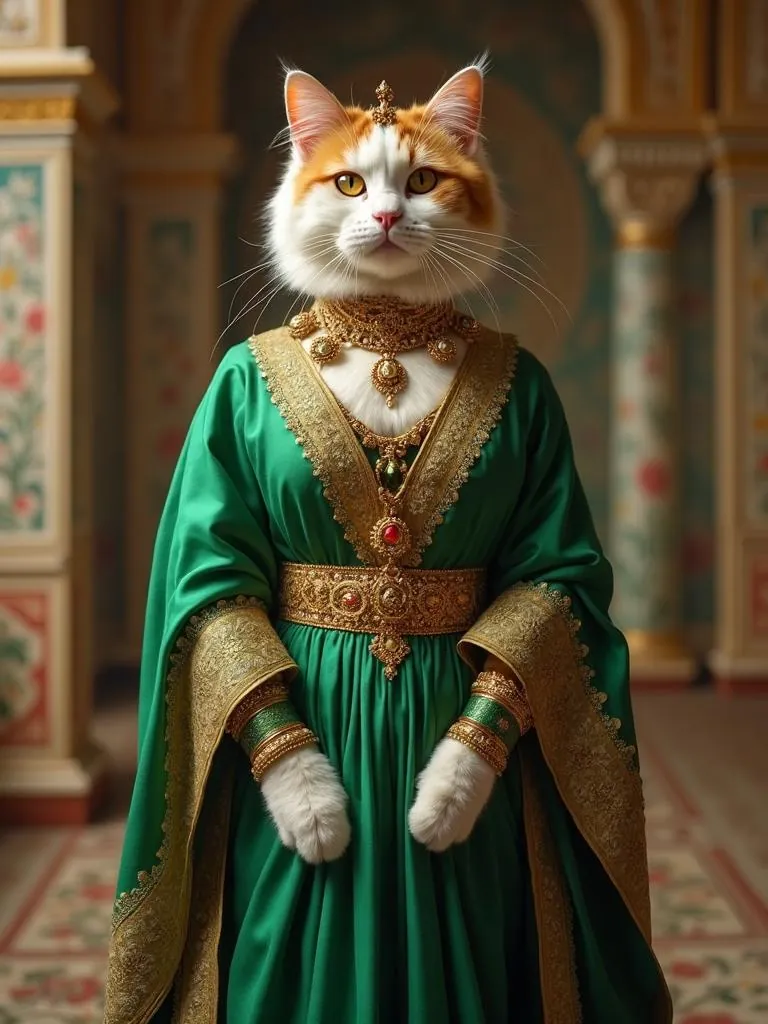
How big is an 8 × 10 print? Pet portrait print sizes explained
An 8 × 10 print is 20.32 × 25.4 cm, with a 4:5 shape. See all four portrait print sizes in cm, plus the pixels, frames and mats each one needs.