Mats for a framed pet portrait: board, border, colour and hinges
A mat keeps a print off the glass and gives it a border. Which board is safe, how thick to cut it, what colour suits a royal portrait and how to hold the print.
By Purrealism. Part of Framing and hanging a royal pet portrait: frames, glass, walls and light.
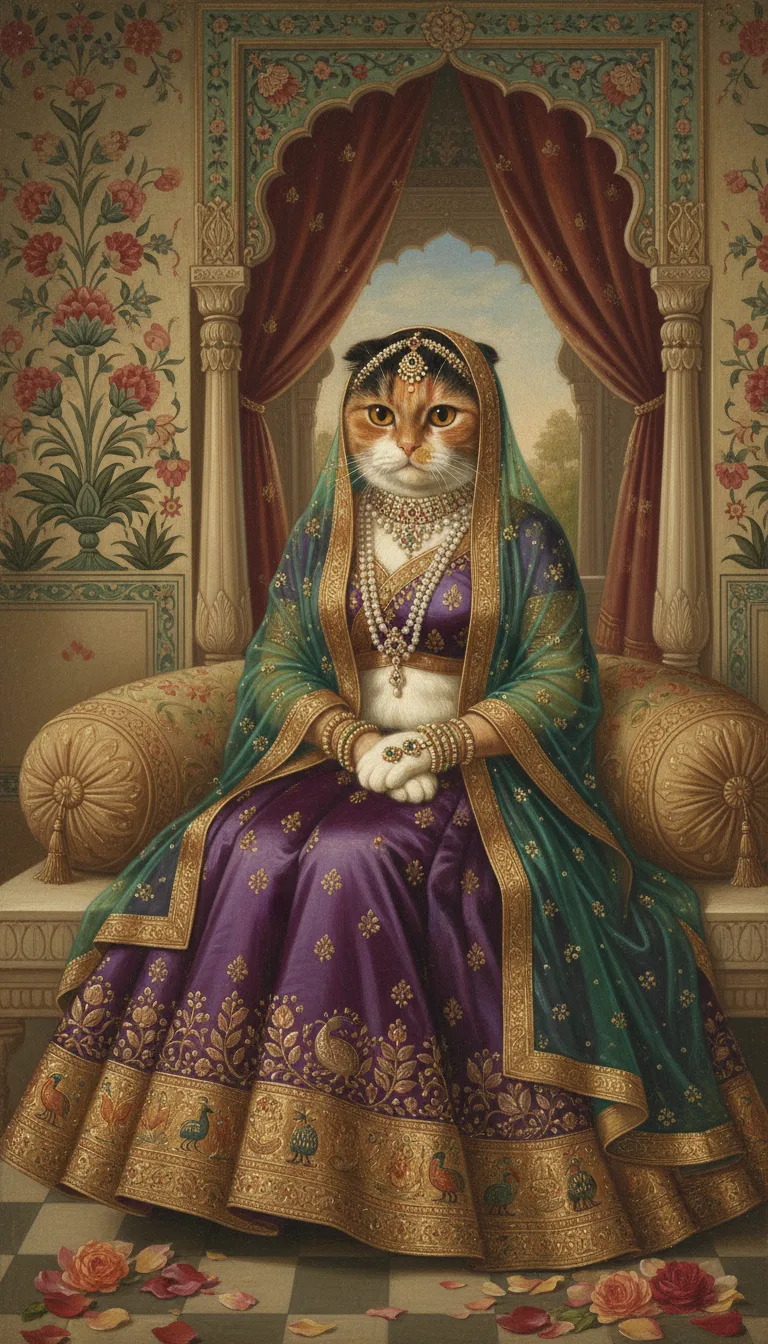
This page is about the mat: the card border that sits between a framed print and the glass. It explains what a mat does, which boards are safe to put next to a paper print, how thick the board should be, how to split the borders, which colours suit a royal pet portrait, and how the print should be held in place behind the window. For the ready-made mat and frame sizes that fit each of the four print sizes, read the Purrspectives article how big is an 8 × 10 print. This page covers the board itself and the work a framer does with it. The main framing and hanging guide shows where the mat fits among the other layers of a frame.
What a mat does
A mat is a sheet of stiff card with a window cut in it. The print sits behind the window, and a second board sits behind the print. Framers call the pair a window mat.
The Canadian Conservation Institute, the Government of Canada's conservation institute in Ottawa, gives several reasons to use one. A mat supports the paper and protects it from damage when it is handled. Inside a frame, the window mat creates an air space that keeps the image from touching the glazing (the glass or clear plastic at the front). And a mat gives an attractive way to present the work.
The air space matters more than it looks. The Institute's guide to glazing says a framed work of art should not touch the glazing, because contact can cause image transfer, staining or mould. The inside of glass can collect moisture from the air, which can then pass into the paper. A mat of the right thickness is the usual way to keep the two apart.
The board: what it is made of
A mat touches the print along every edge for as long as the print stays in the frame, so the board has to be clean and stable. The Institute says paper is sensitive to contamination by poor-quality materials, so only conservation-quality board, paper and adhesive should touch it.
Two kinds of board meet that standard, according to the Institute:
- Rag board. This is board described by its makers as 100% rag fibre, which means cotton. It comes buffered, at a pH of 7.5 to 8.5, or unbuffered, at pH 7.
- Purified wood pulp board. This is board made from highly purified wood pulp and buffered to pH 8.5. The Institute calls it an acceptable, lower-cost alternative.
The pH number tells you whether a material is acid (below 7), neutral (7) or alkaline (above 7). "Buffered" means the maker has added an alkaline substance to the board, so that acid from the air or from nearby materials is used up before it reaches the print. The Institute says buffered board is appropriate for most works on paper.
The Conservation Center for Art and Historic Artifacts, which publishes framing specifications for paper objects, adds more detail. It says mat board should be chemically stable, made from 100% cotton rag or purified wood pulp, and free of lignin (the natural glue in wood that turns paper yellow), ground wood and metal particles. It describes alkaline boards buffered with 3.5% calcium carbonate to guard against acid moving into the artwork over time. It also says boards used with photographs, including inkjet prints, should pass the Photographic Activity Test, a laboratory test that predicts whether a material will react with a photograph.
Ordinary coloured card from a craft shop does not come with any of these promises. The Institute's guide to framing lists what to avoid behind a print: masonite, corrugated cardboard, wood and any other board that is not acid-free, because many of them contain acids and resins that can move into the paper.
Thickness: 4-ply and 8-ply
Mat board is sold by the number of layers, called plies. The Institute's guide to matting generally recommends white or buff 4-ply board. The Conservation Center says most flat paper items can be matted with 8-ply or 4-ply board, which gives rigid support and space between the artwork and the glazing.
The choice of glazing can change the answer. The Institute's guide to glazing says plastic glazing picks up and holds static electricity, which can pull loose particles off the surface of a picture. Its advice is to increase the distance between the picture and the plastic, either with 8-ply board instead of 4-ply, or with a double mat: two window mats laid one on top of the other. The page on glass or acrylic for a framed print explains the static problem and the other differences between the two.
A thicker mat also needs a deeper frame. The Institute says the frame's inner lip should hold a mat, a backing board and the glazing, 2 cm in total (a rounded figure). If you plan an 8-ply or double mat, check the depth with the steps on the page about how to measure a frame.
The window and the borders
The window is cut with a 45 degree bevel, a sloped edge. The Institute says the bevel improves the look of the mat and reduces the shadow the edge casts on the print. It also says the window must be large enough to show the image and any important marks, and that the mat should overlap the edges of the print by at least 2 mm to 4 mm to hold it down.
Splitting the borders
The Institute describes the usual layout: the top and side margins are the same width, and the bottom margin is larger to create a balanced visual effect. When all four borders are equal, the picture can look as if it has slipped down inside the frame.
Here is how the split works in practice. Say a 12 × 16 inch print goes into a mat with a total of 6 inches of extra height. Equal borders would give 3 inches at the top and 3 at the bottom. A framer who wants a heavier bottom might cut 2.75 inches at the top and 3.25 at the bottom instead. The total stays the same, so the frame size does not change. The Institute gives no fixed number for the difference, so decide by eye: lay the cut mat on the print and step back.
How wide should the borders be?
Border width is a matter of taste, with two practical limits. A wide border adds to the size of the frame and the weight of the glazing. A narrow border leaves little room for the bevel and the overlap. Width also changes how a portrait looks on the wall. A small 8 × 10 inch portrait with a wide mat looks more formal and fills more wall. A 24 × 36 inch portrait already fills a wall, and a wide mat makes the frame larger and heavier still.
Colour: white, buff or a royal shade
The Conservation Center prefers neutral or white shades of mat board, both for the look and because they remove the risk of colour bleeding if the mat is ever exposed to water or high humidity. The Institute's guide to matting generally recommends white or buff board, buff being a pale yellow-brown.
For a royal pet portrait, a white or cream mat keeps attention on the colours of the costume. The portraits in the gallery show why. The Maharaja golden retriever sits on a gold throne in a red turban, and the Maharani cat wears a green and gold gown. A cream or buff mat sits next to those golds without competing with them. A bright white mat looks cooler and suits a portrait with cool colours, such as the grey coat and pearls of the Mughal Emperor cat.
If you want colour, keep it thin. A double mat can show a narrow line of a second colour inside the main white or cream window. The inner board touches the print, so choose a conservation board for it as well.
How the print is held in place
The mat holds the edges of the print down, but something has to hold the print to the back board. The Institute says hinging is the best way to attach works on paper to their mats. Hinges hold the paper securely while letting it move when the air becomes damper or drier, and they let the print be taken out later without damage.
The Institute describes the T-hinge as the strongest and most versatile hinge for standard matting. It is made from two strips of Japanese paper. The first strip is pasted to the top edge of the back of the print. The second strip is laid across the first and pasted to the back board, making the shape of a T. The Institute says most works on paper need two hinges, that larger works may need more, and that the tabs should be no narrower than 1.5 cm. The best paste, it says, is wheat starch paste. The Conservation Center adds that hinges are generally placed five inches apart and that the print must always be able to move freely at the hinges.
The Conservation Center describes two other methods. Clear corners made of polyester film hold a print by its corners with no adhesive on the paper. A float mat shows the whole print, edges included, with the paper "floating" on the back board. It uses V-hinges: a V-shaped piece of mulberry paper fixed to the back of the artwork and to the back mat, hidden behind the paper. The Conservation Center says a float mat suits images that run to the edge of the page, and warns that large or heavy items may need a window mat for secure support.
What the Institute warns against is tape. Its guide to matting says shop-bought gummed and pressure-sensitive tapes are often made of unsuitable materials and age badly, and that they will eventually cause staining and damage and may be hard to remove. Its basic care page for art on paper also lists glue, rubber cement, pressure-sensitive tape and masking tape as materials that harm paper.
Mistakes to avoid
- A mat that is too thin for plastic glazing. Use 8-ply or a double mat under acrylic, as the Institute advises.
- Coloured craft card. It may contain acid or dyes that bleed when damp. Ask for conservation board.
- Tape on the back of the print. Ask the framer for paper hinges or clear corners.
- A window that crops the picture. The overlap hides 2 mm to 4 mm on each edge. Check that the tip of a crown or the end of a tail is not in that strip.
- Gluing the print flat to the board. The Conservation Center says a hinged print should never be adhered directly to the mat board.
A mat also changes which frame you need. Once the mat is planned, the page on choosing a frame for a royal pet portrait helps you match the moulding to the portrait's colours.
Questions and answers
What does a mat do in a picture frame?
A mat in a picture frame holds the print back from the glass and gives it a border. The Canadian Conservation Institute says a window mat creates an air space that protects the image from direct contact with the glazing. It also supports the paper when the print is handled, and the Institute adds that a mat gives an attractive way to present the work.
What mat board is safe for an art print?
Mat board made of 100% rag fibre, or of highly purified wood pulp buffered to pH 8.5, is safe for an art print, according to the Canadian Conservation Institute. The Conservation Center for Art and Historic Artifacts adds that the board should be free of lignin, ground wood and metal particles. Board sold for photographs should also pass the Photographic Activity Test.
What is buffered mat board?
Buffered mat board contains an alkaline substance that protects paper against acid. The Canadian Conservation Institute gives buffered rag board a pH of 7.5 to 8.5 and says buffered board suits most works on paper. The Conservation Center for Art and Historic Artifacts describes boards buffered with 3.5% calcium carbonate to guard against acid moving into the print over time.
What is the difference between 4-ply and 8-ply mat board?
The difference between 4-ply and 8-ply mat board is thickness: 8-ply is built from twice as many layers, so it holds the print further from the glazing. The Canadian Conservation Institute generally recommends 4-ply board. It suggests 8-ply, or two mats stacked, under plastic glazing, because the extra space reduces the pull of static electricity on the picture surface.
Should a mat be white or coloured for a pet portrait?
A white or neutral mat is the safer choice for a pet portrait print. The Conservation Center for Art and Historic Artifacts prefers neutral or white shades for looks and because they remove the risk of colour bleeding if the mat is exposed to water or high humidity. The Canadian Conservation Institute generally recommends white or buff board.
Why is the bottom border of a mat wider?
The bottom border of a mat is made wider so the picture looks balanced on the wall. The Canadian Conservation Institute says the top and side margins are normally the same width, while the bottom margin is larger to create a balanced visual effect. With equal borders, the picture can look as if it sits low inside the frame.
What is a float mat?
A float mat is a mount that shows the whole print, edges included, instead of covering the edges with a window. The Conservation Center for Art and Historic Artifacts says float mats suit images that run to the edge of the page, and that they use V-shaped hinges of mulberry paper fixed to the back of the artwork and to the back mat.
Can you tape a print to a mat?
Household tape is a poor way to fix a print to a mat. The Canadian Conservation Institute says commercial gummed and pressure-sensitive tapes are often made of unsuitable materials, age badly, and will in time cause staining and damage that is hard to remove. It recommends hinges of Japanese paper stuck with wheat starch paste, which make the print simple to remove later.
What is a T-hinge in picture framing?
A T-hinge is a paper hinge made of two strips, one pasted to the back of the print and a second laid across it and pasted to the back board. The Canadian Conservation Institute calls the T-hinge the strongest and most versatile hinge for standard matting. It says most works on paper need two hinges, with tabs no narrower than 1.5 cm.
How far apart should hinges be on a matted print?
Hinges on a matted print are usually placed about five inches apart. The Conservation Center for Art and Historic Artifacts gives this as a general rule, with the hinges attached to the back of the artwork. It adds that the hinged print should always be able to move freely at the hinges and should never be glued flat to the mat board.
Sources
- Matting Works on Paper, Canadian Conservation Institute. Accessed September 28, 2026.
- Framing Works of Art on Paper, Canadian Conservation Institute. Accessed September 28, 2026.
- Glazing Materials for Framing Works on Paper, Canadian Conservation Institute. Accessed September 28, 2026.
- Basic care: Works of art on paper, Canadian Conservation Institute. Accessed September 28, 2026.
- Matting and Framing Specifications for Objects on Paper, Conservation Center for Art and Historic Artifacts. Accessed September 28, 2026.
Short reads on this topic
Articles from Purrspectives that answer one question each.

Cat wall art ideas: choosing a cat portrait for every room
Cat wall art for each room: the print size for a hall, living room, bedroom or small flat, the cat portrait that suits its colours, and where to keep it safe.

Dog wall art ideas: how to choose and hang a portrait of your dog
Good dog wall art fits its wall: pick a print size for the furniture below, hang it with its centre at eye level, and keep it out of direct sun.

How big is an 8 × 10 print? Pet portrait print sizes explained
An 8 × 10 print is 20.32 × 25.4 cm, with a 4:5 shape. See all four portrait print sizes in cm, plus the pixels, frames and mats each one needs.