What is a giclée print? How inkjet art prints are made
A giclée print is a fine art inkjet print. The word dates from 1991. Here is how the printer, the inks and the paper work together, in plain words.
By Purrealism. Part of Art prints and paper: how a portrait print is made, sized and kept.
A giclée print is an inkjet print made as a piece of art. The process behind the French name is the same one many home printers use: tiny drops of ink are sprayed onto paper and build the picture dot by dot. This page explains where the word came from, how the printer, the ink and the paper work, and what to ask before you order or make a print. The main guide to art prints and paper covers the rest of the printing process, from pixels to storage.
Where the word giclée comes from
The Historic New Orleans Collection, a museum and research centre in Louisiana, gives the clearest short history. Giclée is a French word that means a splash or a spurt. The American printmaker Jack Duganne first used it in 1991. At the time it described images made on the IRIS, a four colour inkjet printer that Iris Graphics had introduced in 1985. Later the word spread beyond that one brand, and today the museum treats it as a name for inkjet or pigment printing in general.
The Image Permanence Institute at Rochester Institute of Technology studies how prints and photographs age. Its guide to digital prints lists giclée in its glossary as "a term often used for marketing fine-art or fine-art reproduction inkjet prints." For museum labels, the Institute recommends the plain word inkjet and advises against names such as giclée or archival pigment. So if you see giclée on a print, read it as inkjet print, and then ask which ink and which paper were used. Those two choices matter more than the name.
A short history of inkjet printing
Inkjet printing began long before computers. The Image Permanence Institute dates the first device that printed with drops of ink from a nozzle to 1867, when Lord Kelvin built one to record telegraph messages. More than a hundred years passed before inkjet printers were adapted for computers.
The Institute gives this timeline:
| Year | Step in inkjet printing |
|---|---|
| 1867 | Lord Kelvin's ink drop recorder for telegraph messages |
| 1984 | Hewlett Packard's first desktop inkjet printers |
| 1987 | Colour desktop inkjet printers |
| 1993 | Wide format inkjet printing |
| 2000 | Full colour pigment inkjet printing |
| 2007 | Inkjet digital presses |
The University of Illinois Library's preservation guide adds that the technology behind inkjet was developed in the 1950s but only became a commercial product in the mid 1980s. It says colour inkjet quality improved in the 1990s, and home users adopted it quickly after that. The Iris printer that gave giclée its name came between these steps, in 1985.
How an inkjet printer puts ink on paper
The name inkjet describes the whole process: ink is jetted from a nozzle, crosses a small gap of air and lands on the paper. The Image Permanence Institute points out that the print head never touches the paper surface. The drops land as a pattern of dots, and under a magnifier inkjet dots look round and separate.
There are two families of inkjet printer.
Continuous inkjet
A continuous printer sends out a steady stream of charged ink drops. The printer bends the unwanted drops into a recycling channel and lets the others reach the paper. In a continuous printer such as the Iris, the paper was wrapped around a metal drum that turned under the print head, so the paper had to be flexible enough to bend around it. The Image Permanence Institute says continuous printers were the first to be used for high end art prints, although they were first built to make proofs for commercial print shops. Today the Institute says continuous inkjet is used only in large inkjet presses.
Drop on demand
A drop on demand printer releases a drop only where the image needs one. There are two ways to push the drop out. In a thermal printer, a tiny heater inside the print head briefly heats some ink until it forms a bubble, and the bubble forces a drop out of the nozzle. In a piezo printer, a thin ceramic plate bends when it receives an electric signal and presses a drop out. The Institute says all desktop inkjet printers and most wide format printers use drop on demand.
A large art printer and a home photo printer use the same basic idea. They differ in the ink set, the paper and the width of the sheet they can take.
Pigment ink and dye ink
Inkjet ink has two parts. The vehicle is the liquid that carries the colour. The colorant is the colour itself. The Image Permanence Institute says most inkjet prints in museum collections were made with water based inks.
The colorant is either a dye or a pigment:
- Dye dissolves fully in the ink liquid, so no solid pieces remain.
- Pigment is made of tiny solid particles that stay separate in the liquid.
Some printers use all dyes, some use all pigments, and some mix them, with pigment black and dye colours. The Institute says pigment colours have tended to resist moisture, air pollution and light better, while dyes have tended to last better when a print is handled. The Historic New Orleans Collection says that inkjet prints made with pigment inks are archivally stable and resist light and water. The University of Illinois guide says pigment prints on a good paper may last more than 100 years before any fading. It also warns that pigment ink scuffs more easily, above all in dark areas where a lot of ink sits on the surface.
Dye inks cost less. The University of Illinois guide says this is why dye inks are more common in home and office printers. The same guide says dye inks spread and run if even a single drop of water touches the print.
Basic inkjet printers use four inks: cyan, magenta, yellow and black. The Image Permanence Institute says high end printers add lighter versions such as light cyan, light magenta and greys, and sometimes extra colours such as orange, red, green, blue or violet. More inks let the printer reach more colours and make smoother changes from light to dark.
The page on archival paper and inks explains in more detail what makes ink and paper last, and the page on lightfastness and fading explains how fading is tested.
The paper under a giclée print
Plain office paper soaks ink into its fibres, so colours look dull and lines look fuzzy. Paper makers solved this with a special top coating that holds the ink near the surface. The Image Permanence Institute calls this coating an image receiver layer.
The Institute says these coatings were first added to art papers such as watercolour paper. The coating was made of mineral particles held in a starch or plastic binder, and the ink soaked into the spaces between the particles. For this reason it is called a porous coating. Early particles were large, so these papers were always matte or kept the texture of the paper underneath.
The Historic New Orleans Collection lists several supports used for giclée prints:
- cotton rag "watercolour" paper, with a textured surface and a softer image,
- baryta paper, which gives rich black tones,
- canvas,
- vinyl.
The University of Illinois guide adds that porous paper without a plastic layer is what people usually call fine art paper, and that it is used for giclée prints. It also says that not every art inkjet print is made on porous paper. The page on matte and glossy paper compares the coated paper types in more detail.
How to read a print description
The Image Permanence Institute suggests a four part way to describe any inkjet print: the colorant, the process, the coating and the paper. Its own example is "pigment inkjet on porous-coated baryta paper." That one line tells you:
- Pigment: the colours are solid particles, which tend to resist light and water.
- Inkjet: the process that sprayed the ink.
- Porous coated: the top layer that took in the ink.
- Baryta paper: the sheet underneath, made to look like a traditional darkroom print.
When a seller writes only "giclée", you can ask for the other three parts. If the answer is "dye inkjet on plain paper", you know the print needs more care than a pigment print on coated paper.
Is a giclée print a photograph or a print?
The Image Permanence Institute answers this directly. A traditional photograph is made on paper that reacts to light. Inkjet paper does not react to light, so an inkjet print is technically not a photographic process, even when the picture began as a camera file. The Institute prefers the word print. It also recommends naming the process, such as inkjet, when describing the sheet, because only the file that made it was digital.
This matters for care. The Institute says ISO 18902, the international standard for photo storage and framing materials, is not fully suited to inkjet prints, because some adhesives can yellow them and some surfaces scuff them. Inkjet prints have their own weak points, such as scuffing on pigment prints and water damage on dye prints. The page on storing unframed prints gives care steps written for inkjet prints.
What this means for a royal pet portrait
Purrealism offers each portrait in two editions: a digital download and an art print. The art print comes in four sizes, 8 × 10, 12 × 16, 18 × 24 and 24 × 36 inches, on matte or glossy paper. You choose the edition, the size and the finish in the portrait studio.
If you plan to print a digital download yourself, the questions on this page become yours to answer. Ask the print shop, or check your own printer, for the ink type and the paper. Pigment ink on a coated art paper is the combination that the sources above describe as resistant to light and water. The page on printing a digital download lists the steps at home and at a print shop.
Fine detail is where the paper matters. A Mughal Emperor portrait, such as the grey cat in a jewelled crown and pearls in the gallery, has fine lines in the jewels and the pearls. A coated paper keeps those lines sharp, while plain paper would let the ink spread into the fibres and blur them.
Questions and answers
What's a giclée print?
A giclée print is an inkjet print made as fine art, usually with pigment inks on a high quality paper. The Historic New Orleans Collection explains that the word was first used in 1991 by the printmaker Jack Duganne for prints from the Iris inkjet printer, and that it now means the same as inkjet or pigment printing. The picture is built from microscopic dots of sprayed ink.
How are giclée prints made?
Giclée prints are made by an inkjet printer that sprays drops of ink from nozzles onto paper, canvas or another support. The Image Permanence Institute explains that the print head never touches the paper and that the drops form a pattern of coloured dots. Desktop printers and most wide printers release a drop only when the image needs one, pushed out by a small heater or by a flexing ceramic plate.
What does the word giclée mean?
The word giclée comes from French and means a splash or a spurt. The Historic New Orleans Collection says the American printmaker Jack Duganne first used it in 1991 for images from the IRIS printer, which Iris Graphics introduced in 1985. The term later spread beyond that one brand, and the museum now treats giclée as another name for inkjet or pigment printing in general.
What is a giclée printer?
A giclée printer is an inkjet printer used to make art prints, often a wide model with more ink colours than an office printer. The Image Permanence Institute says basic inkjet printers use cyan, magenta, yellow and black, while high end models add light cyan, light magenta, greys and extra colours such as orange, red, green, blue or violet to widen the range of colours they can print.
Can you make a giclée print at home?
A home inkjet printer uses the same basic process as a giclée print: drops of ink sprayed from nozzles onto paper. The Image Permanence Institute says every desktop inkjet printer releases drops only when needed. The result at home depends on the ink and paper. The University of Illinois preservation guide says dye inks are cheaper and more common at home, while pigment inks are more lightfast.
What is the difference between pigment ink and dye ink?
Pigment ink carries its colour as tiny solid particles, while dye ink carries colour that dissolves fully in the liquid. The Image Permanence Institute says pigment colours have tended to resist moisture, air pollution and light better, and dyes have tended to last better when a print is handled. The University of Illinois Library adds that dye inks cost less, so most home and office printers use them.
Who invented inkjet printing?
The first device to print with drops of ink from a nozzle was built by Lord Kelvin in 1867 to record telegraph messages, according to the Image Permanence Institute. More than a century later, inkjet printers were adapted for computers. The Institute dates the first desktop inkjet printer to 1984 from Hewlett Packard, colour desktop inkjet to 1987 and full colour pigment inkjet to 2000.
Is a giclée print a photograph?
A giclée print is a print, even when the picture started as a digital photo. The Image Permanence Institute explains that inkjet paper is not sensitive to light, so an inkjet print is technically not photographic, and it prefers the word print. A traditional colour photograph is made on light sensitive paper in a darkroom process, which is a separate technology from spraying ink.
What should a giclée print label say?
A giclée print label is clearest when it names the ink, the process and the paper, for example pigment inkjet on porous coated baryta paper. The Image Permanence Institute recommends that order: colorant, process, image receiver layer and support. For gallery labels it suggests the single word inkjet, and it advises against names such as giclée or archival pigment on labels.
Why do giclée prints use pigment ink?
Giclée prints often use pigment ink because pigments resist light, water and air pollution better than dyes. The Historic New Orleans Collection says inkjet prints made with pigment inks are archivally stable and resist light and water. The University of Illinois Library adds one trade off: pigment ink scuffs more easily, above all in dense, dark areas of the print.
Sources
- Inkjet/Giclée Print Process, The Historic New Orleans Collection. Accessed September 28, 2026.
- IPI's Guide to Preservation of Digitally-Printed Images, Image Permanence Institute, Rochester Institute of Technology. Accessed September 28, 2026.
- Digital Prints, Preservation Self-Assessment Program, University of Illinois Library. Accessed September 28, 2026.
Short reads on this topic
Articles from Purrspectives that answer one question each.
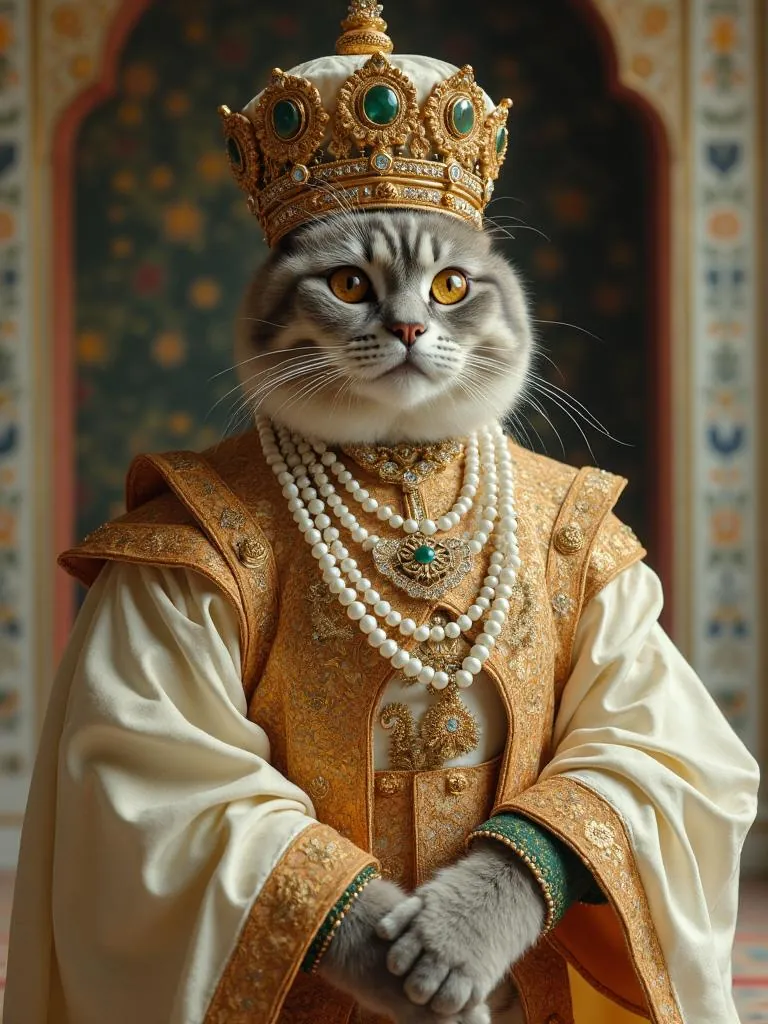
Cat wall art ideas: choosing a cat portrait for every room
Cat wall art for each room: the print size for a hall, living room, bedroom or small flat, the cat portrait that suits its colours, and where to keep it safe.
Dog wall art ideas: how to choose and hang a portrait of your dog
Good dog wall art fits its wall: pick a print size for the furniture below, hang it with its centre at eye level, and keep it out of direct sun.
How big is an 8 × 10 print? Pet portrait print sizes explained
An 8 × 10 print is 20.32 × 25.4 cm, with a 4:5 shape. See all four portrait print sizes in cm, plus the pixels, frames and mats each one needs.