Storing unframed prints: sleeves, boxes and safe handling
An unframed print is safest flat, in its own acid-free folder or polyester sleeve, handled on a stiff board and kept cool and dry. Here is how, step by step.
By Purrealism. Part of Art prints and paper: how a portrait print is made, sized and kept.
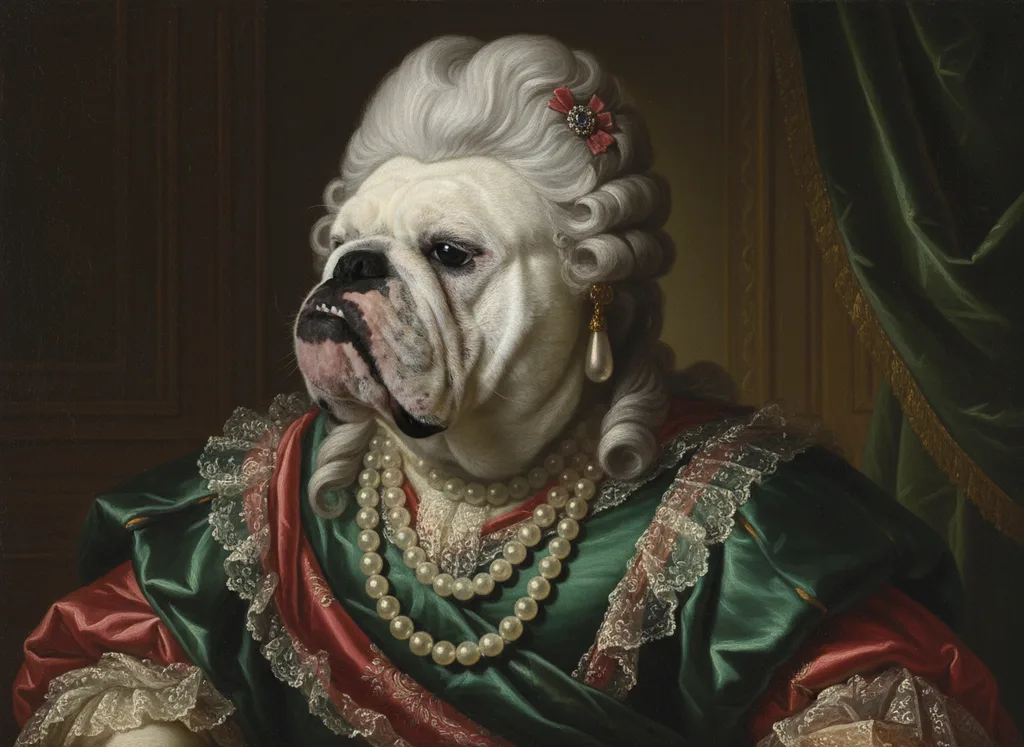
An art print spends time unframed: after it is printed or delivered, while you choose a frame, or when it is put away for a season. This page explains how to keep it safe during that time: which sleeves, folders and boxes to use, how to handle it, why rolling and stacking harm inkjet prints, and what temperature and humidity to aim for. It belongs to the guide to art prints and paper. Once the print goes into a frame, the guide to framing and hanging takes over.
Why unframed prints need care
An inkjet print without a frame is open to air, moisture and touch. The Image Permanence Institute at Rochester Institute of Technology lists the main dangers for prints in storage: heat, moisture and air pollution, plus scratches and scuffs from handling. Signs of damage include fading, colour shift, yellowing of the paper, ink bleeding, and cracking or peeling of the paper's layers.
The type of print matters. The Institute says the surface of a pigment inkjet print can be sensitive to abrasion, while dye inkjet prints can bleed when the air is damp. In the Institute's tests, reported by the American Institute for Conservation, pigment inkjet was more sensitive to ink smearing than any other print process. The page on giclée printing explains the two kinds of ink.
Sleeves, folders and boxes
The Institute bases its advice on ISO 18902, the international standard for albums, framing and storage materials for photographs and prints. It sums up the standard's main points for storage materials:
- acid-free,
- lignin-free, meaning free of the natural wood substance that yellows paper,
- a 2% alkaline reserve,
- a pass in the Photographic Activity Test,
- no chlorinated, plasticised or cellulose-based plastics,
- no rubber adhesives.
The Photographic Activity Test, ISO 18916, checks whether a storage material reacts with a photograph. The Institute's guide to the standard says it uses two special detectors: one for reactions that cause fading and spots, and one for compounds that cause yellowing. A material must pass it to be called photo-safe.
The University of Illinois Library's preservation guide gives the practical version. Each inkjet print should have its own enclosure, to protect it from ink bleeding, dust and handling. The enclosure can be a sleeve, envelope or wrapper of acid-free paper, or of uncoated polyester, polyethylene or polypropylene plastic. Keep the image side away from any seams in a paper enclosure, and choose enclosures with seams at the sides. Then store the enclosures in hanging files or archival boxes.
The Canadian Conservation Institute adds that interleaving, laying a sheet of acid-free tissue or heavier acid-free paper between works, is a simple form of protection, and that individual folders give even more. Both neutral and alkaline-buffered papers are acceptable for most works on paper. In the Image Permanence Institute's tests, buffering did no harm to digital prints.
Which plastic
The Institute says vinyl enclosures made of PVC should never be used with any imaging material, because plasticisers in the sheet can soften toner and pull it off the surface. Polyester is its choice for anything that must touch the face of a pigment inkjet print. In its rubbing tests, polyester film caused the least abrasion of the materials tested. Polyester sleeves also let less air through, and the Institute says this helps slow fading and yellowing caused by air pollution.
Keep it apart from old photographs
A new portrait print may end up in a drawer or box with older family photos. The Image Permanence Institute's researchers tested digital prints as if they were storage materials, using the Photographic Activity Test. They found no way to sort reactive digital prints from safe ones, so they concluded that all digital prints must be treated as reactive. Their advice is to keep traditional photographs that use silver for the image, such as black and white darkroom prints, out of contact with digital prints. Where the two must share a box, put each in its own plastic enclosure.
Flat, not rolled or stacked
The Image Permanence Institute says prints should not be rolled. Rolling stresses the ink-receiving coating and presses the inked face against the back of the sheet, which can scuff it. The University of Illinois guide agrees: avoid folding or rolling inkjet prints, and store large prints flat.
Stacking is the second risk. The Institute says prints should not be stacked directly on top of each other, and that even good interleaving papers can smear or polish the ink of a pigment print. Its preferred method is to let nothing touch the print's surface, for example by placing each print in a window mat so the stacked mats hold the prints apart. For large prints, where mats are not practical, it suggests smooth plastic interleaving and great care.
If prints must be stored without enclosures for a time, the Institute's tests showed that face-to-face contact caused the most damage. The researchers advised stacking prints front to back, never front to front.
The University of Illinois guide gives two layouts: upright in a box with dividers between the prints, or flat, which suits large prints. It prefers enamelled steel, stainless steel or anodised aluminium cabinets to wooden ones.
Handling a print
The Image Permanence Institute names two main risks when handling prints: scratches and scuffs on the surface, and cracking of its layers. It gives these steps:
- Wear gloves. It prefers nitrile to cotton, because nitrile gloves fit better, do not snag on edges and do not let dirt pass through over time.
- Hold the edges. Avoid touching the image area, even with gloves.
- Use a stiff board. Carry the print on a mat board. This stops the print from flexing, which can crack or crimp the surface.
- Turn it with two boards. The Institute's researchers advise turning a print over between two pieces of mat board.
The Institute adds a warning about prints that have been on display: they may have become brittle without any visible sign, and bending them can start cracks.
The Canadian Conservation Institute gives the same advice for all paper: keep a loose sheet on a solid support when moving it, and hold it between two supports. It also says to remove foreign materials before storage, such as paper clips, dried tape, newspaper, acidic wrapping paper and cardboard backings.
Tape and labels
The Image Permanence Institute says pressure-sensitive adhesive, the sticky layer on tapes and labels, should never be put directly on an inkjet print. Most such adhesives do no harm, but some cause deep yellowing within months, and there is no test that predicts which. Water-based adhesives, such as starch paste, should not go on the back of the printed area of a dye inkjet print, because the moisture can move through the paper and make the colours bleed. Write any details on the folder or sleeve instead of on the print.
Temperature and humidity
The Image Permanence Institute recommends a relative humidity between 30% and 55% for all prints. It says dye inkjet prints should be safe below 65%, but above 80% they can show noticeable bleeding in less than 24 hours. Dry air brings its own risk: it can make some inkjet layers brittle, so the Institute advises handling prints only above 30%.
For temperature, the Institute's storage table rates room conditions of 20°C as likely to cause significant damage to inkjet prints in collections, rates cool storage at 12°C as fair, and recommends cold storage. Its reason is that some inkjet papers yellow, and their coatings break down, at room temperature. At home, aim for the coolest room with steady conditions. The Canadian Conservation Institute gives 21°C as the maximum acceptable temperature for works on paper, relative humidity below 50%, and advises against attics, basements and outside walls, where temperature and humidity swing. The page on archival paper and inks gives its figures for how heat speeds up the ageing of paper.
What this means for a royal pet portrait
Purrealism art prints come in 8 × 10, 12 × 16, 18 × 24 and 24 × 36 inches, on matte or glossy paper, chosen in the portrait studio. For the larger sizes, a stiff board under the sheet is the Image Permanence Institute's way to stop it flexing. Carry the print on a board, keep it in a sleeve or folder, and frame it soon. If you print a download yourself, let the print dry fully first, as the page on printing a digital download explains. The gallery shows finished portraits in several styles.
Questions and answers
How should you store art prints before framing?
Art prints are best stored flat, each in its own acid-free folder or polyester sleeve, inside an archival box kept in a cool, dry room. The University of Illinois Library says every inkjet print should have its own enclosure, and that prints should never be stacked in long storage. The Canadian Conservation Institute says the maximum acceptable temperature for paper is 21°C.
What should you store unframed prints in?
Unframed prints should be stored in folders of acid-free paper or in sleeves of uncoated polyester, polyethylene or polypropylene, then placed in archival boxes. The Image Permanence Institute says storage materials should meet the ISO 18902 standard, which asks for acid-free and lignin-free paper with a 2% alkaline reserve that passes the Photographic Activity Test.
Are plastic sleeves safe for art prints?
Plastic sleeves are safe for art prints when they are made of polyester, polyethylene or polypropylene, and unsafe when made of PVC. The Image Permanence Institute says vinyl sleeves of PVC should never be used with any imaging material, because plasticisers in the sheet can soften toner. It recommends smooth polyester film where anything must touch the face of a pigment inkjet print.
Should you roll an art print for storage?
An inkjet art print should not be rolled for storage. The Image Permanence Institute says rolling stresses the ink-receiving coating and presses the inked face against the back of the paper, which can cause abrasion. The University of Illinois Library also advises against folding or rolling inkjet prints and says large prints can be stored flat instead.
Can you stack prints on top of each other?
Prints should not be stacked directly on top of each other. The Image Permanence Institute says pigment inkjet prints, above all on soft fine art papers, can be scratched and scuffed by contact, and that even good interleaving papers can smear or polish the ink. It recommends window mats to keep stacked prints apart, or smooth plastic sheets between them.
Should you wear gloves to handle prints?
Gloves should be worn to handle prints, and nitrile gloves are preferred. The Image Permanence Institute says there is no scientific evidence favouring nitrile over cotton for digital prints, but nitrile gloves fit better, do not snag on edges and do not let dirt pass through over time. It also advises holding prints by the edges and avoiding the image area.
What is the Photographic Activity Test?
The Photographic Activity Test, or PAT, is the international standard ISO 18916 for checking whether a storage material harms photographs. The Image Permanence Institute says it places the material against two special detectors, one that shows reactions causing fading and spots, and one that shows compounds causing yellowing. A material must pass the PAT to count as photo-safe.
Can you use tape on an inkjet print?
Pressure-sensitive tape should never be put on an inkjet print. The Image Permanence Institute says that although most such adhesives are harmless, some can cause deep yellowing within months, and there is no test to predict which. It also warns that water-based adhesives on the back of dye inkjet prints can draw moisture through the paper and make the colours bleed.
What humidity makes inkjet prints bleed?
Dye inkjet prints can bleed at high humidity, and the Image Permanence Institute says prints should be safe below 65% relative humidity. Above 80%, they can show noticeable bleeding in less than 24 hours, seen as blurring and coloured edges. The Institute recommends keeping all prints between 30% and 55% relative humidity, and handling them only above 30%.
What temperature is best for storing inkjet prints?
Cool or cold storage is best for inkjet prints, according to the Image Permanence Institute. Its storage table rates room conditions of 20°C as likely to cause significant damage to inkjet prints in collections, and rates cool storage at 12°C as fair, because some inkjet papers yellow at room temperature. It recommends cold storage at 4°C for long-term keeping.
Sources
- IPI's Guide to Preservation of Digitally-Printed Images, Image Permanence Institute, Rochester Institute of Technology. Accessed September 28, 2026.
- Photo Storage, Display, and Labeling Materials: A Guide to ISO 18902 Photo-safe Testing, Image Permanence Institute, Rochester Institute of Technology. Accessed September 28, 2026.
- Digital Prints, Preservation Self-Assessment Program, University of Illinois Library. Accessed September 28, 2026.
- Lessons in Digital Print Preservation: The DP3 Project, American Institute for Conservation, Topics in Photographic Preservation, Volume 14. Accessed September 28, 2026.
- Storing Works on Paper, Canadian Conservation Institute, Government of Canada. Accessed September 28, 2026.
- Caring for paper objects, Canadian Conservation Institute, Government of Canada. Accessed September 28, 2026.
Short reads on this topic
Articles from Purrspectives that answer one question each.
Cat wall art ideas: choosing a cat portrait for every room
Cat wall art for each room: the print size for a hall, living room, bedroom or small flat, the cat portrait that suits its colours, and where to keep it safe.

Dog wall art ideas: how to choose and hang a portrait of your dog
Good dog wall art fits its wall: pick a print size for the furniture below, hang it with its centre at eye level, and keep it out of direct sun.
How big is an 8 × 10 print? Pet portrait print sizes explained
An 8 × 10 print is 20.32 × 25.4 cm, with a 4:5 shape. See all four portrait print sizes in cm, plus the pixels, frames and mats each one needs.