Archival paper and inks: what makes an art print last
Archival paper is acid-free, low in lignin and often buffered with calcium carbonate. Here is what those words mean and which inks last longest on it.
By Purrealism. Part of Art prints and paper: how a portrait print is made, sized and kept.
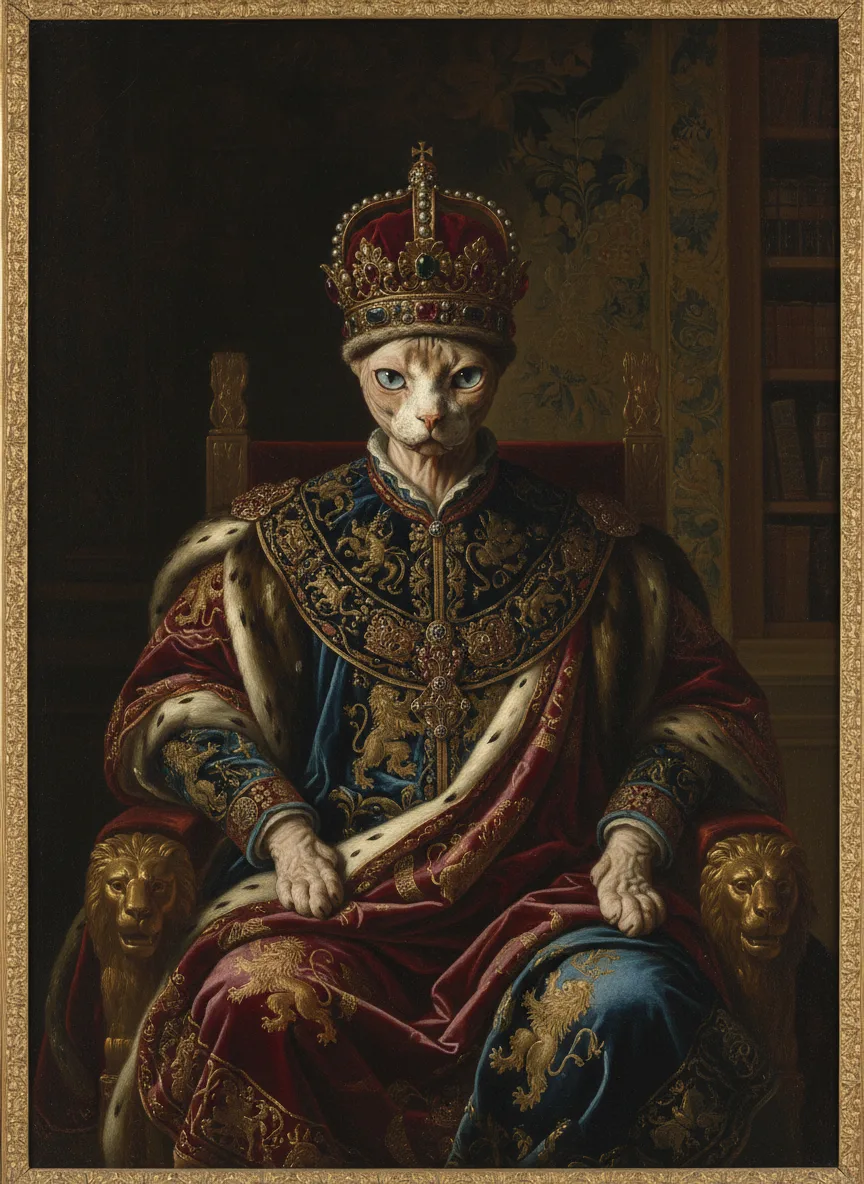
Archival paper is paper made to change as little as possible over many years. It keeps its colour and stays strong. This page explains what archival means in real numbers, why ordinary paper yellows, what the labels on art paper mean, and which inks last longest. It belongs to the guide to art prints and paper, which covers the whole path from a digital file to a print on the wall.
Why paper ages at all
All paper is made of cellulose, the fibre found in plants. The Canadian Conservation Institute, part of the Government of Canada, explains that paper breaks down in two main ways. The first is acid: acid in the paper cuts the long cellulose chains into shorter and shorter pieces, and the paper becomes weak. Higher humidity speeds this up. The second is oxidation, a reaction with oxygen that metal traces, air pollution, bleach residue and light all speed up.
The Institute gives numbers for how much the storage climate matters. At room temperature (20°C) and 50% relative humidity, an acidic paper can suffer serious damage in a few decades. At 20°C and 30% humidity, a typical wood pulp paper lasts twice as long as it would at 50%. Its general rule is that every drop of 5°C in temperature halves the rate of chemical decay. To show the scale, it takes an acidic paper that lasts 50 years at 25°C: the same paper would last 100 years at 20°C and 500 years at 10°C.
So archival paper has two jobs. It starts with as little acid and as few harmful substances as possible, and it carries a reserve that keeps neutralising acid that forms later.
A short history of paper quality
The University of Illinois Library runs a preservation guide for collections, and its page on paper gives the history in order.
| Period | What paper was made from | How it has aged |
|---|---|---|
| From the 1300s in Europe | Cotton and linen rags beaten into pulp | Often still in good condition, because the fibres have a neutral pH |
| From the 1830s | Alum-rosin sizing added to strengthen paper and stop ink bleeding | Acidic, which darkened and weakened many papers |
| From 1843 | Wood pulp, made quickly on paper machines | Papers from about 1850 to 1950 are often in poor condition |
| From the 1950s | Calcium carbonate added as an alkaline buffer | More stable papers |
The guide says the Library of Congress suggests treating any wood pulp paper made before the 1980s as possibly acidic from alum-rosin sizing. It also says that ground wood pulp, used for newspapers since the mid-1860s, keeps its lignin and should still be treated as unstable today.
The Canadian Conservation Institute adds an important point for modern art paper: wood pulp can make lasting paper when it is processed well. Modern papers made from highly processed chemical wood pulp, with alkaline additives such as calcium carbonate, can last as long as rag paper.
What the archival labels mean
Paper packets and print descriptions use a handful of terms. Here is what each one means.
Acid-free
The University of Illinois guide says acid-free is the paper industry's term for paper with a neutral pH of 7 or an alkaline pH above 7, and no acidic pulp, lignin or sulphur. Acid-free paper can be made of cotton or of wood pulp. The guide adds a warning: acid-free status is measured when the paper is made, and it is no guarantee that the paper will stay stable. Acid can form later from the paper itself, from the air or from things it touches.
Lignin-free
Lignin is the natural substance that holds wood fibres together. The Canadian Conservation Institute says lignin in wood pulp makes paper discolour and leaves it sensitive to sunlight, so it yellows and darkens. Paper mills can remove lignin with chemicals during pulping. Cotton has no lignin to begin with.
Buffered, or alkaline reserve
A buffered paper contains extra alkaline material, usually calcium carbonate, that neutralises acid as it forms. The Image Permanence Institute says a reserve of at least 2% calcium carbonate captures acids from the air, from the paper itself or from a print it touches, and that it is used up as it reacts.
Permanent paper
Permanent paper has a real standard behind it. The Library of Congress explains that the National Information Standards Organization defines it in ANSI/NISO Z39.48-1992 (reaffirmed in 2009). The standard asks for:
- a pH between 7.5 and 10.0,
- an alkaline reserve of at least 2%,
- less than 1% lignin,
- good tear resistance.
The University of Illinois guide says papers that meet this standard are designed to last several hundred years under normal use. It names a similar international standard, ISO 9706, published in 1994. Paper that meets either standard may carry an infinity symbol inside a circle, or a printed statement of compliance.
The United States also has a law on the subject. The US Government Publishing Office's paper standards quote Public Law 101-423, passed in October 1990, which states that federal records, books and publications "of enduring value be produced on acid-free permanent papers."
Cotton rag
Cotton rag paper is made from cotton fibres instead of wood. The University of Illinois guide says rag papers are often found in good condition after centuries, because cotton and linen fibres have a neutral pH. The same guide says fine art rag paper today is made of long cotton rag fibres and cotton linters, the short fibres left over when cotton is processed.
Optical brighteners
Some papers contain optical brighteners, which the US Government Publishing Office also calls fluorescent brighteners. They are added to make the paper look brighter. The University of Illinois guide says brighteners and tinting agents may not be lightfast, and can cause fading, yellowing or brittleness over time. The US Government Publishing Office bans optical brighteners in its paper grades that contain 50% or 100% cotton or linen.
The coating on inkjet art paper
An art print needs more than a stable sheet. Inkjet ink spreads into plain paper, so inkjet papers carry a thin top coating that holds the ink near the surface. The Image Permanence Institute, a research laboratory at Rochester Institute of Technology, calls this coating an image receiver layer. It says the first ones were added to art papers such as watercolour paper, using mineral particles in a starch or plastic binder.
The coating ages too. The Institute says some inkjet papers can yellow, and their coatings can break down, even at room temperature. For this reason it recommends cool storage for inkjet prints kept for the long term. The page on storing unframed prints turns that advice into steps for a home.
Ink: the other half of an archival print
A stable sheet can still carry an unstable image, so the ink matters as much as the paper. The giclée printing page explains the two kinds of inkjet ink, dye and pigment, and how each one sits on the paper. For a long life, three further points matter.
Mixed ink sets
The Image Permanence Institute's guide to digital prints says printers use all dyes, all pigments, or a mix of the two, where the colours are dyes and the black is pigment. Pigment has tended to resist light, moisture and air pollution better than dye. So in a print from a mixed printer, the coloured parts of a photo are the weaker part. In the Institute's tests with ozone, a gas in indoor air, printed text lasted better than photographic images. The researchers suggested this may be because text is more often printed with a pigment black. Ask which ink prints the colours before you choose a printer or a print shop.
The pairing of ink and paper
The Institute says the same kinds of print can age at different rates from one product to the next. In its guide to digital prints it gives an example: two images printed on different makers' inkjet printers, on the same type of paper, may age at different speeds because of small differences in the ink and paper recipes. For this reason the Institute recommends treating each print as an individual and checking its condition from time to time.
Open coatings and air
Paper with a porous coating takes in ink through tiny spaces between mineral particles. The Institute says those spaces stay open after the print dries, so the colours are exposed to the air and fade more easily from air pollution. Papers with a swelling plastic coating take the ink fully inside the coating, which makes those prints more resistant to scuffs and to fading from air pollution. The page on lightfastness and fading explains how light and air fade prints, and how fading is measured.
A checklist for choosing archival paper
When you print a digital portrait or read the description of an art print, look for these points:
- Fibre: cotton, or a purified chemical wood pulp.
- Acid-free and lignin-free: both stated.
- Buffered: an alkaline reserve, usually calcium carbonate.
- A named standard: ANSI/NISO Z39.48 or ISO 9706, or the infinity symbol.
- Brighteners: whether optical brighteners were added.
- Ink: pigment ink for the longest life, dye ink only if you accept more care.
- Coating: an inkjet coating made for the ink you will use.
What this means for a royal pet portrait
Purrealism art prints come in four sizes, 8 × 10, 12 × 16, 18 × 24 and 24 × 36 inches, on matte or glossy paper. You choose the size and the finish in the portrait studio. If you choose the digital download and print it yourself, this checklist is how you compare papers at a print shop or in a store.
Paper quality is only half of a long life. The Canadian Conservation Institute's figures show that heat and humidity speed up decay in any paper, so keep an unframed print in a cool, dry room away from heaters, and follow the storage steps linked above until it is framed. To pick the portrait itself, the gallery shows finished examples in several styles.
Questions and answers
What's archival paper?
Archival paper is paper made to stay stable for a long time, usually by removing acid and lignin and adding an alkaline buffer. The Library of Congress points to the ANSI/NISO Z39.48 standard, which defines permanent paper as having a pH of 7.5 to 10.0, at least 2% alkaline reserve, less than 1% lignin and good tear resistance. Many art print papers are sold as archival.
How long does archival paper last?
Archival paper that meets the US permanent paper standard is designed to last several hundred years under normal use, according to the University of Illinois Library's preservation guide. That figure assumes reasonable storage. The Canadian Conservation Institute says heat speeds up the chemistry of decay, and that paper stored at 20°C and 30% humidity lasts twice as long as the same paper at 50% humidity.
Is acid free paper archival?
Acid-free paper passes one of several tests for archival paper. The University of Illinois Library says acid-free describes paper with a neutral or alkaline pH at the time it is made, which is no guarantee of stability later. Permanent paper under ANSI/NISO Z39.48 also needs an alkaline reserve, a low lignin level and good tear resistance.
What is archival paper made of?
Archival paper is made of cellulose fibres from cotton, linen or highly purified wood pulp. The Canadian Conservation Institute says modern papers made from processed chemical wood pulp with alkaline additives such as calcium carbonate can last as long as rag paper. Cotton rag papers come from cotton fibres, which the University of Illinois Library says have a neutral pH and stay in good condition for centuries.
What is archival paper for art prints?
Archival paper for art prints is a stable base sheet with a special top coating that holds inkjet ink near the surface. The Image Permanence Institute says these coatings, called image receiver layers, were first added to art papers such as watercolour paper. It also warns that some inkjet papers can yellow, and their coatings can break down, at room temperature.
What is lignin in paper?
Lignin is a natural substance in wood that binds the fibres together. The Canadian Conservation Institute says lignin in wood pulp causes paper to discolour and makes it sensitive to sunlight, which leads to yellowing and darkening. The ANSI/NISO Z39.48 permanent paper standard, as the Library of Congress summarises it, allows less than 1% lignin in a permanent paper.
What does the infinity symbol on paper mean?
The infinity symbol set inside a circle marks paper that meets a permanent paper standard. The University of Illinois Library says papers that meet ANSI/NISO Z39.48 or the international ISO 9706 standard may carry the symbol or a written statement of compliance. It appears as a watermark on sheets of paper or as a mark printed in books made on permanent paper.
What is an alkaline reserve in paper?
An alkaline reserve is an extra amount of an alkaline substance, usually calcium carbonate, added to paper to neutralise acids that form later. The ANSI/NISO Z39.48 standard, as the Library of Congress summarises it, asks for a 2% minimum reserve in permanent paper. The University of Illinois Library says paper makers began adding calcium carbonate as a buffer in the 1950s.
Are optical brighteners bad for art paper?
Optical brighteners are dyes added to make paper look whiter, and they can change over time. The University of Illinois Library says brighteners and colouring agents may not be lightfast and may cause fading, yellowing or brittleness. The US Government Publishing Office paper standards ban optical brighteners in its paper grades made with 50% and 100% cotton or linen.
Why does old paper turn yellow?
Old paper turns yellow mainly because of lignin and acid. The University of Illinois Library says wood pulp papers made from about 1850 to 1950 are often in poor condition, because lignin yellows and weakens as it reacts to light and heat. It adds that alum-rosin sizing, used from the 1830s to strengthen paper, is acidic and darkened many papers over time.
Sources
- What is permanent paper?, Library of Congress. Accessed September 28, 2026.
- Paper, Preservation Self-Assessment Program, University of Illinois Library. Accessed September 28, 2026.
- Caring for paper objects, Canadian Conservation Institute, Government of Canada. Accessed September 28, 2026.
- Government Paper Specification Standards No. 13, U.S. Government Publishing Office. Accessed September 28, 2026.
- Photo Storage, Display, and Labeling Materials: A Guide to ISO 18902 Photo-safe Testing, Image Permanence Institute, Rochester Institute of Technology. Accessed September 28, 2026.
- IPI's Guide to Preservation of Digitally-Printed Images, Image Permanence Institute, Rochester Institute of Technology. Accessed September 28, 2026.
- Digital Prints, Preservation Self-Assessment Program, University of Illinois Library. Accessed September 28, 2026.
- Lessons in Digital Print Preservation: The DP3 Project, American Institute for Conservation, Topics in Photographic Preservation, Volume 14. Accessed September 28, 2026.
Short reads on this topic
Articles from Purrspectives that answer one question each.
Cat wall art ideas: choosing a cat portrait for every room
Cat wall art for each room: the print size for a hall, living room, bedroom or small flat, the cat portrait that suits its colours, and where to keep it safe.

Dog wall art ideas: how to choose and hang a portrait of your dog
Good dog wall art fits its wall: pick a print size for the furniture below, hang it with its centre at eye level, and keep it out of direct sun.
How big is an 8 × 10 print? Pet portrait print sizes explained
An 8 × 10 print is 20.32 × 25.4 cm, with a 4:5 shape. See all four portrait print sizes in cm, plus the pixels, frames and mats each one needs.