Cats in Renaissance paintings: where they hide and what they mean
Renaissance cat paintings hide cats beside Judas, at a saint's feet and near the Virgin Mary. Six works, what each cat means, and where to see them.
By Purrealism
In the six Renaissance cat paintings below, the cat is a small part of a bigger story. It sleeps at a saint's feet, waits beside Judas at the Last Supper, or runs from an angel. For the best-known paintings of the period, with or without cats, see famous Renaissance paintings. The National Gallery in London dates the Renaissance from the 15th century to the end of the 16th century. Each work, and the meaning of its cat, was checked with the museum or public body that looks after it.
| Work | Artist | Date the museum gives | Where to see it |
|---|---|---|---|
| Saint Jerome in his Study | Antonello da Messina | the 1470s | National Gallery, London, Room 63 |
| The Last Supper | Domenico Ghirlandaio | after 1485 | Museo di San Marco, Florence |
| Adam and Eve | Albrecht Dürer | 1504 | The Met, New York |
| The Annunciation | Lorenzo Lotto | the 1530s | Villa Colloredo Mels civic museum, Recanati |
| The Last Supper | Jacopo Bassano | ordered in 1546 | Galleria Borghese, Rome, Room 15 |
| The Madonna of the Cat | Federico Barocci | the 1570s | National Gallery, London, Room 6 |
Leonardo da Vinci drew cats from life too: the Royal Collection Trust holds his sheet of more than twenty cats and lions from 1517 to 1518, covered in our guide to famous paintings of cats.
A sleeping cat in a scholar's study
Saint Jerome was a scholar and monk born in the fourth century. The National Gallery says he translated the Bible from Greek into Latin, and that his translation, the Vulgate, is still used by the Catholic Church today.
Antonello da Messina painted him in Venice. The panel is small, 45.7 by 36.2 cm, in oil paint on lime wood. You look in through a stone arch, and the gallery compares the view to a doll's house. On the ledge in front, a partridge stands for truth and a peacock for life that never ends. Jerome's lion, which he befriended in the desert, walks down the aisle behind him.
The cat is easy to miss. In a National Gallery catalogue, the gallery points out a sleeping cat and potted plants on the wooden platform at Jerome's feet, and a towel on a peg. It says these small things show that the study is a living space as well as a place of work.
Cats at the Last Supper: Ghirlandaio and Bassano
The Last Supper is the final meal of Jesus with his apostles. One of them, Judas, betrayed him, and in both of these paintings a cat sits close to Judas.
Domenico Ghirlandaio, Museo di San Marco, Florence
Ghirlandaio (1449 to 1494) painted several Last Suppers in a short time. The Museo di San Marco lists one at the Badia a Passignano from 1476, a second at Ognissanti in Florence, and the one at San Marco, painted after he finished another set of wall paintings in 1485. It is a fresco, paint laid on wet plaster, and it is 400 by 810 cm. It covers a wall of the small dining room where guests of the convent ate.
A tabby cat sits in front of the table, next to Judas. Judas has his back to us, wears yellow, has no halo, and is the only one with anything on his feet. The museum says the cat stands for the devil entering Judas and pushing him to betray Jesus. It links the cat to the Gospel of John, where Satan enters Judas after he takes a small piece of food. The museum also points out that Ghirlandaio's devil is a white and grey tabby that could live in any house, and that it looks straight out at the viewer.
Jacopo Bassano, Galleria Borghese, Rome
The Galleria Borghese says the Venetian nobleman Battista Erizzo ordered this Last Supper in 1546 and paid the rest of the price between 1547 and early 1548. Judas sits on the right with his bag of thirty coins, and the cat is at his feet. The museum says the most recent restoration made the cat clear to see. In 1893 the art historian Adolfo Venturi named Bassano as the painter, and he listed "the cat, the dog, the shiny metal basin" as signs of Bassano's love of everyday scenes.
A frightened cat at the Annunciation: Lorenzo Lotto
The Annunciation is the moment the angel Gabriel tells Mary she will be the mother of Jesus. Lorenzo Lotto painted it in oil on canvas, 166 by 114 cm, and it now hangs in the civic museum at Villa Colloredo Mels in Recanati, Italy.
The Marche Region's official tourism site says the painting was first placed in the chapel of the Confraternity of Santa Maria sopra Mercanti, a religious brotherhood of the richest citizens and merchants of Recanati. Mary has stopped reading her prayer book. God the Father breaks into a calm home, shown by everyday objects: a candlestick, a cap, a shawl. The cat runs away in fear, and the site calls it a symbol of evil fleeing from the presence of God.
The Museo di San Marco gives a second reading of cats in 16th-century Annunciations: a sign of the virtues of home life.
A cat and a goldfinch: Barocci's Madonna of the Cat
Federico Barocci's painting shows the holy family in a bedroom of a Renaissance palace. The young John the Baptist holds a goldfinch above the household cat. The baby Jesus turns to watch, Joseph leans in and smiles, and Mary points to the cat, which is ready to pounce.
The National Gallery calls the cat an unusual sight in paintings of the holy family, and explains the game. The goldfinch is a traditional symbol of the Passion, the torture and crucifixion of Christ. By legend, the bird got its red head from a drop of blood as it pulled a thorn from Christ's brow. So the warm family scene carries a serious message about his future sacrifice.
Barocci painted it for Antonio Brancaleoni, Count of Piobbico, and the gallery thinks it was made for his household. The count's coat of arms showed a lion standing on its back legs below a cross, and the gallery says the cat and John's small cross may refer to it.
A cat as a type of person: Dürer's Adam and Eve
Albrecht Dürer, from Nuremberg in Germany, made Adam and Eve in 1504 as an engraving, a print made from lines cut into a metal plate. It is 25.1 by 20 cm. The Metropolitan Museum of Art says four of its animals show the medieval idea of the four temperaments, or four types of human character. The cat is choleric, the type that is quick to anger. The rabbit is sanguine, the ox phlegmatic and the elk melancholic. The Met's page lists the print as not on view, so check before you visit.
What the cats meant, according to the museums
The six works give the cat at least five jobs:
- The devil. Ghirlandaio's cat beside Judas. The Museo di San Marco says that in the Middle Ages many Europeans saw the cat as a creature of the devil.
- Evil running from God. Lotto's frightened cat.
- Home life. Antonello's sleeping cat, and cats in Annunciations.
- A hunter. Barocci's cat, ready to pounce on the goldfinch.
- A type of person. Dürer's choleric cat.
The Museo di San Marco adds one more: in some 16th-century paintings, a cat sits beside a learned saint to guard the books from hungry mice. The National Gallery says cats have long been kept in homes to control mice and rats, and that before the 18th century European artists rarely painted them as lap pets. The gallery also says black cats were linked with witches, an idea from a Roman myth in which a priestess of Hecate, goddess of the underworld, became a cat.
A Renaissance cat portrait of your own cat
The paintings above keep the cat inside a bigger story. A royal pet portrait makes your own cat the sitter.
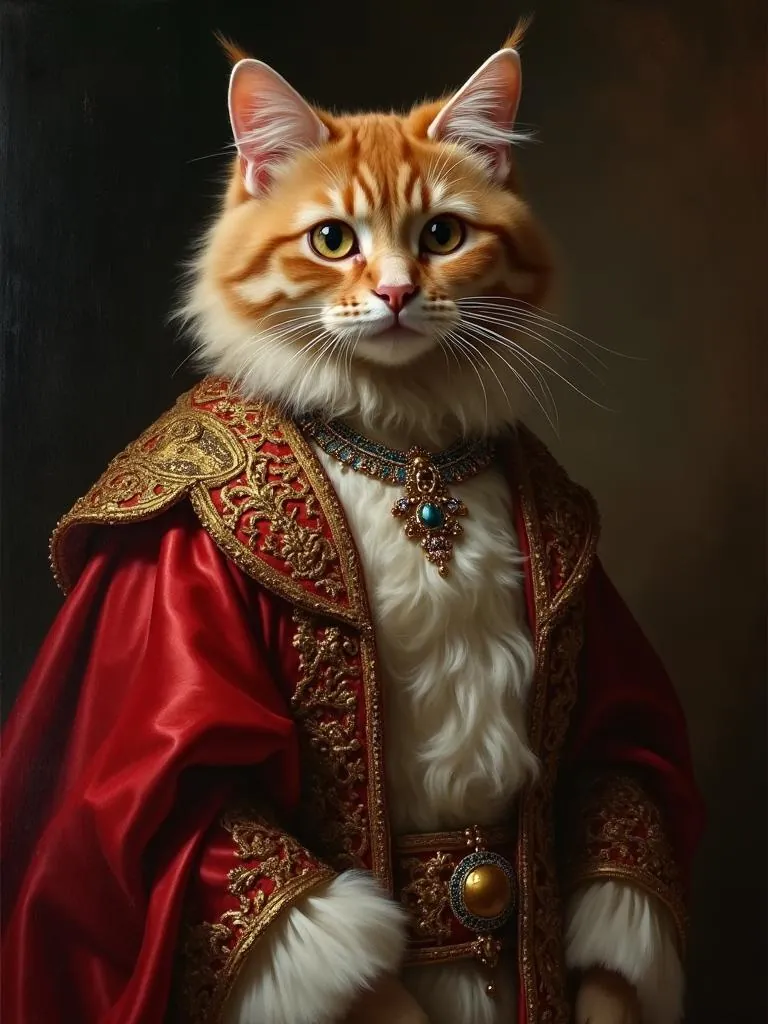
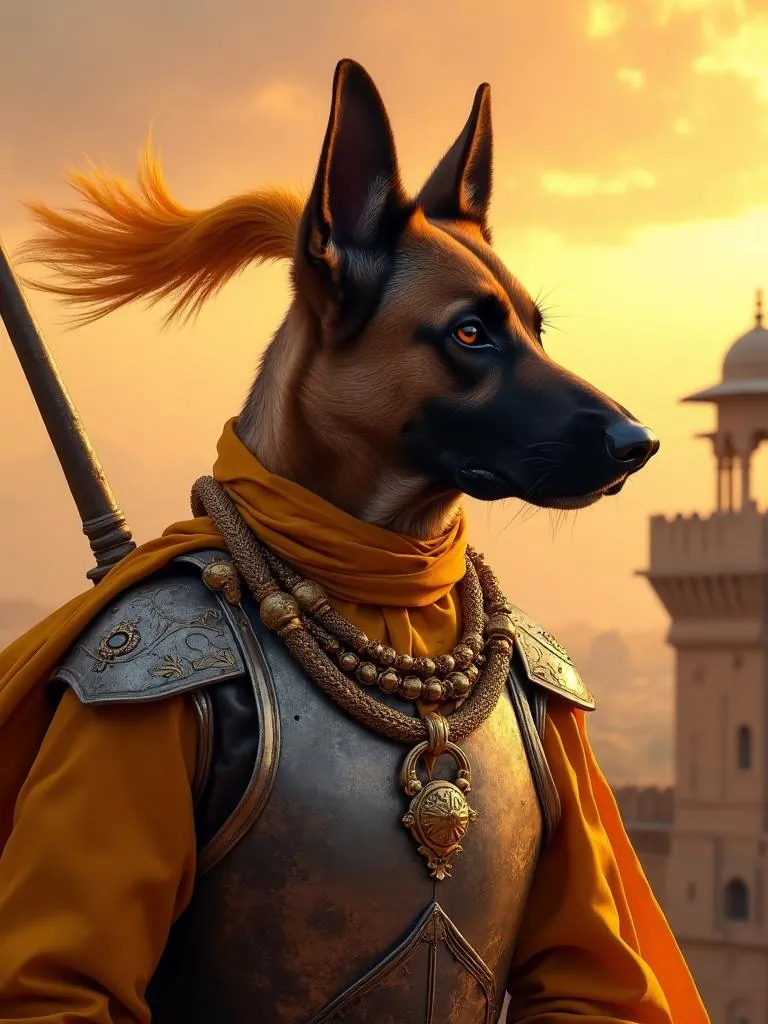
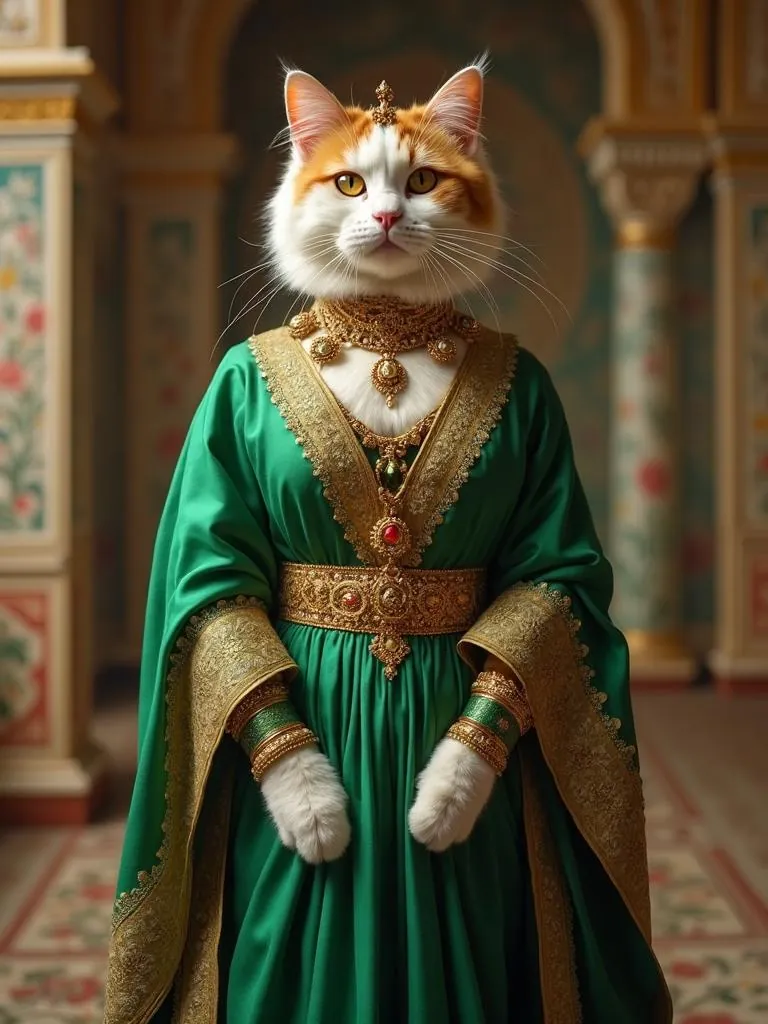
Purrealism offers a Renaissance Royal style among its six European period styles, out of 15 royal portrait styles in all. The gallery shows three cats, all in Indian court styles: a white and ginger Maharani, a grey Mughal emperor and a ginger cat in a red and gold robe. A finished Renaissance Royal portrait is not in the gallery yet. To compare styles first, our guide on how to choose a royal portrait style goes through all 15.
You pick the style in the portrait studio and add one clear photo of your cat, saved as an image file of up to 5 MB. Ghirlandaio's cat looks straight at the viewer, and a photo taken at your cat's eye level, with its eyes on the camera, does the same. Our guide on how to photograph your pet for a portrait covers the photo step by step. The finished portrait comes as a digital pack or as an art print in 8 × 10, 12 × 16, 18 × 24 or 24 × 36 inches, on matte or glossy paper.
Questions and answers
Why do Renaissance cats look like that?
Renaissance cats look the way they do because painters placed them in religious scenes as signs of an idea, such as the devil or home life. The National Gallery in London says that before the 18th century, cats were rarely shown as lap pets in European art. The Museo di San Marco in Florence says the tabby cat beside Judas in Ghirlandaio's Last Supper stands for the devil entering him.
Which Renaissance cat are you?
Which Renaissance cat you are depends on your mood, and museum paintings give you four to choose from. The calm one sleeps at Saint Jerome's feet in Antonello da Messina's painting at the National Gallery in London. The nervous one runs from the angel in Lorenzo Lotto's Annunciation in Recanati. The hunter is Barocci's cat, ready to pounce on a goldfinch, and the troublemaker waits beside Judas in Ghirlandaio's Last Supper in Florence.
What was the original purpose of cats?
The purpose people gave cats in European homes for centuries was catching mice and rats. The National Gallery in London says cats have long been domestic animals, essential for the control of vermin, and that before the 18th century they were rarely shown as lap pets in European art. The Museo di San Marco in Florence says some 16th-century paintings put cats beside learned saints to guard their books from hungry mice.
Why do medieval cats look like that?
Medieval cats in European art often stand for something dark, because in the Middle Ages many Europeans saw the cat as a creature of the devil, according to the Museo di San Marco in Florence. The National Gallery in London says black cats were linked with witches, an idea that goes back to a Roman myth in which a priestess of Hecate, goddess of the underworld, became a cat. The dark meaning lasted into the Renaissance, in Ghirlandaio's cat beside Judas.
Who funded the Renaissance?
Renaissance art was funded by patrons, the people who ordered a work from an artist and paid for it. The National Gallery in London says the Medici, a Florentine banking family, were important patrons of the leading artists in the 15th and 16th centuries. The Galleria Borghese in Rome says the Venetian nobleman Battista Erizzo ordered Jacopo Bassano's Last Supper, with its cat at Judas's feet, in 1546 and paid for it by early 1548.
Are cats in the Bible?
Cats appear in the Bible only once, in the Letter of Jeremiah, according to Encyclopaedia Britannica. The Gospel stories of the Last Supper name no cat, so the cats in Renaissance Last Supper paintings were the painters' own addition. The Museo di San Marco in Florence says Ghirlandaio placed his cat beside Judas to stand for the devil, who, in the Gospel of John, enters Judas at that meal.
What does the cat mean in Ghirlandaio's Last Supper?
The cat in Domenico Ghirlandaio's Last Supper at the Museo di San Marco in Florence stands for the devil. The museum says the tabby cat sits beside Judas and shows the devil entering him and pushing him to betray Jesus, as the Gospel of John tells it. Ghirlandaio painted the cat white and grey, like any house cat, and it looks straight out at the viewer. The wall painting is 400 by 810 cm.
Why is there a cat in Lotto's Annunciation?
The cat in Lorenzo Lotto's Annunciation runs away as the angel arrives, and the Marche Region's official tourism site calls it a symbol of evil fleeing from the presence of God. The painting, now in the civic museum at Villa Colloredo Mels in Recanati, Italy, was made for the chapel of a local religious brotherhood. The Museo di San Marco in Florence gives a second reading of cats in 16th-century Annunciations: a sign of the virtues of home life.
Is there a cat in Antonello da Messina's Saint Jerome in his Study?
Antonello da Messina's Saint Jerome in his Study has a small cat asleep on the wooden platform at the saint's feet, next to potted plants. The National Gallery in London, which shows the painting in Room 63, says these details, with a towel hanging on a peg, make the study a living space as well as a place of work. The painting also has a lion, a partridge and a peacock, and the gallery dates it to the 1470s.
What does the cat mean in Barocci's Madonna of the Cat?
The cat in Federico Barocci's Madonna of the Cat points to the future suffering of Christ. The National Gallery in London says the cat is ready to pounce on a goldfinch that the young John the Baptist holds up, and the goldfinch is a traditional symbol of the Passion, Christ's torture and crucifixion. The gallery adds that the cat and John's small cross may also refer to the coat of arms of the patron, Count Antonio Brancaleoni.
Sources
- Cat, Encyclopaedia Britannica
- Renaissance, The National Gallery, London
- Cats, The National Gallery, London
- Medici family, The National Gallery, London
- Antonello da Messina, Saint Jerome in his Study (NG1418), The National Gallery, London
- Building the Picture: Antonello da Messina, Saint Jerome in his Study, The National Gallery, London
- Federico Barocci, The Madonna of the Cat ('La Madonna del Gatto') (NG29), The National Gallery, London
- Museo di San Marco in progress: il Cenacolo di Ghirlandaio e altre novità, Museo di San Marco, Florence
- Sympathy for the devil. I demoni di San Marco, Museo di San Marco, Florence
- Alla ricerca degli animali nascosti nel Museo di San Marco, Museo di San Marco, Florence
- Il cibo celeste e la fame terrena. I cenacoli fiorentini, Museo di San Marco, Florence
- Jacopo Bassano, Last Supper, Galleria Borghese, Rome
- Lorenzo Lotto, Annunciazione, Marche Region (Regione Marche)
- Albrecht Dürer, Adam and Eve, The Metropolitan Museum of Art
- Leonardo da Vinci, Cats, lions, and a dragon (RCIN 912363), Royal Collection Trust
Go deeper
The full guides on this topic, each a set of pages with sources: