Gifts for cat lovers: 15 personal ideas for cat owners
The best gifts for cat lovers are about their own cat: a portrait from its photo, a gift in its name, a cat-safe plant or toy. Here are 15 personal ideas.
By Purrealism
The best gifts for cat lovers are about the owner's own cat. A portrait made from a photo of that cat, a donation in its name, or a safe plant for its window tells the owner that you know their cat by name. This guide gives 15 personal ideas for cat owners. For anything the cat will chew, scratch or sniff, it follows the advice of cat welfare charities and the ASPCA. If you are also shopping for a dog owner, read the guide to gifts for dog lovers.
Gifts made from a photo of their cat
1. A royal portrait of their cat
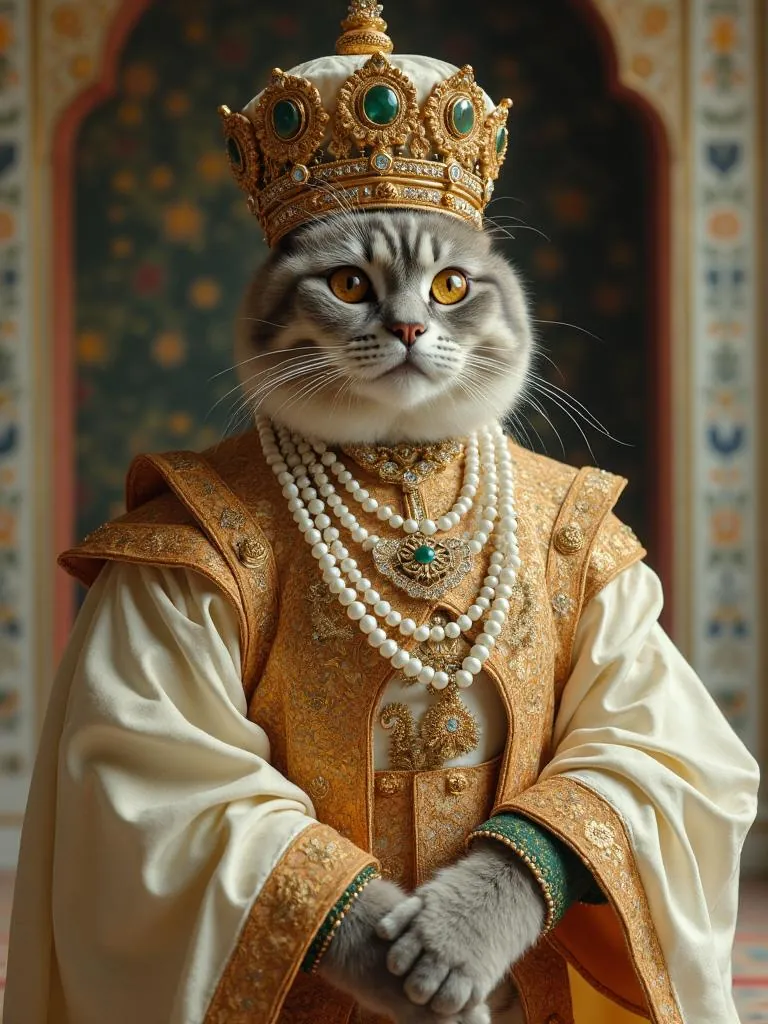
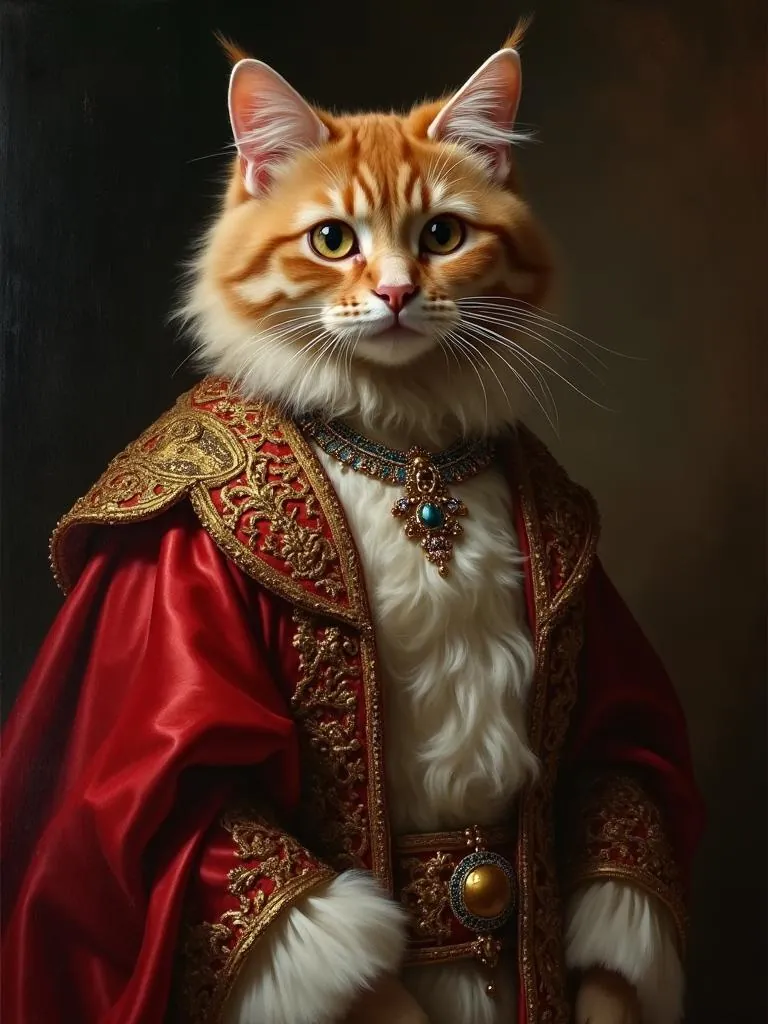
At Purrealism, you add one photo of a cat and choose one of 15 royal portrait styles. The gallery already shows three cats: a white and ginger cat as a Maharani, a grey cat as a Mughal emperor, and a ginger cat in a red and gold royal robe. You can give the portrait as a digital pack, which is a high-resolution file with no watermark, or as an art print. Prints come in 8 × 10, 12 × 16, 18 × 24 and 24 × 36 inches, on matte or glossy paper. An 8 × 10 inch print fits on a desk or a shelf.
2. A photo book of the cat's life
Collect photos from the first week at home to today. Ask family members for the photos on their phones too. Under each picture, write one line: the day the cat arrived, its favourite sleeping spot, the box it would not leave. Our guide to how long cats live sets out a cat's life stages, from kitten to senior, if you want to give each stage its own page.
3. A wall calendar with 12 photos
Pick one photo of the cat for each month. Mark the cat's birthday or the day it was adopted, so the owner can plan for the day.
4. A mug or cushion with the cat's face
A printed mug or cushion shows the cat to its owner every time they use it. Pick the sharpest photo you have, with the face looking straight at the camera.
Which royal portrait suits their cat's coat
The three cats in the gallery give you a place to start.
- Ginger cat: the Regal Feline, in the Indian Royalty style, shows a ginger cat in a red and gold royal robe. It is the closest example of a ginger coat in royal clothes.
- White and ginger cat, or another two-colour cat: the Maharani portrait dresses a white and ginger cat in a green and gold gown. The green keeps the ginger patches clearly separate from the clothes.
- Grey cat: the Mughal Emperor portrait shows a grey cat wearing a jewelled crown and pearls.
- Black cat: none of the three gallery cats is black. Choose a style with light colours, such as saffron or gold, so the dark coat stands out. The Mysore Royal portrait shows this with a black labrador in a saffron turban.
- Tabby or patterned cat: choose plainer clothes, so the pattern stays the main detail.
The guide on how to choose a royal portrait style covers all 15 styles, and how to match a style to the cat's character as well as its coat.
How to get a good photo of someone else's cat
Getting a photo is harder when the cat lives in another home. Here are three ways to get one and keep the gift a surprise.
- Look through photos the owner has already sent you. Choose one where both eyes are sharp and the whole face is in view.
- Ask a person who lives with the cat. A partner, a housemate or a grown child can take a photo on a quiet afternoon.
- Take it yourself on your next visit. Cats Protection, a UK cat charity, says to turn off the flash because it could startle the cat, and to use natural light in a well-lit room. It says the best point to focus on is the cat's eyes. It suggests taking the photo just after the cat has eaten or woken up, when it is more likely to be sleepy and relaxed, and asking a helper to dangle a toy out of view of the camera.
The portrait studio takes one image file of up to 5 MB. For more tips, read how to photograph your pet for a portrait.
Gifts in their cat's name
5. A donation to a shelter or cat charity
Give to the shelter or rescue the cat came from, and write the cat's name on the card. If the owner's cat has died, the guide to gifts for someone who lost a pet has gentler ideas.
6. A cat sponsorship
Some cat charities let you sponsor the cats in their care. Cats Protection describes its sponsorship as a gift for cat-loving friends and family. A sponsor supports a pen at one of its adoption centres. The charity says the pack includes a personalised certificate, a first photo of the cat in the pen and a photo album, followed by new photos and updates.
Gifts for the cat itself, checked for safety
The owner will enjoy these gifts through the cat. Check each one against the advice below, because a cat will chew, bite and sleep on what you give it.
7. A cat-safe houseplant
The ASPCA lists the spider plant, the Boston fern, the parlour palm, the areca palm and the African violet as non-toxic to cats. Search the ASPCA plant list for any other plant before you buy it. Cats Protection says plants marked "caution" should be kept out of reach, especially if the cat likes to chew leaves.
8. A pot of cat grass
Cats Protection suggests giving a cat cat grass to chew on. It also warns that grass may be dangerous if it has been treated with weed killer or insect killer, so grow the pot at home without any sprays.
9. A wand toy
International Cat Care (iCatCare), a cat welfare charity, describes a wand toy as a long rod with a string and a small toy at the end, such as a few feathers or a toy mouse. It says to put the toy out of reach when you are not playing. It also says to avoid pipe cleaner toys, toys made of ribbon or string, and balls of wool, because they can harm a cat's intestines if eaten.
10. A high place to rest
International Cat Care says cats are natural climbers that need to rest and watch over their home from high places, because that is where they feel safe. It suggests a cat tree or tower, and says a shelf needs a non-slip surface, because many wooden shelves are slippery. For an older cat, it suggests a radiator bed, which is warm and sits close to the ground. Ask the owner where their cat likes to sit before you choose one.
11. A scratching post
iCatCare says cats scratch to keep their claws healthy, to exercise the muscles of the front legs and spine, and to mark their territory. It says a post should be as tall as the cat when it stands on its back legs at full stretch, and sturdy enough to hold still when the cat pulls on it. Suggest a spot near the cat's favourite bed, because iCatCare says cats often scratch after sleep.
12. A food puzzle
A food puzzle holds treats, so the cat has to work to get them out. iCatCare suggests a simple one: a small handful of the cat's favourite dry treats inside a paper bag or a cardboard egg box. Make a few and wrap them together.
13. A new cardboard box
iCatCare says that giving a cat a new box to explore two or three times a week is a joy for most cats. Wrap your other gifts in a sturdy box, and leave the box for the cat.
Flowers and time for a cat owner
14. Flowers with no lilies
Cats Protection suggests freesias, roses and snapdragons for a bouquet for someone you love. The US Food and Drug Administration (FDA) says the whole lily plant is toxic to cats: the stem, leaves, flowers, pollen and the water in the vase. The FDA says a cat that licks a few pollen grains off its fur can develop fatal kidney failure in less than 3 days, and that an owner who suspects a cat has eaten part of a lily should call a veterinarian or a pet poison control centre at once. Tell the florist that the bouquet is for a home with a cat, and ask for no lilies.
15. An offer to feed the cat while they travel
Write a card that offers three days of cat-sitting, and keep the promise. Ask the owner for the cat's feeding routine and the phone number of its veterinarian before the first visit.
Questions and answers
What are good gifts for cat lovers?
Good gifts for cat lovers are gifts about their own cat. A royal portrait made from a photo of the cat, a photo book of its life, a donation to a cat charity in its name, or a cat-safe plant for its window all show that you know the cat. For anything the cat will touch, check the advice of a cat welfare charity such as International Cat Care or Cats Protection first.
What to get someone who loves cats?
Someone who loves cats will enjoy a gift that shows or names their own cat. Ideas include a wall calendar with 12 photos of the cat, a mug printed with its face, a sponsorship at a cat charity, or an offer to feed the cat while they travel. If the person has no cat of their own, a donation in their name to a local shelter or rescue is a personal choice.
What are cat safe indoor plants?
Cat-safe indoor plants include the spider plant, the Boston fern, the parlour palm, the areca palm and the African violet, which the ASPCA lists as non-toxic to cats. Cats Protection, a UK cat charity, also suggests cat grass for a cat to chew on. Check every plant in the ASPCA's list before you give it, because some common plants, such as lilies, are toxic to cats.
Which flowers are cat safe?
Freesias, roses and snapdragons are cat-safe flowers, according to Cats Protection, a UK cat charity, which suggests them for a bouquet for someone you love. The ASPCA also lists the rose as non-toxic to cats. Leave out every lily. The US Food and Drug Administration says the whole lily plant is toxic to cats, including the pollen and the water in the vase.
What cat toys are safe?
Wand toys and small fur mice are good cat toys, and International Cat Care, a cat welfare charity, says they appeal to most cats. It says to avoid pipe cleaner toys, toys made of ribbon or string, and balls of wool, because they can harm a cat's intestines if eaten. A wand toy has a string, so International Cat Care advises putting it out of reach after each game.
Does catnip calm cats?
Catnip calms some cats and excites others. The ASPCA says catnip makes some cats sedated, which means calm and sleepy, and others stimulated, and that it can cause vomiting and diarrhoea. International Cat Care says catnip excites many, but not all, cats, and that kittens under three months old do not respond to it. Ask the owner how their cat reacts before you give a catnip toy.
What are cat lovers called?
A cat lover is called an ailurophile. Merriam-Webster defines the word as a cat fancier or a lover of cats. It says the word comes from the Greek word ailouros, meaning cat, and the ending -phile, meaning lover, and it gives 1914 as the first known use in English. The word makes a fun line to write inside a card for a cat owner.
Why do cats bring you gifts?
A cat brings prey home because home is where it feels safe, according to Cats Protection, a UK cat charity. The charity says a cat may not want to eat its catch, or leave it, where other animals could steal it, so it carries the catch back to eat in peace or to store for later. Cats Protection adds that this can still be a sign of love, because it shows the cat feels safe with you.
How can I get a photo of someone else's cat for a portrait gift?
To get a photo of someone else's cat, look first through the photos the owner has already sent you, or ask a person who lives with the cat to take one. Choose a photo where both eyes are sharp and the whole face is in view. The Purrealism portrait studio takes one image file of up to 5 MB, so check the file size before you start.
Sources
- Making your home cat friendly, International Cat Care
- Playing with your cat, International Cat Care
- Scratching on furniture and carpets, International Cat Care
- Plants Poisonous to Cats, Cats Protection
- Pet photography: How to take amazing photos of your cat, Cats Protection
- Why do cats bring you dead animals?, Cats Protection
- What's included in sponsorship?, Cats Protection
- Sponsorship makes the perfect gift, Cats Protection
- Lovely Lilies and Curious Cats: A Dangerous Combination, US Food and Drug Administration
- Toxic and Non-toxic Plants: Spider Plant, ASPCA
- Toxic and Non-toxic Plants: Boston Fern, ASPCA
- Toxic and Non-toxic Plants: Parlor Palm, ASPCA
- Toxic and Non-toxic Plants: Areca Palm, ASPCA
- Toxic and Non-toxic Plants: African Violet, ASPCA
- Toxic and Non-toxic Plants: Rose, ASPCA
- Toxic and Non-toxic Plants: Catnip, ASPCA
- Ailurophile, Merriam-Webster
Go deeper
The full guides on this topic, each a set of pages with sources: