Halloween pet safety: candy, costumes and the front door
Keep chocolate, xylitol and glow sticks away from pets, test any costume early, and keep dogs and cats away from the door on Halloween night. A full checklist.
By Purrealism

Halloween brings three risks for dogs and cats: food they should not eat, decorations they can chew, and a front door that opens all evening. Each one has a simple fix. This guide collects the advice of the ASPCA, the American Kennel Club (AKC), the American Veterinary Medical Association (AVMA) and Pet Poison Helpline, and ends with a way to give your pet a Halloween look without putting a costume on it.
Put the candy out of reach
The ASPCA says a dog's sense of smell will find even candy that children hide in their rooms. Keep the treat bowl on a high shelf or in a closed cupboard, and store each child's bag of candy the same way once they come home.
These are the main dangers:
- Chocolate. The AKC says eating chocolate is one of the most common Halloween emergencies for dogs. All chocolate contains theobromine, and the darker the chocolate, the greater the risk. Baking chocolate has the highest amounts. Pet Poison Helpline lists the signs of poisoning: vomiting, diarrhea, a fast heart rate, restlessness, tremors and seizures. It says the harm depends on the type and amount of chocolate and on the size and health of the pet. The ASPCA warns that chocolate is dangerous for cats as well as dogs.
- Xylitol. This sugar-free sweetener is in many kinds of gum, mints and candy. Pet Poison Helpline says it can also be in some peanut butters, toothpastes, chewable vitamins and even makeup. If a dog eats enough of it, xylitol can cause life-threatening low blood sugar within 10 to 15 minutes and sudden liver failure. The AKC says xylitol can be in products that do not say "sugar-free" on the front, so read the ingredient list.
- Raisins. Some families give out small boxes of raisins in place of candy. The AKC says raisins and grapes can cause kidney failure in dogs.
- Wrappers. A dog that finds a candy bowl often eats the wrappers too. The AKC says wrappers can get stuck in the throat or gut and may need surgery to remove. Foil and plastic wrappers can also upset the stomach.
- Hard candy and gum. In large amounts, the AKC says, these can form a mass in the stomach that blocks the gut.
After trick-or-treating, pick up any dropped wrappers from the floor and the path to your door. The AKC also suggests walking your dog before dark on Halloween, when the sidewalks are clear of dropped candy.
Pumpkins, corn and pie filling
Pumpkins and dried corn are common autumn decorations. The AKC says both can break into pieces and block a dog's airway or gut if the dog chews and swallows them. Plain canned pumpkin can be a healthy source of fibre for dogs, but canned pumpkin pie filling may contain xylitol. Read the label before you share any.
Glow sticks, candles and decorations
Glow sticks and glow jewellery look like toys to a pet. Pet Poison Helpline says the liquid inside causes fast nausea with frothy drooling, retching and vomiting if a pet bites into one. The liquid can hurt the eyes, and a swallowed piece of the plastic tube can block the gut. Collect every glow stick when the children come home, and check the floor of the car and the front hall.
Candles and jack-o'-lanterns can burn a pet or start a fire. The ASPCA says a pet can knock over a lit pumpkin, and that curious kittens are at the greatest risk of burns from a candle flame. The AKC says a wagging tail can touch a flame too. A battery-powered light inside the pumpkin removes the flame, but keep it out of reach as well: the AKC warns that batteries and small parts are dangerous if a pet chews or swallows them.
Wires from lights and moving decorations should be out of a pet's reach, the ASPCA says.
Costumes: fit, a trial run, and signs of stress
The ASPCA recommends that you do not put your dog or cat in a costume unless you know your pet loves it. If you do, these rules come from the ASPCA and the AKC:
- Choose a simple costume. AKC chief veterinarian Dr. Jerry Klein says fastenings should be Velcro, with no buttons, drawstrings or elastic. Beads, ribbons, snaps and small pieces of fabric can be chewed off and swallowed.
- Check the fit. The costume must let your pet move, see, hear and breathe freely, and bark or meow. A costume that is too tight at the neck or chest, or covers the face, is unsafe. The AKC adds that a costume can make a dog too hot.
- Practise early. Dr. Klein suggests putting the costume on for short periods in the days before Halloween, so your pet gets used to it.
- Never leave your pet alone in it. A loose costume can catch on furniture or twist around the pet, the ASPCA says.
Watch your pet the whole time. Dr. Rachel Malamed, a veterinary behaviourist quoted by the AKC, lists these signs of fear in a dog: a tucked tail, ears pulled back, pacing, shaking or cowering, moving slowly, refusing treats, watching everything, yawning, lip licking and panting. If you see them, take the costume off. The ASPCA suggests a festive bandana in its place.
Your own costume matters too. The ASPCA says small toys and costume accessories can be swallowed by a pet, and the AKC says masks can confuse dogs, because dogs read human faces.
Trick-or-treaters at the door
The ASPCA advises that all but the most social dogs and cats stay in a separate, comfortable room away from the front door during the busiest trick-or-treating hours. Give them a chew toy or a food puzzle toy for a dog, and an interactive toy for a cat. The AVMA says pets should have a quiet, safe hiding place indoors, away from the activity, and warns that the door opening and closing all evening gives pets a chance to escape.
If your dog is calm with visitors, Dr. Malamed suggests a simple routine: ask your dog to sit, and let the visitor give a dog treat. Keep the dog on a leash. Do not let neighbours give your dog candy made for people.
If you walk your dog after dark, the ASPCA says to use a reflective collar and a secure leash. The AKC advises against leaving a dog alone outside on Halloween, even in a fenced yard.
ID tags and microchips
A frightened pet may run. The AKC says to make sure your dog wears an ID tag, is microchipped, and that all the contact details are current. The AVMA gives the same advice: a collar and a microchip, so anyone who finds your pet can reach you. If you have moved or changed your phone number since your pet was microchipped, update the record with the microchip company before Halloween.
Black cats, and why every cat should stay inside
Humane World for Animals, writing for animal shelters, says there is still concern about black cats at Halloween, despite a clear lack of evidence that they are at greater risk of harm at this time of year. It calls the idea of stopping black cat adoptions around Halloween a myth.
The safe choice is the same for every cat, whatever its colour. Dr. Klein of the AKC says it is best to keep pets indoors during trick-or-treating hours. Bring outdoor cats inside before dark on 31 October and keep them in a closed room until the visitors have stopped.
If your pet eats something
Call your veterinarian or an emergency clinic first. You can also call ASPCA Poison Control at (888) 426-4435 or Pet Poison Helpline at (855) 764-7661. The AKC says it helps to know the type of candy, its ingredients and how much your pet ate, so keep the wrapper.
A Halloween look without a costume
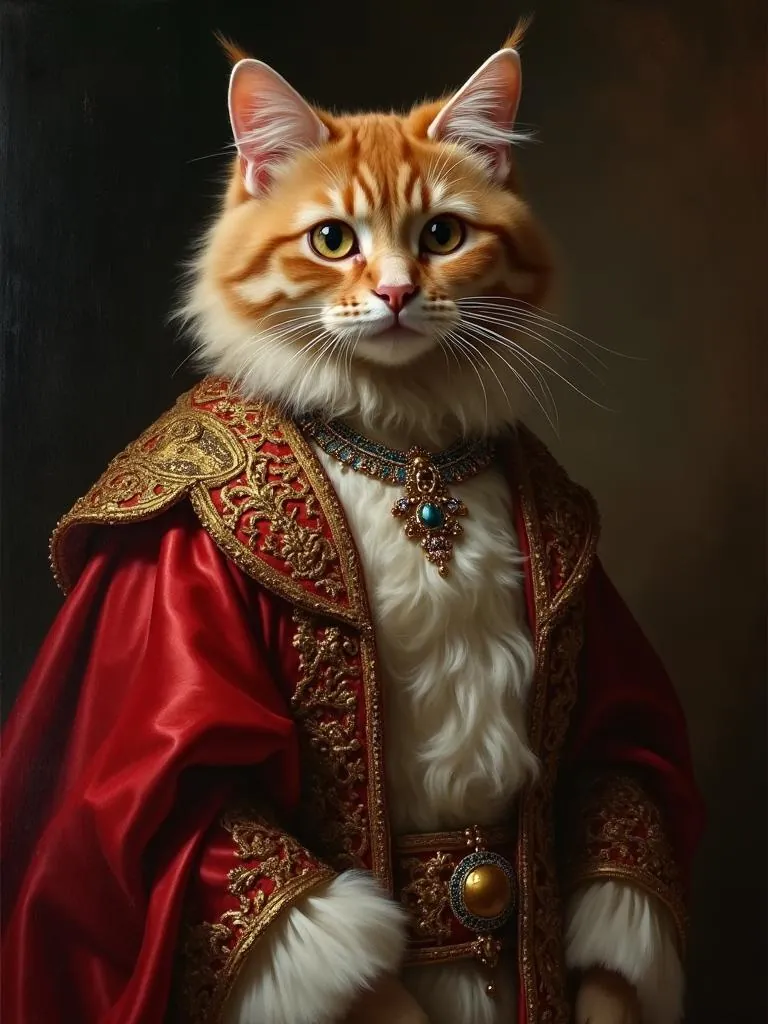
Some pets will never be happy in a costume. A portrait can give them the dressed-up look instead, and the pet never has to wear anything. Purrealism offers 15 royal portrait styles, made from a single photo, including Rajput Warrior, Medieval Knight, Military General and Mughal Emperor. The gallery shows a finished Rajput Warrior portrait: a dog in armour, with a fort at sunset behind.
To choose between the styles, read how to choose a royal portrait style for your pet. The history behind the warrior look is in what is Rajput painting?. Take the photo on a calm day, well before Halloween: how to photograph your pet for a portrait has the steps, and the portrait studio takes one image file of up to 5 MB.
Questions and answers
Can dogs eat Halloween candy?
Dogs should not eat Halloween candy made for people. The American Kennel Club names chocolate, sugar-free candy with xylitol, raisins and candy wrappers as the most common Halloween hazards for dogs. Wrappers can get stuck in the throat or gut and need surgery to remove. If your dog wants a Halloween snack, the AKC suggests a treat made for dogs.
Do dogs like Halloween?
Dogs notice Halloween through its sights, sounds and smells. The American Kennel Club lists costumes, new decorations, a doorbell that rings all evening and the smell of candy as changes a dog notices. Even well socialized dogs can feel stressed by this, the AKC says, so give your dog a quiet room or a crate away from the front door.
Do dogs like costumes?
Some dogs enjoy a costume and others find it stressful, according to the American Kennel Club. Veterinary behaviourist Dr. Rachel Malamed told the AKC not to dress a pet unless you are sure it will be happy with the idea, because some dogs fear being handled. The ASPCA gives the same advice for dogs and cats, and suggests a festive bandana for a pet that seems unhappy in a costume.
What are the best dog costumes?
The best dog costumes are simple, well-fitted outfits with no loose parts. Dr. Jerry Klein, chief veterinarian of the American Kennel Club, says fastenings should be Velcro, with no buttons, drawstrings or elastic, and no dangling parts a dog could chew and swallow. The dog must breathe, see, hear and move freely. The AKC says a dog in a costume should never be left alone.
Is xylitol deadly to dogs?
Xylitol can be deadly to dogs. Pet Poison Helpline says that if a dog eats enough xylitol, it can cause life-threatening low blood sugar within 10 to 15 minutes and sudden liver failure. Xylitol is a sugar-free sweetener found in gum, mints, candy, some peanut butters and some toothpastes. Call a veterinarian or a pet poison line at once if your dog eats a product with xylitol.
Why can't dogs eat chocolate?
Dogs cannot eat chocolate because it contains theobromine and caffeine, which are harmful to them. Pet Poison Helpline lists vomiting, diarrhea, a fast heart rate, tremors and seizures as signs of poisoning. The American Kennel Club says the darker the chocolate, the greater the risk, and baking chocolate has the highest amounts. A small dog is at greater risk than a large one.
Can a dog eat a Halloween pumpkin?
A dog should not chew on a Halloween pumpkin or a decorative corncob. The American Kennel Club says both can break into pieces and block a dog's airway or gut. Plain canned pumpkin can be a healthy source of fibre for dogs, according to the AKC, but canned pumpkin pie filling may contain xylitol, which is toxic to dogs. Keep a lit jack-o'-lantern out of reach too.
What happens if a cat bites a glow stick?
A cat that bites a glow stick usually drools, retches or vomits soon after. Pet Poison Helpline says the liquid inside glow sticks and glow jewellery causes fast nausea with frothy drooling, and that the liquid can hurt the eyes. A swallowed piece of the plastic tube can block the gut. Call a veterinarian or Pet Poison Helpline if your cat or dog has chewed one.
Should I keep my black cat inside on Halloween?
Yes, keep a black cat inside on Halloween, and every other cat and dog too. Humane World for Animals says there is no clear evidence that black cats are at greater risk of harm at Halloween. The real risks apply to all pets. The American Kennel Club advises keeping pets indoors during trick-or-treating hours, and the ASPCA advises a separate room away from the front door.
Why do dogs get scared of trick-or-treaters?
Dogs get scared of trick-or-treaters because masks and costumes hide the faces dogs read. Dr. Jerry Klein of the American Kennel Club says dogs rely on human faces and expressions, so masks can confuse them. Add a doorbell that rings all evening and groups of strangers, and a calm dog can become afraid. A scared dog may try to run out the open door.
Sources
- Halloween Safety Tips, ASPCA
- Halloween Safety Tips for Dogs: Avoid Common Holiday Hazards, American Kennel Club
- What Do Dogs Really Think About Halloween?, American Kennel Club
- Halloween can be a scary time for pets; AVMA shares tips on keeping them safe, American Veterinary Medical Association
- Glow Jewelry, Pet Poison Helpline
- Xylitol, Pet Poison Helpline
- Chocolate, Pet Poison Helpline
- Black cats and Halloween, Humane World for Animals (HumanePro)
Share this guide
The button copies a ready-written post, then opens LinkedIn. Paste the text into the post box.
Go deeper
The full guides on this topic, each a set of pages with sources: