How do cats show love? Slow blinks, head bunts and what research says
Cats show love with slow blinks, head bunts, a raised tail, kneading and purring. Research finds most pet cats bond securely with the person who cares for them.
By Purrealism
People who live with cats often hear that cats are aloof, and that a cat only stays for the food. Studies of pet cats find something kinder. Most pet cats form a secure bond with the person who cares for them, and they show it with signals that are quieter than a dog's greeting: a raised tail, a slow blink, a head pressed against your hand. This guide goes through each sign, what two studies found about cats and their owners, and how to make the bond stronger.
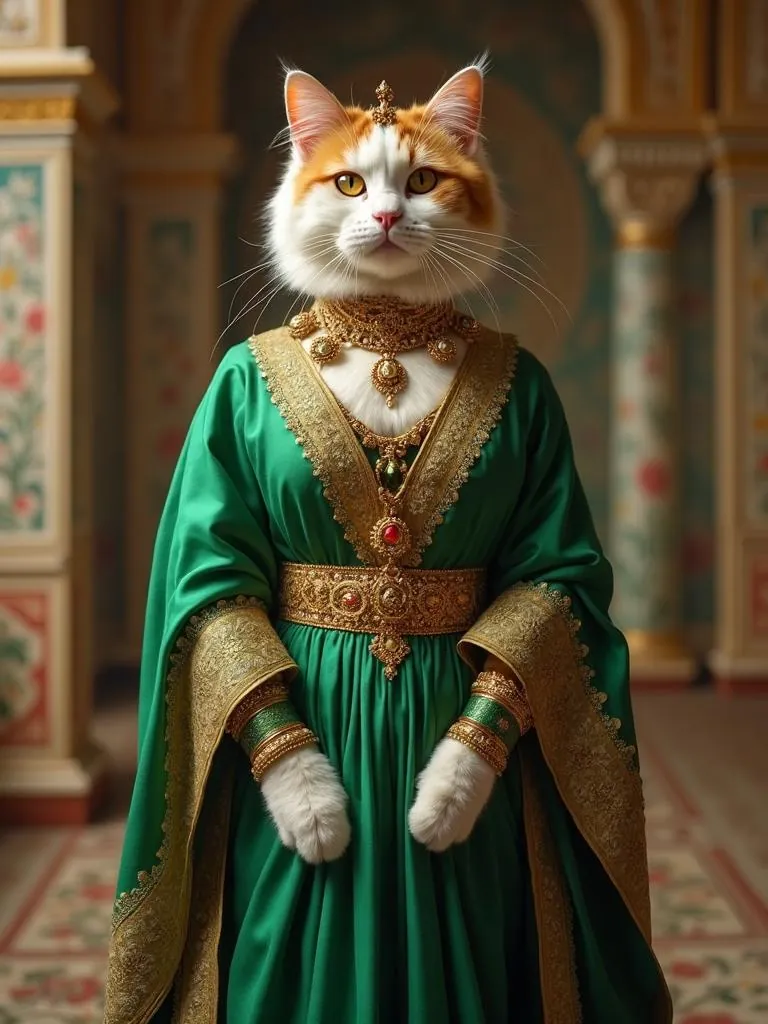
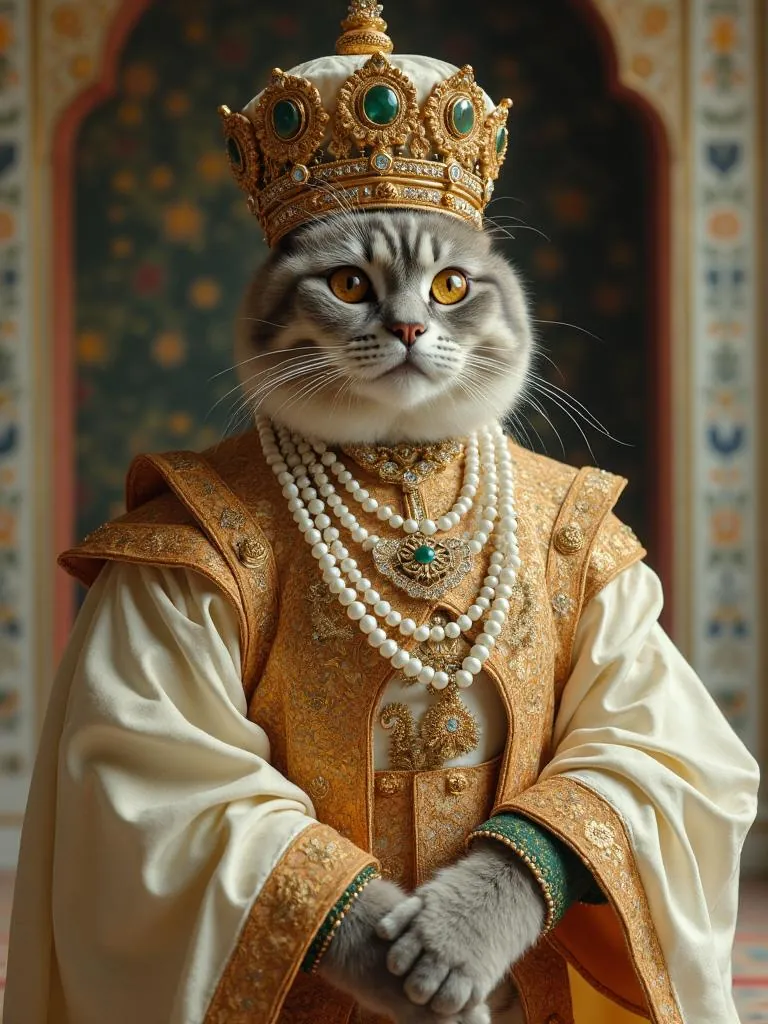
People have kept and honoured cats for a long time. The guide to royal cats in history follows them from ancient Egypt to the Mughal court and European portraits, and famous paintings of cats shows ten works by artists from Leonardo to Gwen John.
Do cats love their owners? What the research says
Scientists cannot ask a cat how it feels. They can measure how a cat behaves when its person leaves and comes back, which is how researchers study the bond between a baby and a parent.
In 2019 a team at Oregon State University, led by Kristyn Vitale, published a study of this kind in the journal Current Biology. Each cat took part in a "secure base test". It spent two minutes in a new room with its caregiver, then two minutes alone, then two minutes after the caregiver returned. Behaviour experts watched recordings of each test and sorted the cats by the same rules used for infants and dogs.
The university's news release describes two patterns:
- Secure attachment. When the person came back, the cat was less stressed and split its attention between the person and the room. It kept exploring.
- Insecure attachment. The cat showed signs of stress, such as twitching its tail and licking its lips. It either kept away from the person or clung to them, jumping into their lap and staying still.
Of the 70 kittens the researchers could classify, 64.3% were securely attached. Of 38 cats aged one year or older, 65.8% were securely attached. The researchers point out that 65% of human infants are securely attached to their caregiver. After a six-week training and socialization course, the researchers found no statistical change in the kittens' attachment styles.
Vitale said that the majority of cats use their owner as a source of security, and that a cat which is insecure can run and hide or seem aloof. She added that people have long held a biased belief that all cats behave that way.
Not every study agrees. In 2015 Alice Potter and Daniel Mills of the University of Lincoln tested 20 cats and their owners with a different version of an attachment test. The cats made more sounds when their owner left the room than when the stranger left, and the researchers found no other sign of secure attachment. They concluded that adult cats are often independent, even in their social relationships, and called for new ways to study the bond. The two teams used different tests, so their results are hard to compare.
The slow blink
A slow blink is a cat narrowing its eyes, or closing them, while it looks at you. In a 2020 study in the journal Scientific Reports, researchers from the Universities of Sussex and Portsmouth describe the "slow blink sequence" as a series of half blinks followed by a long eye narrow or a full eye closure.
The team ran two experiments in the cats' own homes:
- Owners. 21 cats from 14 households took part. When their owners sat near them and slow blinked, the cats narrowed their eyes more often than when the owner sat in the room without interacting.
- A stranger. 24 more cats took part, with results analysed for cats from eight households. A researcher the cats had never met either slow blinked or kept a neutral face, then held out a flat hand, palm up. The cats were more likely to approach the hand after a slow blink.
The authors conclude that slow blink sequences may work as a form of positive emotional communication between cats and humans. The University of Sussex says the eye narrowing has some parallels with the genuine human smile. International Cat Care agrees on the wider point: relaxed eyes that blink, sometimes half closed, show a cat is content. A hard stare with wide eyes is a sign of tension.
You can try it. Professor Karen McComb, who supervised the study, suggests narrowing your eyes as you would in a relaxed smile, then closing them for a couple of seconds. McComb says cats tend to answer in the same way. The guide to photographing cats uses the same trick to calm a cat before a photo.
Head bunting and rubbing your legs
When a cat presses its forehead or cheek against you, it is bunting. International Cat Care explains that cats have scent glands under the chin, at the sides of the mouth and cheeks, on the sides of the forehead, at the base of the tail and along the tail. A cat marks everything in its social group with its own smell, and bunting happens mainly in the safest part of its territory, such as your home.
The same charity says a cat that rubs around your legs greets you in the way it greets another cat in its group, by rubbing face and body together. It uses your legs because it cannot reach your face. Afterwards it goes off to groom and check your scent. Bruce Kornreich, director of the Cornell Feline Health Center, says researchers believe a cat that bunts you is marking you as its own and telling you it wants you in its social group. International Cat Care's advice is simple: if your cat head bunts you, it feels safe with you.
The tail up greeting
Watch your cat's tail as it walks toward you. International Cat Care says a tail held straight up, at a right angle to the ground, signals friendly intent toward another cat, another animal or a person. The ears are usually pricked up and the whiskers relaxed. A tail tucked between the back legs is a sign of fear, and a puffed out tail with an arched back tells others to stay away.
A cat that walks to the door with its tail up, then rubs your legs, is giving you two friendly signals at once.
Kneading
Kneading is the slow, rhythmic push of the front paws, one after the other, often on a lap or a soft blanket. International Cat Care traces it to kittenhood: kittens tread on their mother's belly with alternate front paws to make her milk flow. A cat that kneads your lap or chest, the charity says, links you with its mother. Some cats drool as they knead, because as kittens the movement came before milk.
Kornreich of Cornell says kneading can be a sign of affection. It can also hurt when the claws come out. International Cat Care says a cat should never be punished for kneading, because that could damage your bond. Put a folded blanket on your lap instead.
Purring
Purring starts early. International Cat Care says a mother cat purrs quietly to her kittens when she returns to the den, to tell them all is well, and the kittens purr as they feed. Later in life, cats purr as a greeting, and while they groom each other.
A purr has more than one meaning. The same charity says cats also purr when they are sick or injured, perhaps to soothe themselves. Read the purr with the rest of the cat. A purr with a raised tail, soft eyes and a relaxed body comes from a content cat. A purr from a cat that is hiding or unwell can mean the cat is soothing itself.
Grooming, resting together and the belly roll
Cats that like each other touch each other. International Cat Care lists mutual grooming, rubbing bodies together, touching noses and curling up together as the common ways friendly cats touch. It says cats that use each other as pillows, or wind their tails together, are believed to be bonding. A cat that licks your hand or hair, or chooses to sleep pressed against your leg, is doing the same things to you that it does with cats in its own group.
The belly roll is harder to read. International Cat Care calls it a social roll: the cat rolls onto its back and shows its belly, usually as a friendly greeting from a cat that is relaxed or wants to play. The charity says it can be a sign of trust, or a request for rough play. The belly is one of the places most cats do not like being touched, so enjoy the greeting and stroke the cheeks.
How to strengthen the bond with your cat
International Cat Care's advice has one main rule: let the cat decide. The charity puts it in three questions, from the work of Dr Lauren Finka, spelled C-A-T:
- Choice. Did I give the cat a choice to interact?
- Attention. Am I watching for small signs that the cat is uncomfortable?
- Touch. Where am I touching the cat, and does it still want me to?
In practice:
- Greet with a hand. Hold out a loosely closed hand and wait. If the cat sniffs it and rubs its face on it, it is ready to be stroked.
- Stroke the right places. Most cats enjoy touch on the cheeks, the chin and the head. Cats differ on the body and tail. Legs, belly and the base of the tail are best avoided.
- Stroke for a few seconds, then stop. International Cat Care suggests 3 to 5 seconds on the cheeks or under the chin, then a pause. If the cat rubs against you again, continue. If it does not, it has had enough for now.
- Let the cat come to you. Stay still, avoid a direct stare, and leave a resting or hiding cat alone. Avoid picking a cat up during a social moment.
- Play in short sessions. The charity recommends short, regular play sessions with toys that move like prey, and quiet company, such as reading in the same room.
- Slow blink back. When your cat slow blinks at you, answer with your own slow blink.
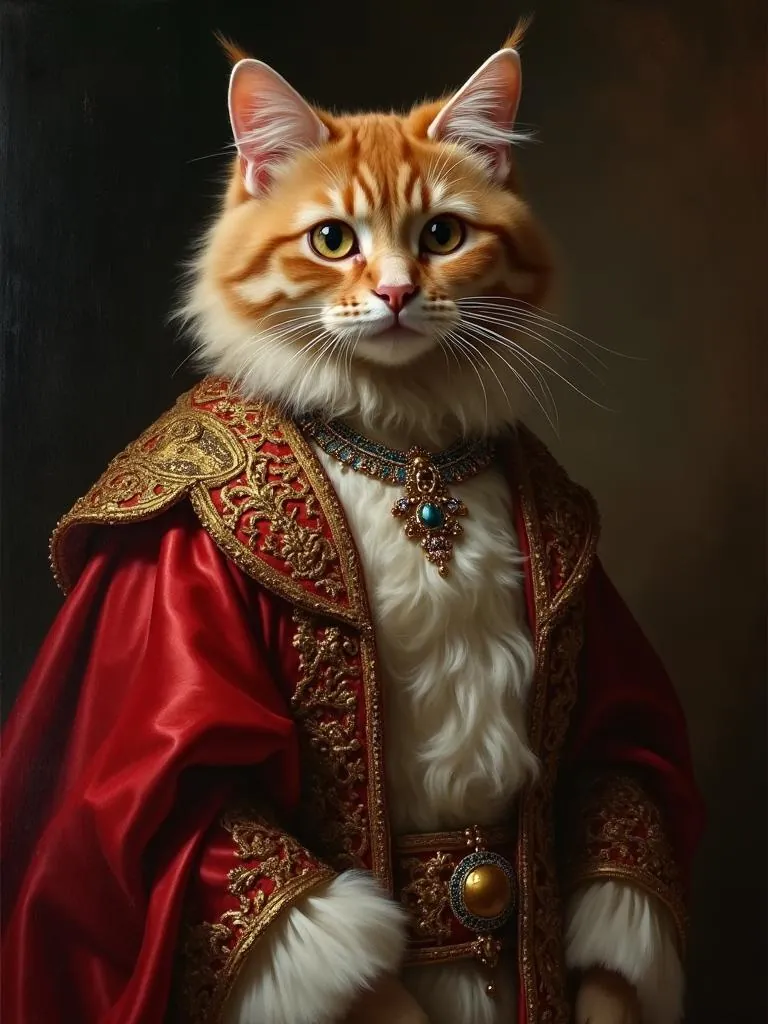
A calm cat is also easier to photograph. When your cat sits with soft eyes and a relaxed face, take the picture: the portrait studio needs one clear photo of up to 5 MB. The Regal Feline in the gallery, a ginger cat in a red and gold royal robe, is a finished example in the Indian Royalty style.
Questions and answers
Do cats love their owners?
Most pet cats form a secure bond with the person who cares for them. In a 2019 Oregon State University study published in Current Biology, 64.3% of 70 kittens and 65.8% of 38 adult cats were classed as securely attached to their caregiver. The researchers point out that 65% of human infants are securely attached. A securely attached cat stays calm when its person returns and keeps exploring the room.
How do cats show affection to humans?
Cats show affection to humans with a raised tail, head bunting, rubbing around the legs, kneading, purring and slow blinks. International Cat Care says a tail held straight up signals friendly intent, and that a cat rubbing your legs greets you the way it greets a cat in its own group. Bruce Kornreich, director of the Cornell Feline Health Center, says kneading can also be a sign of affection.
Do cats slow blink to show love?
A cat's slow blink is a friendly signal that people can return. In a 2020 study in Scientific Reports, researchers from the Universities of Sussex and Portsmouth found that cats narrowed their eyes more often after their owners slow blinked at them. The authors say slow blink sequences may work as a form of positive emotional communication between cats and humans, and the University of Sussex compares the eye narrowing to a genuine human smile.
Why do cats headbutt their owners?
Cats headbutt their owners to put their scent on them and to include them in their social group. International Cat Care calls this bunting and says it happens mainly in the core area of a cat's territory, such as its home, where it feels safe. Bruce Kornreich of the Cornell Feline Health Center says researchers believe the cat leaves pheromones, which are scent chemicals, to mark you as its own.
What does cat kneading on me mean?
A cat kneading on you is repeating a movement from kittenhood. International Cat Care explains that kittens tread with alternate front paws on their mother's belly to make her milk flow, and that a cat kneading your lap or chest links you with its mother. Some cats drool while they knead. The charity says a cat should never be punished for kneading, because punishment could damage your bond.
How do cats bond with their owners?
Cats bond with the person who cares for them, and Oregon State University researchers found this bond has the same main styles as a child's bond with a parent. In their 2019 test, a cat spent two minutes in a new room with its person, two minutes alone, then two minutes reunited. Securely attached cats stayed calm at the reunion. After a six-week training course, the researchers found no statistical change in attachment styles.
Does cat showing belly mean trust?
A cat that rolls over and shows its belly as a greeting is often showing trust. International Cat Care calls this a social roll and says it is usually a friendly greeting from a relaxed or playful cat. The charity also warns that the roll can be an invitation to rough play, and lists the belly among the areas most cats dislike being touched, so stroke the cheeks or chin instead.
Why do cats purr?
Cats purr as a friendly signal that starts in kittenhood. International Cat Care says a mother cat purrs to tell her kittens that all is well, and the kittens purr while they feed. Adult cats purr as a greeting and while grooming each other. The charity adds that cats also purr when they are sick or injured, perhaps to soothe themselves, so read a purr together with the cat's body and eyes.
How to show your cat affection?
To show your cat affection, let the cat choose the contact. International Cat Care advises offering a loosely closed hand, waiting for the cat to rub its face on it, then stroking the cheeks or under the chin for 3 to 5 seconds and pausing. If the cat rubs against you again, continue. Short, regular play with toys that move like prey, and a slow blink from across the room, also help.
Sources
- The role of cat eye narrowing movements in cat-human communication (Scientific Reports, 2020), Humphrey, Proops, Forman, Spooner and McComb, via PubMed Central
- Feline friendly? How to build rap-paw with your cat, University of Sussex
- Cats, like children and dogs, develop attachments to their caregivers, study shows, Oregon State University
- Domestic cats (Felis silvestris catus) do not show signs of secure attachment to their owners (PLoS One, 2015), Potter and Mills, University of Lincoln, via PubMed Central
- Cat communication, International Cat Care
- Why do cats..?, International Cat Care
- How to greet a cat, International Cat Care
- Cat friendly interaction, International Cat Care
- The ABCs of C-A-Ts, Cornell University
Share this guide
The button copies a ready-written post, then opens LinkedIn. Paste the text into the post box.
Go deeper
The full guides on this topic, each a set of pages with sources: