A portrait gift for a new puppy, kitten or rescue
A royal portrait for someone with a new puppy, kitten or rescue: when to give it, why young pets change fast, and what vets say about giving live pets.
By Purrealism. Part of Pet portrait gifts: choosing a royal portrait for every occasion.
When a friend or a relative brings home a new puppy, kitten or rescue, a portrait of the new arrival is a gift about the change in their life. This page covers that gift: why young pets change so fast that a portrait made now records something brief, when to give it, and how to give it safely in a home that now has a curious young animal. It also sets out what the ASPCA and a veterinary association say about the other new-pet gift, a live animal given as a present, and why a portrait avoids those questions. For the steps every portrait gift shares, start with the guide to pet portrait gifts.
Young pets change fast
The first months of a pet's life pass quickly, and veterinary guidelines put numbers on them.
For dogs, the 2019 Canine Life Stage Guidelines from the American Animal Hospital Association (AAHA) define the puppy stage as the time from birth until rapid growth stops. That happens at 6 to 9 months, varying with breed and size. The young adult stage follows, and the guidelines say most dogs complete their physical and social maturing by 3 to 4 years of age. The Merck Veterinary Manual adds that a puppy's adult teeth begin to appear at 4 to 5 months and are all in place by 7 months.
For cats, the 2021 Feline Life Stage Guidelines from AAHA and the American Association of Feline Practitioners define the kitten stage as birth up to 1 year. From 1 through 6 years a cat is a young adult.
So a puppy's time as a puppy ends within its first 9 months, and a kitten's within its first year. A portrait made from a photo taken in those months keeps a face the owner will not see again. The pet photo guide covers how to photograph a young animal safely and sharply.
Two moments to give the portrait
Now, for the baby face. A portrait in the first months records the stage that ends soonest. Use a recent photo, because a young animal can look different from one month to the next.
Later, for the first milestone. The first birthday is the other natural moment. For a cat, the feline guidelines put the end of kittenhood at 1 year. For a dog, the first birthday falls after rapid growth has stopped. The page on birthday portraits covers the life stages in detail. A family might welcome both: a portrait now, and a second one at a year, hung side by side.
For an adult rescue, give it time. The American Kennel Club says an adopted adult dog can take days or even weeks before it feels confident and comfortable enough in its new home to show its true personality. A portrait made from a photo taken in the first days, while it is still nervous, may not show the animal the family comes to know. The page on adoption anniversary portraits covers marking the first year.
If you want to give something now and the photo can wait, give a card that promises the portrait. The owner chooses the photo once the pet has settled, and you order it then.
Giving a live pet: what welfare groups say
Sometimes the new pet itself is the gift. Welfare groups and veterinarians have studied this.
What the ASPCA says
The ASPCA's position statement on pets as gifts says Americans have a long tradition of giving pets, usually puppies or kittens, as gifts for birthdays, holidays and graduations, and that there is debate about how this affects the animals.
Its own survey found that most gifted pets did well. The statement says 96 percent of people who received pets as gifts thought it increased their love or attachment to the pet or had no effect, and that 86 percent of those pets were still in the home. It found no difference in attachment whether the gift was a surprise or known in advance. It also cites studies from 1996 to 2000 that found pets acquired as gifts were less likely to be given up than pets people acquired for themselves.
Even so, the ASPCA sets conditions. It recommends giving a pet only to people who have shown a lasting interest in owning one and the ability to care for it responsibly. It recommends getting pets from shelters, rescues, friends, family or responsible breeders, and never from places where the source of the animal is unknown. If the recipient is under 12, the child's parents should be ready and eager to take on the animal's care. And if the gift is a surprise, the giver should know the recipient's lifestyle and schedule well enough to be sure they have the time and means to care for a pet, with a schedule free enough to help it settle in.
What a veterinary association says
The Oregon Veterinary Medical Association is more cautious. It asks people to consider seriously the choice to give a pet as a gift, and says one of the main reasons animals are abandoned or taken to shelters is that they are unwanted. If a pet is the gift, it advises letting the recipients select the pet themselves, so they can find one that is right for them. It also says the holidays may not be the best time to introduce a new pet, because the excitement, noise and change of routine make settling in harder, and it recommends waiting until after the holidays.
Where a portrait fits
Both groups leave the choice of the animal to the person who will care for it. That leaves a clear role for the giver: support the new owner after they have chosen. A portrait of the pet they picked does that. It needs no feeding, no walks and no change of schedule, and it arrives after the hardest decision has already been made by the right person.
For a planned holiday pet, the page on a portrait as a Christmas gift covers the season.
Giving safely in a home with a young pet
A home with a new puppy or kitten has new risks, and a gift can add to them.
Wrapping. Young animals chew. The ASPCA says long, stringy items such as ribbon, tape and bows can lodge in a pet's throat or digestive tract. Open the gift with the puppy or kitten in another room, and put the wrapping away at once. The page on presenting a portrait gift covers this in more detail.
Where the portrait goes. The AAHA canine guidelines say puppies and young adult dogs are inclined to investigate and explore. They advise owners to "puppy-proof" the home by putting away toys, clothes and shoes, securing rubbish bins and cupboards, and steadying furniture or items that may tip or fall. A large framed print leaning against a wall at floor level is one of those items. Hang it, or keep it out of the room until it can be hung. The framing and hanging guide covers safe picture hanging.
Cords and candles. If you give the portrait with a lamp to light it, the Oregon Veterinary Medical Association warns that puppies may chew electrical cords, which can cause burns to the mouth or a fatal electric shock. Keep cords out of reach.
A useful second gift: the name on a tag
A new pet also needs a way home if it gets lost. The AAHA canine guidelines ask veterinarians to encourage registration and identification for new dogs, including microchips, identification tags and licences, and they say readable, current identification increases the chance of recovering a lost dog. A collar tag engraved with the pet's new name and the owner's phone number is a small practical gift to pair with a portrait. Ask the owner for the number to engrave, or give a voucher for the tag so they can choose the words.
New pets arrive all year, with a pattern. The ASPCA says U.S. shelter adoptions rise in spring and summer and fall in winter, and that 4.2 million dogs and cats were adopted from U.S. shelters and rescues in 2025.
Choosing a style for a young pet
Purrealism offers 15 portrait styles: nine from Indian royal courts and six from European history. A young pet's character is still forming, so choose from the look and the owner's home. A small dog in a jewelled turban makes a playful picture; the gallery shows a Pomeranian as Patiala royalty in a blue coat and jewelled turban on a red throne. For a kitten, the Maharani or the Mughal Emperor suits an animal that already claims the best seat in the house. A large-breed puppy that will grow into a big dog may suit a warrior style that fits the adult it is becoming.
Whichever you choose, the portrait will show one short stage of a long life. That is what makes it a good gift for a new beginning.
Questions and answers
What is a good gift for someone who just got a puppy?
A portrait of the new puppy is a good gift for its owner, because it records a stage that ends fast. The American Animal Hospital Association's canine guidelines say a dog is a puppy only until its rapid growth stops, at 6 to 9 months depending on breed and size. A portrait made now keeps the puppy face the owner will not see again.
When should I give a portrait of a new pet?
A portrait of a new pet can be given in the first months, or saved for a milestone such as the first birthday. The AKC says an adopted adult dog can take days or even weeks to show its true personality, so for an adult rescue, wait until the pet has settled. For a puppy or kitten, an early portrait records how small it was.
Why does a puppy portrait need a recent photo?
A puppy portrait needs a recent photo because puppies change shape fast. The American Animal Hospital Association defines the puppy stage as the time of rapid growth, which ends at 6 to 9 months. The Merck Veterinary Manual adds that adult teeth come in from 4 to 5 months. A photo from a month earlier may show a different-looking dog.
Are pets given as gifts kept by their new owners?
Most pets given as gifts stay with their new owners, according to an ASPCA survey. The ASPCA's position statement says 86 percent of pets received as gifts were still in the home, and 96 percent of recipients said the gift increased their love for the pet or had no effect. It cites earlier studies that found gifted pets less likely to be given up.
Does a surprise pet gift change how attached the owner feels?
A surprise pet gift made no difference to attachment in an ASPCA survey. The ASPCA's position statement says the survey found no difference in attachment whether the pet was a surprise or known in advance. The ASPCA still says a surprise giver should know the recipient's lifestyle and schedule well enough to be sure they have time to care for the animal.
Should the recipient choose their own pet?
The recipient should choose their own pet if a pet is the gift, according to the Oregon Veterinary Medical Association. It says this lets them find a pet that is right for them, and warns that pets given to people who do not want them are one reason animals end up in shelters. A portrait of the chosen pet can follow later.
Can a child be given a pet as a gift?
A child can be given a pet only when the parents are ready to care for it, according to the ASPCA. Its position statement says that if the recipient is under 12 years old, the child's parents should be ready and eager to take on the animal's care. A portrait of the family's new pet, given to the child later, carries no such duty.
Why are puppies more at risk from things around the house?
Puppies are more at risk from things around the house because they investigate and explore. The American Animal Hospital Association's canine guidelines say this is true of puppies and young adult dogs, and advise puppy-proofing: putting away toys, clothes and shoes, securing rubbish bins, and steadying furniture or items that may tip or fall.
Is a portrait better given now or at a new pet's first birthday?
A portrait of a new pet can suit either time, and a family may want both. A portrait now keeps the puppy or kitten look, which the AAHA canine guidelines and the 2021 AAHA and AAFP feline guidelines say ends by 6 to 9 months for dogs and at one year for cats. A first birthday portrait shows the young adult.
How do I give a portrait gift before a new pet has settled in?
A portrait gift for a pet that has not settled in yet can be given as a card that promises the portrait. Let the owner choose a photo once the pet is relaxed at home. The AKC says an adopted adult dog can take days or even weeks to feel confident enough to show its personality, so wait for a photo taken after that.
Sources
- Position Statement on Pets as Gifts, ASPCA. Accessed September 28, 2026.
- Holiday Pet Care Tips, Oregon Veterinary Medical Association. Accessed September 28, 2026.
- 2019 AAHA Canine Life Stage Guidelines, American Animal Hospital Association. Accessed September 28, 2026.
- 2021 AAHA/AAFP Feline Life Stage Guidelines, Journal of Feline Medicine and Surgery, via PubMed Central. Accessed September 28, 2026.
- Dental Development of Dogs, Merck Veterinary Manual. Accessed September 28, 2026.
- U.S. Animal Shelter Statistics, ASPCA. Accessed September 28, 2026.
- How Old Is My Dog?: Calculating Your Pet's Age, American Kennel Club. Accessed September 28, 2026.
Short reads on this topic
Articles from Purrspectives that answer one question each.
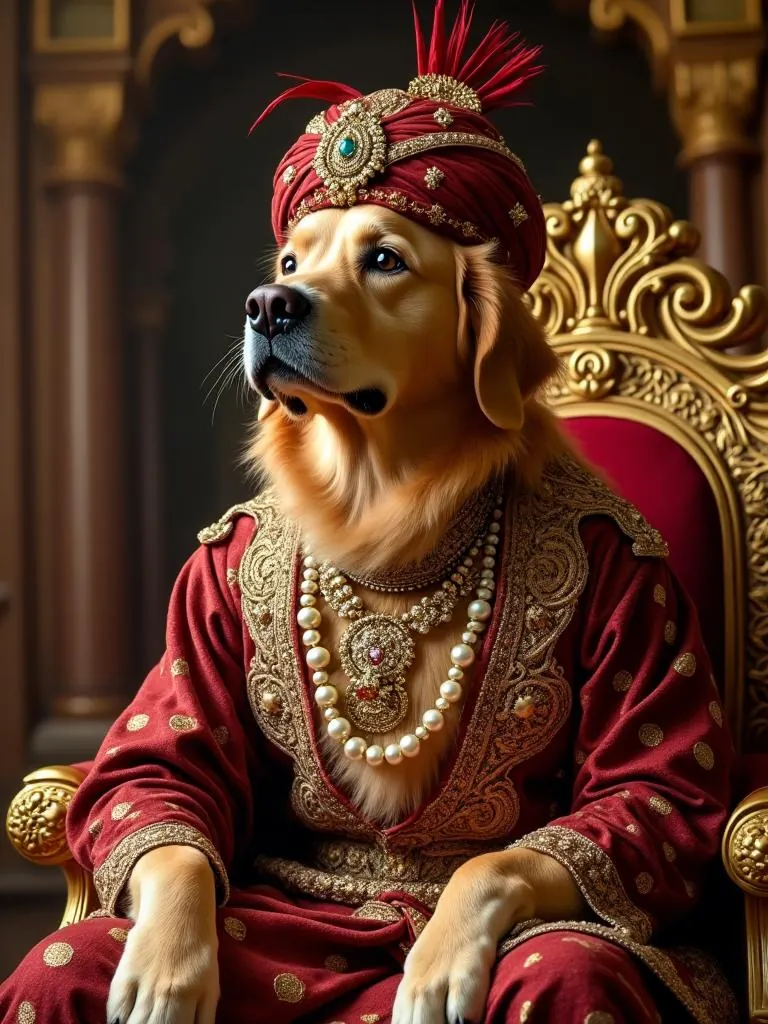
Dog birthday ideas: how to celebrate your dog's birthday, plus gift ideas
Celebrate your dog's birthday with a favourite walk, a play date, a dog-safe treat and a yearly photo. Plus dog birthday gift ideas for the dog and the family.
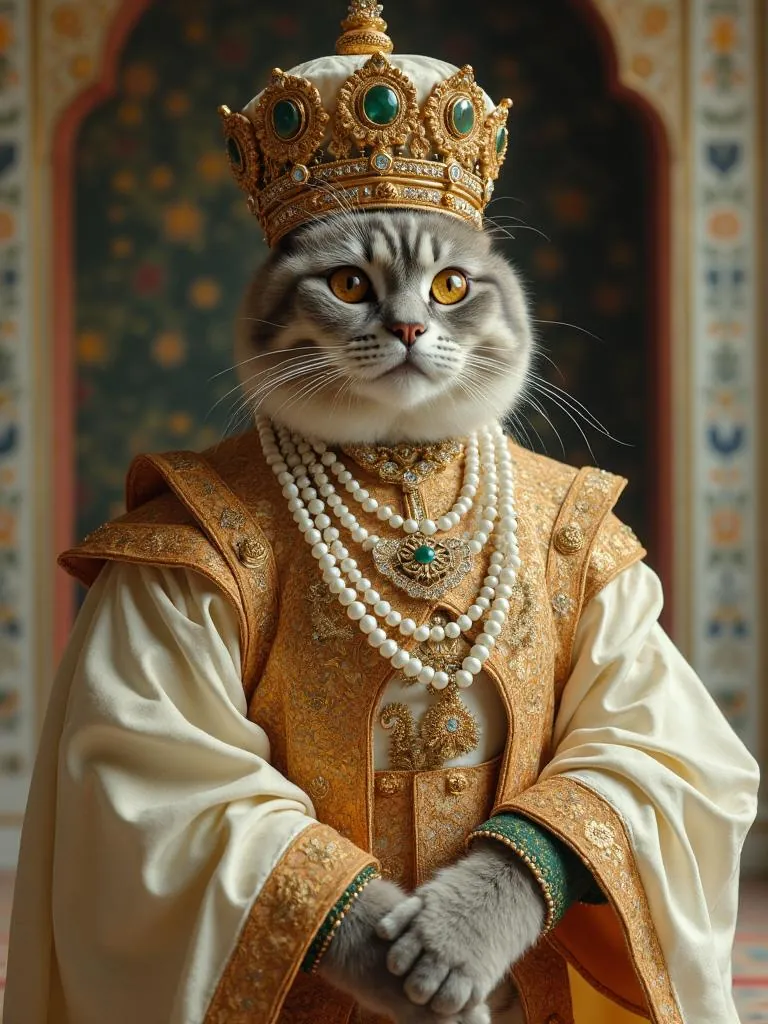
Cat wall art ideas: choosing a cat portrait for every room
Cat wall art for each room: the print size for a hall, living room, bedroom or small flat, the cat portrait that suits its colours, and where to keep it safe.
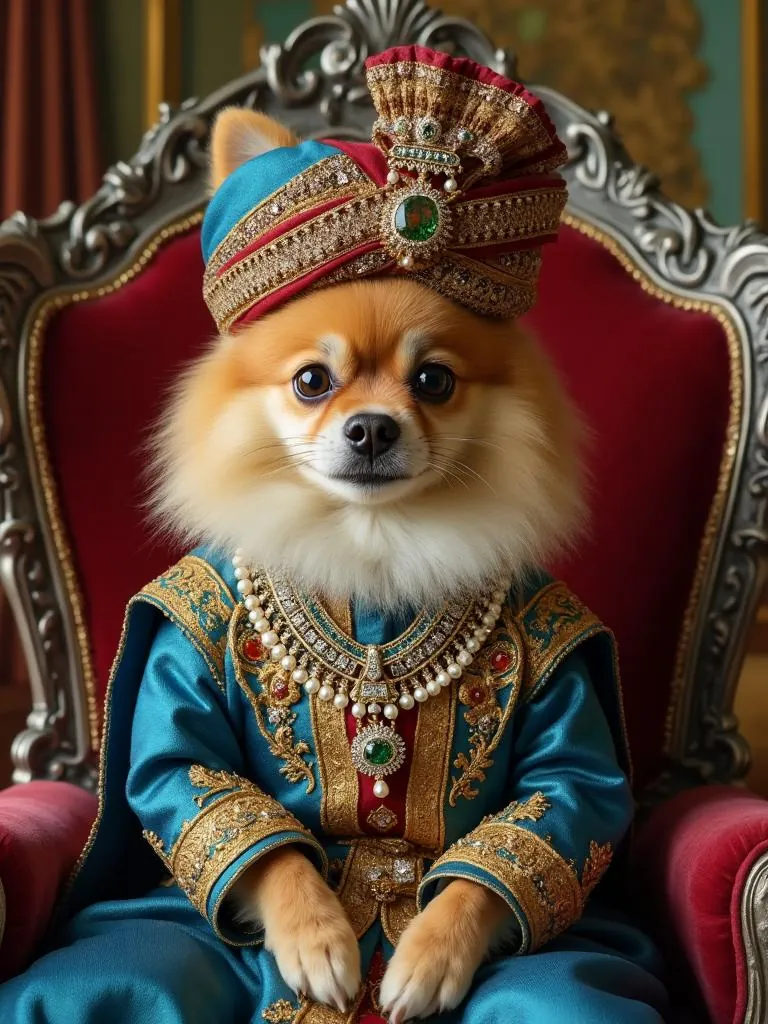
Funny pet portraits: why a dog on a throne makes us smile, and 10 ideas to try
Funny pet portraits put a dog or cat in a serious human role. How Landseer and Wegman used the joke, and 10 royal portrait ideas matched to your pet's habits.