Ragdoll cat history: California 1960s, the founding cats and a famous name
Ragdoll cat history from Ann Baker and Josephine in 1960s California to the breed patterns, slow maturity, CFA championship status and portrait tips.
By Purrealism
The Ragdoll is one of the newest pedigree cat breeds, developed in California in the 1960s by a single breeder who selected cats for a specific temperament. It went from a private breeding programme with its own registry to championship status in the two largest cat associations in the world. This guide follows the Ragdoll from its founding cats to its recognition in the mainstream cat fancy, and ends with how to photograph one for a royal portrait.
Ann Baker and the founding cats
The Ragdoll was developed in Riverside, California, in the early 1960s by Ann Baker. The Cat Fanciers's Association says Baker selected domestic longhaired cats with specific temperaments and appearances to establish the breed. The founding cats were a white longhaired female called Josephine, a seal point mitted male called Daddy Warbucks and a solid black cat called Blackie. The International Cat Association says all Ragdoll breeding lines trace back to these cats.
Baker's story of how Josephine came to have such a relaxed temperament is disputed by geneticists. The CFA notes that the extreme passivity Baker described is rare in modern Ragdolls. The breed's consistent calm character was what kept breeders interested.
A name and a registry
The breed takes its name from Baker's claim that Josephine went limp when held, in the way a cloth doll does. The CFA says this trait gave the breed its name even though it is not typical of the modern Ragdoll. The name fits a cat known for its calm, tolerant character and relaxed posture when handled.
Baker ran her own registry, the International Ragdoll Cat Association, and required breeders who purchased her cats to register offspring through it rather than through the established cat organisations. Several breeders, including Denny and Laura Dayton, eventually left Baker's programme and worked directly with the mainstream registries. The International Cat Association accepted the Ragdoll for championship competition in June 1979, when TICA was formed. The Cat Fanciers's Association accepted Ragdolls for registration in 1993 and advanced the breed to championship status in 2000.
Colour patterns
Ragdoll cats come in four patterns. The CFA says all Ragdolls carry the colourpoint gene, which produces a pale body with darker colouring on the face, ears, paws and tail. The mitted pattern adds white paws and a white chin. The bicolour pattern has an inverted V of white on the face and white on the lower body. The van pattern has colour only on the top of the head and the tail.
The colours available within each pattern include seal, blue, chocolate, lilac, red and cream, as well as the tortie and lynx variations.
Size and slow maturity
The Ragdoll is one of the largest pedigree cat breeds. The CFA says males commonly reach 20 pounds or more, while females are typically smaller. The breed is slow to mature: the coat does not reach its full colour until two to three years old, and the cat does not reach its full adult size until around four years old. This slow development means a Ragdoll kitten changes in appearance for several years before settling into its adult look.
Photographing a Ragdoll for a royal portrait
A Ragdoll's most striking features are its large size, the colourpoint pattern and the long, silky coat. Getting all three in one photo calls for good light and room in the frame. These steps add to the full guide on photographing cats:
- Sit at the cat's eye level. A large cat looks best when the camera is level with the face, not looking down at it. Get down to the floor.
- Use window light from the side. Side light shows the depth of the long coat and the contrast between the pale body and the dark points.
- Leave room for the full face and ears. The large head and wide-set ears are part of the breed's character. Stand back enough to fit the whole face in the frame.
- Wait for the cat to be still. Ragdolls are generally calm, but a moving cat gives blurred results. Wait for stillness, then tap the nearest eye to focus.
- Choose a plain background. The colourpoint pattern and the long coat are detailed enough without a competing background.
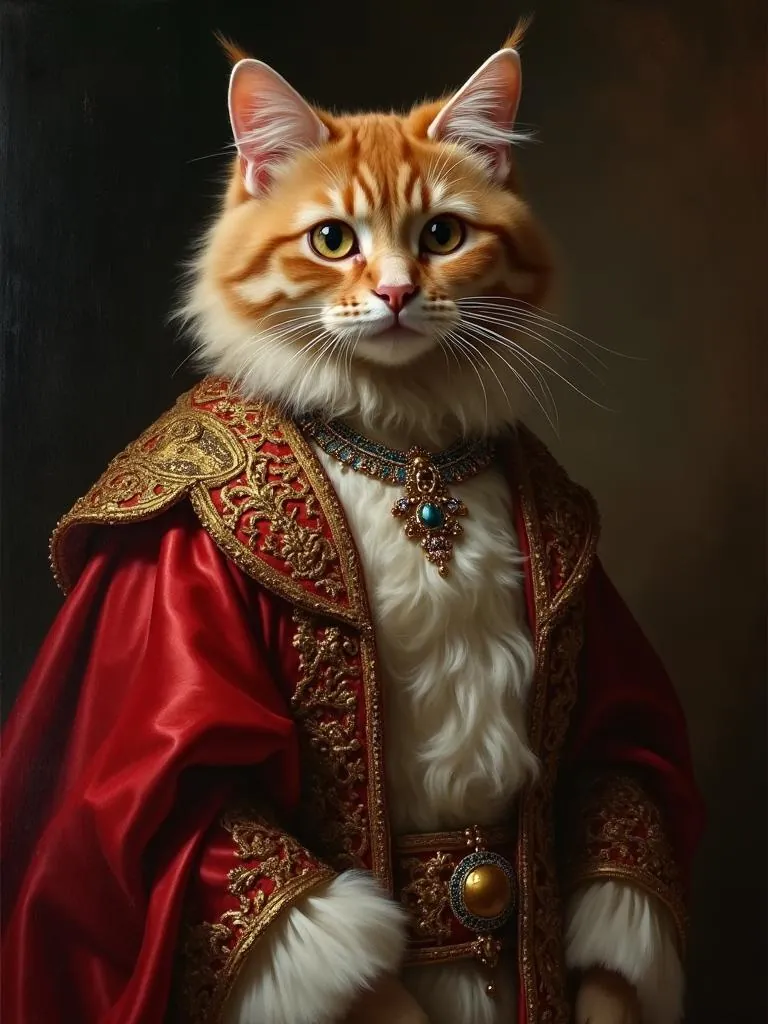
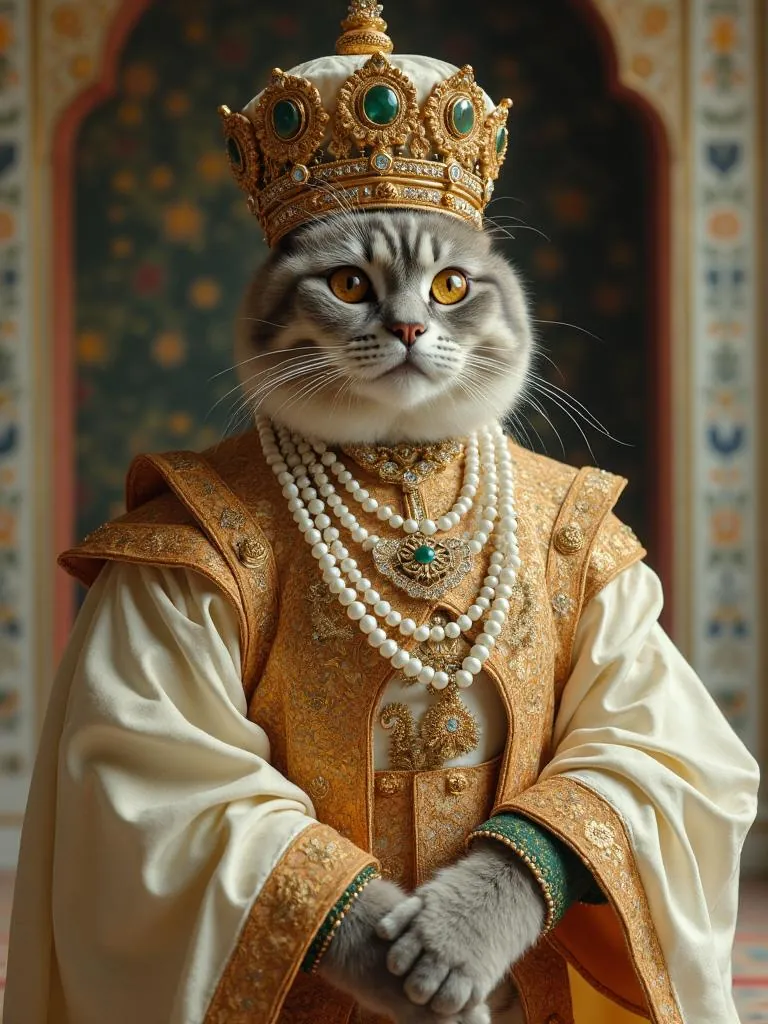
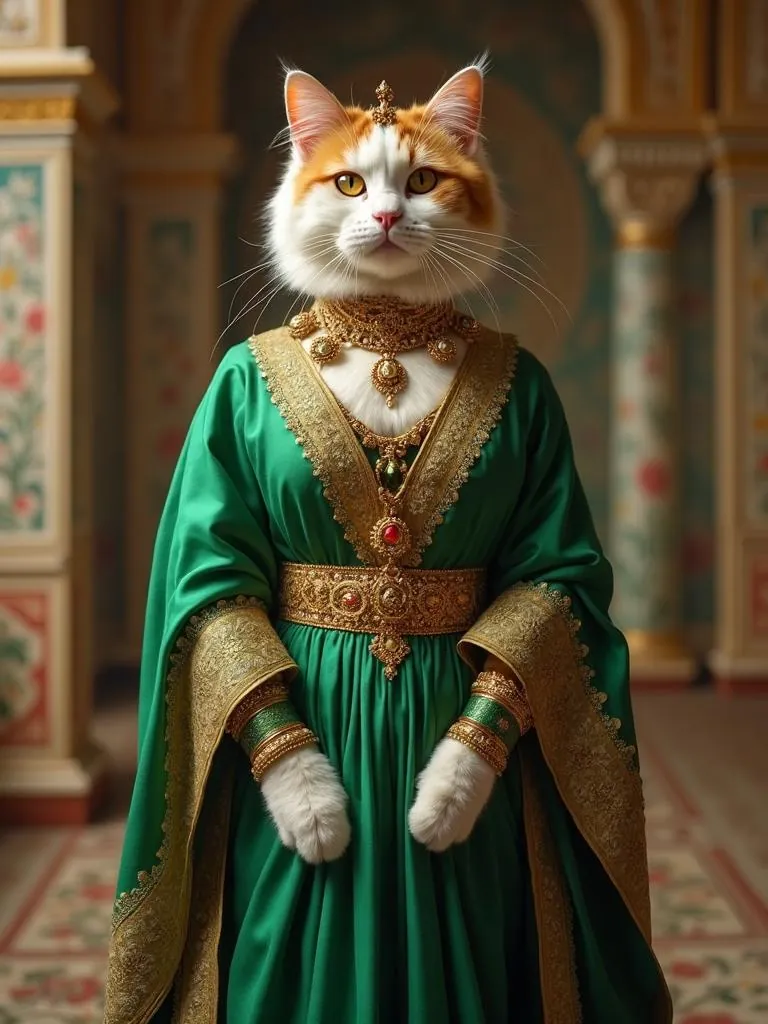
The gallery has portraits of cats in Mughal and Maharani styles. When your photo is ready, the portrait studio lets you choose from 15 royal styles and upload a photo of up to 5 MB.
Questions and answers
Where do Ragdoll cats come from?
Ragdoll cats were developed in Riverside, California, in the early 1960s by a breeder named Ann Baker. The Cat Fanciers's Association says Baker selected domestic longhaired cats with specific temperaments and appearances to create the breed. The founding cats included a white longhaired female called Josephine, a seal point mitted male called Daddy Warbucks and a solid black cat called Blackie. The breed reached CFA registration in 1993 and championship status in 2000.
Who was Josephine the Ragdoll?
Josephine was the founding cat of the Ragdoll breed, a white longhaired female owned by Ann Baker in Riverside, California. The International Cat Association says that all Ragdoll breeding lines trace back to Josephine and two other cats, Daddy Warbucks and Blackie. Baker claimed that Josephine's kittens showed a notably calm and relaxed temperament, and that this trait became central to the breed's character. The story of how that trait developed is disputed by geneticists.
Why are Ragdoll cats called Ragdolls?
Ragdoll cats take their name from a trait that founder Ann Baker claimed the founding cat Josephine had: she went limp when held, like a cloth doll. The Cat Fanciers's Association says this extreme passivity is not typical of modern Ragdolls, but the name stayed. The breed is known for a calm, relaxed temperament and for tolerating handling well, which fits the name even if the original claim was overstated.
What colour patterns do Ragdoll cats have?
Ragdoll cats come in four patterns: colourpoint, mitted, bicolour and van. The Cat Fanciers's Association says all Ragdolls carry the colourpoint gene, which gives them a pale body with darker colouring on the face, ears, paws and tail. The mitted pattern adds white paws. The bicolour pattern has an inverted V of white on the face and white on the lower body. The van pattern has colour only on the top of the head and the tail.
When did the CFA recognise Ragdoll cats?
The Cat Fanciers's Association accepted Ragdolls for registration in 1993. The breed was advanced to championship status in 2000. The International Cat Association accepted the Ragdoll for championship competition in June 1979, when TICA was formed, making it one of the first breeds in that registry. The CFA's Most Popular Breeds list has included the Ragdoll among the top breeds in the United States for several years.
How big do Ragdoll cats get?
Ragdoll cats are one of the largest pedigree cat breeds. The Cat Fanciers's Association says males commonly weigh 20 pounds or more, while females are typically smaller. The breed is slow to mature: the coat does not reach its full colour until two to three years old, and the cat does not reach full adult size until around four years old. The long, silky coat, large body and gentle temperament make the breed stand out in size as well as character.
Are Ragdoll cats easy to handle?
Ragdoll cats are described as calm and tolerant of handling. The Cat Fanciers's Association says the breed's temperament was central to Ann Baker's selection process from the beginning, and that calmness and adaptability are consistent traits in the breed today. The name Ragdoll itself refers to the cat's relaxed posture when held. These traits make the breed suited to households with children or other pets, though each cat still has its own character.
What was the IRCA in Ragdoll cat history?
The IRCA, the International Ragdoll Cat Association, was Ann Baker's own registry for the Ragdoll breed. Baker required breeders who purchased her cats to register offspring through the IRCA rather than the established cat registries. The International Cat Association says several breeders, including Denny and Laura Dayton, eventually left Baker's programme and worked with mainstream registries. This allowed the breed to gain recognition from the Cat Fanciers's Association and the International Cat Association.
How do I photograph a Ragdoll for a royal portrait?
A Ragdoll's most striking features are its large size, the colourpoint pattern and the long, silky coat. Sit at the cat's eye level and use window light from the side to show the depth of the coat and the contrast between the pale body and the dark points. Leave enough room in the frame for the whole face and the large ears. The guide to [photographing cats](/guides/pet-photo-guide/photographing-cats) has more steps on focus and angles for large cats.
Sources
Share this guide
The button copies a ready-written post, then opens LinkedIn. Paste the text into the post box.
Go deeper
The full guides on this topic, each a set of pages with sources: