British Shorthair history: Roman cats, the first cat show and two World Wars
British Shorthair history from Roman cats in Britain and the 1871 Crystal Palace show to World War disruptions, the British Blue and photographing one for a portrait.
By Purrealism
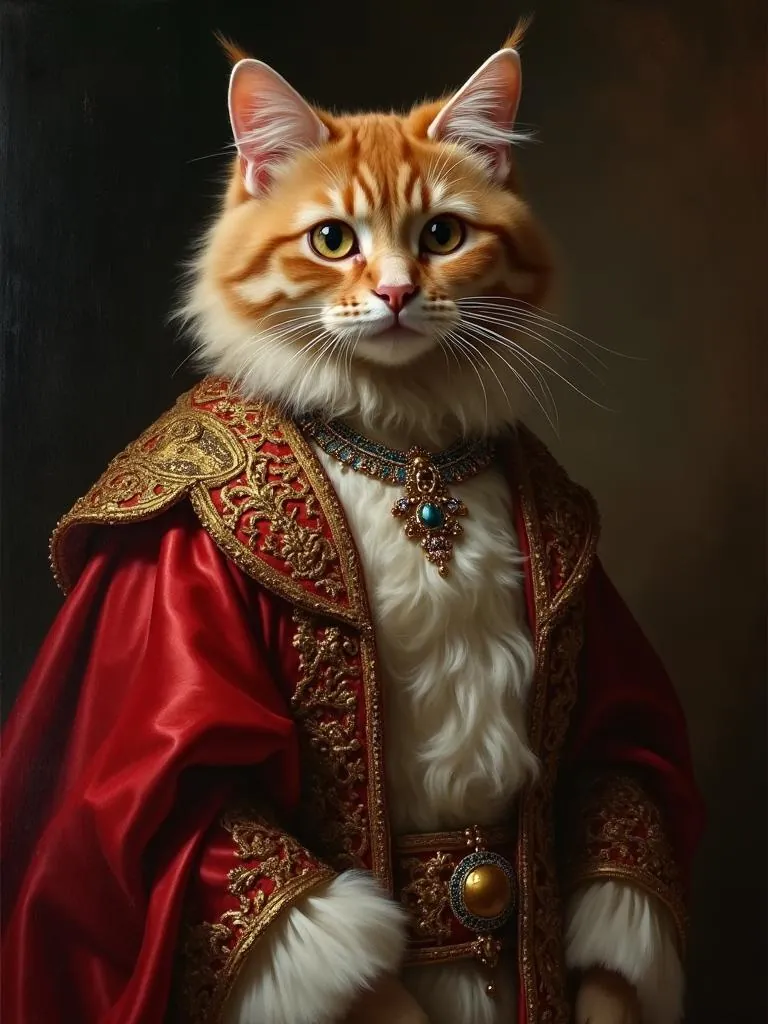
The British Shorthair is one of the oldest cat breeds in Britain. Its ancestors were brought to the British Isles by Roman soldiers, and its modern form was developed through the cat shows of the Victorian era. Two World Wars nearly destroyed the breed, and breeders spent decades restoring it. This guide follows the British Shorthair from its Roman origins to the Crystal Palace shows, through the wartime disruptions, and ends with how to photograph one for a royal portrait.
Roman cats in Britain
The Cat Fanciers's Association describes the British Shorthair as the modern form of the ancient cats that Roman soldiers brought to Britain. These cats were valued for their hunting ability rather than their appearance, and over centuries they spread through the British Isles as working and companion animals. Formal breeding efforts did not begin until the 1800s, when cat shows gave breeders a reason to select and record specific types.
Harrison Weir and the Crystal Palace shows
The first organised cat show was held at London's Crystal Palace in 1871. The CFA says it was conceived by Harrison Weir, who is credited as the father of the cat fancy. Weir wanted to improve domestic cat breeds by giving breeders a way to compare and judge them in a formal setting.
The first Best in Show at that 1871 show went to a 14-year-old blue tabby British Shorthair owned by Weir himself. The Crystal Palace shows continued annually until 1936, when the building was destroyed by fire. The British Shorthair's dominance at those early shows shaped how the breed was understood: solid, calm, British.
Two World Wars and the breed's survival
World War I severely disrupted the British cat fancy. The CFA says breeders after the war could not find enough quality registered British Shorthairs, and were forced to introduce unregistered domestic shorthairs. This diluted the breed's type, and breeders spent years working to restore it.
World War II brought a second disruption. The CFA says breeders had to outcross to Russian Blues, Burmese, Chartreux and Persians to restore genetic diversity and the original appearance. After crossing with Persians, three generations of further breeding were required before the offspring could be registered as British Shorthairs.
By the 1950s, the breed was re-established. A blue male called Brynbuboo Little Monarch became the first Grand Champion of any breed in the Governing Council of the Cat Fancy in the United Kingdom. The CFA says most modern British Shorthairs trace their ancestry back to this cat's bloodline.
The British Blue and American recognition
The first shorthaired cat registered in the Americas was a British Shorthair named Belle of Bradford, a male red tabby imported by Jane Cathcart in 1901. The CFA says the breed was initially registered as British Blues, reflecting the most common and most admired colour. Championship status was granted by the CFA in 1980, more than 75 years after the first American registration.
The British Blue, a solid grey-blue coat with orange or copper eyes, remains the colour most associated with the breed. It is the colour of the cat that many people picture when they hear British Shorthair.
A round face and a dense coat
The British Shorthair has a distinctive round appearance. The CFA describes a broad, round head with large round eyes, prominent whisker pads and a short, broad nose. The body is compact and muscular. The coat is dense, and the CFA says it contains more hairs per square inch than any other breed, which gives it a thick, padded feel different from most other shorthaired cats.
The breed's temperament matches its appearance: calm, steady and adaptable. The CFA describes the British Shorthair as easygoing, loyal to its family and not demanding of constant attention. The cats tend to prefer being near people rather than on laps, and are generally quiet.
Photographing a British Shorthair for a royal portrait
A British Shorthair's most recognisable features are its round face, large eyes and dense, plush coat. Getting all three in one photo calls for direct, soft light. These steps add to the full guide on photographing cats:
- Sit at the cat's eye level. The round face and large eyes only show their full character when the camera is level with the cat. Looking down flattens the face.
- Use window light from the side. Side light shows the depth of the dense coat. Direct front light flattens it and loses the texture.
- Choose a plain background. The round head and dense coat are detailed enough without a competing background.
- Wait for the cat to be still and looking forward. A British Shorthair's best expression is calm and direct. Wait until the cat is settled before tapping the nearest eye to focus.
- Show the full face, including the cheeks. The broad cheeks and prominent whisker pads are part of the breed's character. Leave enough room in the frame for the whole face.
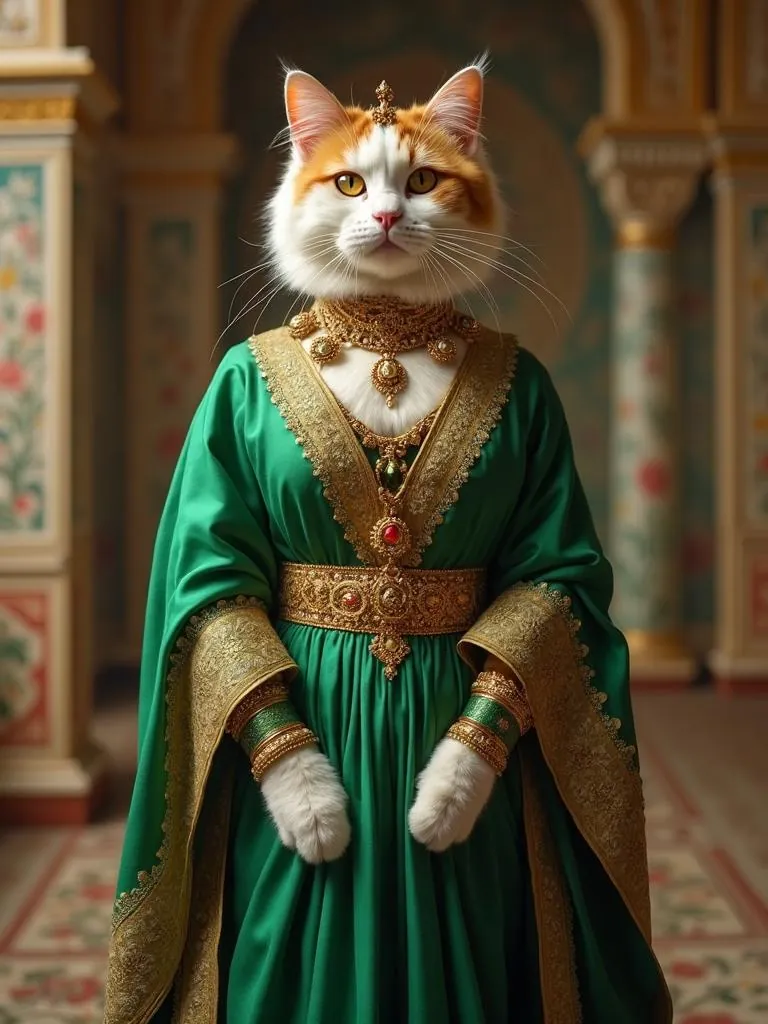
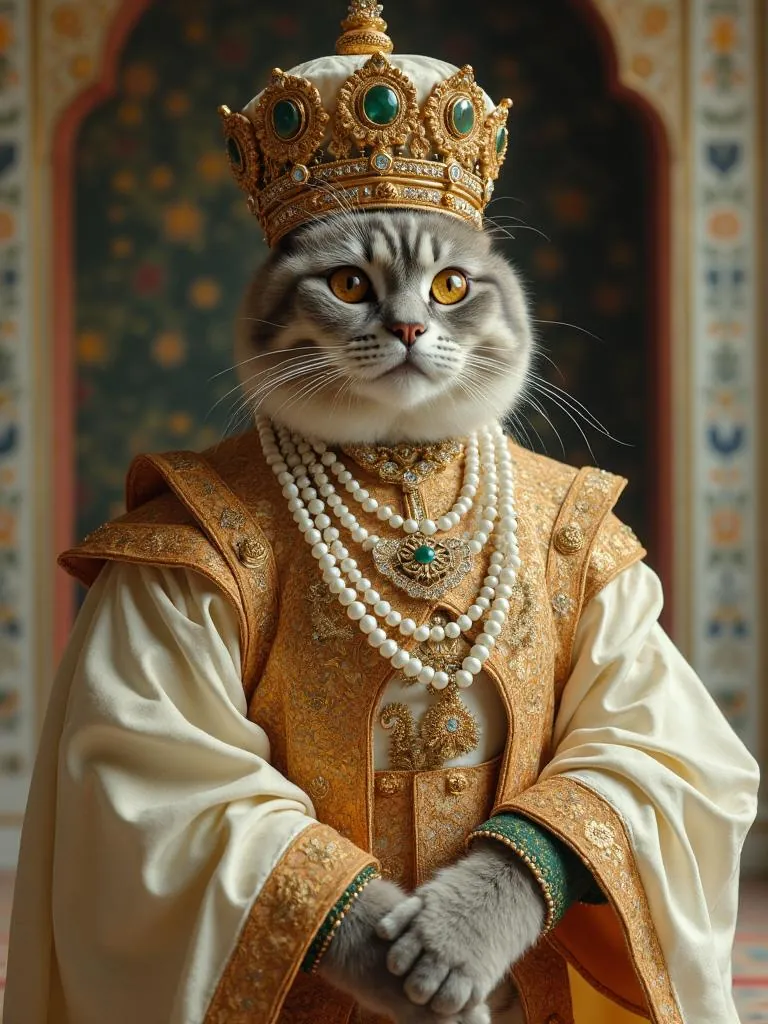
The gallery has portraits of cats in Mughal and Maharani styles. When your photo is ready, the portrait studio lets you choose from 15 royal styles and upload a photo of up to 5 MB.
Questions and answers
Where do British Shorthair cats come from?
British Shorthair cats are considered the modern form of the ancient cats brought to Britain by Roman soldiers, according to the Cat Fanciers's Association. These cats were valued for their hunting ability and gradually spread through the British Isles over centuries. Formal breeding efforts did not begin until the late 1800s, when cat shows in London gave breeders a reason to select and record specific types.
What was the first cat show?
The first organised cat show was held at London's Crystal Palace in 1871. The Cat Fanciers's Association says it was conceived by Harrison Weir, who is credited as the father of the cat fancy. Weir wanted to improve domestic cat breeds by giving breeders a way to compare and judge them. The first Best in Show was awarded to a 14-year-old blue tabby British Shorthair owned by Weir himself. The Crystal Palace shows continued annually until 1936.
What colour is the British Shorthair?
British Shorthairs come in many colours, but blue, a solid grey-blue, is the most famous and historically the most associated with the breed. The Cat Fanciers's Association says the first cats registered in the Americas were listed as British Blues before the registration later opened to other colours. Championship status was granted by the CFA in 1980. The breed's coat is described as dense, with more hairs per square inch than any other breed.
How did World War I affect British Shorthair cats?
World War I severely disrupted the British cat fancy and left breeders with very few registered British Shorthairs. The Cat Fanciers's Association says that after the war, breeders could not find enough quality registered stock, and were forced to introduce unregistered domestic shorthairs. This diluted the breed's type, and breeders spent years working to restore the original appearance before the second disruption of World War II arrived.
How did World War II affect British Shorthair cats?
World War II caused similar disruption to the British Shorthair as the first World War. The Cat Fanciers's Association says breeders after the war had to outcross to Russian Blues, Burmese, Chartreux and Persians to restore genetic diversity and the breed's original appearance. After crossing with Persians, three generations of further breeding were required before the offspring could be registered as British Shorthairs again.
Who was Brynbuboo Little Monarch?
Brynbuboo Little Monarch was a blue male British Shorthair who became the first Grand Champion of any breed in the Governing Council of the Cat Fancy in the United Kingdom. The Cat Fanciers's Association says the British Shorthair breed's revival after the two World Wars was established by breeders in the 1950s, and that most modern British Shorthairs trace their ancestry back to this cat's bloodline.
When did British Shorthairs come to America?
The first shorthaired cat registered in the Americas was a British Shorthair named Belle of Bradford, a male red tabby imported by Jane Cathcart in 1901. The Cat Fanciers's Association says the breed was initially registered as British Blues, reflecting the most common colour at the time. The CFA granted the British Shorthair Championship status in 1980, more than 75 years after the first American registration.
What does a British Shorthair look like?
A British Shorthair has a round, broad head with large round eyes, a dense, plush coat and a compact, muscular body. The Cat Fanciers's Association describes the coat as containing more hairs per square inch than any other breed, which gives it a thick, padded feel. The face has prominent whisker pads and a short, broad nose. The overall impression is round and solid, different from the leaner body of many other shorthaired breeds.
Are British Shorthairs good family cats?
British Shorthairs are known for a calm, steady temperament. The Cat Fanciers's Association describes the breed as easygoing and adaptable, and says the cats tend to be loyal to their families without being demanding of constant attention. The breed's calm nature makes it suited to households with children or other pets. British Shorthairs are generally quiet and prefer to be near people rather than on their laps.
How do I photograph a British Shorthair for a portrait?
A British Shorthair's most recognisable features are its round face, large round eyes and dense coat. Sit at the cat's eye level and use window light from the side to show the depth of the plush coat. A plain background keeps the focus on the round face and eyes. Wait until the cat is still and looking forward before tapping the nearest eye to focus. The guide to [photographing cats](/guides/pet-photo-guide/photographing-cats) has more steps on timing.
Sources
- British Shorthair, The Cat Fanciers's Association
- British Shorthair Article, The Cat Fanciers's Association
Share this guide
The button copies a ready-written post, then opens LinkedIn. Paste the text into the post box.
Go deeper
The full guides on this topic, each a set of pages with sources: