Abyssinian cat history: Zula at the Crystal Palace and what genetics found
Abyssinian cat history from Zula at the 1871 Crystal Palace show to the ticked coat, the Southeast Asian origin theory and photographing one for a portrait.
By Purrealism
The Abyssinian is one of the oldest breeds in the cat fancy and one of the most distinctive-looking cats in the world. Its name suggests African origins, but genetic research points to Southeast Asia. Its written history begins with a single cat brought from Ethiopia to England in the early 1870s and shown at London's Crystal Palace. This guide follows the Abyssinian from that first appearance to its recognition in the United States, and ends with how to photograph one for a royal portrait.
A name from Abyssinia, origins elsewhere
The Cat Fanciers's Association is direct about the breed's name: it only indicates that the first Abyssinians exhibited in England happened to be imports from Ethiopia, which was then known as Abyssinia. Genetic research, the CFA says, points to the coastal areas of the Indian Ocean and Southeast Asia as the breed's true origin, suggesting the cats arrived in England via trade routes rather than through any connection to African cats.
A taxidermy specimen in the Leiden Zoological Museum in Holland supports the Asian theory. The specimen, a ruddy ticked feline, was purchased in the mid-1830s and labelled as originating from India, decades before the first documented Abyssinian appeared in England.
Zula at the Crystal Palace
The first documented Abyssinian in England was a cat called Zula, shown at the Crystal Palace in 1871. The CFA says Zula was brought to England by Mrs. Captain Barrett-Lennard following a military conflict in Abyssinia. An 1874 British book described Zula as having a ticked coat with no clear tabby markings, the same feature that defines the breed today.
The 1871 Crystal Palace show was the first organised cat show in the world, also attended by British Shorthairs and other breeds. The Abyssinian's appearance there at the very first show placed it among the foundational breeds of the cat fancy.
Early registration and American arrival
The Abyssinian was one of the original breeds registered when the Cat Fanciers's Association was founded in 1906. The breed arrived in the United States in the early 1900s, but the CFA says that quality show specimens were not imported from England until the 1930s. Two English Abyssinians registered around 1934 became foundational to American breeding programmes, and by volume 19 of the CFA stud book, ten Abyssinians had been recorded.
The ticked coat
The ticked coat is what makes an Abyssinian unmistakable. Each individual hair carries multiple bands of colour, producing a fine, shimmering pattern across the whole body with no visible stripes or spots. The CFA recognises four colours: ruddy, a warm reddish-brown; cinnamon, a lighter warm brown; blue, a warm grey; and fawn, a pale cream. All four show the ticked pattern.
The coat lies close to the body and has a fine, dense texture. The CFA describes the Abyssinian as appearing to stand on its toes, with a fine neck arch, large ears and almond-shaped eyes. The slender, muscular body and the alert expression give the breed the look that has led many people to compare it to the cats in ancient Egyptian paintings, even though the genetic evidence points elsewhere.
Temperament
The Cat Fanciers's Association describes Abyssinians as busy, active and agenda-driven. The breed is in constant motion and tends to explore its environment. The CFA says the Abyssinian is not typically a lap cat, but it is affectionate toward its family on its own terms, often choosing to be near people rather than on them. The breed's high activity level and curiosity make it a cat that fills a room.
Photographing an Abyssinian for a royal portrait
An Abyssinian's most striking features are its ticked coat, large ears and alert posture. Getting all three in one photo calls for patience and the right light. These steps add to the full guide on photographing cats:
- Sit at the cat's eye level. The large ears and alert expression show best when the camera is level with the cat's face. Looking down flattens the head and loses the ear height.
- Use window light from the side. Side light brings out the multi-banded ticked coat. Front light flattens the coat and loses the colour variation.
- Wait for stillness. An Abyssinian in motion will give a blurred face. Wait until the cat pauses and is looking forward, then tap the nearest eye to focus.
- Leave room for the large ears. The wide-set ears at full height are part of the breed's character. Stand back enough to fit the full ear tips in the frame.
- Choose a plain background. The ticked coat is detailed and varied. A plain background keeps the focus on the coat's colour.
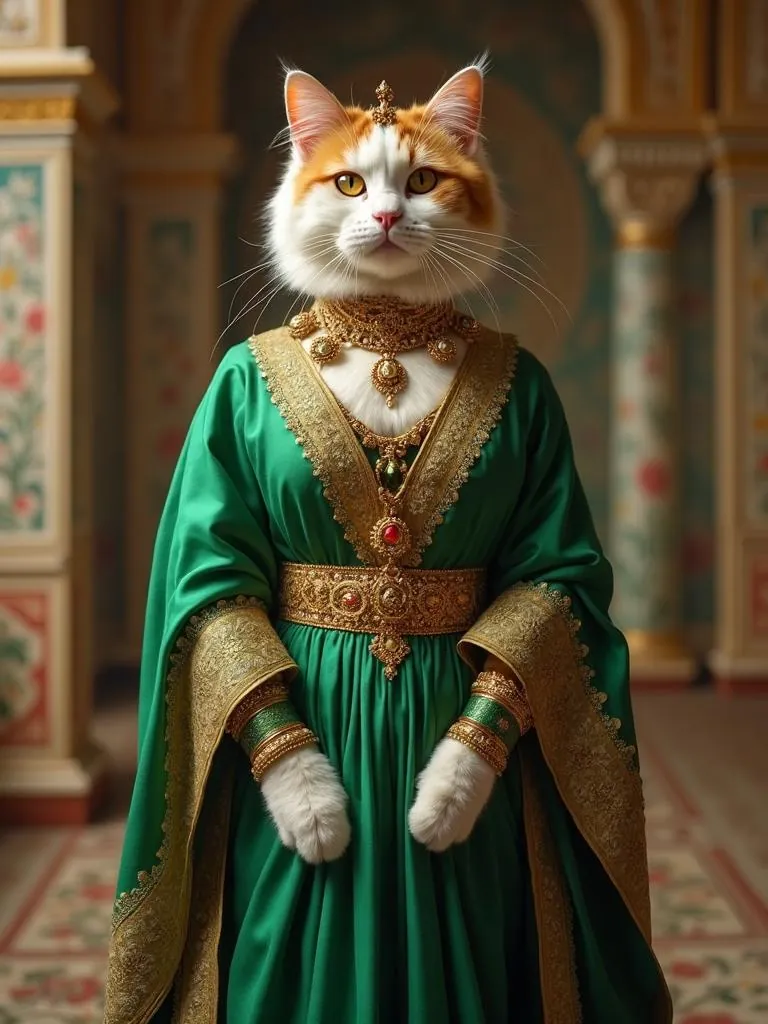
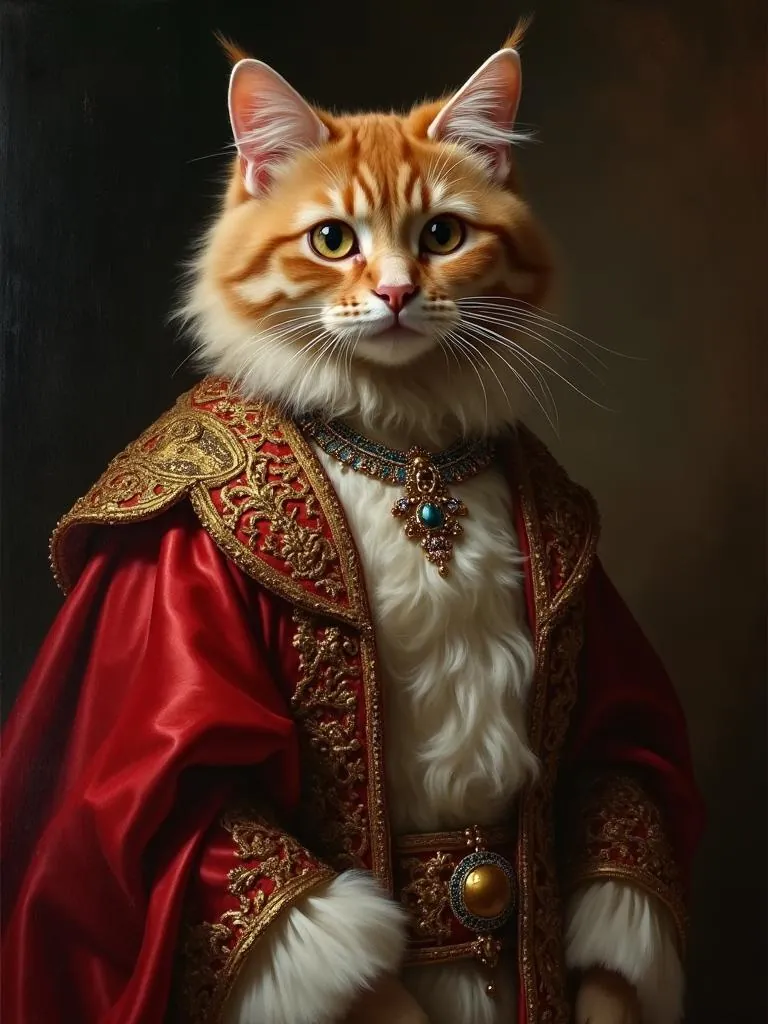
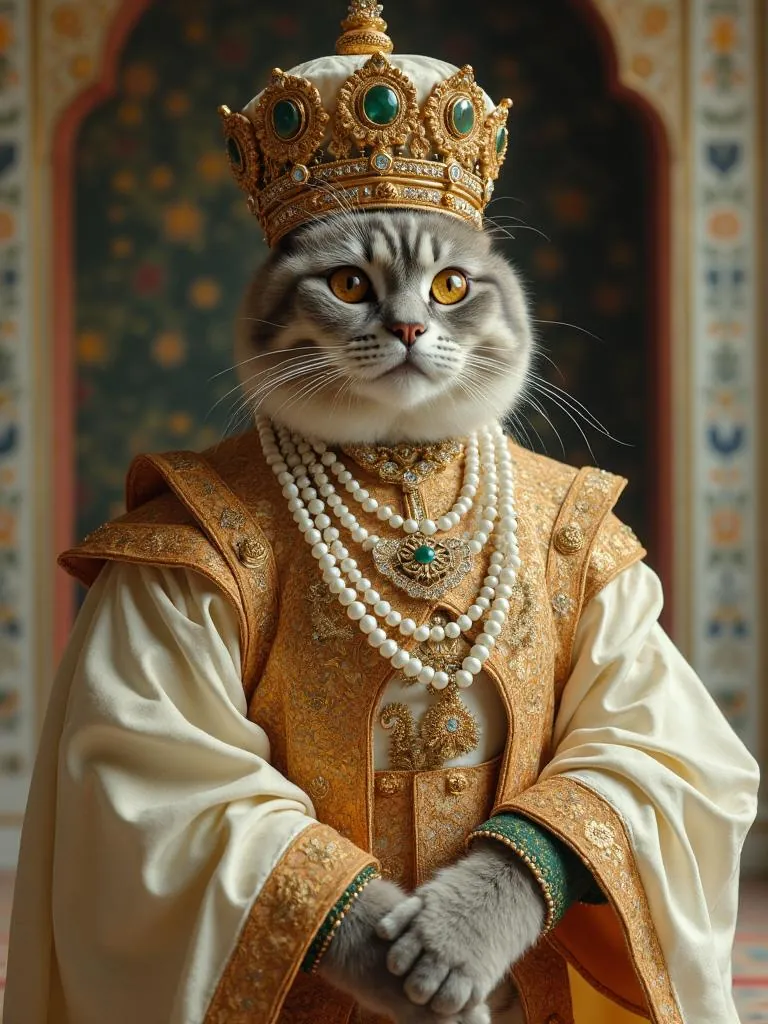
The gallery has portraits of cats in Mughal and Maharani styles. When your photo is ready, the portrait studio lets you choose from 15 royal styles and upload a photo of up to 5 MB.
Questions and answers
Where do Abyssinian cats come from?
Despite the name, Abyssinian cats most likely did not originate in Abyssinia, which is now Ethiopia. The Cat Fanciers's Association says genetic research points to the coastal areas of the Indian Ocean and Southeast Asia as the breed's true origin. The name comes from the fact that the first Abyssinians shown at cat exhibitions in England happened to be imports from Ethiopia. The documented history of the breed begins with one cat brought from Abyssinia to England in the early 1870s.
What was the name of the first Abyssinian shown in England?
The first Abyssinian to appear at a cat exhibition in England was a cat called Zula, shown at the Crystal Palace in 1871. The Cat Fanciers's Association says Zula was brought to England by Mrs. Captain Barrett-Lennard following a military conflict in Abyssinia. An 1874 British book described Zula as having a ticked coat with no clear tabby markings, which is the defining feature of the modern Abyssinian.
What is the ticked coat of an Abyssinian?
The ticked coat is the Abyssinian's most distinctive feature: each individual hair has multiple bands of colour, giving the coat a shimmering, broken pattern with no clear stripes or spots. The Cat Fanciers's Association says this ticking is what sets the Abyssinian apart from other shorthaired cats. The four recognised colours are ruddy, cinnamon, blue and fawn, all showing the ticked pattern. The coat lies close to the body and has a fine, dense texture.
Do Abyssinian cats look like Egyptian cats?
Abyssinian cats do resemble the cats depicted in ancient Egyptian art, with their slender body, large ears and almond-shaped eyes. The Cat Fanciers's Association says this resemblance appears to be coincidental rather than a sign of direct ancestry. Genetic research places the breed's origin in Southeast Asia and the Indian Ocean coast, not Egypt. A taxidermy specimen in the Leiden Zoological Museum in Holland, purchased in the mid-1830s and labelled as originating from India, may support the Asian connection.
When did Abyssinian cats come to the United States?
Abyssinian cats arrived in the United States in the early 1900s, and the Cat Fanciers's Association says the breed was one of the original breeds registered by the CFA when it was founded in 1906. Quality show specimens were not imported from England until the 1930s. Two English Abyssinians registered around 1934 became foundational to American breeding programmes, and by volume 19 of the CFA stud book, ten Abyssinians had been recorded.
What colour are Abyssinian cats?
Abyssinian cats are recognised by the Cat Fanciers's Association in four colours: ruddy, cinnamon, blue and fawn. Ruddy is the most common, a warm, reddish-brown coat with black ticking. Blue is a warm grey with darker grey ticking. Cinnamon has a lighter, warm brown base, and fawn has a pale cream base. All four colours show the breed's defining ticked pattern, where each hair has bands of colour rather than a uniform shade.
What is the temperament of an Abyssinian cat?
Abyssinian cats are described as busy, active and affectionate by the Cat Fanciers's Association. The CFA says they always seem to have an agenda and are constantly in motion, which makes them different from breeds that prefer to sit on laps. The breed is curious and tends to explore its surroundings. Abyssinians are described as affectionate toward their families but on their own terms, often choosing to be near people rather than held.
What does an Abyssinian cat look like?
An Abyssinian is a medium-sized, slender cat that the Cat Fanciers's Association describes as appearing to stand on its toes. The breed has large, wide-set ears, almond-shaped eyes and a fine, arched neck. The body is lean and muscular. The fine, close-lying ticked coat shows multiple bands of colour on each hair. The overall impression is of an alert, athletic cat, which is why the breed is sometimes compared to the cats in ancient Egyptian paintings.
How do I photograph an Abyssinian for a royal portrait?
An Abyssinian's most striking features are its ticked coat, large ears and alert, athletic posture. Sit at the cat's eye level and use window light from the side to show the multi-banded colour of the ticked coat. Wait until the cat is still and looking directly at the camera before tapping the nearest eye to focus. Leave enough room in the frame for the large ears. The guide to [photographing cats](/guides/pet-photo-guide/photographing-cats) has more steps on capturing an active cat.
Sources
- Abyssinian, The Cat Fanciers's Association
- Abyssinian Article, The Cat Fanciers's Association
Share this guide
The button copies a ready-written post, then opens LinkedIn. Paste the text into the post box.
Go deeper
The full guides on this topic, each a set of pages with sources: